Haiti travel tips
• Bring a sense of adventure, along with sunscreen and an umbrella. The sun beats down, but during the rainy season from June through October, the skies open up frequently.
• Haiti is a poor country. Be prepared for depressing street scenes with garbage clogging gutters and curbs. Wear sturdy walking shoes, and watch where you walk.
• Get some Haitian currency, called gourds, which trade at about 42 gourds to the U.S. dollar. Forget the coins, just use the banknotes for purchases from street vendors. Dollars are accepted everywhere, as well.
• Ask before taking someone’s photo. Tip the basket man, flower vendor and the ladies selling baubles and bangles. Resist handouts to the street kids, but tip if you take their picture.
• Take a ride in a Tap Tap, the colorful local buses.
• Everyone speaks Haitian Creole, a blend of French and African languages. English is spoken but not among the street people or in many shops.
• Pay attention. Sidewalks have gaping holes, traffic is chaotic, stop signs are merely decorative, gridlock rules and most drivers don’t use turn signals.
• Haitian rum is smooth, coffee is strong, mango juice is delicious and the seafood is local and fresh. If the sight of a fish head and eyeball on your plate is a turnoff, ask the waiter to remove them before serving.
• Visit an art gallery, artist’s studio, exhibit or crafts fair. The paintings are vibrant and a wonderful souvenir.
• Get out of the hotel and see the sights, especially the Marche de Fer (Iron Market) in Port-au-Prince, where bargaining is expected, and the Barbancourt Rum Distillery near the capital, where the samples are generous.
• Don’t drink the water (except bottled); carry a hand sanitizer and don’t flash the jewelry.
• Haitians are warm, resilient people. A smile and a friendly “bonsoir” from a traveler go far and mean a lot.
— Gay Nagle Myers
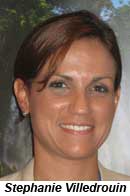 PORT-AU-PRINCE, Haiti — If Stephanie Villedrouin, Haiti’s minister of tourism, has her way, this star-crossed country will emerge as a tourist destination offering not only its music and mountains but also its Creole culture, crafts and cuisine.
“I need U.S. tour operators,” Villedrouin said. “I need door-to-door packages. I need travel agents to come see the country, sell the country and send us leisure travelers.”
Right now, Haiti’s market is primarily business travel and humanitarian workers.
“If groups are interested in voluntourism, that’s fine, but we need to move away from the perception that Haiti is all about needing help,” Villedrouin said. “We’re rebuilding and repairing. We want visitors to see the hidden beauty here, not the tragedy.”
She has backed up that assertion with an ambitious set of tourism initiatives and a master plan that will be announced in June.
Haiti is getting technical assistance from Fonatur, Mexico’s National Trust for the Promotion of Tourism, in mapping out a master plan that includes the development of three tourist regions in the north coast, the Arcadins coast 45 minutes north of Port-au-Prince and the Caribbean coast on the south.
“Haiti is a big country,” she said. “We have beautiful beaches, caves, national parks and waterfalls, but the added value is our culture: voodoo, art, food, music, festivals and people. That’s what we have to market and promote.”
Villedrouin envisions smaller hotels in each of the regions, tours that combine stays in the capital with visits to historical and scenic sites and roadways that offer ease of getting around the country.
There are plans afoot to launch a tour linking Puerto Plata in neighboring Dominican Republic with Cap Haitien on Haiti’s north coast and to develop the island of Ile a Vache off Haiti’s south coast with resorts, art studios and restaurants.
Hotel development is curving upward, fueled by the recent openings of the Best Western Premier and the Royal Oasis by Occidental, both in Petion-Ville, to be followed by the 173-room Port-au-Prince Marriott in 2014.
JetBlue will launch daily service from New York and Fort Lauderdale on Dec. 5, joining American, Delta and Spirit from U.S. gateways.
The Haitian government opened a new terminal at the Port-au-Prince airport late last year, unveiled a newly paved 7,500-foot asphalt runway at the Cap Haitien airport in the north, and plans to develop several smaller airports throughout the country.
Haiti still has a long way to go before it becomes a top tourist destination, but as Villedrouin said, “We’re open for business, and tourism will lead the way.”
Follow Gay Nagle Myers on Twitter @gnmtravelweekly.