 The Germans have a word, gemutlichkeit, that so defies direct translation, it's simply been adopted, wholesale, into English.
One dictionary defines the term as "middle-class niceness or coziness; hospitality." I prefer the German National Tourist Board's (GNTO) take on it: "Good food, good company, a drink or two and plenty of time to enjoy it all in a cozy location."
I found it the more accurate description on a recent food- and wine-focused trip across southwestern Germany.
Traversing this beautiful region, which includes the Black Forest, I stopped at world-class wineries and restaurants, from Michelin-starred to less renowned or refined, in pursuit of my own hearty helping of gemutlichkeit.
Most of my time was spent in the "sunshine state" of Baden-Wurttemberg, with forays into neighboring Hesse and Rhineland-Palatinate, trawling five of the country's 13 official wine-growing regions: Baden, Nahe, Rheingau, Rheinhessen and Wurttemberg. As any wine aficionado already knows, German vintners specialize in white wine varieties such as Riesling — easier to produce at northerly latitudes — but quality reds are produced, as well. Pinot noir grapes, known locally as spatburgunder, are most often used for reds.
Two typical days
When I asked Ricarda Lindner, Americas regional manager at the GNTO in New York, how best to experience gemutlichkeit, she recommended "a visit to the traditional inns and taverns in southwest Germany."
"People still sit together on long communal benches, so it's easy to get in touch with the locals," she said. "Make sure to sample the regional dishes with a good glass of wine or beer and listen to some German folk music."
Here's a detailed look at the first two days of my gemutlichkeit getaway to lend an idea of what such a food- and wine-focused itinerary might look like:
The quaint Rhine Valley town of Rudesheim, 45 minutes by car from Frankfurt Airport, was the perfect kicking-off point. Chockablock with half-timbered houses, historical churches and winding alleys, Rudesheim is one of the most visited towns in Hesse's Rheingau wine region.
My digs for two days there was the 78-room Hotel Lindenwirt, a charming and comfortable inn boasting six Weinfasszimmer, or "wine rooms." These are outsize wine barrels‚ more like vats, really — equipped with two single beds (separate bath and living areas are attached).
 An inaugural lunch of traditional fare with a flair at the Breur's Rudesheimer Schloss restaurant (on the menu: a chili-pepper-infused mushroom soup, grilled chicken with potatoes and a superior apple strudel) was followed by a wander about story-book streets and a guided visit to the hilltop Eibingen Abbey overlooking town. The nuns at the abbey produce their own quality wines on 16 acres of vineyards; tastings are available in the abbey gift shop.
Come evening, I enjoyed a tour, tasting and dinner at Ankermuhle, a boutique winery and restaurant set in a restored farmhouse. Owner Birgit Huttner explained her color-coded and somewhat cheeky approach to classification and branding: Dry whites are labeled in green, sweet ones in yellow, reds in red and so on, and the wines are marketed in contrasting pairs such as "Jesus" and "Lucifer." Although it was a weeknight, Ankermuhle's veranda was packed with diners and tipplers drinking in bucolic views.
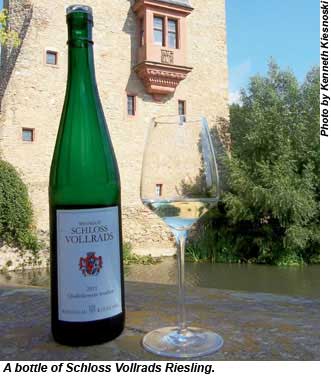
My second day in the Rheingau began with a cable-car ride over local vineyards to the hilltop Niederwald Landscape Park and its 105-foot-tall statue of Germania, a figure that historically has personified the German people as a whole. Next up: a visit to the storied winery at the Schloss Vollrads estate. More traditional in ambience and approach, the winery focuses exclusively on riesling. Managing director Rowald Hepp offered wine tastings, vinoculture lessons and a tour of the winery's Renaissance castle.
After a quick lunch in the shadow of a 14th century palace in Eltville, I ferried across the Rhine to Bingen, Rudesheim's bigger, more bustling sibling, located in a different state, Rhineland-Palatinate.
Located on the border of two other wine regions, Nahe and Rheinhessen, Bingen hosts Germany's longest wine festival, the 11-day Winzerfest, each September (The event runs Aug. 30 to Sept. 9 this year). After roaming local sights such as the Mouse Tower and a museum dedicated to medieval mystic St. Hildegard, I followed Lindner's advice and hit one of the wine stands at the most recent Winzerfest. Swigs of local vintages helped wash down hefty helpings of bratwurst and other Bingen-area comfort foods.
As a five-hour, 16-mile bike ride along the river to Mainz was set for first thing the next day, I skipped the recommended nightcap of Asbach Uralt brandy, hot coffee and whipped cream, a local take on Irish coffee.
A world of wineries
After my sprint through the Nahe, Rheingau and Rheinhessen, it was time to head south to the bigger Baden and Wurttemberg wine regions. The two are neatly encased in one sprawling state, Baden-Wurttemberg — tourist nirvana, wine lover's paradise and gourmand's delight.
"Thanks to the great weather, two of the country's best wine-growing regions are located there," Lindner said. "Both regions continue to have wines ranking highly at distinguished wine [competitions] and Stuttgart, capital of southwest Germany, is [our] only city … to have its own wine-growing estate."
Visitors can pay homage to Stuttgart's wine prowess with daytime visits to its new Wein-baumuseum and surrounding urban vineyards, followed by dinner, drink and song at the city's annual wine festival, next set to be held Aug. 28 to Sept. 8. Visitors can then crisscross Baden-Wurttemberg from rural winery to village or urban wine shop, each offering something different or unique.
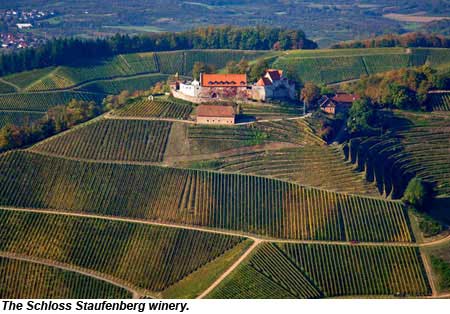
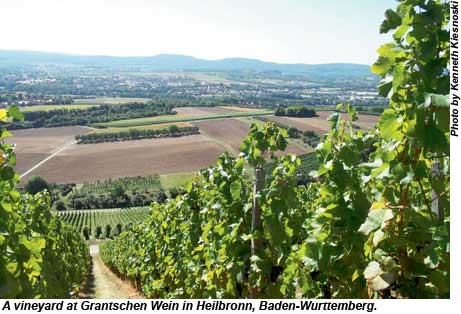 In Heilbronn, I was treated to a "slow food" barbecue and Segway tour in the vineyards of Grantschen Wein, followed by a wine-and-chocolate pairing/tasting hosted by local chocolate purveyor Confiserie Schell. Amid the vine-covered hills of Durbach, a winery tour and tasting at hilltop Schloss Staufenberg topped off a delectable al fresco lunch of snail soup and sauerbraten.
Lying in the shadow of Freiburg's cathedral, the Alte Wache House of Baden Wine offers sample tastings of local vintages as well as to-go cups of its signature Cold Sophia wine ice-slushie concoction (available in red or white). In Breisach, you can tour Europe's biggest wine cellar: the Badischer Winzerkeller, headquarters and clearinghouse for the region's wineries. Its on-site shop sells 500 to 600 of the area's best vintages.
Just outside Radolfzell, on Lake Constance, I enjoyed a schnapps- and wine-tasting at the family-run Rebholz Weingut shop. Vintner and owner Hans Rebholz poured generous shots of his specialty schnapps, including pear, apple and sour cherry varieties. A short drive away, in the town of Constance proper — undamaged in World War II — the historical Spitalkellerei boasts an original medieval wine cellar and boutique shop selling its famed vintages.
Eat, drink, be merry
Winery tours are great fun, but some of the best wines in southwest Germany are to be found and fawned over at upscale hotels, resorts and restaurants. And these, of course, also happen to offer that other essential component of gemutlichkeit: great food.
Take, for example, the Wald & Schlosshotel Friedrichsruhe resort, in the woods of Hohenlohe northeast of Stuttgart. The former noble summer residence and hunting lodge is now a five-star, 66-room resort graced by a one-Michelin-star gourmet restaurant. Clients may well revel in dinner at the gorgeous Jaegerstube, or chef's table, attended by chef Boris Benecke, an efficient wait staff and house sommelier Jochen Benz.
In fact, Michelin stars abound in Baden-Wurttenberg. Book clients a meal at Zirbelstube, in the Hotel Colombi on the edge of Freiburg's Old Town, or at Restaurant Adler in the Black Forest hamlet of Hausern. There, 33-year-old wunderkind chef Florian Zumkeller holds court in the kitchen. The restaurant, in Relais & Chateaux-affiliated Schwarzwaldhotel Adler, has received a Michelin star every year since 1966.
Another Black Forest village, Baiersbronn, enjoys outsize foodie fame that belies its small size. Lindner described it as "a mecca for food lovers, combining seven Michelin stars across three restaurants."
At the chalet-style Traube Tonbach resort there, Michelin-star chef Harald Wohlfahrt treated me to a cooking demo and three-course tasting. Guests can sample his skills for themselves at Schwarzwaldstube, one of four restaurants on the premises. The hotel also offers cooking classes.
 Sampling traditional local fare is highly recommended.
"Southwest Germany is famous for its Swabian cuisine," Lindner said. "From maultaschen [Swabian ravioli] to lentils with spaetzle [potato noodles] and gaisburger marsch [beef noodle soup], there is something for every taste bud."
I sampled for myself at spots such as the farmhouse-themed Dorfstuben, at the Hotel Bareiss in Baiersbronn; the Hotel zum Ritter St. Georg, housed in Heidelberg's oldest surviving townhouse; and the rollicking Stuttgarter Staeffele, where the onion soup, served in a giant onion, can't be beat.
Gemutlichkeit how-to
Agents and operators interested in crafting wine- and food-themed itineraries to southwestern Germany will find a more-than-willing partner in the GNTO. According to Lindner, selling the country's culinary charms, "star chefs" and wine regions are a "key focus" in the U.S. market.
"Germany has a range of fantastic experiences in store for food and wine connoisseurs," she said, noting there are 249 restaurants in Germany with one or more Michelin stars. "German wines — and, in particular, riesling — are an ideal vehicle for advertising Germany as a travel destination."
Companies offering food- and wine-focused trips in 2013 include Viking River Cruises, with its Vineyards & Vistas itinerary, and specialty operators such as Worldwide Wine Tours, of Walla Walla, Wash., and Wine Tours of the World, of Greenwood Village, Colo.
For more information on gemutlichkeit, visit www.germany.travel.