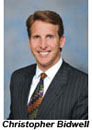
 The current aviation security debate certainly hits home for Christopher Bidwell, vice president of security and facilitation for Airports Council International -- North America. As a pilot and a former corporate security manager for American, Bidwell brings a unique perspective to the recent crackdown on air travel screening. Recently he spoke with aviation editor Michael Fabey about what needs to be done to make the airways more secure in the wake of the failed Christmas Day attempt to blow up a Northwest passenger jet.
Q: What keeps you up at night now?
A: What keeps me up at night is this: What haven't we thought of yet, and where do we need to go from here? In a security environment, we have to be right 100% of the time. A terrorist only has to be right one time. It's an evolutionary process. Clearly, the events of Dec. 25 show that security procedures needed to evolve.
Q: How do you see them evolving?
A: What needs to happen is the proper level of coordination between the government and industry. As the new rules come online, there needs to be the proper level of sharing. We need evolution in every area: procedures and new technologies being employed not only in the U.S. but also internationally.
Q: What's likely to be the next big change?
A: The next step will be an evolution of technology. [The Transportation Security Administration] will deploy advanced technology units. This technology has a chance to reduce the hassle factor.
Q: Right now most of the technological focus is on employing full-body scanners. But many privacy-rights groups have raised concerns about the use of these machines.
A: The TSA has done some things to ensure the privacy of the traveler is protected. They give you the option to go for the pat-down or to go through the screener. The operator is in a closed room and has no view of the scanned individual. The images cannot be downloaded, stored or transmitted. They've also been working to make the image fuzzy or into a stick figure. The privacy provisions put in place by TSA have been more than adequate.
Q: But the debate continues.
A: When Congress holds hearings this month, part of that will be a discussion of aviation screening technology.
Q: It appears that the most recent security crackdown has had an impact on air travel. Recent media reports cited longer security lines at many major airports. Are you concerned?
A: I don't know if there really has been a knee-jerk reaction. Based on reports from our international customers, there have been longer lines there. But domestically, we really haven't heard from airports about significant line waits.
Q: What about the airport closures or other flight disruptions due to security concerns in the weeks immediately following the Christmas Day incident?
A: Given the focus on aviation security and aviation as a whole, there's a heightened awareness. There's greater focus.
Q: What are airports doing to make their terminals and gates more secure?
A: Clearly, the TSA is responsible for screening passengers and baggage in the United States. Airports have responsibility, as well. After Dec. 25, airports revisited their security plans, and they have taken steps. Airports all have law enforcement officers. They are the eyes and ears on the ground. They've increased law enforcement and canine patrols. They can coordinate what they are seeing with the TSA. At the local level, there has to be the appropriate balance of procedures.