On the occasion of the recent Travel Weekly Mexico City Leadership Forum 2011, executives from airlines, hotels, tour operators and the Mexico Tourism Board gathered for a breakfast roundtable at the St. Regis Mexico City hotel to discuss the state of travel and tourism south of the border. During the roundtable, moderated by Travel Weekly Destinations and Special Supplements Editor Kenneth Kiesnoski, participants tackled hot topics such as traveler safety, handling negative publicity, affordability, airlift and competitiveness. The original transcript has been edited for length and flow.
Travel Weekly: The first question is identical to last year's. It's been a tough couple of years for travel and tourism. Does Mexico have any advantages or disadvantages vis-a-vis competing destinations in this economic climate?
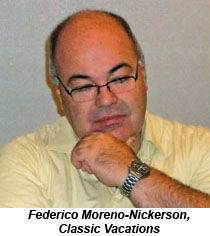 Federico Moreno-Nickerson, director of product development for the Caribbean and Mexico, Classic Vacations: The value that Mexico offers. I have to be very politically correct because I'm also in charge of the Caribbean, [but] I will make a very simple analogy. If you were to stay at a luxury hotel -- let's just say, for example, the St. Regis Punta Mita -- and you were to book the same vacation at the St. Regis Bahia Beach in Puerto Rico, the price differential can be substantial.
The same applies for Rosewood: If you're staying at Rosewood Mayakoba, which is a brand-new property, and you were to stay at Caneel Bay, it would be the same thing. And the Ritz-Carlton, Cancun vs. the Ritz-Carlton, Grand Cayman. At the end of the day, the value in Mexico is superior, bar none, on the one hand. And on the other hand, the level of services in Mexico, I think, is far superior. There are more AAA Five Diamond hotels in Mexico than in Hawaii and the Caribbean combined. So those are the two huge advantages.
The disadvantage we have [are the] perpetual misconceptions about Mexico. When people ask me about Montezuma's revenge, I have to laugh. I told someone the other day [that] it would be like me saying that Americans don't drink wine. Maybe that was the case 20 years ago, but that's not the case today.
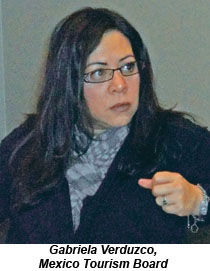
Gabriela Verduzco, e-commerce marketing director for the Mexico Tourism Board: I think that what Federico just mentioned about the quality of service is very important. We are a unique country in terms of our people. And the people are what makes a big difference with other competitors. The value that the people give to the destination [is] unique, and I don't think anyone can compete with that.
TW: Any comment, from the hotel perspective, about what travel agents' clients get, in terms of value for money paid, at Mexican properties?
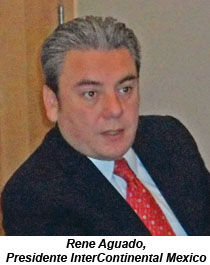
Rene Aguado, director of sales and marketing for Presidente InterContinental Mexico:[Due to crises], the mindset is that going to Mexico has to be a bargain. It was [always] very cheap compared to Europe or the States. Now, ... wow! We've tried to get back to the rates that we had before, or [to] rates where we can be compared to destinations such as the Caribbean, but it has been very slow because of that perception that Mexico has to be cheap because [it's] in dire straits.
The Mexican way of serving is very innate, it's very unique. I know that, truly, it's far better than in other countries. You have very good hotels, you have very good services, very good companies. And with the [average daily] rate down in Mexico because of the reasons I stated before, it's a great bargain for the money.
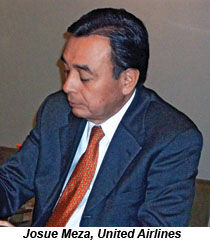
Josue Meza, director of Latin American sales for United Airlines: From the airline point of view, I would say that Mexico has a tremendous advantage in connectivity. Also, Mexico is seen not only as a leisure destination but a business destination, a combination of both, something that probably Hawaii or the Caribbean cannot offer.
We serve 30 cities in the country. That's a combination of business destinations, pleasure destinations, colonial cities, beaches, etc. But now, thanks to the merger [with Continental], we are taking advantage of the West Coast destinations. From Guadalajara to Los Angeles, from Guadalajara to San Francisco. Something that we always dreamed of now is becoming a reality, mainly because of the ethnic traffic and the business traffic between Guadalajara and California.
TW: The Riviera Maya has new airlift out of Europe that might help pick up the slack as U.S. arrivals decrease. Dario, can you tell us what's going on in your destination?
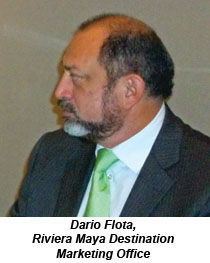
Dario Flota, director of the Riviera Maya Destination Marketing Office: A year ago, British Airways started flying from London to Cancun. One year after, we have been seeing a 30% increase of British [visitors] to our destination. The growth of the European visitors has been [so] big that it's been bigger than the reduction in North American visitors. We will be closing this year with net growth of 5%, even with a reduction of about 7% of tourists from the U.S.
Air France has started flying Paris to Cancun; as of the end of [October], Aeroflot will be flying Moscow to Cancun; and next year in July, Virgin Atlantic will start flying London to Cancun also. Iberia is waiting to announce exactly when next year they will start flying Madrid to Cancun.
We have been chasing airlines for years to fly to Cancun. Always they said that to make a flight profitable, they need to fill up their first-class seats. They didn't find enough upscale hotels in the destination to guarantee that [those] clients will be flying with them. Now, they realize that was a mistake because the [luxury hotel] offer then was big, and now it's bigger.
That's why all [the airlines] at the same time decided to start flying to Cancun, even when some other destinations are having problems. So I think this is an example of what's going on at Riviera Maya, a good example of the opportunity that Mexico has as a country.
 TW: Growth in the number of luxury accommodations available in Mexico as average daily rates remain depressed seems counterintuitive. What's MLT Vacations' take?
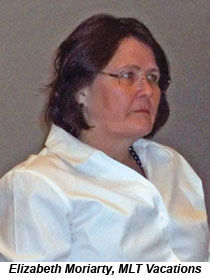
Elizabeth Moriarty, vice president of product development for MLT Vacations: Mexico is extremely well-positioned for all segments of the market, including luxury and romance. In fact, the Riviera Maya is one of our top-performing luxury destinations. We offer a luxury product on both of our [United and Delta] brands. We've been extremely successful in providing more customers to Mexico, but specifically to the Riviera Maya, for the luxury program because of the product that is available in Cancun, as well as in the Riviera Maya.
We've seen specifically on the romance program a lot of increase in business. I think it's a double-digits increase, and we continue to see a demand for destination weddings and for honeymoons.
When we talk about value, it's not necessarily just a low price. You can get value, and it's based on the product. And in Mexico there's been so much development and refreshment of product, I really don't believe you can find product of the caliber that you have in Mexico for the price point for the customer [elsewhere]. So it doesn't have to be, as we say, "cheap and cheerful." You like that one? [Laughter]
The service delivery is just phenomenal in Mexico. And the Mexican people, their world-class hospitality, it really shines through. Yes, we've had some softness in our business to Mexico over the past couple of years, but we really feel confident that we've hit that low point.
TW: Can you elaborate on what you mean by "softness"?
Moriarty: For 2011, we actually will be flat year over year. So when we say softness, we received double-digit growth to Mexico for the past four years. And a lot of that has been because of the fact that we took over the management of the Continental Airlines vacation program. And obviously Continental, with their air capacity and routes to Mexico, that gave us a boost.
But for 2012, we're seeing positive signs. We are seeing, though, a weakness on the Pacific side of Mexico, specifically in Puerto Vallarta and Riviera Nayarit. Cabo is performing well. At Cancun and Riviera Maya, we see good growth for 2012. We're cautiously optimistic that our business to Mexico will improve and are planning for growth in 2012.
Verduzco: Have you reached the same levels you had in 2008 again?
Moriarty: We are close to reaching those numbers, but as I said, that business has changed, depending on the destination within Mexico.
Verduzco: What are the things that are happening in P.V. and the Riviera Nayarit?
Moriarty: I think some of it is because of the product that's available on the east coast of Mexico, an increase in inventory, so there's more hotel rooms available in the destination. And, frankly, there's been rate compression just because there has been a softness in demand. So what has happened is the rate compression in Cancun and the Riviera Maya has affected the production in the Pacific side. Plus, there has been a decrease in air capacity.
Aguado: Los Cabos is actually doing great, and that can influence the other [Pacific] destinations. Los Cabos was very expensive but now, with price compression, people who wanted to go but were unable to before, can.
Verduzco: There are all-inclusives now. Previous to 2000-2001, you don't have any all-inclusives in Los Cabos. Now you do, so that also makes a difference.
Moreno-Nickerson: All-inclusives are important, but they're not the answer to all the questions. Luxury can be defined a number of ways. There's a lot of hotel brands that claim to be luxury that are not part of the Classic Vacations program. I know they're not Virtuoso, I know they're not AAA [Five Diamond], or even Four Diamonds, so when I meet with them I say: What's your claim to fame? And they say: "Well, we market ourselves as luxury." I say, "Just because you have a checkbook to pay for the advertising doesn't make you a luxury brand."
 To answer the question "Where are travelers going?": The airlines play a fundamental role. Time and time again, we've seen this in cycles. It's interesting that Josue is here from United, because he can relate to the Hawaiian business. When prices hit a certain threshold in Hawaii ... up above $1,000 apiece ... we saw a natural shift from Hawaii to Mexico's Pacific coast. When Hurricane Wilma impacted Cancun, we saw a shift from the U.S. Northeast [from] Cancun ... to the Caribbean. There's really a price point that is kind of a magic price point. And once the airlines hit that threshold, then travelers start looking for alternatives, No. 1.
No. 2, I've been very critical of the Cancun tourism board because of the fact that they never truly illustrated for the American consumer what really transpired after Wilma. The hotels didn't just make repairs. They basically refurbished the entire hotel. So after Wilma, the Cancun inventory was like opening new hotels. It wasn't just about fixing it up.
So, yes, Cancun and Riviera Maya have much more inventory. Plus, what is impacting the other destinations is a combination of two things. First is the U.S. travel warning that specifically calls the state of Nayarit and the state of Jalisco areas with increased violence. That's what I'm talking about.
The other topic has to do with the price of air. When you look at the price of traveling to the Cancun airport vs. traveling to the Puerto Vallarta airport, you'd think it would be three times more expensive to go to Puerto Vallarta. Now in Puerto Vallarta, there are some fine hotels. But all things being considered, they haven't invested as much in inventory. They haven't gone through the same expansive, expensive or extensive refurbishment as the hotels in Cancun. And when you look at what they have in Puerto Vallarta and how expensive it is to be there, you know, Americans are just gravitating toward the Cancun airport.
So at the end of the day, Cancun's airport is dominating and is taking the largest market share. I'm sure that all of the tour operators will tell you the same thing. In Cancun and Riviera Maya, the market share is at historic heights.
Moriarty: But if you take a look at tourism in Mexico, I know the last time I looked at the statistics, Cancun and Riviera Maya represented 80% of the income from tourism. So that's just the situation.
Moreno-Nickerson: I have to qualify that. In Mexico, the domestic market is bigger than the international market, in terms of tourism. So it's 80% of the international business. And international arrivals is not the largest share. That's important.
Moriarty: And I recognize it. Frankly, I know if it wasn't for the domestic market now, a lot of the hotels would be suffering even more. My point was that Cancun and Riviera Maya still generate the lion's share of tourism dollars. That's why it was so critical after Wilma to get Cancun back on line in an expedited manner. I think there's huge upsides for Puerto Vallarta and for Riviera Nayarit because [they have] a lot to offer, and some of the challenges are due to the air capacity and air policy.
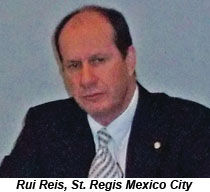
Rui Reis, general manager of the St. Regis Mexico City: Eighty percent or 90% of the tourism in Los Cabos and Puerto Vallarta [is] from the U.S. That's huge.
In any business, with 90% of your business [from] one country, obviously, there's a risk there. What happened in Hawaii was that when Japan was strong, so unbelievably strong, Hawaii didn't really need the business from the U.S. mainland. When Japan dropped, then [there] was a shift of clientele ... and all the effort went into driving business from the mainland to Hawaii.
Puerto Vallarta is 90% from the U.S., and as it's dropped, it's a disaster. Why are other countries, like European or Asian countries, so weak in [tourism to] Mexico? I don't understand, really.
Moreno-Nickerson: Tourism inevitably is in circles, concentric circles. So the biggest pieces of business ... come from your region and then from your neighboring countries. Anywhere you go in the world, that will always be the case. You see how many Canadians visit the U.S. How many Mexicans vs. other countries. And you always see a greater proportion. The same thing with Mexico. If you take Canada and the U.S., they take the lion's share. If you go to France, the biggest influence comes from Spain, from Germany, from England.
Reis: The second point I would like to mention is about leisure [travel] in Mexico City, why Mexico City is not a success in terms of leisure. It should be. You can't think of any successful tourism country in which the capital is not a success itself. France ... obviously, Paris is a success. You think about the U.K.; London is a rather nice journey. Even Washington is a tourism destination.
Why is Mexico City so forgotten in this situation? I can't imagine that with all these airlines coming from everywhere in the world to Mexico City, if Mexico City were a destination perceived as a great value, you could combine both [capital and country].
Moreno-Nickerson: Mexico City had the very first airport in the country. Traditionally, all the foreign visitors who came to Mexico had to fly into Mexico City, period. But in the last 40 years ... there was a diversification. After 1970, the government started building [other] airports and started diversifying the traffic because the airport in Mexico City was getting very saturated. That was one thing. Then they started promoting sun and fun, and Cancun was the first integrated development for tourism in Mexico. And then after that came others, like Ixtapa-Zihuatanejo.
Another major factor for Mexico City no longer being a leisure destination [is] all this bad press. I mean, "60 Minutes," CNN, you name it. Unfortunately, Mexico City has had this bad luck ... for 20 years.
 People talk about how polluted Mexico City is; they confuse the symptoms of altitude with air quality. If somebody tells me that Mexico City has poorer air quality than Los Angeles, I laugh. Mexico City, in fact, has won international awards in terms of air-quality improvement. All of the local transportation in Mexico City has reduced its carbon footprint tremendously. There was an effort to actually move factories out of Mexico City. But all these things get lost in the press. You know, one of Mexicans' greatest qualities is that they always keep everything as a secret. [Laughter] It's like the guy who's dating the most beautiful girl but he doesn't want anybody to know.
Reis: Would you agree that these last 20 years of a bad image for Mexico City have impacted the whole country?
Moreno-Nickerson: Mexico is painted with a very broad stroke. When you hear news ... that a congresswoman was shot in Arizona, they don't say a congresswoman was shot in the U.S. When there's a crazy person who bombed an Oklahoma federal building, they don't say a bomb in the U.S. In Mexico, it doesn't matter where it is, it's always just Mexico, you know.
Verduzco: Last year, during the Travel Weekly Mexico City Leadership Forum, I talked to two directors of sales from big international hotel chains in Mexico City, and I asked them about more or less what you are all saying. The answer I got is that they're really not focusing on leisure travelers. They're focusing 100% on business travelers.
Aguado: Last year, the focus was to bring back the business, the core business. Now actually, we're doing fine. The hotels, from Monday to Thursday, are full, basically. So now their incremental business is only during the weekends. And the weekends is leisure. Mexico City is not only for business. We have everything that all other capitals have.
TW: So do you have U.S. leisure visitors staying with you at the Presidente InterContinental Mexico?
Aguado: Yes, we do. We have made efforts ... [although] we have very limited budgets. Obviously, the vast majority of leisure guests are from within Mexico. Now that Mexico City is perceived as the safest city in Mexico, [they] come here to spend the weekends. So ... we focus on that. But we have been going to the U.S., all the same. We want to get your business for holidays. Easter in Mexico City, for example, is fantastic. It's really a great city to come to on vacation. Our wholesale business has increased ...when everything else -- the corporate market, the group market -- was down. The wholesalers here in Mexico City were outperforming what we were expecting. It wasn't only our hotel. So it's coming naturally without any effort. In my opinion, we just need to invest a little bit more time, a little bit more money.
TW: The Mexico Tourism Board has produced some very beautiful new TV commercials to which they've now added regional destination branding. Any comments on marketing, say, the Riviera Maya specifically, as opposed to Mexico broadly? Has all the negative news about Mexico affected how individual destinations within Mexico are promoted abroad?
Reis: It's not about Mexico City; it's about the country itself benefiting. Now, if we start wasting our efforts [with] many, many, many different efforts in Cabo, in Cancun, etc. -- if you promote, for example, Riviera Maya ... and there's a problem with [the] Mexico [brand] -- then, yes, I agree, there's an advantage. But we shouldn't lose the opportunity of this strong word "Mexico," this brand.
Flota: It's still controversial for some destinations and some operators, [the question of whether] we still must have the overall Mexico brand as our own destination brand. I think that the Mexico brand is a very strong brand. I understand that our visitors are not geography specialists, but they are not stupid. They know where they're going. They know Cancun is Mexico. Californians know that Cabo is Mexico, but also they recognize Cabo as a safe place ... as well as Cancun and Riviera Maya.
For some destinations where we are opening the door, like Asian markets, we need to go in first with the Mexico brand. We are wasting our money and our efforts talking about small pieces of Mexico. When we started promoting in China or India or Asia in general, they always start by asking, where is Mexico? And we have to show a map showing where the U.S. is.
Mexico is a very big country, too. So for some markets we need to have a national strategy. We cannot go isolated. We have been doing it for many years, this selling Mexico by pieces.
 Moreno-Nickerson: You can't disassociate yourself from Mexico. I've had the utmost respect for Dario for many, many years. Some of his predecessors ... would say, "Oh, Cancun is not Mexico." Are you kidding me? I said, "Guys, I hate to tell you; consumers are not stupid. OK? You're not an island in the Caribbean." I agree that you have to have an umbrella campaign.
TW: The administration of President Felipe Calderon, and the president himself, is very active in promoting Mexico as a tourist brand.
Reis: Do you know how involved President Nicolas Sarkozy is in the tourism industry in France today? Or who the secretary of tourism in France is today? Anyone know that? Who cares? It doesn't matter. It's not a question of the president. I mean, it's great that you see the president of this country so involved in this, but this is not the question of a president.
I think Mexico is still suffering because ... [tourism promotion] was poorly designed. I'm not sure if this is what happens, but I can say what it looks like to me. It's "if you succeed, I don't like you." I will make all efforts I can so you don't succeed.
Moreno-Nickerson: Unfortunately, in Mexico success is not praised. It's criticized and undermined. I don't know where that comes from, but it is a problem. But Mexico has to be promoted as a brand. I completely agree. One of the things that the co-president of Classic Vacations, [who is a] Chinese-American, said to the Consejo was, "You need white dudes to do your testimonials. Not Jennifer Lopez, not George Lopez. You need gringos. You know?" [Laughter]
I think they were shocked. When he told me that, I laughed so hard because I said, "Exactly!" Jennifer Aniston is the beautiful girl next door. She goes to Cabo all the time. She loves Mexico. She's the one that should be doing the testimonials.
Moriarty: I think it has been a question that's been on a lot of people's minds about whether it should be a Mexico umbrella campaign. And I think what's driving that is the security issue. And I'll be honest, I've heard even some owners of hotels say, "I don't want to be under the umbrella of Mexico. I want to focus in on my destination." So there's a lot of pressure.
Verduzco: It's not a small group. The group that Elizabeth is talking about is a big group. But we work closely with each destination. We put plans together. We work with the tour operators. We work with the destinations. We do marketing plans together with each destination for an entire year, where our budgets combine for the destination only, and trying to include them to be part of this Mexico umbrella.
Moriarty: Right. So I think it's pressure from within Mexico. It's not just externally. I think you need to brand Mexico, because, first of all, the customer needs to understand: Where am I going? And as we're looking at tourism from a global perspective, Mexico needs to be more diversified with respect to its source market, just like any country.
TW: Is MLT sending any American clients to Mexico City?
Moriarty: We offer it as part of our program, but I'll be honest, we don't have a tremendous amount of volume. But I think some of it, frankly, is Americans have X-amount of vacation time on an annual basis. When we take a look at what the average length of stay is, it's about four or five nights. So to try and do a combination of Mexico City and other destinations, it's too short.
Moreno-Nickerson: I think the challenge that we have is, as Elizabeth says, that Americans take a short vacation to Mexico, but they do take longer vacations where they go elsewhere. When Americans travel to Europe, they don't go for four or five nights. So the question is: How to do it? And, you know, we're working toward that in terms of escorted tours and using Mexico City as a hub. But that takes a lot of convincing. I wonder how many people who've traveled to Riviera Maya from the U.S. will be really interested in going to [Mexico City's] Museum of Anthropology. They may go into Chichen Itza one day during their five nights in Cancun. But I wonder if they would want to go all the way to Calakmul.
Mexico City has to be promoted as the gateway to central Mexico, because Mexico City has a lot to offer. I love this city. I think this city has as much to visit and to see as any of the world's other great capitals.
Verduzco: But it's a secret.
Moriarty: You have to really focus in on the marketing creating demand. Our company [offers]Mexico City as part of our portfolio. We even used to offer escorted tours from Mexico City, but frankly, they didn't sell.
Verduzco: What I recommend is for you to get closer to the tourism office in Mexico City. We've got several platforms to work with the hoteliers through the tourism office, as we do with Dario and his hotels, as we do with the tour operators in all destinations. You can work through the tourism offices and find out the platforms that the Mexico Tourism Board has for you and take advantage of it. We have an entire team that is dedicated just to work with destinations. We have the marketing team, and we have a completely separate team that works with us. But it's like customer care for destinations only. See what is it that you can do to promote Mexico City under the umbrella of Mexico, and take advantage of it. You'll be surprised at all the things that you can do with the Mexico Tourism Board.
 TW: How have all the negative press and U.S. government travel advisories about Mexico affected bookings?
Flota: Many of the big [meetings] events have been canceled because of safety considerations and on the advice of [U.S.] insurance companies, which are not covering the risk of traveling to Mexico. And if the government also says don't go, and you go, then it's at your own risk. So it goes deeper even than just the insurance companies.
Moreno-Nickerson: [Travel advisories] state that all American citizens should be aware that nonessential travel should be reconsidered "when visiting the following countries." So government employees are not reimbursed if it's ... I don't remember the phrasing, but it basically says "nonessential."
Moriarty: I believe that [the Mexico Tourism Board] should really be applauded for what they have been doing. In the past two or three years, the activity level, the campaigns that they have launched, it's really been phenomenal.
I just hope there's going to be continuity, [considering] the fact that there's going to be an election in 2012 in Mexico, that all of the hard work and effort that's been put forth by the Consejo will be continued and there will be continuity. That's my hope.
TW: Any other final thoughts?
Moreno-Nickerson: It's really important that the private sector makes sure that whoever wins the next election doesn't start with a clean slate, because that would be tragic. There's so much potential for Mexico. There's potential for all the destinations. And I am looking at a very good year for 2012, and it should be a new beginning.
Flota: It has been proven that continuity is a key factor to success. When we have been measuring or thinking only in terms of three years or one year, a couple of years, the success has been always sort of a long-term vision, long-term plans and long-term in actions. ... I think we all have a role in this to keep the Consejo continuing [the] action that has proven that they are doing it the right way.
Meza: Talking about the warnings, I hope that now that the U.S. Embassy or the Department of State is more specific about where the problem is, I hope it does help, especially for meetings, for groups. And the insurance companies should react more positively instead of being so generic.
As an airline, we are very optimistic about Mexico. We have big plans. We just want to finish our merger between Continental and United; that's what's keeping our focus today. But plans for Mexico are good because it's an optimistic picture.
Aguado: We had 60,000 additional rooms last year, so it's growing. I believe this is going to happen also on the beach side. And the Consejo? Well, it's doing a fantastic job. I believe it's just a matter of continuity and a fine-tuning of what is being done to improve the numbers of people coming to Mexico to spend money.
 Reis: I think the most important thing is the continuity, and I would also like to praise the current government. It's just a question now ... of setting in place some mechanism that could guarantee [continuity] and not shifting in other directions.
I think we as actors in this business, we should insist on [a unified] message and everyone rowing in the same direction. I think it would be a great recipe or formula for success.
Verduzco: [The Consejo] created a position that's going to be handling just the trade industry. That means hoteliers, travel agencies and so on, and chambers and associations, and so this position was created a couple of weeks ago. Anytime, pick up the phone, give us a call, we're always there.
I'm a hotelier myself, and I truly believe we need to go back to basics, meaning our sales force has to leave their offices, put on their tennis shoes, go outside and knock on doors. And that's not only for Mexico City, that's for the country. We need to go back to sales calls. No emails, no phone calls. We need to go back and knock on doors. And that's the way we did it 15 years ago, 20 years ago. It worked. It has to work again. ... The competition out there is growing and growing and growing.
For destination news and updates worldwide, follow Ken Kiesnoski on Twitter @kktravelweekly.