Ken Segall knows a lot about simplicity.
He came by the knowledge firsthand, working closely with Apple co-founder Steve Jobs for more than a decade in ad executive positions. Segall was the ad agency creative director for NeXT, the computer/software company Jobs founded in 1985 after he was fired from Apple that same year. When Jobs returned to Apple, Segall went with him.
“We had a good relationship, Steve was comfortable working with me, so when he came back to Apple in 1997 I was the guy who got the offer to come be the creative director for the agency,” Segall said.
Some now-legendary campaigns followed as Jobs orchestrated the rebirth of Apple, including ‘think different’, which Segall helped develop. He’s also credited with naming the iMac, which launched the i-everything Apple product naming protocol.
Segall isn’t shy about saying that when he met Jobs, “my life changed, seriously. Like many people who worked in Steve’s world, I had opportunities to do things I never would have had elsewhere. I won’t say it was completely one-sided, because he got some good stuff out of me, but I also got a lot of good stuff out of him.”
A lot of that “good stuff” — in counterpoint to some not-so-good stuff Segall encountered during his creative work for Dell and Intel — is in his book, Insanely Simple. The Obsession That Drives Apple’s Success (Portfolio Penguin, April 2012). The book posits that Apple was able to outthink and out-market competitors with far superior resources and reach for one uncomplicated reason: for Steve Jobs, simplicity was a religion whose principles were at the heart of everything Apple did.
Segall spoke with Diane Merlino about his insights on the principles of simplicity, why it works in business, and what the travel industry can do to simple-down for success. This is the first of three articles based on the discussion, which has been edited for clarity and length.
In your book you talk about simplicity as a value, an obsession — almost like a religion. Is simplicity really all or nothing? Can’t a company simplify just a little and get a better result?
Debatable. Obviously you can do many things in life part way and reap part of the benefits. In my book I make a point that it is an all or nothing proposition.
I’m thinking of the creative environment in which I worked. Working with a company like Dell, for example, you would ordinarily start out with a lot of people agreeing about how something should move forward. ‘Let’s make this simple,’ and all those kinds of things get said up front. Then little by little the simplicity gets whittled away. Not intentionally, obviously, but people say ‘let’s see how it works over here,’ and ‘we gotta bring in this guy to look at it.’ And before you know it, whatever you’re working on doesn’t look like what you started with that everybody was so excited about.
 So I do think a general guideline is all or nothing. Steve Jobs was incredibly good at that. He liked to keep things very simple and very pure. Steve cared about the quality of the thing he was working on and he didn’t like people to sidetrack projects or add elements that were going to water them down.
When I worked at other places there were so many times where I realized that some little thing that somebody was letting slide was going to be a problem. Whereas in Steve’s world, when someone at the table introduced an element of complexity, he was very quick to swat them down and say, ‘we’re not doing it that way’ or ‘that reminds me of something a big company would do’, or whatever insult he would throw at it.
When I describe it to people, it almost sounds like a naïve way of doing business. It’s like the kid graduating college and saying, ‘hey, let’s run a business. And we’re going to do it different than everyone else.’ Steve actually did do that. He maintained his values and applied those values — which would probably have been laughed at to a certain degree in these bigger companies who would say ‘we can’t do it that way here because that’s going to muck up the process.’
So what’s your down and dirty definition of simplicity?
I think its communication. It can be anything — an idea, a product, a service. But it’s something that communicates very quickly and clearly, leaving no element of confusion.
You’ve also described simplicity as distilling everything to its essence. Would you include that in the definition?
The process of simplifying is the process of distilling. Normally when you start on a project, whether it’s creating a product or an ad campaign, you’ve got a lot of different things to consider.
And even when you get to a certain point and you’re pretty proud of it, someone — if you work with the right people — someone will always come along and say you could trim it back even more by doing this or that, and then you feel silly for not seeing it yourself. But in the end you get a lot of people working together to make things beautifully simple, something that you can be proud of.
You talk about complexity as the extremely powerful and seductive evil twin of simplicity. You position it almost like a battle of good versus evil. Isn’t that kind of extreme?
It probably is a bit extreme, because we’re not normally talking life and death situations here. But when you’re talking about great ideas, it can be a matter of life or death for those ideas. So metaphorically I do characterize it as a battle similar to good versus evil.
When you look at these bigger companies, there are a lot of different people and processes that water down great ideas or add some level of complexity. They don’t think they’re doing something bad — the people behind these processes and decisions think they are doing something good, applying their smarts. But when things get complicated, they usually end up being less good and less pure than if the ideas were protected.
And that’s what Apple has been so good at. I bring it back to a company that makes products, but it can also be applied to companies that provide services. Steve was just incredible at keeping everybody in focus and not allowing outside forces to disrupt what they wanted to do. That was the drive of Apple, and Steve didn’t allow anything to get in the way.
So in his mind it probably was very much a good versus evil thing. Because all those things that could get in the way of Apple creating something great were going to make the product less great, and make Apple less successful, etc. etc. So it really was sort of a life and death thing for Apple to be devoted to this idea of simplicity and not let complexity get in the way.
Did Steve Jobs have this same obsession with simplicity when he was at NeXT, before he returned to Apple in 1997?
I think he did. I had an interesting experience in that I saw him in the eight years at NeXT, where he was not nearly as successful as in later years when he returned to Apple.
But when I think about the way he was then, he really was the same person; he had the same values. When he evaluated marketing ideas for example, he made very similar kinds of comments. He was very practical, he didn’t like to waste money on larger space ads that we needed to run; there were debates about three pages in the newspaper versus two pages. He was very practical in that sense.
But he also had this love of design and art that was obvious in the products he was making then. The only thing that was missing was — well, success, for one thing. But that’s because it wasn’t like selling an iPod that everyone could fall in love with. He was selling computer systems to enterprises that worked on a very, very different level than Mac ever did. It was a much harder sell for him. He was dealing with a much different crowd, the IT people of the world, of big corporations. And he didn’t have the magical consumer-oriented device.
But he himself was pretty darn consistent from the beginning, just the way he reviewed things, the way he didn’t want things to be overly complicated. Even though he had a very complicated product he wanted to reduce it to its essence then, too — at least in the way we described the value it would have to potential customers.
Our readers are top decision makers in a lot of different verticals in the travel industry — cruise, tour, airline, hotel, retail distribution. Can the same principles of simplicity be effectively applied in different and very diverse business models?
Yes, I think they can be, and that really is the reason why I wrote the book. Apple’s example is of obvious interest to those who are in the technology business, to get an idea of how Steve operated. But I also think the principles of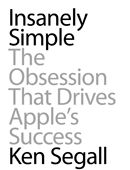 simplicity — how you protect an idea from the beginning to the end — can be applied in any business.
In the travel industry you’re selling a product where people buy one thing versus another because it’s more attractive to them in one way or another. How people find the information they need to find, and the attractiveness of one offer or product over another — these ideas are born inside the travel industry much as they are born inside of Apple, where there’s a group of people trying to come up with interesting ways to solve problems or give people new opportunities.
So it’s really about how ideas are created, and how they are protected — the process by which an idea travels from its inception to something that is out in the world.
It doesn’t have to be an iPhone or a product you can hold in your hand. It’s about the things people come up against when they shop for anything, whether it’s for a vacation or from a hardware store. There are ways to come up with interesting ideas that appeal to a certain part of what’s built into every human being, which I propose is this love of simplicity.
So the reason simplicity is so powerful is that it speaks to something innate in human beings?
I just put together a vacation, and spent many late nights clicking around all over the place trying to do it. There are many frustrations built into that process.
One of the principles Apple proved is there are an awful lot of people who don’t’ want to wade through tons of information. They want to see some really good solutions that are easy to recognize and easy to understand and well supported — like the Genius bars in the Apple stores — and they’ll be more than happy to buy them. People who want simplicity want to understand what you’re offering, so make it easy for them to get answers to their questions, make it easy for them to buy.
I’m sure these things are not news to anyone in the travel business. But they are also not news to anyone in the computer business, and yet if you look to the sites of a lot of the big companies you’ll find they can be extremely confusing compared to Apple, because Apple followed these principles of simplicity. The other companies tend to think that the more options they offer the happier their customers will be, and that’s just not the case.
COMING UP: Segall’s insights on leadership in an organization dedicated to simplicity, kicking complexity out of entrenched business systems, the application of simplicity principles in the travel industry, and more. Ken Segall blogs about technology and marketing at Ken Segall’s Observatory, and serves up weekly doses of Apple-based satire at Scoopertino.