 This column is called Reality Check. But how do you check the reality of the nightmare that occurred off the shores of Isola del Giglio, a quiet island that, it is said, dips its small feet into the Tyrrhenian Sea?
The diving is so good off the shores of this small island that the number of tourists who may visit is limited by regulation. They come to enjoy the fresh sea air, to envy the former seamen who dwell in the small houses that line the shoreline.
And, as Mayor Sergio Ortelli told the newspaper Corriere della Sera, "Costa ships often pass close to the island."
The locals and a few tourists were standing on the jetty where a stone tower, built to spot pirate ships approaching from the open sea, has stood for hundreds of years, watching the Concordia sail by.
Down below, the pristine waters that lap against the shoreline are said to be among Italy's finest dive sites, enhanced by two or three shipwrecks below the waterline. Their captains didn't have the benefit of the electronic navigation on an ocean liner launched only five years ago.
But then it all went wrong, and we grieve for the victims. This is a tragedy not soon forgotten, and we will all be changed by the fate of the Costa Concordia.
I was awakened in the middle of the night to be told CNN was reporting that a luxury ship had gone down. I have clients sailing such ships in every corner of the world, and I could not fathom what had happened.
As they always do, the media reported it was a "luxury cruise ship." The notion of one-percenters hanging on for dear life is imagery that TV reporters cannot resist. There is nothing to be gained from saying that this was a cruise for mostly middle-class vacationers.
I do not know what possessed Captain Schettino to get so close to the shoreline. I do know that he is not the first captain to try to be a good ambassador of his line, his crew and his flag. Whatever the courts determine, Captain Schettino was not out on a joy ride. He was trying to be accommodating, and he made some dreadful errors.
Was he trying to do a "cruise by" so that the ship's head waiter could wave to his family ashore? Was he trying to say hello to a former Costa admiral who lives on the island?
Or was this done for the benefit of the mayor, who had sent thanks to the line previously for the captain's efforts to entertain Giglio's tourists?
I have been on ships when captains, against company rules, have navigated routes that sail extremely close to islands. The last time it happened, some folks in an upper suite had asked our captain to get "as close to Stromboli as possible."
Years earlier, I worked for a cruise line whose captain ran one of our ships aground sailing out of Acapulco. He had wanted to get close to land to show his wife, who was cruising with him, the Acapulco cliff divers. No loss of life, but that one cost many millions to repair, not to mention several weeks of lost revenue.
Captain Schettino came to Costa Crociere in 2002 as, ironically, a safety officer. And he did what captains do. It might have something to do with ego. When you have a Ferrari, you want to show it to your friends. You want to show them what you can do with such a marvel of machinery. What must go through the mind of a captain in charge of a $400 million cruise ship? Is it really surprising that he'd want to demonstrate his ability to maneuver this huge vessel? As the London Telegraph reported, the local prosecutor, Franco Verusio from nearby Grosseto, is claiming "there was someone in particular that he wanted to signal."
I won't speculate on the facts. It is far too early to know and, quite frankly, the grief for those who died and for our industry is still too raw to lay blame.
The initial reaction of agents I've spoken to is muted. Few if any cancellations are being reported as this is written. Carnival Corp. stock took a hit, but its guests are not abandoning the company or its outstanding fleet of spectacular vessels. Agents report getting questions about the relative safety of large ships and the portrayal of the Costa crew as being poorly prepared.
We are on the brink of a possible ecological disaster that could do for Costa what the Gulf spill did for BP. Already, as the ship heaves in seeming death throes, its full load of heavy fuel is cause for anxiety.
But even with no evidence of leaking fuel, the president of the Italia Nostra conservation organization has proclaimed that "these monstrous floating cities pollute the scenery with their very presence."
The fishermen of Sorrento fought the big ships successfully for ruining their fishing nets. And now the megaliners are relegated to Naples. I think we can expect environmentalists in Italy to take the fight to the cruise industry. And if the fuel can't be extracted successfully, we could see new shipping restrictions that some lines will find it difficult to swallow.
But even now, the Concordia disaster raises serious questions that I suspect our industry will be addressing for at least a decade: Are these ships too big to evacuate at sea? And are crew training standards sufficient?
The trends are clear. Ships are getting bigger, some carrying 7,800 souls. The draft on some vessels has been reduced so tenders are not necessary. The ships go to more and more exotic ports, where rescue and medical facilities might not exist. And the ships are getting taller as lines stack onboard-revenue drivers higher and higher in the structure, which could result in diminished stability.
I am most concerned about crew training. The officers are knowledgeable, but what of the deck crew who play a pivotal role in an onboard emergency? Your waiter might be directing your group at muster. I'd like to think he is as well trained as a Delta flight attendant. But I know he isn't.
Then, of course, there's this: We are recognizing (celebrating is not the right word) the 100th anniversary of the sinking of the Titanic this year. Wouldn't one think that in 100 years, someone would have come up with a faster way to get people off a sinking ship? The Concordia's passengers still had to go to their muster area and hope the crew had not abandoned their stations and were familiar with the operation of the lifeboat-launching equipment.
My website has been receiving requests from passengers booked on megaships who want to know if we think they are as safe as smaller ships. If the crew knows your name, will they be more effective if they have to rescue you? We are all going to be addressing that issue, and the media will make certain that the Concordia does not stray far from our minds. The photos of that lovely lady lying on her side struggling to right herself while all of Italy prays for her survival is just too much for the cameras to ignore.
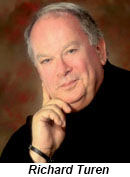
Contributing editor Richard Turen owns Churchill and Turen, a vacation-planning firm that has been named to Conde Nast Traveler's list of the World's Top Travel Specialists since the list began. Contact him at [email protected].