 When I entered this industry, umpteen years ago, my goals were fairly straightforward. I needed to get people safely from place to place. Generally, they told me where they wanted to go, and I knew which buttons to push to get them there. But then, along the way, something happened to my rather clear job description.
Clients, I observed, were making a lot of wrong decisions, and I began to become uncomfortable with this whole "travel agent" thing. I didn't like robotic reservations, and I started to observe a whole new breed of travel agent. I decided I would get to really know my products well so I could do more than book travel. I would advise travelers.
So, like many of you, I made a decision to complicate my life. I took on a new responsibility.
Unfortunately, the "products" I was selling were countries and cities and in-between places. So I made a decision to know the world. That is, of course, an impossible feat on any level.
But then I realized that it was no longer enough to know the geography of the world. To really serve my clients well, I would need to know the innkeepers on the world map by name. I would need to tell them my clients were coming.
Soon after that, I realized that knowing the geography of the world and having a working relationship with every important G.M. on Earth was not nearly enough. My clients started to depend on me to be a meteorologist. I had to know months of maximum rainfall and heat indexes from Alaska to Abu Dhabi. It was expected.
It soon became clear that arranging travel in foreign lands properly would require a deep knowledge of the best restaurants in cities around the world. But it wasn't enough to know the names of the restaurants. I quickly realized that my clients would need to know what dishes to order to get the most out of the experience. This made me take on the compilation of a guide to every top restaurant as well as more reasonably priced local discoveries in destinations around the globe. I needed to become a walking Zagat guide.
Some of this started taking its toll. I had to read more and more. I was working nights and weekends just to keep up, and it still wasn't enough.
Ten years ago, I realized that my clients wanted to read books about the destinations they would be visiting. I still love books; I love touching them and cleaning the covers. I use my Kindle as a coaster for cheese plates. So I took on the job of knowing the best travel books for every major destination in the world.
That turned quickly into apps, because my younger clients need to know I speak at least a few words of their strange language.
I started assigning myself the task of reading virtually every computer magazine published in America. I went Apple at home and PC in the office because Mac users like to get their correspondence from other Mac users. If you respond to a Mac user on a PC, you might as well include your AARP number in the email.
I had become a geographer, a meteorologist, a tech nerd, a book reviewer, a restaurant critic and a hotel maven. That was when I realized that my Mac and PC clients needed to have me provide a content-rich website experience of the kind that would be updated daily. I wanted to be a good adviser, I wanted to meet their needs, so I took on the challenge.
And you know what? I was feeling overwhelmed and overworked, but I felt that I was serving my clients well.
Then I opened the December issue of Conde Nast Traveler, and everything fell apart. I realized that I had overlooked one of the most important responsibilities a travel adviser has to his clients. I have not advised them how to smell when they travel.
The article featured commentary by Chandler Burr, who, it turns out, was previously the "scent critic" for the New York Times. I never knew such a journalistic position existed.
The point made in the piece was that certain scents repel and attract in lands abroad. And I suddenly realized that this is a whole new subject I had to master to be a credible adviser.
I learned from Burr that when traveling in South America, for instance, clients need to be advised that they should wear "whatever your dad wore in the 1950s." This would include Old Spice for men. Shalimar for the ladies. Heavy on the fruits.
When in France, he reports, men are advised to wear Kouros, "which smells like body odor and French truckers." For ladies, something strong, earthy and "dirty" like Vetiver by Guerlain. The French, the former Times critic advises, like their women to smell "like De Niro in 'Raging Bull.'"
I started to think how many clients I've sent to France without sharing this important information. I have been a failure. I am an incomplete adviser.
The Chinese, Mr. Burr explains, can handle florals, citrus or fruits as long as they are light, while the Japanese like scented minimalism with nothing heavy. They most dislike heavy florals and anything that smells of smoke.
In the Middle East, travelers should bring something dark and heavy with elements of moss or the woods. For ladies visiting Dubai, Burr recommends Annick Goutal Encens Flamboyant.
Sad to report there is, apparently, no country on Earth in which the wearer of Britney Spears' new fragrance has a tactical scent advantage.
How one should smell is a matter of tradition, preference and national pride, and I suppose savvy travel advisers now have to add mastery of this rather complex subject to their repertoire.
A few other examples:
- Travelers to Brazil, for example, should be aware that fragrances for infants is big business. South America is the only place on Earth where babies are properly scented before going out in public.
- In much of Africa, the wearing of any type of cologne or perfume might call attention to the fact that you are from out of town. While on safari, I will be advising my clients that, in the bush, the only acceptable fragrance is one that smells like rain.
- In Ethiopia, it is believed that the best scent on Earth is that of cows, while the Dogon of Mali would be most impressed with any woman who shows up redolent of the smell of onion.
- One of the more interesting scented travel experiences can be found in the more remote stretches of the Amazon region, where more than 50,000 Avon ladies sell the product line literally hut by hut. They exist even in those villages so removed from civilization that they can be reached only by canoe.
Travel agents who just take orders, one could argue, are the industry's high school graduates. But there is college for those who seek to be destination consultants, and graduate school for those who wish to become trusted advisers. It all has to do with the years one is willing to devote to one's craft.
But it is a life filled with the frustration that we can never know even a small portion of what we really need to know. So we press forward, always reading, always adding courses to our curriculum. It just never ends, and you never go to sleep thinking you have completed your work.
I am still not sure how one should smell when visiting Canada, so I still have work to do tonight.
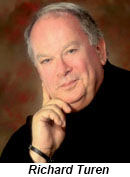
Contributing editor Richard Turen owns Churchill and Turen, a vacation-planning firm that has been named to Conde Nast Traveler's list of the World's Top Travel Specialists since the list began. Contact him at [email protected].