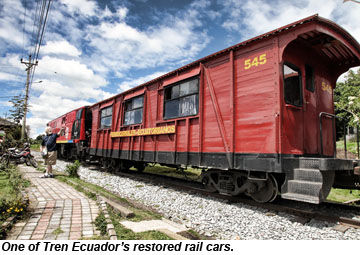
 The Tren is making a comeback in Ecuador. From a spruced-up station south of Old Town in Quito, restored train cars sway and weave through the backstreets of Ecuador's capital, heading south past patchworks of gold and emerald green farmland that stretches up the slopes of the Avenue of the Volcanoes.
Ecuador's railroad slipped into oblivion in the 1970s when transportation patterns shifted and government investment dwindled; floods caused by El Nino later wiped out whole stretches of track through the Andes Mountains. But under current President Rafael Correa, the government designated the railroad as a historical treasure in 2008, and the reconstruction began.
Several portions of the route that once ran between Quito and Guayaquil are currently open; visitors can include a Tren ride with a tour of Cotopaxi National Park for views of the world's highest active volcano, with a lunch stop at a nearby hacienda. Rail service, primarily aimed at visitors, will be completed between the country's two largest cities in 2013, according to Slav Ivanov, Tren Ecuador's marketing manager.
Pictures of the train's glory days, when riding atop train cars was as popular as sitting inside, decorate the walls of the Quito station. The train cars are old-fashioned, but the seats are comfortable, and the views get better as the city's industrial warehouses fade into peaceful pastures. Instead of cross bars and flashing signals to halt traffic along the route, young men on motorcycles ride ahead of the train warning vehicles, pedestrians and animals to clear the tracks for the slow-moving train.
After a two-hour ride, passengers disembark at the El Boliche station, where musicians in native costumes play lively Ecuadorean music. Snack plates with an ear of corn, lima beans and soft cheeses are served along with cups of rich hot chocolate. Cotopaxi is a short though jarring drive from the station; visitors can stop at a small museum, sample regional coca tea and view the volcano from an overlook.
Cotopaxi was shrouded in clouds during most of our visit. But the sun was warm as we hiked through a mountain meadow strewn with tiny wildflowers and crossed by clear blue streams. The 45-minute walk was exhilarating, and we were rewarded with a momentary glimpse of the snow-topped volcano as we climbed back into the van.
Lunch is just one highlight of a visit to Hacienda San Agustin de Callo. Among the country's most important archaeological sites, the hacienda was an Inca palace. A general who later became president of Ecuador in the early 1900s purchased the hacienda, which is now a working farm and an 11-room bed-and-breakfast run by his granddaughter, Mignon Plaza.
Rich, creamy locro (potato soup) is served in a dining room whose volcanic stone walls date to before the 15th century. Plaza delights in sharing the hacienda's -- and the family's -- controversial history, along with her locro recipe.
After a dessert of Ecuadorean fruits, visitors are surprised by a small herd of llamas that leap into the hacienda's flower-filled courtyard on cue. Though primarily interested in the carrot slices provided by the hacienda staff, the inquisitive creatures are quite amendable to being petted and photographed.
For more information, contact Adventure Associates in the U.S. at (800) 527-2500 or visit www.adventure-associates.com.