Agents and travel management companies that handle government travel predict that votes in Congress last week to cut and freeze travel spending by government agencies for five years could have a significant impact on their businesses.
The actions in Congress appear to be backlash from the scandal over the General Services Administration’s (GSA) excessive spending on its Western Regions Conference in 2010.
Measures passed by the House and the Senate would cap travel spending by government agencies at 80% of their 2010 level through 2016. The two versions were not identical, however, and must still be reconciled before they can become law.
Fallout from the scandal was already apparent in the industry last week when the Global Business Travel Association (GBTA) canceled its National Travel Forum planned for June 4 in Phoenix.
That forum, which the GBTA bills as the “largest and most important government travel event of the year,” brings together the GBTA and federal agencies, including the GSA, to collaborate on education programs for government travel specialists.
The GBTA said that it had been notified by the GSA that it was no longer able to support the event.
In a letter to the forum’s exhibitors, attendees and sponsors, GBTA President Mike McCormick said the GBTA “has no choice but to postpone” the National Travel Forum, even though he said no government funds were used to create it.
“GBTA staff members and volunteer leaders from the GSA have spent countless hours developing the [forum] program together,” McCormick wrote.
“And although we at GBTA firmly believe that there is no more appropriate time for government travel professionals to learn cost-cutting strategies from top corporate travel managers, hear from business and academic leaders, build key relationships with industry suppliers and reinforce ethical behavior standards, we cannot hold this important forum without GSA’s participation.”
The House and Senate actions would also set restrictions on government agency participation in meetings and conferences, including a requirement that “no agency may expend more than $500,000 to support a single conference.”
 After the disclosures about the GSA event in Las Vegas, these provisions were added to a pending measure called the Digital Accountability and Transparency Act, or DATA Act, which deals generally with the topic of standards and procedures for reporting federal expenditures.
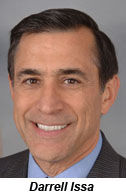
Rep. Darrell Issa (R-Calif.), a key sponsor of the bill and the chairman of the House Oversight and Government Reform Committee, said on the eve of the House vote, “Now, more than ever, the American people demand real accountability of how their tax dollars are being spent. It’s clear from our investigation into GSA’s lavish conference spending that accountability and increased transparency is needed. Through the bipartisan DATA Act, we can improve our oversight of federal funds by mandating clear, consistent reporting standards.”
Travel management companies (TMCs) with significant government travel business said the spending freeze would negatively affect their business.
“This will create a loss of business for us,” said Goran Gligorovic, executive vice president at Omega Wold Travel, where half the business is government travel.
Gligorovic said it would not necessarily mean a 20% cut in their government business, but he said it was too soon to tell what the impact would ultimately be.
“The corporate world tightened their budget and now the government is doing it,” he said. “This will be a hardship for both TMCs and for them.”
Gligorovic and other government TMCs said that this would add to recent cuts in government travel budgets due to directives passed toward the end of 2011.
“We’ve already seen a lot of government agencies adjust travel downwards,” he said. “Some as much as 20% already.”
Arthur Salus, president of Duluth Travel in Duluth, Ga., also said there has already been a decrease in government travel since the beginning of this year.
In the last month alone, he said, government travel has been down about 10%, which could be attributed to the GSA scandal fallout.
Salus, the former president of the Society of Government Travel Professionals, said he expected his business to feel the impact of the new law by the end of the year. He said there was no way to know how much impact the cuts would have but that it could result in layoffs.
Duluth handles travel for the Veterans Affairs department, the second-largest civilian agency in the government.
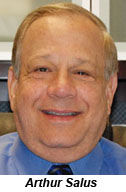 Salus said the GSA scandal in no way characterized the majority of government travel. He added that he had met with top officials with the GSA and that they had assured him the Las Vegas affair was “an isolated incident” within that agency, as well.
Marc Casto, president of Casto Travel in San Jose, Calif., which does not handle government travel, said that there are many instances of companies using a similar lack of financial responsibility as was demonstrated by the GSA and “this will always be the case.”
“That said, there is also a self-regulating aspect as companies must maintain [profit and loss] integrity,” Casto said. “The government, unfortunately, doesn’t have the same pressures.”
On the bright side, Casto said the recent flare-up had not had any noticeable impact on Casto’s corporate travel business.
“None of our clients have expressed any interest in canceling their meetings,” Casto said. “The value for travel events, be it client-related, team-building or training, is still very valuable for companies willing to make the investment.”
Follow Johanna Jainchill on Twitter @jjainchilltw.