Worst infestations
The 15 most bedbug-infested U.S. cities, according to pest-control company Terminix:
1. New York
2. Philadelphia
3. Detroit
4. Cincinnati
5. Chicago
6. Denver
7. Columbus, Ohio
8. Dayton, Ohio
9. Washington
10. Los Angeles
11. Boston
12. Indianapolis
13. Louisville, Ky.
14. Cleveland
15. Minneapolis
A resurgence of bedbugs across the nation is once again grabbing headlines, but there appears to be some good news for travelers: Pest-control companies say hotels, which were among the first places hit when the resilient bugs started their comeback, have made substantial headway against the problem.
"We have definitely seen a downturn in the severity of outbreaks at hotels," said Gil Bloom, president of Standard Pest Management in the New York borough of Queens.
Bloom is also a member of an advisory committee on bedbugs in New York, which tops a new list of the country’s most bedbug-infested cities (see list at right).
"When it really started getting a lot of publicity about six years ago, hotels certainly played into being one of the sources," Bloom said. "But I will say the hotel industry has learned to a great extent, and they have become much more proactive."
Bloom said most hotels and major chains have adopted protocols for dealing with bedbugs, which are notoriously difficult to eradicate. Even hotels that were slow to react have some sort of plan for dealing with the pests, he said.
"Unfortunately, it is also an area where every time someone walks through the front door there’s another potential bedbug carrier," Bloom said.
And if the latest reports are any indication, the potential for bedbug infestation is growing.
 Last month, the Environmental Protection Agency and the Centers for Disease Control and Prevention in Atlanta issued a joint statement reporting that public health agencies across the country had been overwhelmed by complaints about bedbugs in recent years.
The statement called for the private sector and federal and local government entities to work together to research and combat the problem.
A few weeks later, Terminix, a leading U.S. pest-control service, released a report identifying the top 15 cities for bedbug infestation across the country.
The combination of the two reports immediately fueled front-page headlines.
"The good news is they aren’t talking about hotels," said Joe McInerney, who heads the American Hotel & Lodging Association, which for years has been working with the Pest Management Association to educate hoteliers on the best ways to prevent and eradicate bedbug infestations.
The AH&LA notes on its website: "Although the National Pest Management Association estimates there has been an increase in bedbugs in America over the last several years, the increase has had a minimal impact on the vast majority of hotels."
One reason for that, McInerney said, is that as soon as the pests started to reappear in recent years, "hotel companies really jumped on it. They did a lot of additional training of housekeeping staffs. … That way they are able to get it before it becomes a real problem."
Bloom said hotel companies have trained their staff to look for the bugs and have adopted simple programs like bagging sheets before they take them from the room to a laundry cart in the hall.
Many hotels, he said, employ monitor traps, while others use dogs to sniff out problems.
"The first line of defense is instructing housekeeping staff that bedbugs exist, what they look like, what to look for," Bloom said.
An informal poll of hoteliers conducted by the AH&LA on its daily SmartBrief summary of industry news showed that 52.5% of respondents said they had never had to deal with a bedbug problem, 38.2% said they had but were able to quickly eradicate the pests and 9.55% said they had and continue to struggle with the problem.
And in states like Ohio, which had four cities on the top 15 list, exterminators said it was hard to tell if hotels are being affected less than other places.
Chris Brundige, regional manager for Terminix in Ohio, noted that the number of bedbug calls increased significantly in the past two years.
"Compared to residents, a small aspect of our business would be hotels," Brundige said. “If you think about it, if someone has it in a hotel, they can take it to a house, but it can also go the other way. … Then if you look at airlines, if you take a suitcase infested from a hotel stay, they put it in the cargo area. Now they can spread to any suitcase."
Bedbugs were largely eradicated in the U.S. around the time of World War II. But in the past six years or so, they have made a comeback. Experts blame the resurgence on international travelers and the fact that DDT and other pesticides that were most effective against the resilient bugs have been banned.
The bugs do not spread disease, but their bites are painful and are frequently slow to heal. Bedbugs are also hard to spot and are extremely resilient. As a result, the bugs or their eggs can easily be transported from building to building.
Once an infestation sets in, it usually requires about three visits from a professional exterminator to eradicate the pests. Even then, furniture and carpeting often has to be destroyed.
Brundige said the problem goes far beyond homes and hotels: "We are getting calls from people in their homes, in dorms. We are getting them from consignment shops, movie theaters. … In Cincinnati we are getting anywhere between 15 and 30 calls a day."
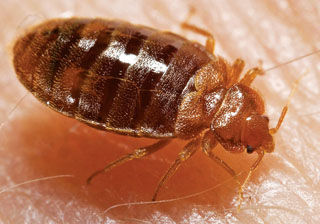
Brundige and Bloom advised travelers to always check bedding and mattresses for small, reddish-brown stains from the pests. They also advised checking the headboard, a favorite place for the pests to hide, and they warned against storing clothing in hotel drawers or storing your suitcase on the floor or anywhere near the bed.
"If I am at all suspect, I keep all my stuff in the bathroom," Bloom said. "I don’t unpack."
Tips for clients
Because of bedbugs’ tendency to hitch rides from one location to the next, high-traffic areas such as hotels, motels, airplanes and cruise ships are especially susceptible to infestations. Terminix and other pest-control experts recommend travelers follow these steps to protect themselves:
• Check headboards, mattresses and box springs for bedbugs and the dark blood spots they leave behind.
• Hang all clothing. Leave nothing lying on the bed or furniture.
• Avoid unpacking clothing and storing your clothing in the hotel’s furniture drawers.
• Store baggage on a luggage rack or in the bathroom, as far from the bed as possible.
• Vacuum suitcases when returning, and immediately wash clothing in hot water.
This report appeared in the Sept. 6 issue of Travel Weekly.