SAN DIEGO — Luxury hotels, which were among the hardest hit by the economic meltdown, are seeing a rebound in demand, and recent data indicate a turning point for the industry as a whole as it comes off its worst year since the Great Depression.
"Shockingly, over the past eight weeks I have had no bad news and a surprising amount of good news," Laurence Geller, CEO of Strategic Hotels and Resorts, told the closing session of the Americas Lodging Investment Summit during its annual meeting here last week.
 "The business is coming back," said Geller, whose portfolio includes Four Seasons, Ritz-Carlton and InterContinental properties. "I’m feeling much better than I was two to three months ago."
The mood among the 2,000 hotel owners, operators, investors and others was one of guarded optimism. The conference theme was, fittingly, an upbeat phrase posed as a question: "Light at the end of the tunnel?"
Most of the show’s attendees seemed to agree that there is indeed a light — and that it’s not a train about to run them over.
Perhaps most encouraging were Smith Travel Research’s year-end numbers, which show that luxury demand increased 5% to 8% in each of the last six months, and is now at levels comparable to demand levels during the boom that drove rates to record highs in 2007.
"As the recovery begins to transform, it’s going to be top down," said Mark Lomanno, president of STR.
But while that is an early sign of recovery for the beleaguered sector, luxury rates fell so far last year that it could be another year before that demand increase translates to rates high enough to give luxury operators the margins needed to turn a profit.
"The rate bothers me a lot," said Lomanno. "We haven’t seen any evidence of significant movement."
John Scott, CEO of Rosewood Hotels, which operates 17 luxury properties around the world, said it remains "pretty cloudy out there.
"This year, demand is up 10%, but rate is down 15% to 18%," he said. "This year is not a bright year. We are really not going to see a lot of RevPAR [revenue per available room] growth until the end of the year, if we see it at all."
Scott said luxury properties have cut their costs to the bone.
"We can all survive a year," he said. "We can all survive 18 months. But if this goes beyond two years …"
The consensus at the conference was that rates would start to recover across the industry at the end of this year.
Still in doubt, however, is the return of group business, hit last year by a double whammy of the recession and a backlash against extravagant corporate spending.
"I think the pain is yet to come," said Mike Shannon, president of KSL Capital Partners, which operates several high-end meetings resorts. "People who canceled have not rebooked yet."
Even if the forecasts hold or improve, the industry has a lot of ground to make up. In the U.S., 2009 was the worst year for the industry since STR began tracking hotel data 40 years ago.
Year-end numbers show the U.S. hotel industry posted a double-digit drop in its key metric, RevPAR, which fell 16.7%, to $53.71. Occupancy fell 8.7%, to 55.1% for the year, and average daily rate dropped 8.8%, to $97.51.
Average daily rates for properties in the luxury category suffered the worst fall, dropping 16.3% for the year.
"Good riddance to 2009, a year which we believe will go down as the worst in the modern hotel industry," Lomanno said.
"The combination of a distressed economy in conjunction with panic pricing drove RevPARs down to levels that were virtually incomprehensible just a year and a half ago," he added. "I look for a significant improvement in the key hotel performance indicators in 2010."
STR is projecting 2010 occupancy to be flat, at 55.1%; ADR to decrease 3.2%, to $94.39; and RevPAR to drop 3.2%, to $51.99.
In every month of 2009, Lomanno said, the U.S. hotel industry sold 5 million to 7 million fewer group rooms than in 2007 and 2008. On the average day, he said, 215,000 fewer rooms were sold.
To set the mood of the conference, Lomanno, PKF Hospitality Research President Mark Woodworth, Dolce Resort CFO Debra Bates and Carlson Hotels Executive Vice President Nancy Johnson opened with a dance routine set to the song "Don’t Nobody Bring Me More Bad News."
 And while most were optimistic that 2010 will be the year of the turnaround, investors are frustrated by the lack of investment opportunities.
Many hotel companies and investors expected 2009 and 2010 to be the years they could pick up distressed properties at discounts. But many banks have been reluctant to take back the keys and have opted instead to work out debt restructuring plans in lieu of foreclosure.
"The theme for this conference should be: optimistic but frustrating," said Mitesh Shah, CEO of Noble Investment Group. "There is a lot of capital out there chasing what should be the greatest investment opportunity."
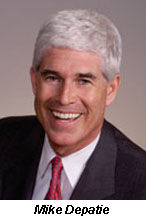
Kimpton Hotels is one of those companies that has been waiting, and waiting. The company set up a fund to buy new properties two years ago, and CEO Mike Depatie said he still had "$150 million burning a hole in my pocket."
"The stress out there is palpable, but banks have been given regulatory approval not to foreclose," Depatie said.