 Sol Melia Hotels & Resorts is not just about rooms.
True, guestrooms are the visible product of the Spain-based hotel firm. Among its seven brands, Sol Melia's inventory stands at 76,000 rooms in 306 hotels in 28 countries as well as its Vacation Club for owners.
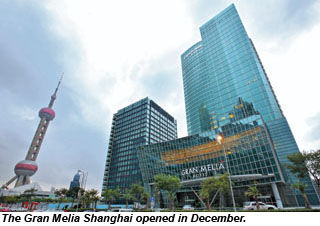
The company signed 20 new hotels in 2009, including three properties in Colombia; acquired the Melia Bilbao, a former Sheraton, and several other Melia properties in Spain; and opened the 700-room Gran Melia Shanghai in December.
Sol Melia will open hotels in Rome and the Greek island of Crete this year. And other properties are still in the pipeline, including several planned for Brazil.
But Sol Melia is positioning itself in other arenas, as well, including its commitment to responsible hotel development with minimal environmental impact.
A change in the firm's leadership structure last year divided up the CEO role that had formerly been shared by the two Escarrer brothers. Their father, Gabriel Escarrer, founder of Sol Melia, remains chairman.
One of his two sons, also named Gabriel, now is in charge of the company's internal strategies and operations, while the other son, Sebastian, has assumed a more external role, helping Sol Melia develop its new "corporate diplomacy" policy, which includes a targeted focus on sustainability policies, community involvement, environmental challenges and cultural heritage.
"The new model is working perfectly," Sebastian Escarrer said. "We are entering relevant forums and organizations and assuming a leading role within the tourism sector."
Sustainability is key for Sol Melia, according to Escarrer. In December, it was announced that the firm was the first to be certified as a "biosphere hotel company" by the U.K.-based Responsible Tourism Institute and Unesco.
To achieve the certification, at least 10% of its hotels had to meet strict environmental and operational standards, with a further commitment to extending those standards to more of its properties.
 Sol Melia now operates 15 biosphere hotels, and eight others have received Green Globe certification.
"Tourism is one of the industries that can bring added value to society and the economy with a minimal environmental impact in countries which develop as tourism destinations," Escarrer said.
The Multistakeholder Experts' panel, which formed six months ago in Spain, includes Sol Melia investors, nongovernmental organizations, environmentalists, consumer associations, Unicef and Unesco.
"This is helping us to see how we are perceived within the industry," Escarrer said.
The firm has strong ties to its travel agents and offers its Group Amigos incentive and reward program for its agent partners.
Sol Media has taken "a new approach to finding out what our guests, owners and stakeholders want and how we as a hotel company are perceived," Escarrer said.
Last year's economic downturn was an example "of the importance of being able to adapt to constant and dramatic changes within the tourism industry," Escarrer said.
One example was the situation in Mexico last year.
"Because of the global financial crises, drug violence and the swine flu threat last spring, Mexico was perceived as a high-risk destination in the minds of many travelers," Escarrer said.
"The swine flu threat had ebbed by November, and much of the crime surrounding the drug issue was not in the tourist areas," he said. "Because we were aware of these perceptions, we were able to quickly adapt strategies to help rebuild the destination in our customers' minds."
The hotel firm's heightened visibility in the global tourism arena included the 5th Tourism Leadership Forum held in Madrid in late January.
Exceltur, the Spanish Alliance for Tourism Excellence, an association of 26 tourism companies in Spain, along with the U.N. World Tourism Organization, organized the forum.
Escarrer, as chairman of Exceltur, spoke in broad terms of the need for the tourism sector "to reposition itself toward a framework that is more competitive and that provides added value to travelers. Challenges for the post-crisis scenario are multiple and cut across public and private sectors."
The forum drew an audience of 2,200 and was attended by 22 tourism ministers, including those from India, China, South Africa, Portugal and Brazil.