The tourism industry along much of South America's west coast was regrouping last week in the wake of two devastating natural disasters: the 8.8 magnitude earthquake that rocked Chile last month hard on the heels of massive flooding in Peru that resulted in a two-month closing of Machu Picchu.
Both incidents resulted in loss of life; there is confusion in Chile over the actual number of casualties. A few people reportedly died in the Peru floods.
The disasters produced immediate logistical challenges for travel suppliers and operators, including cancellations, reroutings and rebookings.
Nevertheless, operators in the region were predicting that the recovery would be relatively fast.
So fast, in fact, that the U.S. Tour Operators Association's meeting in Chile, scheduled for April 14 to 24, is going ahead as planned, evidence that tourism marketers and suppliers on the ground are optimistic enough to showcase the country to top travel industry executives a bit more than a month after suffering one of the largest earthquakes on record.
USTOA President Bob Whitley said his group had met with Turismo Chile representatives who said "the areas we're going to were totally unaffected by the earthquake."
USTOA is hosting 50 people, including 28 tour company representatives as well as members of the media, including Travel Weekly Editor in Chief Arnie Weissmann, on an itinerary that will include Patagonia and the northern desert region.
Numerous operators last week declared confidence in the two countries' ability to rebuild both their infrastructures and their reputations as tourism destinations.
"Chile and Peru will bounce back relatively quickly, especially Peru," predicted Matt Holmes, president of Boundless Journeys, whose South America destinations include the two countries as well as Ecuador.
 "Once the transportation and other logistical issues are straightened out, Peru will pick up right where they left off," Holmes said. "Chile, on the other hand, is a slightly different case. Although some of the major tourist destinations in Chile such as Patagonia and the Lake District were unaffected, tourists will shy away because of the loss of life and the impact that the earthquake had on the people of Chile."
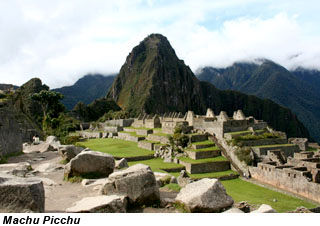
Severe rains and flooding at the end of January took out the only rail line to Machu Picchu, leaving that site closed to tourists until at least April 1, at which time Peruvian officials say the train will be up and running again.
The epicenter of the Chilean earthquake on Feb. 27 was about 200 miles south of Santiago, the country's capital. Santiago Airport's passenger terminal suffered structural damage, but there was no significant damage to the runways. Nevertheless, the airport was closed to all but military operations for two days, after which it resumed commercial aviation with the use of temporary, tented terminals.
The quake hit hardest around the central Chile cities of Concepcion, Talcahuano and Temuco in the northern Lakes and Volcanoes region, a less popular tourist destination than other areas of the country. The tourism destinations of southern Patagonia and Easter Island were not affected, according to Turismo Chile.
The quake could have serious consequences for wine tours, however, as it is believed to have caused hundreds of millions of dollars in damage to Chile's popular wine industry, according to a recent report in the Washington Post.
South American operator Explora said it has suspended its wine program due to extensive damage to the Casa Porta Estate in the coastal Alto Cachapoal Valley, some 60 miles south of Santiago. The vintner is not expected to reopen for 14 months.
Nevertheless, "most guests intend to travel as originally planned" in Chile, said Tom Armstrong, corporate communications manager for Tauck World Discovery.
He said that clients looking for an alternative to Chile were choosing Argentina and, to a lesser extent, Brazil and Uruguay.
"Since this is the beginning of shoulder season in Chile, followed by low season, we expect business to pick back up as it normally does in October," Armstrong said.
Steve Born, vice president of marketing for the Globus Family of Brands, said that what the company has seen with other destinations hit by natural disasters "is there doesn't seem to be a hangover lasting more than one travel season." He added that Globus remained "really bullish on South America," despite the recent disasters.
For Globus, the Machu Picchu closing had a significant impact on bookings, since about 70% of the operator's South America portfolio either includes Machu Picchu or offers it as an extension. The company had more than 300 passengers scheduled to visit the site during February and March. All either were rebooked or offered alternative itineraries.
As for future bookings, operators remain hopeful that the incidents in Peru and Chile won't put South America on the back burner for U.S. travelers.
"Those folks that are traveling to [South America] are more seasoned travelers," said Paula Twidale, executive vice president at Collette Vacations. The return to business in South America "is contingent on what happens going forward. If everything is copacetic, there's no reason not to run the tour, and people will book."
In the end, she said, it will all come down to "how fast that tourist infrastructure is back up and running."