So much of Egyptian tourism is focused on its antiquities: the tombs of pharaohs, the iconic pyramids found plastered on postcards, the thousands of years of history preserved and on display.
But an overlooked part of the country is its experiences rooted in modernity: the locals there today who call the destination home.
I'm in Egypt with Intrepid Travel, experiencing its nine-day premium tour of the country. The destination has long topped my bucket list, perhaps first inspired by my obsession as a child with the 1998 "Prince of Egypt" animated movie, which follows the biblical story of Moses.
And in all my excitement to see the pyramids in person and float down the Nile on a river cruise, I gave little thought to my experiences with the people living in Egypt today. But Intrepid, a tour operator that prides itself on responsible tourism and centering locals in its experiences, arranges for travelers to enjoy dinner with a local Nubian family, providing an opportunity to experience the living culture of the country alongside its preserved history.
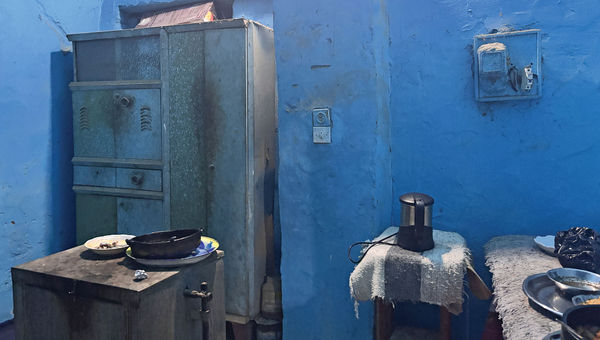
The kitchen inside our host's Nubian home in Aswan, Egypt. Photo Credit: Brinley Hineman
Nubians are an ethnic group indigenous to the ancient Nubia region, which includes parts of Egypt and Sudan. The group differs culturally and ethnically from Egyptians and speak both Arabic and Nubian. Modern Nubians were displaced in the 1960s when the construction of the Aswan High Dam flooded their ancestral homeland and covered their villages along the Nile with the river's water. (The dam was constructed to control the yearly and devastating flooding of the Nile.)
Intrepid works with half a dozen Nubian families that live in Aswan, where we flew after starting our trip in Cairo.
Nubian hospitality
We crossed the Nile from one side to the other on a small boat with Ahmed, who invited us to dine in his home.
Typically, an open-air cruise on a river treats passengers to a cool breeze wafting off the water, but in Egypt, where temperatures routinely soar past 100 degrees, we weren't treated to a soothing breeze but instead hot gusts of air akin to opening an oven door.
After docking our boat on the bank of the Nile and scrambling up it, Ahmed led us through the village to his home. The sun was beginning to dip behind the sand dunes, and the village sparked to life as locals emerged from their homes as the staggering heat dissipated.
Here, in this village, the ancient Egypt that had existed in my mind -- one consisting of powerful pharaohs and family dynasties -- faded and was replaced by the Egypt of today, where cousins play in courtyards giggling beneath the night sky and families enjoy nightly meals together.
The dinner was held in Ahmed's family home. Only one person lived in the home full-time but daughters, sons, cousins, children and extended family members meet in the home throughout the week to spend time together and enjoy meals alongside one another. Nubian family members stay close by, just a few houses away from each other.
Eat like an Egyptian
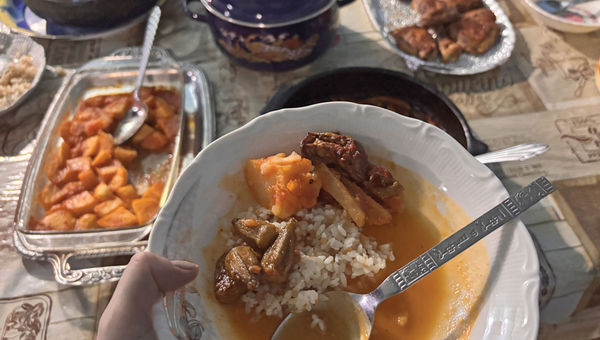
The main course of the Nubian meal included rice, chicken and vegetables. Photo Credit: Brinley Hineman
The traditional home, made of mudbricks and a sandy floor, features a large open-air, semi-shaded courtyard in the center of the residence, which serves as the main location of daily life: it's here that the family dines and relaxes.
The walls are painted a brilliant shade of blue and adorned with hand-painted murals depicting daily life (a woman fetching water and a man riding a donkey), while the lounge space and sitting area are covered in woven blankets and rugs.
Toward the end of the home is a large brick oven and the animal pen, where the bleating of goats can be heard from the second floor, which is where the nursery is located and a room reserved for newlyweds, who traditionally live in the bride's family home for one year after marriage.
Our dinner offered us a taste of traditional cuisine while experiencing an evening of daily life for Nubians. We started our meal with a sourdough bread popular in Upper Egypt, known as Egyptian sun bread or "eish shamsi," and a delicious lentil soup. After that, we noshed on an array of vegetables and chicken.
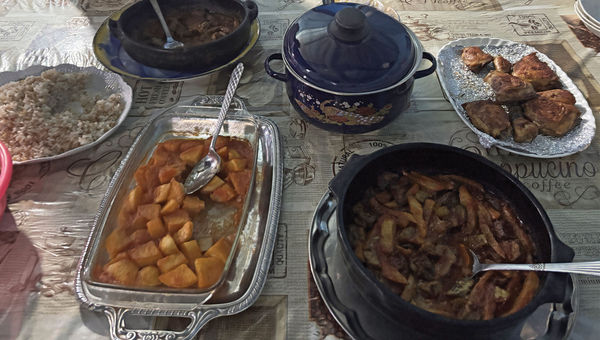
Nubians typically only have meat once or twice a week, or when hosting guests, making our dinner a special treat. Photo Credit: Brinley Hineman
Meat doesn't find its way onto Nubian tables every day. Instead, Nubians typically only eat meat once or twice a week or when hosting guests, making the chicken a special treat. Our vegetables were okra, potatoes and eggplant served alongside rice.
Ahmed told us the best way to show that you like food in Egypt is to eat all of it, with him encouraging us to grab seconds and then thirds. Finally, when we had our fill of the home cooking, local children -- neighbors and relatives of Ahmed -- performed songs for us.
And as night settled over the village, we departed, with the group of children eagerly waving goodbye.