Snapshot: Riding the wave
 A majority of respondents to Travel Weekly's online survey, 58%, indicated that they believe Wave season promotions should be extended this year. (Click the image above to view a graphic of key findings from the survey.) Here's a sampling of promotional offers from Wave 2012:
MSC Cruises
"Upscale Upgrade" promotion offers MSC Yacht Club accommodations to clients booking a standard balcony suite.
Norwegian Cruise Line
Balcony and suite upgrades for Alaska and Hawaii cruises and 50% reduced deposits.
Regent Seven Seas Cruises
Business-class air upgrades for $499 each way on transatlantic flights, valid on certain Europe cruises. Clients in penthouse and top-category suites receive free business-class air upgrades.
Royal Caribbean International
Free "romance package" with any 2012 Europe cruise; includes one bottle of sparkling wine, roses and chocolate-covered strawberries.
Seabourn
Shipboard credit of $1,000 for premium suite bookings; free pre- or post-cruise hotel stays; up to 50% off published fares; suite upgrades.
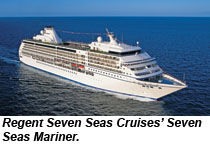
Source: Cruise line websites or promotion statements issued to media
If there's one thing most cruise sellers and cruise executives agree on, it's that at the outset, Wave 2012 had the potential to break records.
The conditions were ripe thanks to an improving economy, pent-up demand, a bevy of newer ships and aggressive consumer marketing campaigns by the major lines.
Instead, the Jan. 13 Costa Concordia accident in Italy threw the industry into a tailspin; almost overnight, Wave season went from a 40-foot crest to a choppy swell.
But at least there is a swell, and that's what agents and cruise executives are focusing on.
For many agencies, the brunt of the year's business traditionally is deposited during Wave season, which begins after Jan. 1 and continues until mid-March.
The ramifications of the Concordia accident vary widely by agency, with some retailers saying the effects were minimal and others pointing to significant losses in business, mostly from first-time cruisers who balked after seeing photos and videos of a chaotic evacuation when the Costa ship plowed into a rocky reef off the coast of Italy and began taking on water.
"I have been selling cruises for over 20 years and have seen the ups and downs of Wave season," said Elisse Gaines, an outside agent with Fort Lauderdale-based Cruise.com. "This year in particular started off with a giant Wave. I did many, many cruise bookings [in early] January, much more than last year at that time. But when the Costa mishap happened, suddenly I got eight cancellations."
Five of those were international clients who had never cruised before and who had booked a cruise on Norwegian Cruise Line's Norwegian Epic in Europe this summer, she said.
"Another was booked on Oceania and [also] was a first-time cruiser who got scared to death no matter how I tried to change his mind," Gaines said. "My steady repeat clients did not have any fear about cruising, but the new clients were terrified."
Gaines said that although she has a strong following of longtime, repeat clients, "I'm having trouble this year closing new business."
The cruise industry's challenges seem to have created a boon for other products, said Dwain Wall, senior vice president and general manager of CruiseOne and Cruises Inc.
"From Jan. 1 to Feb. 1, our land bookings were up 34%," Wall said. "Our agents say the clients are first-time cruisers hesitant to book a ship."
A temporary setback
The year is young, say cruise executives, who firmly believe the booking slowdown following the Concordia accident is temporary.
"It took some of the wind out of the industry's sails -- and its sales -- but we are on our way to recovery from this episode," said Rick Sasso, a 40-year veteran of the cruise industry who now is president and CEO of MSC Cruises USA.
 "Overall there were very few cancellations after Concordia," said Sasso, who previously held executive positions with Costa Cruises and Celebrity Cruises. "That tells me it's the first-time cruisers who didn't book. We also were coming off of a very aggressive fourth quarter, when bookings were brisk and running ahead of pace, so it could be that those earlier bookings created a kind of vacuum in the first quarter of this year. Before Concordia, Wave was looking very promising."
Cruise executives across the board agreed with that assessment.
Richard Fain, chairman and CEO of Royal Caribbean Cruises Ltd., told Wall Street analysts earlier this month that the company had "great pricing momentum coming into this year. The economy was showing strength. Even in Europe we were expecting higher yields."
Fain said booking volumes dropped significantly in the immediate aftermath of the Concordia grounding, then began rising toward the latter half of January.
Like Sasso, Fain said cancellations were not a factor and he expected no long-term impact on bookings for his company's three U.S. brands: Royal Caribbean International, Azamara Club Cruises and Celebrity Cruises.
Those observations and predictions were almost identical to investor guidance issued just days earlier by Carnival Corp., which owns 10 cruise brands, including Costa Cruises. Following the Concordia incident, bookings dropped by 20% for the Carnival brands and by a higher, undisclosed percentage at Costa. (Costa Cruises Chairman and CEO Pier Luigi Foschi was quoted Feb. 12 in an Italian publication as saying that bookings dropped by 35%.)
Norwegian Cruise Line CEO Kevin Sheehan also reported that his company "started the year off strong," adding, "We did see a slowdown in bookings vs. earlier in the year, following the tragic [Concordia] incident. However, bookings have since regained traction with each week that goes by."
Sheehan added that Norwegian is selling cruises at higher prices than it was at this time last year.
CruiseOne's Wall was among those who suggested that first-time cruisers were probably more likely to book through a cruise line's reservation center or website and that the drop in those direct bookings could be what drove down the overall volume.
"There is a dichotomy between what the major lines reported and what we saw, because our cruise bookings year-over-year are up about 6%," Wall said. "That's about where we expected to be at this point. My gut tells me that they just have a higher level of direct bookings with first-timers. It's one possible explanation."
Wall, too, said that Wave "started out with a real bang" and that CruiseOne and Cruises Inc. didn't start to see softness in the market until about a week after the accident.
"But since then, we have seen demand return," he said. "What we don't know is how much demand didn't return, because you can only measure what you're selling."
The safety question
Like Cruise.com's Gaines, Joe Matwa, president of Richmond, Ill.-based Now Voyager Cruises and Tours, said the Concordia incident spooked several of his clients who were set to book Mediterranean cruises this year.
"They've called and expressed concern [about] safety at sea, especially since the Concordia incident happened so close to land," he said. "They're asking, 'What if it was farther out at sea? ... Would the ship's crew be more diligent in operating a ship evacuation?'"
 Nagging questions like that could be responsible for first-timers and others turning away from cruising, at least for the time being. As Sasso put it: "This is going to be an issue for as long as the Concordia stays where it is."
The ship remains half-submerged off the Italian island of Giglio, where salvage crews are working to recover fuel, oil and other contaminants from its holding tanks. Some reports have indicated the ship will remain where it is for several months.
The cruise industry, meanwhile, has taken steps to assuage consumer doubts about onboard safety.
Cruise lines on Feb. 9 embraced a new emergency-drill policy requiring mandatory muster for embarking passengers prior to departure from port. CLIA, the European Cruise Council and the Passenger Shipping Association in England announced the pledge with the support of their member cruise lines.
The new policy, which took effect immediately, addressed the lack of a passenger safety drill when the Concordia departed Civitavecchia on the day of its accident. More than 600 people who had boarded the ship that day had not yet participated in a muster drill. Under International Convention for the Safety of Life at Sea rules, ships must hold their safety briefings within 24 hours of departing a port.
The Concordia was operating within the 24-hour rule, but at the time the 3,200-passenger ship was evacuated more than one-third of its guests had not attended a drill and thus were unfamiliar with the emergency procedure.
CLIA also announced on Jan. 27 that the industry would undertake a Cruise Industry Operational Safety Review, including a "comprehensive assessment of the critical human factors and operational aspects of maritime safety." (See related report, "CLIA's Duffy talks safety and cruising's image.")
Carnival Corp. also has pledged an independent audit of its onboard safety procedures.
Price check
According to Kevin Saxe, vice president of CruiseMagic.com, based in Davis, Calif., hesitancy on the part of frightened clients isn't the only obstacle to booking cruises this year. In his view, a lot of it is about price.
"It seems we have a lot of people kicking the tires, but they're not ready to buy," he said. "We have people who are pricing out cruising to see if it will fit their budget because the media touts the value of cruising."
And while observing that the economy is stronger, he added, "We're just not seeing the deals like we did last year, and that's the difference between a shopper and a buyer."
Customer leads are about where they were at this time last year, Saxe said, but clients "keep asking where the deals are."
He said the megaships are "pricing out at a premium," and "people are sitting on the sidelines waiting for the real deals to hit."
But the cruise lines are not inclined to cut fares other than for very selective, tactical promotions.
During its earnings call with analysts in early February, RCCL executives indicated they planned to stay the course on pricing. Given the uncertainty of the market, the company provided a wide range for yield improvement this year: between 1% and 5%.
Royal Caribbean International President and CEO Adam Goldstein said the company had not taken and did not plan to take any significant pricing action. Royal Caribbean operates the megaships Oasis of the Seas and Allure of the Seas.
"We're looking across countries and our products, and we'll apply promotional techniques that make the most sense, such as onboard credits," Goldstein said. "But we're holding our ground on pricing."
 Despite complaints from retailers or consumers, MSC's Sasso said that RCCL's pricing position was right on the money.
"It's very difficult to make a pricing decision against an emergency," Sasso said. "Why create an atmosphere of distressed pricing due to an incident when you know it will slowly recover? Why put yourself at that risk?"
Cruise fares, he said, "are the same as they were in 1985."
"It's still a spectacular value," Sasso said. "It isn't wise to start cutting prices to solve a temporary setback. You deal with it, and you move on."
Recent analyst reports indicate fares have been up moderately or have been flat since the start of Wave season.
Robin Farley, leisure, gaming and lodging analyst for UBS Investment Research, said in mid-February the UBS Cruise Data Tracker found that, for the 2012 cruising season, "prices across the Caribbean have been up moderately for the last two months."
In the Feb. 14 pricing report, Farley wrote that fares to Alaska had been "flattish" since the start of Wave.
"Mediterranean cruise pricing had been relatively flat since a downward pricing adjustment in early November, and we saw a sequential pricing decline last week after a slight pricing uptick in the previous week," she wrote.
Wave action
RCCL's Fain suggested during his financial presentation to analysts that because of the post-Concordia booking blip, Wave season perhaps should be extended this year.
That's an idea that CruiseMagic's Saxe is in favor of. "Yes, Wave season should be extended, and the lines should look at how they are pricing the products," he said.
 Matthew Eichhorst, president of Expedia CruiseShipCenters, said it would make sense for the cruise lines' Wave promotions to "go an extra couple of weeks" this year.
"For some retailers, Wave accounts for 50% of sales for the year," he said, adding that his company "keeps up very aggressive marketing every month, so an extension of Wave wouldn't make that much of a difference for us."
For Expedia CruiseShipCenters, he said, bookings in the early part of February were stronger than in January, after the Concordia accident.
"It hasn't totally settled down, but we're getting through it," Eichhorst said.
Beyond consumers' fear of a catastrophe at sea, the temporary slowdown in bookings can be attributed to other factors, too, said an agent who posted an anonymous comment in a Wave season survey conducted by Travel Weekly. (See related report, "TW survey shows choppy wave," for key findings from the survey.)
He declared that he lost more business from coverage by the consumer media of a norovirus outbreak on three ships in late January and early February than from the spectacle of the Concordia wreck.
For cruise news and updates, follow Donna Tunney on Twitter @dttravelweekly.