For its 30th anniversary issue, Inc. Magazine created a list of 30 books that no business leader should be without. The “Business Owner’s Bookshelf” features well-known classics drawn from more than 70 years of management writing from How to Win Friends and Influence People to Good to Great and beyond. Green to Gold (Yale University Press, 2006), co-authored by Andrew Winston and Daniel Esty, is on the list.
The book has been published in seven languages and is considered one of the leading examinations of the positive impact sustainable practices can have on a business’ bottom line.
Winston continues to write extensively on green business strategy, including a weekly column for Harvard Business Online, and he is regularly tapped as a globally recognized source on green business in major media, including The Wall Street Journal, Time, BusinessWeek, The New York Times, and CNBC. His newest book, The Big Pivot, is scheduled for publication in early 2014. Founder of Winston Eco-Strategies consulting firm, Winston is a sort of  practical evangelist for the benefits of going green, with experience rooted in the realities of the corporate world. His clients have included Bank of America, Bayer, Hewlett-Packard, Pepsi, Boeing, and IKEA.
Travel Weekly PLUS Editor in Chief Diane Merlino caught up with Winston for an extended telephone interview on the practical implementation of sustainability in the travel industry.
Merlino: You’ve made the point that implementing sustainable business practices is unavoidable based on a variety of pressures from both natural forces and key stakeholders. Yet many businesses have not taken any steps to do so. Why not?
Winston: I don’t think there are many companies that have done nothing. They may not realize they’ve done something that would be called green or sustainable; they haven’t looked at it that way or defined it that way themselves. But any company that’s spent any amount of time trying to reduce their energy use or reduce their waste or cut back and save money through what people technically call eco-efficiency is doing green, maybe despite themselves.
The companies that make a point of it, that really focus on it, discover that there’s far more to be done and far more opportunities than they thought possible before they got started, and they save far more money. But everybody’s doing it to some extent.
Why don’t more companies take a broader agenda or get more aggressive about this? There are a lot of hurdles, but the biggest hurdle remains a misperception that a green program will just cost money.
Merlino: Why does that idea persist — that implementing sustainable business practices will result in nothing more than an expense?
Winston: There are good reasons for that misperception. A lot of green started as compliance with the law, and there are still a lot of things that fall into that category.
Merlino: One example of that in the travel industry is local regulation of waste disposal by cruise ships in Alaskan waters.
Winston: And cruise lines could say, “Well, now we’ve got to implement new procedures to adhere to those regulations, and that’s just going to cost us additional money.” But a larger view of green — what’s fundamentally at its core — is doing more with less. It’s figuring out a way to achieve the aims we have in a business or in society by using greatly reduced resources.
Merlino: How would that core concept play out in the real world?
Winston: You could take that example of restrictions on waste handling by cruise lines and ask what would happen if you simultaneously aggressively reduced the amount of waste generated so that your handling costs went down. Or figure out a way to use some of the food waste to make energy. What if when you brought it to shore you got paid for your waste?
Maybe cruise lines are already exploring this kind of thing, I don’t know. There are different ways of looking at waste, and companies have discovered that something that was a cost center actually turned into a profit center. More and more companies are doing that.
Merlino: Give us an example of a company that turned waste disposal into a profit center.
Winston: General Motors is a great example of a company that went to zero waste-to-landfill in 100 or more of its factories. And now they have made a few billion dollars over the last few years on this haul-away waste, something that used to cost them money.
I think there are surprises in store for companies that take a different attitude about what green can mean for them.
Merlino: So all companies are doing green to some extent, whether they meant to or not, and others are really focusing on it. What percentage of U.S. companies would you say are really focusing on sustainability?
Winston: There’s a slightly different answer depending on the size of the company. For the largest companies — the Fortune 500s, which is where my work is — almost every single one has some form of sustainability program and somebody with the title of Sustainability Officer or VP of Environment or something in that realm.
The leaders of virtually every large company have agreed that there’s value in the agenda of reducing waste, reducing energy use, reducing water use. It’s proving to save them so much money that every large company is doing some combination of things in those areas.
For the broader agenda, maybe a quarter of the largest companies are seeing it in a deeper way: how green can drive innovation and create brand value and take your business to a new place.
Merlino: That’s a pretty small slice of the big guys in the business world. Is that discouraging to you, or is it what you expected at this point in time?
Winston: I’m not discouraged. Over the last few years, people have asked me if there has been a slowdown in 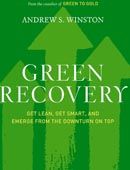 sustainability with the recession. That’s what the second book, Green Recovery [Harvard Business Press, 2009], was about. I don’t think there’s been a slowdown. As I’ve said, virtually every large company has somebody focused on sustainability now, and there’s no CEO of a large company out there saying “This is all BS” anymore. That’s tremendous progress, and that is relatively recent. Everybody’s onboard with some pieces of the agenda.
The challenges that we’re facing globally and locally are reasons I would worry. The evidence of these challenges at every level — and their magnitude — has grown even faster than the companies’ adoption of sustainable practices. So, the target we’re shooting for is moving away from us a little faster than we’re going towards it. That’s where I feel some urgency.
Merlino: There are a couple of fundamental ideas I’d like you to expand on as they’re of particular interest to business leaders in the travel space. What’s the relationship between doing green and cutting costs?
Winston: There are countless examples of companies seeking out ways to reduce energy use under the green banner. In the travel industry, almost every hotel chain has reduced the energy load or water use in their hotels. There’s the famous example of those cards inviting you to hang your towel up and reuse it, or not have your sheets changed every night. That clearly saves money. You don’t have to wash as much. You have lower labor costs with quicker room turnovers.
Those kinds of things are growing, but I think the travel industry needs to be careful, like every industry, because customers are getting savvier about the claims that are made. Overstating is small but common blunder that hotels make. You know, “Hang up your towel, we’re gonna save the world.” It’s great, but it’s not going to save the world.
That’s just a minor example. There are many more initiatives. There are areas in facilities like lighting, heating and cooling, in fleet and distribution, in IT, and in waste, where the payback comes in a very, very short time. Companies have found literally billions of dollars in months. Dow Chemical, for example, has taken $9 billion out of its energy spend over the last decade.
Merlino: Wow.
Winston: Well, Dow is a big company, but that’s still a big number. The numbers are not marginal, and the thing to keep in mind with something as specific as energy spend is that reductions drop right to the bottom line.
At first companies might say, “Energy is only a small percent of our expenditure.” But it depends on what your margins are. If your margins aren’t that high and you’re dropping a bunch of energy savings to the bottom line, you could improve your margins quite a bit. There are surprises when companies really look at this.
Merlino: Any examples in the travel industry?
Winston: In Green Recovery I use some examples from IHG [Intercontinental Hotels Group]. They did a simple program five or six years ago to change a quarter-million light bulbs to a CFL [compact fluorescent] type of bulb. It cost them $400,000, and they saved $1.2 million a year in energy costs, so that was a form of payback.
And IHG has this program, Green Engage, that shares best practices about energy savings across 4,000 hotels. They expected to save up to 25% on energy, or $200 million. That was in 2009, when I wrote the book, and that estimate was based on them having tried out the principles at a few hundred hotels.
Merlino: That’s an encouraging example.
Winston: Cutting energy cost is the easy stuff. There’s always plenty of quick payback. Revenue and brand are the real upside.
Merlino: In terms of costs and revenue, why should travel companies concern themselves with green practices beyond energy savings that reduce costs?
Winston: In the business-to-business world, companies are asking more questions. Your customer base has more interest in what your sustainability performance looks like, and they will use that to direct business your way. That happens more clearly for consumer products, but it also happens in travel with corporate customers.
One large hotel chain sent me a list of all the questions that their hotel owners had gotten in one quarter in RFPs for big corporate events, booking hundreds of hotel rooms. There was every kind of question imaginable about their environmental performance. How much water do you use? How much energy do you use? Do you use renewable energy? Do you use green cleaning products? Can you send us documentation?
To answer these questions you have to have data. You have to know what your footprint is like. You have to be doing something, showing progress. You have to be walking the talk.
Green is quite often a tiebreaker now for corporate business. That’s a phrase I hear a lot from commodity businesses, and I would think hotels in a busy city are fairly commoditized. If you can demonstrate the best sustainability performance at the same price and quality, you can win. It’s a way to protect your current customers and generate new business.
See Andrew Winston’s blog, Finding the Gold in Green.
COMING UP: Andrew Winston on the relationship between sustainable business practices, innovation, and new revenue generation.