The end of cheap oil is ushering in a no-growth economy that will reverse the globalization trend of the last two decades, leaving no country or industry unchanged.
That’s how Jeff Rubin sees it. An economist who worked for CIBC World Markets for 20 years, Rubin is also an  energy expert and a best-selling author who came by his perspectives in the course of his work. His latest book, The Big Flatline: Oil and the No-Growth Economy, (Palgrave MacMillan, 2012), arose from his experience in financing energy exploration.
“The investment bank that I worked for was very active in financing the development of the Alberta [Canada] tar sands, or oil sands as they’re known, and I became very involved in energy,” Rubin told Travel Weekly PLUS. “It was the recognition that tomorrow’s oil supply would be coming out of resources like the Alberta tar sands or shale oil in the Bakken [Oil Formation] in the U.S. or deep water, that led me to believe back around 2000 that we would see steadily rising oil prices, and that would become a dominant issue not just for the performance of the energy sector but for the whole global economy.”
Rubin’s views are not particularly popular in some circles. He says change is inevitable but that the new no-growth economic world order is not all bad news for business. This is the first excerpt in a conversation between Rubin and Travel Weekly PLUS Editor in Chief Diane Merlino.
Merlino: A central hypothesis in The Big Flatline is that the end of an abundant and cheap supply of fuel, especially oil, spells the end of global economic growth as we know it. How did you get there?
Rubin: When you go from oil at $20 a barrel to $115 a barrel today, you change the speed limit at which economies can grow. And that’s as true of the Chinese economy as it is of the U.S. economy as it is of the German economy. In the world of triple-digit oil prices, all of those economies downshift into a much slower rate of economic growth.
There can be different numbers for different countries. For China, which used to grow at 10% a year, that might become 5%. For the U.S. or Canada, which used to grow at 3% a year, that might become 1%. For a Euroland country or Japan, which used to grow at 2% a year, that might become a 0%.
Merlino: How is that connected with the availability of oil that’s relatively inexpensive to access?
Rubin: If you look at the empirical record of the global economy for the last 40 years, virtually every major global recession has had oil’s fingerprints all over it. What’s different today than in past oil-induced recessions that tended to be supply shocks — like the first and second OPEC oil shocks, or the first Iraq war when Kuwait was invaded — is that there is no supply disruption. The world is burning 88 [or] 89 million barrels a day. Never has more oil flowed through the pipeline.
The only problem is we can no longer afford to burn what’s flowing through the spigot. Because the kind of oil prices that are needed to raise one-and-a-half million barrels out of the tar sands, 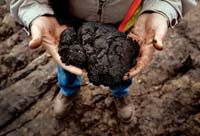 or 800,000 barrels out of the Bakken [Oil Formation] in North Dakota or out of deep water, translate into the same prices that are very difficult for our economies to grow with.
Merlino: So you’re describing a new, impending economic reality where growth, at least as we’ve known it in the U.S. for centuries, will be virtually nonexistent.
Rubin: I’m not saying necessarily nonexistent, but everybody’s going to gear down to a much slower rate. Relative to what we’ve become accustomed to, maybe in big-picture terms it will appear nonexistent.
But let’s back up for a second, because you said “for centuries.” One of the things that we do, particularly in North America, is look at the growth rates we’ve seen since World War II and benchmark that as the norm. And that’s not unreasonable, because what you expect is what you’ve experienced. But I think from any historical vantage point, the growth rates that we’ve seen for the either the U.S. economy or, more generally, the global economy over the last 40 years are atypically high. And I would argue the key reason behind that has been cheap energy. In particular, cheap coal and cheap oil.
That era is unfortunately coming to an end, not because the world will physically run out of oil or coal but because we’re increasingly relying on very high-cost sources of new energy supply.
Merlino: The scenario you’ve described here would require fairly drastic changes for business and governments. I would think it’s fairly unpopular in a lot of circles.
Rubin: Well, yes. The challenge is that by all the metrics of my discipline and profession, economics, the way that we measure our well being — income per capita, consumption per capita, GDP per capita, energy per capita — all of these measures are intrinsically tied to growth. So saying that we’re not going to grow, or we’re going to grow at a much lower rate than we have in the past, by all of those metrics we’re poorer.
At the same time, when we look around at what’s happening in the world today, when we see once-in-a-century storms becoming everyday occurrences and then leaving a $64 billion cleanup bill like Superstorm Sandy, or the billions more paid out for drought relief to farmers in the Midwest, maybe we’re challenged to have some broader metrics.
In Canada right now I’m on tour with David Suzuki, who’s probably the country’s No, 1 environmentalist and an outspoken critic of the tar sands. Our tour is called The Eco Tour because the eco, oddly enough, is the intersection of economics and ecology. From David’s perspective this [slow or no economic growth] is a game changer because it takes the decision of carbon management right out of our hands, which is a good thing — that even our inexorable drive to environmental self-destruction is going to run out of fuel.
Merlino: How does it take carbon management out of our hands?
Rubin: If you look at your country or my country, 2009 carbon emissions fell in the U.S. It sure as hell wasn’t because of anything President Obama did. The Waxman-Markey climate change bill died on the Senate floor. The reason carbon emissions fell in the U.S. was that U.S. GDP wasn’t growing. And that was the case universally for the whole global economy. So, if you’re worried about us cooking ourselves to death, this is a great news story.
Merlino: Is this global economic scenario you’ve described inevitable in your view?
Rubin: It’s happening right now, as we speak. Look at your own economy. By any cyclical standard, look at how anemic the recovery has been, through no shortage of action. You’ve thrown everything but the kitchen sink at it. You’ve got [Federal Reserve chairman Benjamin] Bernanke not only having the interest rates at zero but now guaranteeing he’ll keep them there for the next 10,000 years. You’ve got a budget deficit of over a trillion dollars. By any historical benchmark, both fiscal and monetary policies are in extreme positions. Yet it’s still a very problematic recovery.
Of course, what’s happening in the U.S. is relatively robust compared to what’s happening in Japan and in Europe. The locomotives of global economic growth, like China, are also affected. The days of China growing at 10% are now in the rearview mirror. Today it’s 7% to 8%. I predict China will be lucky to grow 4% to 5% in the future, which will be more than anybody else will be growing.
Economies are being clocked at different paces. The slowdown in China is a different rate than the slowdown in the U.S. or Canada. But relative to everyone’s benchmark five to six years ago, the world economy is in a decidedly lower gear.
Merlino: What’s your perspective on how the no-growth economy will impact business and industry? In your book you actually predict the revitalization of some industries.
Rubin: I think the most dominant theme in business is going to be the whole reshoring phenomena. I described it in my first book [Why Your World’s About to Get a Whole Lot Smaller, Random House, 2009] as coming home — the repatriation of a lot of long-lost manufacturing jobs, and maybe even agricultural jobs as well. Because in  a world of triple-digit oil prices, distance costs money, and the whole idea that you can produce something at one end of the world to be sold at another end of the world now means transport costs go from being trivial to very significant.
So I think the revival of local economies is probably going to be the most dominant theme affecting business. For the last decade it’s been about finding your niche in the global economy. The new mantra for business is reconnecting to the local consumer, that your competitive advantage is in your knowledge of your local market and that triple-digit oil prices have the same impact as huge tariff barriers did 20 or 30 years ago.
Merlino: This dynamic you’re describing dovetails exactly with a rising tide of interest among people to buy local and support local businesses as much as possible.
Rubin: You’re absolutely right. And that’s not just an American phenomenon. You see that all around the world, and you see it in terms of the empowerment once again of the local consumer and the local producer. I think it’s going to change the whole way that we do business. It’s going to bring production, once again, in much closer proximity to the market.
The surprise will be the extent of the renaissance of American manufacturing. And that will have ripple effects because it will change the demand for different occupations, like all of a sudden we’ll need more tool-and-die workers because we’ll be making more goods. I think that’s the plus side of the story.
What’s going to make room in the economy for more manufacturing and more factory workers is we’re going to see a reversal of the last 30 years in the growth of the service sector. The one area of the service sector where we’re going to see the most shrinkage in is the financial service sector, which has basically doubled in size since World War II. We’re probably going to see more steel workers, but at the same time we’re going to have fewer private equity fund managers.
Merlino: So, fewer equity fund managers. Why is that, Jeff?
Rubin: Well, for one thing, just look at the performance of the market. There’s a whole lot less mutual fund sales in a bear market than there is in a bull market. Ultimately, the market is going to reflect the underlying economic reality.
Also, the regulatory pendulum has swung. We’re no longer in the world of ideologues at the Fed like Alan Greenspan who believed intrinsically in market self-regulation. The regulatory pendulum is swinging back, and it’s probably got a ways further to go. Part of the huge growth of the financial services industry was due to deregulation that Ronald Reagan and Margaret Thatcher brought in the 1980s. After the sub-prime mortgage market, we’ve come full circle on that process.
NEXT ISSUE: Economist Jeff Rubin on how the no-growth global economy will change the travel industry.