James Carville wears a lot of hats. Best known as a feisty and relentlessly direct political strategist and commentator, Carville is also the author of numerous books, including It’s the Middle Class Stupid! (Penguin Group, 2012), which he coauthored with friend and political pollster Stan Greenberg.
While the book’s focus is on the public policy implications of the shrinking U.S. middle class, many of the research-based findings it includes are applicable to the business world in general and the travel industry in particular.
Carville is no stranger to the travel industry. He has been the keynote speaker on several occasions at Travel Weekly’s annual Executive Forum, a gathering of top-level travel executives held at Pebble Beach. Last year, a 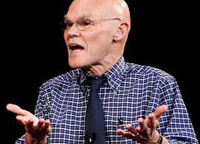 pivotal election year, Carville shared the keynote spot at the Forum with conservative political strategist Carl Rove, with the two men giving separate presentations on separate days.
And, Carville is downright passionate about the need to increase marketing funds to attract more international travelers to the U.S., a project he says he would “love” to be part of.
Travel Weekly PLUS Editor in Chief Diane Merlino caught up with Carville recently for a phone interview. Their discussion has been edited for clarity and length.
Merlino: Why do you say that the middle class is the single biggest problem the United States faces? You’ve done a lot of research and focus groups on the topic.
Carville: Well, yeah, I have, because for 65% of the country we have not figured out a way to get incomes to grow, and the middle class is caught between the horrific vise of flat incomes and rising costs of education and horrifically expensive healthcare costs.
I’m not blaming something that’s happened recently. This has happened since the ’70s. It’s a very difficult thing, and we don’t have a single idea how to solve it, so we tend to push it off or not put the problem front and center. We have institutes to study climate change, but where is the Ohio State University study about the decline of the middle class? How are we able to tell people, “If you play by the rules, if you work hard, you have a chance for a growing income to be able to educate your children, to be able to have some semblance of a humane elderly life?” You know, I’m not sure we can say that right now, and it troubles me.
Merlino: And why should executives and decision-makers heading up travel companies be actively concerned about the decline of the U.S. middle class?
Carville: I’m a pragmatic guy. If you’re running an airline or a hotel group, or whatever it is that you’re doing, you have an obligation to grow your business. I would suggest to you that if 65% of the people — and that’s just a rough estimate; it could be 5% more, 5% less — have income growth, not only are you going to be able to get more people to use your products but you’ll also be able to get a better price for them.
You’re in a brutal pricing situation. I talk to people in the hotel business and the restaurant business here in New Orleans all the time, and they will say something to the effect that, “We’re doing better on occupancy, but we’re still having trouble with price.” Well, if you’re targeting 15% of the people in the country you can do well, but wouldn’t you do much better if you had a way to get a better price for your product? Travel is good for affluent people, but a lot of travel is everyday people or families.
So they [travel industry executives] should care about what happens to the middle class because it’s in their interest. There’s a huge market there. I wouldn’t say it’s an untapped market, because obviously middle-income people travel, but it’s a market that has a lot more potential than we’re seeing right now. It’s in all of our interests to think about this.
Merlino: But, as you mentioned, business leaders are responsible to grow their business, wherever and however they can.
Carville: I’m being very honest here. Yeah, if you work for a publicly held company your first obligation has got to be your shareholders. But where is your growth going to come from in the future?
Population growth is not that great. Even though we’re in a little bit of a recovery — we had good job numbers recently — where is your ability to grow your market into bigger things? When you extract out all of the efficiencies, you still want to be able to get more people buying your product, and at a better price.
If people in the travel industry, or any other industry, said “You know, we need to think of a way that we can grow incomes, give people more disposable income to do things like travel,” then we’ll all be better off.” I think that therein lies the answer.
Merlino: What about other reasons, like humanitarian concerns, for why travel executives should want to develop a stronger middle class in America?
Carville: Well, it’d be nice if somebody said, “I’m a senior travel executive, and I’ve done well, and I want to help middle-class people do better,” but that’s not the way the world works. But if you’re a travel executive, you don’t just live in your own industry. You live in your community, you live with people around you. So your quality of life is better if you see the people around you have better opportunities, they have healthcare, their children go to better schools, they drive on better highways, there’s better infrastructure.
Merlino: You’re clearly passionate about this, James, and it seems to go beyond politics and policy, to values and sort of the fabric and texture of life in America.
Carville: I have a public opinion organization with a friend of mine [Democracy Corps, with Stan Greenberg], and  you can’t go to a focus group anymore or talk to middle-class people where somebody doesn’t just break down crying. They’re having to move back with their kids or their kids are having to move back with them. And couples in their 50s, a lot of them are working four jobs, two jobs apiece. And yet we’re being told that the problem is that people don’t work hard enough. My experience is people really do work hard. Most people do. They work really hard.
Merlino: Regarding the travel industry specifically, at Travel Weekly’s Executive Forum in Pebble Beach last year you said, “I’d like to see tourism as part of the strategy to grow the economy.” You said the travel industry is undervaluing itself, what it can do in this regard. Can you expand on that?
Carville: My perspective is a little different than most people because I live in New Orleans. Normally you would say, “This city is dependent on tourism,” which is true to a point. What I think we’re dependent on is culture, and tourism is part of culture. I think the reason that we’re doing well in terms of tourism is we do well in terms of culture.
Merlino: Interesting.
Carville: It’s the extent that tourism ties itself to something larger. If you go somewhere and see things, and you honor those things, you’re a part of a culture. You go to Italy, you’re part of a culture. You go to China, you’re part of the culture. Tourism is not just an abstract thing. Whatever you do [as a travel industry leader] you’re bringing something together.
We don’t think about that. We think of tourists going to a mediocre type hotel on a beach with kids tee-teeing in the swimming pool. And some of it is just to have fun. Some of life is just pleasure. But I think the definition of the industry itself can be much more expansive.
Merlino: In your keynote at the Forum you also said the industry needs to shift its mentality to see people from other countries as customers rather than competitors.
Carville: We’re trained to look at China as this giant competitor that produces cheaper goods because they have pollution and cheap labor, right? To some extent that’s true. But as opposed to looking at China and saying, as we traditionally have, “What is it that they make that we can buy?” why don’t we look at China and say, “What is it that we can make that they can buy?” The same thing might be true of Latin America.
Why is it that Americans travel to Brazil? Because we always think that’s a tourist destination for us. Gee, if Brazil is an increasingly prosperous nation, where is the Brazilian travel market to the United States? Where is the Chinese travel market to the United States? Hell, maybe Africa will be the exploding new market that’s growing the fastest 50 years from now. My view is we’ve got to quit thinking of people in other countries as competitors and think of them as customers.
Merlino: You’re well known as a master at identifying the heart of an issue and then crafting a snappy message about it that has a lot of impact. A lot of our readers are in marketing. Do you have any insights for them?
Carville: I’ll tell you, there is no one in the Gulf that does not think the BP thing was a massive screw-up. But what people here say, literally to a person, is that the marketing money they gave us helped. That was the big thing I learned.
Why don’t we double what we spend on marketing the U.S. in terms of tourism? When a tourist comes here, we generally get the pick of the litter. When a German or a Chinese person or a Japanese person comes here, we get the most affluent, law-abiding, best-spending people from there. If I was the president or I was the Congress, I would quadruple the tourism budget. There’s almost a direct line between what you pay for marketing and what you get.
I defy anybody in this business to talk to anybody in the northern Gulf that will disagree with that. Talk to any hotel owner, talk to any restaurateur, talk to any tour operator, and they will tell you that the BP thing was horrible, it hurt us, that there were bad, irresponsible people. But I’ll tell you what, the marketing money they gave us really helped. And in terms of the bang for your investment buck, the balance of trade, we can’t do better than to bring foreign tourists in to this country.
That’s one of the things that we’re really behind on. I would love to work on a project to get more people to come here, set up something so we can do that. Because you’re not going to grow your business just getting people from Texas to come to Louisiana, or people from Louisiana to go to Florida, or people from Florida to go to Colorado. Where you’re going to grow your business is getting people from around the world to come here.