It might not happen for a couple of years, but there is little doubt the day is coming when your mobile device will have a super-smart travel app that anticipates your needs while on the road and enables you to take care of all of them easily and in one place.
This OS-based travel button of the future might come from Apple. It might come from Google. It might also come from an airline or from Microsoft. A lot of companies are working on it.
This is the second excerpt from a dialogue between technology consultant Norm Rose and Travel Weekly PLUS Editor in Chief Diane Merlino about the potential outcome of Apple versus Google in the travel space.
Merlino: Give us a quick overview of how Google and Apple compare in terms of the products and functionalities each currently has in the travel space.
Rose: Google has acquired different travel capabilities and built some of its own. The Flight Search capability came from the acquisition of ITA. ITA software had historically been licensed by lots of different companies, basically as an alternative to the GDS. When it started, it wasn’t a complete GDS replacement by any stretch; it was more just a search function of GDS. It’s evolved within Google to be very rapid; they differentiated it by making it very fast. 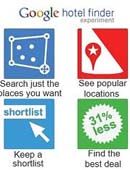 It’s somewhat limited as far as content because it's just doing airline search. I'm sure that's going to change.
The next major product is the Hotel Finder, an internal product that Google created. It's a map-based, location-based way of trying to find a hotel, and it is media-modeled, so it lists the hotels based on advertising preferences. Hotel Finder has an interesting evolution; it's becoming more and more of a mobile tool.
Those are the two core travel engines that exist within Google. Then you have content that was purchased: Zagat, which is mainly restaurant reviews, and Frommer’s, which is guidebook information. I think you're going to see more integration of all these elements into one clean response so it becomes a way to enhance Google’s search capabilities, especially as everything moves to mobile.
On the Apple side, we have nothing other than Passbook out in the marketplace. Then we have the iTravel patent, which covers everything from how you check in at the airport to how you search for local content.
Merlino: So you see Google integrating its travel products in order to enhance search?
Rose: As we see more tablets out there, things will become more integrated. People usually put smartphones and tablets in the same bucket, but there’s a difference. Tablets are much more of a search-and-planning platform, and smartphones are more for immediate, location-based get-me-something-I-need-now, even though there's some crossover with both. This area is going to get more and more advanced and more and more intuitive. Controlling search is a big factor.
Another thing that both camps are going to follow is interacting with your device as a personal assistant. It’s a model that's been out there for many, many years and it hasn't been fully really realized yet by anyone.
Merlino: What does that mean — Interacting with your mobile device as a personal assistant?
Rose: A personal assistant kind of metaphor. For iTravel it’s the Siri integration. I almost was reluctant to say Siri, because now Siri has gotten kind of a bad rap because it doesn't do so many things and misunderstands so many things. But remember, it’s real 1.0 technology.
I think we're going to be looking at much more intuitive technology and much more responsiveness from these types of products, from Apple as well as from Google.
Merlino: What do you speculate might be next in terms of what Google and Apple will introduce in the travel ecosystem?
Rose: This leads to my firm belief that doing smart services is what's going to really change the way that travel goes. So, where those smart services come from has yet to be seen; it could be from OTAs or airlines or travel management companies.
Merlino: What do you mean by smart services?
Rose: I'm sitting in a client's office. My phone knows where I am because of the GPS. It knows my travel itinerary. It knows the traffic patterns that exist between where I'm at and the airport, and it sends me a message saying, “You're going to miss your flight. Here are two other optional flights. Which one would you like? Please choose.”
That is a smart service. It anticipates what you need. Now, it’s not easy to do that. Big data is an important element  here. Trying to analyze everything from your social media patterns and the elements of your travel itinerary and your calendar to all the other things — trying to pull all that together and make sense of it and then deliver a service is not simple. It’s complicated.
When Delta Air Lines introduced the whole concept of knowing if your checked bag is onboard, it seemed like a no-brainer. But it wasn’t easy to implement; otherwise, every airline would have implemented it by now. Delivering even a text-based service like that is challenging. And delivering a smart service through a voice-initiated intelligent assistant, which I think is the ultimate goal that will be realized, will dictate how successful a service is going to be.
Merlino: Who is more likely to introduce that first — Apple or Google?
Rose: Will this actually come from Google? Will this come from Apple? It's unclear. It may come from each of the organizations with a third party.
It's kind of the way TripAdvisor is working with Facebook. Who's driving that? I think both companies are driving it — the idea that you can sign in with Facebook and suddenly everything that is in your Facebook now gets released out to that other vendor, and they can mine that information. Hopefully, people realize that when you do that you're giving permission to allow your Facebook information to be shared with that company.
Merlino: How would that scenario play out in the travel space?
Rose: The same thing could happen here. If there is an integrated solution to deliver these types of smart services that comes from either Apple or Google — or from Apple and Google and one of their software developers — that's going to be a major change. It does have the potential of displacing someone, which could be the travel management company — unless that company drives it.
The fact that Concur has invested in Evature to develop an intelligent mobile assistant shows what their vision is [Editor’s Note: Evature is the developer of EVA, the Expert Virtual Agent.] There are other companies trying to develop this as well, including some big computer companies. It could also come from an airline. Everyone is competing in the same space, trying to become intelligent with what they deliver.
Merlino: Let’s get back to the OS-based “travel button.” You’ve said it’s an inevitable development and would mean a dramatic change for the industry. What would an Apple or a Google “travel button” look like?
Rose: Well, you could say we have it already. BlackBerry licensed the WorldMate model and made it into a travel button. I'm not sure what the status of it is now that WorldMate is owned by Carlson Wagonlit. You could say that TripIt is trying to become that app as well. But it doesn’t do everything. You can't go and change your flight on TripIt; it'll send you to the airline site. TripIt is owned by Concur now.
So there have been some attempts at this. I think that the common theme here is simplicity: Why do you need five different apps on your phone for one trip? How can an [Apple] iOS button improve upon that? If it has access to your [Apple] Wallet information as we were discussing before, and it has some type of enhanced functionality that 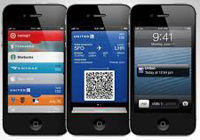 Apple could bring to the party to simplify. Again, Apple's DNA is: How do we make this simpler? Studies have shown there is a certain level of frustration from the consumer on the way online travel works now, and we're moving to a mobile platform to try to enhance that. How can that be simplified?
That’s one element of an OS button. The other element is simply brand and your brand affinity — Google or Apple.
Merlino: How about a prediction, Norm. When are we likely to see an Apple or a Google travel button hit the travel space?
Rose: I don't think we’re going to see an Apple travel button or even a consolidated Google travel button this year. I think we'll see it within four years. Once Google does it, I think Apple will say, “Well, we've got all the patents. We can do it too. But we're going to do it a different way; we're also going to offer something.”
I mean, who knows? Maybe Microsoft with Bing Travel — you don't know what they're going to do. I would never underestimate Microsoft, no matter how far behind they are.
ALSO SEE: Norm Rose on Apple vs. Google in Travel: The Battle is Brewing.