Daniel Burrus describes himself as “a science guy who is also an entrepreneur, and has applied that to forecasting.”
That’s the short version. Over the last three decades, Burrus has gone from teaching biology and physics to launching six successful companies of his own to establishing an international track record as a business strategist, technology forecaster, and futurist.
In his work in the corporate world, Burrus has served as a strategic advisor to CEOs and their direct reports in major companies across a range of industries including GE, IBM, Oracle, Microsoft, DuPont, Google, Toshiba, Procter & Gamble, American Express, Northwestern Mutual, ExxonMobil, and Sara Lee.
He’s also a highly regarded speaker (more than 1,000 keynotes under his belt) and a business author whose six books include Flash Foresight. How to See the Invisible and Do the Impossible (HarperBusiness2011). The book has garnered widespread praise from the business community and its popularity gave it standing on the bestseller lists of the Wall Street Journal and New York Times, among others.
Flash Foresight is based on the practical application of seven principles designed “to help shift us from being mostly reactionary to being anticipatory. To give some insights that are scientifically based so you know how to separate the things that will happen from the things that might happen.”Mastering that, Burrus says, will enable businesses and organizations “to do amazing things and solve seemingly impossible problems.”
You talk about the difference between hard trends and soft trends.
Hard trends will happen, soft trends might happen, and it’s really good to know the difference. Why have you purchased nothing from Polaroid for a long time? Why has Kodak struggled for a decade? Digital photography wasn’t a secret. But those companies saw digital as a soft trend and treated it that way, and it was a hard trend. By separating the hard trends from the soft trends you lower risk and increase your competitive advantage, and the ability to grow your company.
How can you tell the difference between hard trends and soft trends?
There are three drivers of hard trends; one of them is obviously technology. Apple just introduced the iPhone 5. Nobody is talking about it yet, but do we know anything about the iPhone 6 or the iPhone 7? Sure we do. We know the iPhone 6 will have a faster processing chip in it than the iPhone 5, 4, 3 2 or 1. We know it will have more internal memory; they always have more memory.
We have 3G wireless now, and we’re starting to get 4G wireless. Is that it, or can we predict what they’ll call the next one? Yes, it will be 5G. We’re putting this stuff in the Cloud. Is the Cloud going to be full? Of course not, we are going to put even more stuff in the Cloud next year.
Is recognizing hard trends related to the ‘start with certainty’ principle in Flash Foresight?
The common perception is that everything is uncertain. Nonsense. There is a lot that we know. When we look at mobility and the rate of changes there — which are fully predictable and measurable — you can see that over the next several years mobility is going to transform how we sell, how we market, how we communicate, how we collaborate, how we train, how we educate.
This is extremely important for thought leaders in business. Because most of us have been using the word transformation — we’re transforming this or that, I hear it all the time — but what most people are really talking about is faster change. And there is a big difference between transformation and faster change.
What's the difference between change and transformation?
When I was a young guy, decades ago, I could listen to one album per spinning disc, 33 1/3. Then as I got older there was a technological change that came along — and I emphasize the word change here — and I could get that one album on a smaller spinning disc, it was called a CD. There were good benefits to that, not just that it was smaller but it got rid of the hisses and the pops and the scratches on my old albums. So I rebought all my old stuff, and got all my new stuff on CD.
Today I’ve got all of my music and all of my photography and all my videos, and access to the Internet and my emails, on a device that fits in my pocket. That didn’t change how I listen to music — it transformed it.
In that same way we are transforming all business processes. We have more change coming to us in the next five-year period — I’m calling it transformation — than anybody reading this has experienced since they’ve been alive. In reality it represents opportunity.
You say that businesses large and small need to create ‘tomorrow labs’ so they can recognize transformational trends and the opportunities they present. Is that realistic in this business climate?
At some point it’s hard to cut yourself back into growth. If you are in a crisis management mode, you can focus on one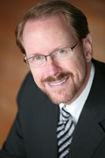 of the ways of increasing revenue and that is to be more efficient, more effective, and to decrease your workforce.
But the other way of accelerating growth is to create new products and services, and new markets and new income streams. That takes a little innovative thinking, and a look at where we’re going. It’s important to spend some time on the future.
What does a ‘tomorrow lab’ look like inside a business?
Tech people are usually busy delivering the current solution, making sure that all the systems in IT are working, everybody knows how to use them, we’re on our upgrade path, and we’ve got a good firewall. And that’s an important job. But where is that group of people looking at emerging technologies that represent new ways of generating revenue and growth, new ways of exceeding customer expectations?
If you’re a big organization I believe it’s important that you officially create a tomorrow lab that’s working on moving the company forward. Maybe it’s a group in IT combined with a group in marketing, combined with a group in sales, maybe even combined with people who are directly touching the customer. They have to have at least some percent of their time put aside for tomorrow lab work to focus on future growth, and where it can be.
What about smaller businesses who might not have the resources to do that?If you’re small or midsized, it simply means devoting some time to your future and to thinking about it. You can put off thinking about the future because you’re trying to survive today, but by doing that you might not be here tomorrow.
I believe that we are all way too reactionary. In the past change came to us quite slowly, at least compared to today, and we could just react to the changes that were occurring. Now changes are happening so fast, and they can put you out of business so fast, that we need to be anticipatory — in terms of opportunities, but also in terms of being able to solve future problems that are fully predictable before they happen.
One Minute, One Thing: Daniel Burrus
[MEDIA_1]
The tomorrow lab sounds like a great idea, but everybody I know in the business world already has a super busy schedule just keeping up with their regular work.
I want to make a point about being busy. Everyone reading this is really busy, and you’re going to be even busier next year. Let me ask a quick strategic question: Were the five top executives at General Motors really busy every day before they went bankrupt? Of course they were. It didn’t help them and it’s not going to help you, especially in a time of transformational change.
You are going to be busy, but now you also have to be anticipatory and strategic. With all the types of innovations in mobility and other technologies, the more you are in a protect-and-defend mode, the quicker you are going to be in trouble. The transformations occurring are hard trends, and that means they’re going to happen whether you like it or not. If you don’t take advantage of the opportunities presented, someone else will.
Editor’s Note: Text 99000 with the message Burrus to receive a PDF article by Daniel Burrus outlining 20 technology-driven trends, and an app that provides access to Burrus videos and blogs.