Five Generations at Work
By 2020 the workforce will experience a historic first — five distinctive generations working together.
• Traditionalists include the 46 million people born before 1946.
• Baby Boomers include the 78 million people born between 1946 and 1964.
• Generation X includes the 50 million people born between 1965 and 1976.
• Millennials include the 88 million people born between 1977 and 1997.
• Generation 2020 (aka Generation C) includes the 41 million people born after 1997.
Source: U.S. Census Data
By 2020 there will be five generations working together, each with different reasons for working and each with distinctively different expectations regarding when, where, and how they do their jobs.
This historic shift in the composition of the workplace is partly the result of people living and working longer, according to Jeanne Meister, founding partner of Future Workplace consulting firm and a columnist for Forbes magazine.
“Individuals we call ‘Generation C’ (for Connected), who are now in high school, will be entering the workforce as a full cohort in the year 2020. That gets us to five generations,” Meister said. “This is the first time in history where  age diversity — having these five generations in the workplace — is a type of diversity that human resource executives have to grapple with.”
The challenges involved, and what employers can do about them, are the subject of a book co-authored by Meister and Karie Willyerd, The 2020 Workplace: How Innovative Companies Attract, Develop and Keep Tomorrow’s Employees Today(Harper Collins, 2010). The authors identify three megatrends that are reshaping every aspect of the workplace including globalization, the use of social technologies inside of corporations, and the workplace expectations of the millennial generation.
Meister discussed how millennials see the work world and what they want from it with Diane Merlino, editor in chief of Travel Weekly PLUS.
Merlino: What is the key difference between millennials and other generations in terms of what they want from an employer?
Meister: Millennials, born between 1977 and 1997, and to some extent Gen X, the slightly older group born between 1964 and 1976, want to work when they want to and where they want to. That means workplace flexibility is a bigger issue or criteria for this group in identifying an attractive employer.
In our most recent research of multiple generations at work we found that 35% of our sample of about 1,189 employees considered workplace flexibility very important, but almost 40% of the millennial generation said it was the top criteria for employer attractiveness. Many managers are really underestimating this; only about 22% of the managers surveyed thought that workplace flexibility was an important criterion with prospective employees.
So workplace flexibility is more important the younger you are. I think that’s because boomers are a pretty obedient generation. I'm a boomer and we may agree with millennials that workplace flexibility is important, but it's not something we're going to go to (the mat) for.
Merlino: But workplace flexibility is a deal killer, so to speak, for millennials?
Meister: Choice is a big factor for younger workers. Younger populations want the choice of where and when to work to meet the company’s goals. And for millennials, workplace flexibility doesn't necessarily mean working from home. Because millennials are a highly social generation, they don't really want to be working from home all the time. They want to be socializing and networking on the job.
Merlino: Are there any companies that have acknowledged this and made any changes in how they do things?
Meister: I looked at two best-practice companies, American Express and Aetna Insurance, in a recent column I did for Forbes magazine. Both recognize the role of workplace flexibility, not as an employee perk but as a business tool that is aligned to the strategy of the company.
American Express said that every year they do a big survey of all their employees and they identify the roles in the company that can roam, meaning they don't have to be in the office every day or that need to be at home. And there are roles where employees they have to be in the office, managing folks. And so it's not a perk where it's like "We're giving this to you, and you can take advantage of it," but there are certain roles where you probably can't do this because of the role that you have in the company. So they're able to somehow work in flexibility in another way.
Merlino: What else do millennials want from their employers and their work experience?
Meister: In our research one of the things the younger generation was really interested in was life skills training, not just role-specific training. This was quite interesting. If you are in marketing, you expect your company to offer training to make you a more effective marketing professional as well as leadership development. But millennials also said they want their employers to offer life skills training, and the number-one area of interest was financial literacy.
Why? Think of the student loans that many millennials carry when they enter a company for their first job. The average is around $24,000. In this country there is a trillion dollars of student loan debt, surpassing mortgage and 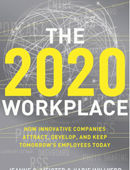 credit card debt. Millennials are very aware that when they get on the job they not only have to do their job but they also have to manage their personal finances because they've got loans to pay back. So they're looking for their employer to help them with financial literacy training. As a boomer that’s something I never thought of my employer helping me with.
They're also looking for their employer to offer them global opportunities. Millennials are a very globally bent generation, and they're looking for language skills and more global opportunities earlier in their careers, and also more opportunities for corporate social responsibility.
Merlino: What are millennials looking for in terms of corporate social responsibility?
Meister: In the book we also cited research by the Cone Millennial Cause group and Net Impact, two organizations that look at millennials and corporate social responsibility. Both organizations found that well over half of the millennials that each organization surveyed want to work for a company whose values match theirs.
The Cone Millennial Cause Study, which surveyed 1,800 13- to 25-year-olds, found that 79% want to work for a company that cares about how it impacts and contributes to society. More than half said they would refuse to work for a company they felt was irresponsible in that area.
Merlino: Jeanne I understand you also got some interesting results in your first study around the question of work-life balance.
Meister: What we found back then, and it keeps playing out to this day, was that the traditionalists and the boomers answered the work-life balance question, saying how important it was to them, but the Gen Xers and the millennials said work-life balance is an outdated term. Work is part of life. Life is part of work. The two are blurring.
We all know this is happening — the blurring of the lines between work and the rest of our lives. For millennials the issue is not the balance that the company is going to allow them; the issue is that they are available 24/7 and they have to create their own work-life integration. It’s not about balancing; it’s about integrating.
Editor’s Note: Jeanne Meister invites Travel Weekly PLUS readers to view a 90-second video on her website, “What Does the Future of the Workplace Look Like?" that covers how five generations will be working side by side by the year 2020.