If you’re hoping for a return to the good old days of relatively predictable cycles of prosperity and recession, you’re waiting for Godot.
The “interlocking fragility” created by the post-2008 global economy, and the immediacy that information technology has brought to every aspect of life, have permanently altered economic patterns, says John Caslione, co-author, along with Philip Kotler, of Chaotics. The Business of Managing and Marketing in the Age of Turbulence.
“There has to be recognition that the heightened level of economic turbulence and the accompanying risks and uncertainties are not going to subside — they are built in now as a permanent part of the system,” Caslione told Travel Weekly PLUS. “You’re not going to be able to just slow down and take a breath. You need to rethink and rebuild your company, including your people’s thinking and how they’re going to deal in the new environment.”
Caslione’s work has given him a broad geographic and historic perspective. He’s founder, chairman and CEO of GCS Business Capital LLC, a global advisory and investment firm focusing on emerging and high-growth markets. Over the last quarter century he’s advised global corporations across a wide array of industries and regions.
In this third and final except of a dialogue with Travel Weekly PLUS Editor in Chief Diane Merlino, Caslione discusses some of the new strategic behaviors businesses need to adopt for success.
Merlino: Why do you say that the unpredictable economy requires companies to expand their stakeholder base?
Caslione: The traditional four stakeholders in any business are customers, employees, management, and the board of directors. But now you’ve got to expand it, you’ve got to cast that net out much further. You have to include tier one distributors, tier two distributors, NGOs, private equity if they’re involved, your banks. Because all of them have access to vital pieces of information that you need to keep your scenario planning, and the resultant strategies, continually refreshed.
A constant flow of information coming from a wide range of different sources will help you to continually tweak, revise, and update your strategy. Different scenarios will be impacted by the information, and then the resulting strategies will have to modified — sometimes in a great way, sometimes in minor ways. But the accumulation over time creates a sizeable change.
You’re also got to flatten the organization, reduce the levels in the hierarchy in order to accelerate and clean up the communication flows going up, down, and sideways. You have to take out all of the buffers and the ‘noise’ that can change the message when you’re going through different layers.
Q: Practically speaking, how would a travel company expand and enhance its stakeholder base?
A: The four I described are the ones companies traditionally pull information from on an ongoing and continuous basis. It’s not enough anymore; it’s just not enough. Now you’ve got to look at anybody and everybody who could have any kind of vested interest in the company — and they don’t even have to be customers.
Right now we’ve got something called an asymmetrical distribution of communication. In the past, whatever companies said 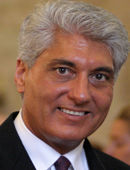 and put out there we believed. Not anymore. Now you’ve got social networking, you’ve got Facebook, you’ve got people tweeting. You’ve got governments being taken down because communication now is not one-to-many, it’s many-to-many. What has to happen is that anybody and everybody that is touching your company — or any of your suppliers or customers — in any way has got to be brought into the fold. They’ve got to be part of the communication linkages for you to understand what’s going on.
Q. What’s your take on creating a sustainable business model in an unpredictable economy?
A. Sustainability is much broader than just environmental; it’s looking at the health of the company at many, many levels. In essence all companies, all corporate structures, are members of the community — local communities, regional communities, global communities — and they have a responsibility in those communities.
Q: Is it possible for companies to shift their strategic mindset to long-term sustainability, particularly those struggling to survive quarter to quarter?
A: In some ways it’s nearly impossible if you’re a publically listed company; that’s why we’ve seen more and more companies going private over recent years.
When you’re a publically listed company you are basically held hostage by the financial markets. You are held hostage by investment bankers, by traders, by analysts that all have their own measurements and metrics by which they gauge your performance — which may not be in the best interest of the company in some cases.
Q: You’ve worked with a lot of major corporations around the world. Many of the businesses in the U.S. travel industry are significantly smaller and many — particularly on the retail distribution side — are much, much smaller. Do the same cautions, principles and solutions that we’ve been discussing apply to companies of all sizes, John?
A: They do. And there is even a greater ringing of the bell, if you will, for larger companies. Generally speaking, the larger the company the more fixed and restricted it is to yesterday’s strategy, because it takes a greater effort to make structural changes in larger companies than in smaller and medium-sized companies. That’s a generalization; there are certainly smaller companies whose management is resistant to change. So, the message is equally compelling and important to companies of all sizes, and the danger is heightened for those companies who tend to be less receptive to change.
Q. Is part of the challenge for companies the rapid rate of change, as well as the unpredictable nature of global economic cycles?
A. Diane, gone are the days where we can see some turbulence, some things that are hitting us, and just say, ‘You know what? Let’s just wait. Let’s just wait it out this quarter. Let’s see what happens next quarter.’ Forget it. You have to move more quickly.
You have to be proactive. The bottom could fall out in a manner of weeks or days. It could — and you’ve got to be prepared for that. You also have to measure the probability of that occurring, which is why you need to develop different strategic scenarios.
Q: What does strategic marketing and sales behaviors look like in a company that’s positioned for success in a turbulent economic environment?
A: Some of the things people would call counter-intuitive are normal now. For example, when your business is starting to falter, whether it’s your own fault or whether externalities are happening, even though your sales are down or your margins are being cut, it is not a time to cut back on sales and marketing expense. It’s a time to maintain it or even increase it, because at no other time is it more important for you to get closer to customers to understand what they’re thinking.
What happens during turbulent times is that everybody gets nervous. Decision models — how customers are making decisions, their thoughts — start to retract. Then you don’t even know why they’re doing things. That’s why it is even more important to communicate more actively with customers so you can stay out in front of them, so you are not only able to influence their thinking but also to understand how they’re thinking, what’s changing in their thinking.
Cut back on other things but don’t cut back on your sales people going out and seeing customers, especially if they’re large customers. You should actually spend more on sending your sales people out, so they are there more often. More than 90% of the companies out there cut back on those things. It’s crazy.
Q: What about on the marketing side?
A: You have to go back to your core customers and your core markets and shore those up. If you are expanding in other areas, it’s not going to help you if you lose your core customers to your competition. You may have to temporarily forgo some expansion into new areas, because that is always going to be fraught with a certain amount of risk and higher investment.
Q: John, is there a key piece of advice or insight you want decision makers at U.S. travel companies to take away from this discussion?
A: Until there’s a clear and deep understand of what the real issues are, what the real problem is, they’re not going to find a solution in the context of waiting to go back to something that resembles the old economy. That’s never going to be there again. There has to be a realization that yesterday is gone and these are the new rules of the game.
There has to be recognition that the heightened level of economic turbulence and the accompanying risks and uncertainties are not going to subside — they are built in now as a permanent part of the system. You’re not going to be able to just slow down and take a breath. You need to rethink and rebuild your company, including your people’s thinking and how they’re going to deal in the new environment.
ALSO SEE:
How To Get a Grip in the Age of Economic Turbulence
Dump the Two-Strategy Playbook, Try Scenario Planning