As travel ramps up again across the U.S., many hospitality operators have found that a slow-simmering labor shortage has now reached a boiling point.
"It's an issue we've seen get exacerbated," said Carol Dover, CEO of the 10,000-plus-member Florida Restaurant and Lodging Association. "But it was during spring break, as everyone was flocking to Florida, that our members really started hitting that 911 button.
"Hotels are actually having to leave rooms dark," she said, and not because of pandemic-related capacity restrictions. (Florida restaurants and hotels are permitted to operate at 100% capacity.)
Rather, rooms are remaining unoccupied because there aren't enough staff to service them.
Dover cited feedback from one association member, a property owner who told her that, despite solid booking activity, an inability to find housekeepers has forced the hotel to keep some rooms offline.
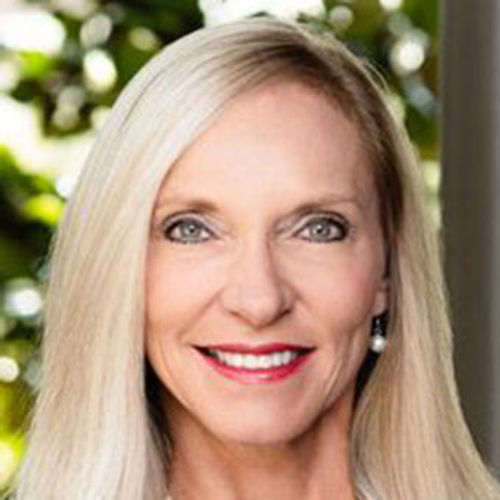
Carol Dover
"We have general managers who are cleaning rooms and property operators who are in the back of the house, cooking," said Dover. "It's gotten crazy."
Dover put much of the blame on expanded "no-strings-attached" state and federal unemployment benefits, which she claims have disincentivized a return to the workforce among the laid-off or furloughed.
Most recently, at the federal level, President Biden passed the American Rescue Plan Act, further extending a suite of enhanced unemployment provisions, including a supplemental benefit payment of $300 per week, through Sept. 6.
"We're paying people more now, in many cases, to stay home," Dover said. "[It's not because we're paying just] minimum wage. We have signing bonuses. We're doing everything you can think of, and people still are not showing up."
Dover emphasized that the hospitality labor squeeze isn't just a Florida issue but a more widespread "national problem."
Indeed, across the nation in California, where strict travel restrictions have finally begun to be lifted, the state's restaurants and hotels are facing similar labor pressures.
"As our economy opens up, all of a sudden, everyone's got 'help wanted' signs in their window," said Lynn Mohrfeld, CEO of the California Hotel & Lodging Association. "The demand has been insane."
According to Mohrfeld, a recent ZipRecruiter search surfaced roughly 19,000 job openings within the California hotel sector alone.
In addition to a shortage of applicants, California hotels' hiring processes are being hampered by the state's "right to recall" ordinances, which require certain hospitality employers to first bring back employees who were laid off due to the pandemic before bringing on new hires. Although well-intentioned, Mohrfeld said the ordinance has made it difficult for many hotels to quickly staff back up.
"If I have housekeepers who were furloughed, and I want to bring them back, I offer them a job, and then I have to wait five days for them to respond," said Mohrfeld. "I then have to go to the next housekeeper and so on, which slows us down. We're over a year into this, and a lot of hotel employees have moved on, or their circumstances have changed. So, it's really tough to get our old employees back."
Mohrfeld added that in California, the shortage has been felt across the board, from food service to housekeeping to the front desk.
In Hawaii, where the unemployment rate remains higher than the national average, the labor shortage has been somewhat less dire, according to Mufi Hannemann, CEO of the Hawaii Lodging and Tourism Association.
"It definitely is an issue for us, but mainly for entry-level positions," said Hannemann. "When it comes to housekeepers, middle management and above, we have no problem. And part of that is because we have some of the highest housekeeper wages in the U.S., with full medical benefits."
Related: Agency owners ponder timing to rehire for expected demand
David Sherwyn, a professor of law at Cornell University's School of Hotel Administration and academic director of the Cornell Center for Innovative Hospitality Labor and Employment Relations, said that the process of deciding to go back to work can be fraught for many former hospitality employees.
"If you've got kids that maybe are in school some days and not in school on others [due to the pandemic], and child care is expensive, it may not be worth it to work," said Sherwyn. "And for tipped employees who aren't yet sure what the traffic looks like at their place of business, is it worth it for them? There's a cost to work."
Sherwyn added the current U.S. unemployment rate has improved greatly from where it was roughly a year ago.
The U.S. unemployment rate hit a high of 14.7% in April 2020, according to a Congressional Research Center report. Notably, the leisure and hospitality industry suffered one of the nation's highest unemployment levels, hitting 39.3% in April 2020.
Immediately prior to the pandemic, U.S. unemployment hovered at around 3.5%.
"Unemployment's now at 6%," said Sherwyn. "We're coming out of the hole, but there are certainly some unintended consequences that we're dealing with today. It's been a conservative talking point that people don't want to work and a liberal talking point that that's not true. But the truth is somewhere in the middle."