 Travel people are involved in rounds of social gatherings and supplier-provided events designed to make us product-proficient. So we meet other agents and we socialize with them at a dazzling array of expos, seminars, cocktail parties, fam trips and breakfasts.
For the most part, they seem much like us. They struggle, they complain and they pay tribute to the way the industry once was, much like any group on the way to retirement after a lifetime of travels and little compensation.
For many travel agents involved in the industry's social life, it becomes routine: familiar faces all trying desperately to put the best face on what has become an extremely challenging profession.
But while this is going on, there is another reality. The best of the best in this profession get privileged invitations that often involve exotic travel and face-to-face time with the suppliers' very top executives; this access can translate to clout. Their opinions are sought out at these gatherings of the top-producing agency firms, and in exchange for being treated like travel royalty, they offer cooperation for commission overrides and very special treatment.
I would argue that all too often they sell out. Because the fact is that top-producer awards do not recognize agents who create business; they honor agents solely on their aggregate business.
I've attended more than a few of these events, and I've sold out as much as anyone. I did boycott one top-producer event, but I was told that I was the only agent who had even raised the issue of business creationism.
I want to tell you how I came to climb up on this particular soapbox, and why I hope I might influence one or two other high-producing agency owners to consider the impact they could have on our industry if they "just say no" to their next top-producer event invitation.
A few years ago, we were attending one of these events sponsored by a major cruise line. On the first night, just as we were being seated for dinner, a very nice couple asked if they could join us.
The dinner was pleasant, but my wife and I seemed to be doing most of the talking as we were peppered with questions about our somewhat unorthodox business model. I knew that the other couple owned one of the line's top-producing agencies, and I finally looked at them and said, "So, enough about us; tell us a bit about your agency."
The woman smiled and responded, "Oh, I don't know anything about the travel business. I'm a rebater. My husband is a computer expert, and we just take our three favorite cruise lines and we rebate a good share of our commission on our website. We get millions of visitors, and we do great business, but I actually don't know much about travel."
This didn't shock me. I had, after all, worked for a major cruise line for more than a decade. But I was surprised that this woman was so openly admitting what she does for a living.
I've recounted this story previously because it led me to take count of the attendees at the top-producer events on my schedule. And, not surprisingly, many of them are top-producing rebaters.
Without fail, the room is filled with agents I admire, true leaders of the industry. But they all have one thing in common: They accept their award status and their honors without ever questioning why so many others in the room are outlaws who choose to be parasites.
I do not know of a single instance of a top-producing agency owner telling a supplier that he or she will not be attending a recognition event as long as the nation's (and neighboring nations') largest rebaters are included.
When I declined to attend one of these events, a top cruise line executive told me I was a fossil who did not understand that "there are a lot of business models out there that are different from yours. Not everyone sells retail."
Last year, I attended a cruise line event where I was seated with the top sales executive of one of the world's best cruise lines. It was all love and kisses except for one gentleman who sat silently through the dinner. He was the owner of one of America's largest online rebate agencies, and it appeared that he had no interest in or knowledge of the industry issues being discussed. His was, as it was again explained to me, "a different business model, Richard. They sell on volume discounting just like other Internet megasellers."
When I do seminars I am often asked how the giant rebaters actually do it. How do they get such great pricing?
They do two things you and I don't do. They sell so much by giving back their commission to the buyer that they can be assured of earning a certain number of free tour conductors. So they factor that into the discount.
The second thing that they do, with the tacit agreement of most of the upscale cruise lines, is take large portions of their extensive "marketing override" and then plow it back to the agency's bottom line.
This tactic enables the upper-echelon cruise lines to claim that megadiscounters are receiving just about the same commission as any agent while providing marketing support to them through the back door.
Since some of the mega-rebaters who work with cruise lines earn cumulative commission and marketing fees in the 23% range, their ability to adjust pricing downward, when combined with factoring in tour conductor fees, makes for a substantial discount.
It is interesting to observe that Carnival, Royal Caribbean and Norwegian Cruise Line have been more aggressive about policing pricing of their product than many of the upper-crust lines.
So is rebating some sort of wonderful new business model?
No. It is, I believe, a company that is saying to a supplier that it does not need its commission and that it will simply return much of it to the consumer.
It is a company that undermines the value of the products it sells, in effect saying that the product is worth less than the value set by the company itself and honored by the ethical agency sales force.
But most importantly, the rebating company is based on enticing clients away from legitimate agencies who have real business models.
I believe that to be a "business model" you have to actually create business. Rebaters simply attempt to take existing business and reallocate it.
Nothing I write is likely to have any impact on rebating. Your angry letters will not stop the practice.
But just suppose that the leaders of our industry, the owners of the top-producing ethical travel agencies and consortia, turned down their next invitation to a top-producers event. Just imagine what would happen if these industry leaders took the position that it is not an honor at all to be recognized in the same way as those whose approach to business approaches that of a rug merchant in the Grand Bazaar.
Imagine what would happen if collectively we all said, "You do me no honor when you also honor those who demean the value of your product and the notion that we can all compete on the basis of services rendered."
What would happen if the most respected among us just said no?
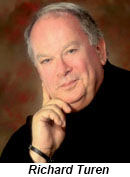
Contributing editor Richard Turen owns Churchill and Turen, a vacation-planning firm that has been named to Conde Nast Traveler's list of the World's Top Travel Specialists since the list began. Contact him at [email protected].