
Visiting Vietnam,
past and future
Fifty years after the end of the Vietnam War, a visitor finds a country with a blend of rich history and modern development, tropical beauty and cultural heritage.


By Tom Stieghorst
March 17, 2025

NHA TRANG, Vietnam — Driving into this port city in what used to be South Vietnam, it is impossible not to notice the traffic. Where bicycles were once the most common sight, there are now a buzzing multitude of scooters that move like schools of fish though the streets, carrying residents on busy errands.
We were in Nha Trang for a visit to the night market and a pedicab tour of the downtown area. As the twilight emerged we could see the colorful lights of a Ferris wheel on one of the islands offshore. Our pedicabs weaved and coasted along the avenues of this mid-size city. We craned our necks upward to see a forest of modern office towers and hotels.
Vietnam is a country with one foot still in the developing world and one increasingly out. There are open-air markets where meats are sold a foot off the ground. There are also wind farms, fields of solar panels and sparkling seaside resorts.

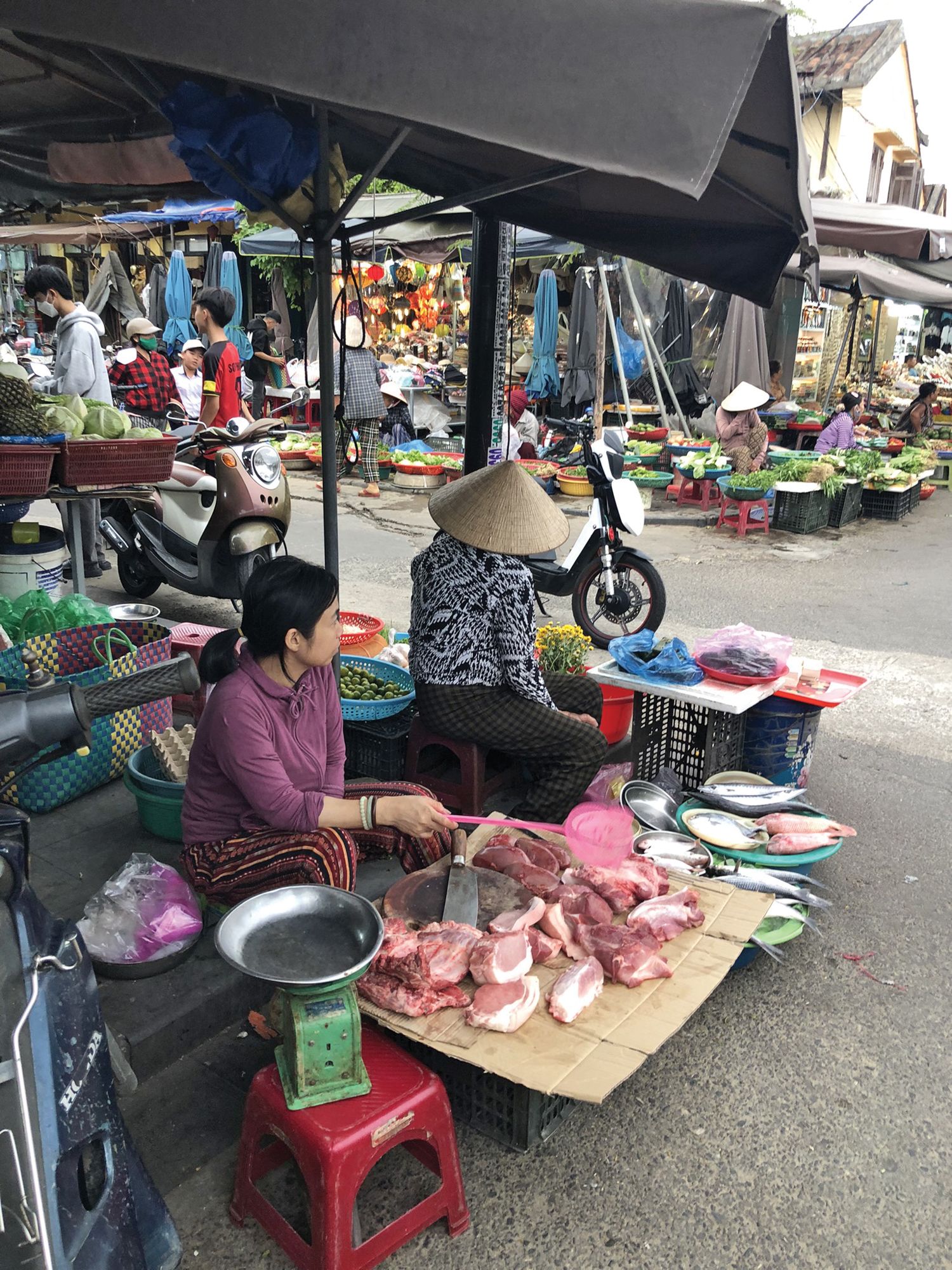
Vendors at an open-air food market in Hoi An. (Photo by Tom Stieghorst)
Vendors at an open-air food market in Hoi An. (Photo by Tom Stieghorst)
Rice paddies fill the countryside, but the cities bustle. Prices for most things are remarkably low. I bought three local beers one night for our tour group for 60,000 dong — about $2.35.
Most of all, this is a nation that has largely moved on from the wars it fought from 1945 to 1975, defeating the French, the Americans and finally the Vietnamese of the south to become a unified, independent country.
Although 2025 is the 50th anniversary of the fall of Saigon and the North’s victory over the South, the war seems like a back-burner event in a country that is more interested in the current century than the last.
There are no Soviet-style monuments and few memorials or shrines. One exception is the Independence Palace, once the seat of government of the Republic of Vietnam. Anyone can tour it and see the war from the North’s perspective. But even there, replicas of the two tanks that crashed through the palace gates on April 30, 1975, ending the war, are parked not on the front lawn but discreetly off in the trees to the side.
As a teen I watched the war on television. Years later, I was curious to see what the country was like in person. A weeklong press tour took us to Hanoi, Da Nang, Hoi An, Ho Chi Minh City (formerly Saigon) and resorts in Mui Ne and Cam Ranh.
Throughout, one constant was the tropics. “What people don’t think about is the Vietnamese jungle is just beautiful,” said Ed Hellenbeck, a Marine veteran I spoke to who was assigned to long-range reconnaissance duty in 1968 and 1969.
Palms, heliconias, frangipani trees, banana plants and birds of paradise are just some of the foliage that adorns the landscape.
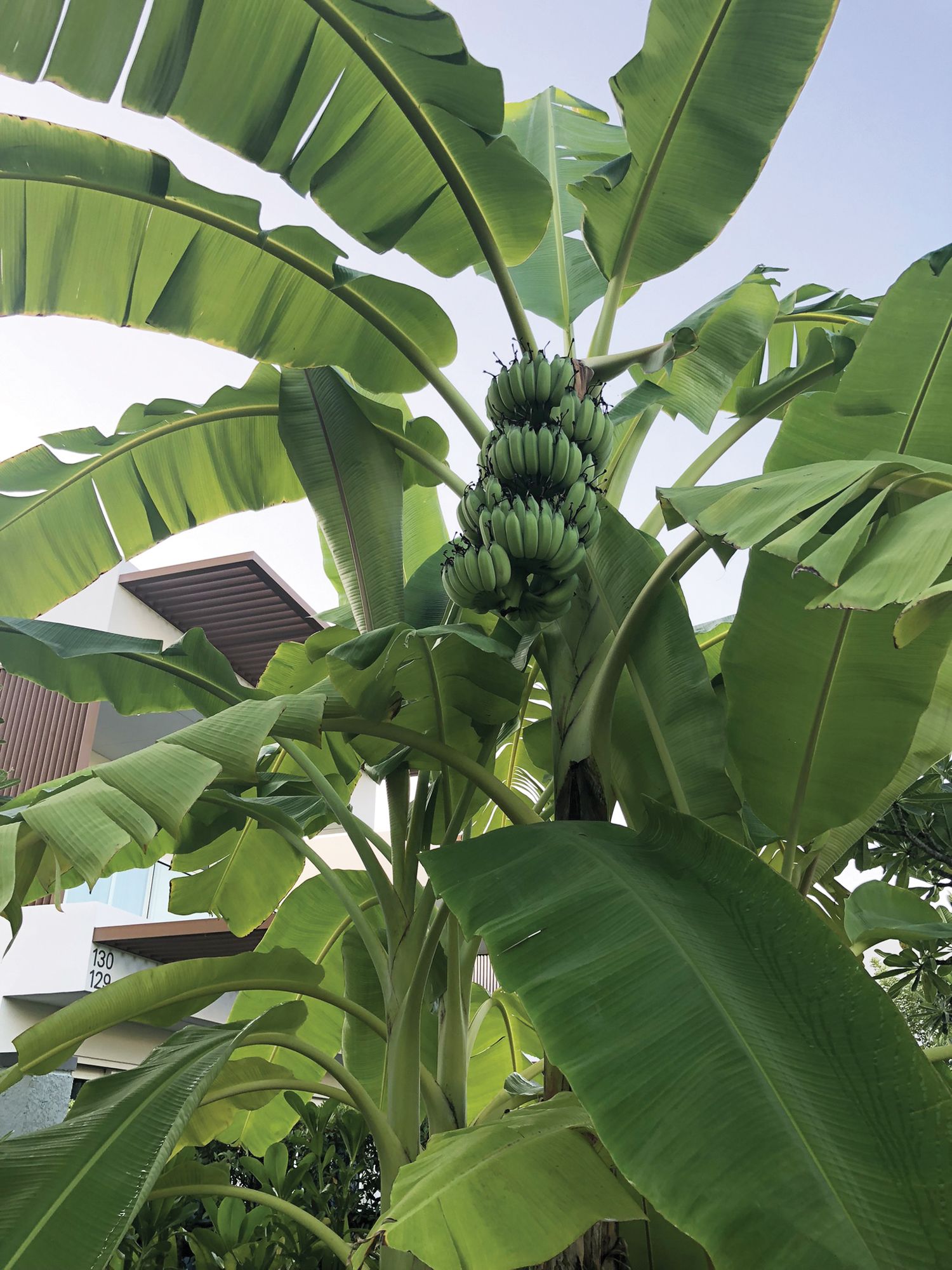
A banana plant on the grounds of the 75-acre Alma Resort in Cam Ranh. (Photo by Tom Stieghorst)
A banana plant on the grounds of the 75-acre Alma Resort in Cam Ranh. (Photo by Tom Stieghorst)
Long and narrow, Vietnam also has more than 2,000 miles of coast where most of its resorts are located. We visited several, including the TIA Wellness Resort in Da Nang, the Anam in Mui Ne and the Alma Resort Cam Ranh, south of Nha Trang.

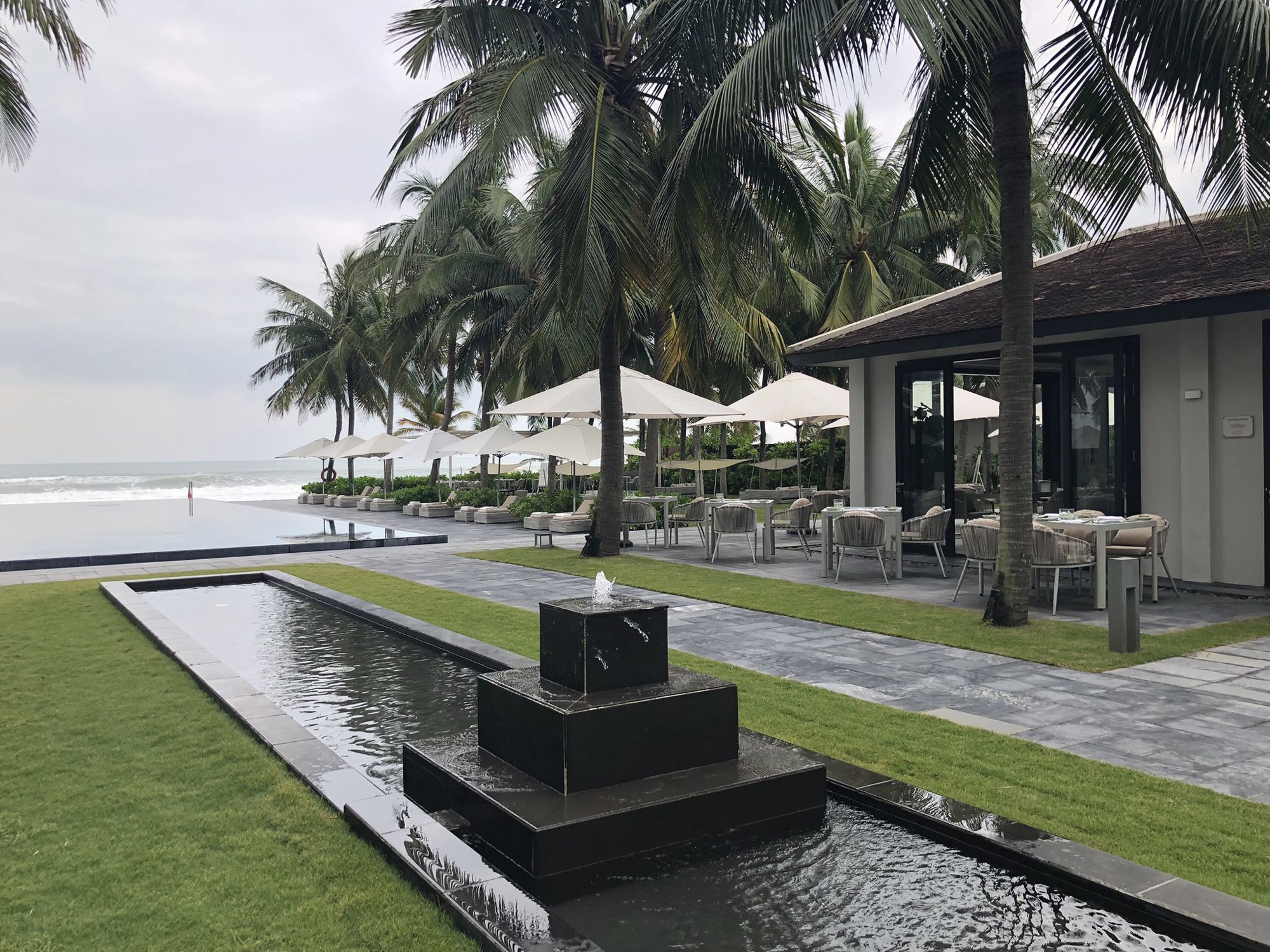
The TIA Wellness Resort is a tranquil oasis on the beach south of Da Nang. (Photo by Tom Stieghorst)
The TIA Wellness Resort is a tranquil oasis on the beach south of Da Nang. (Photo by Tom Stieghorst)
The 75-acre Alma has numerous amenities, including a dozen swimming pools cascading down to the beach, a kids waterpark and science center, a 75-seat cinema, a convention center, an amphitheater, a 13-room spa, an 18-hole putting green, a minimart and nine restaurants and bars.
Regularly scheduled golf carts help transport guests around the grounds. The villa I stayed in was spacious and modern, yet comfortable, with its own shaded plunge pool. Rates for the three-bedroom unit adjacent to the sand work out to about $300 per room a night.
The Anam, in Mui Ne, is more compact but just as delightful. A highlight for me was the big, umbrella-lined, palm-shaded saltwater pool. It sits next to the beach, which attracts kite surfers from all over the world.
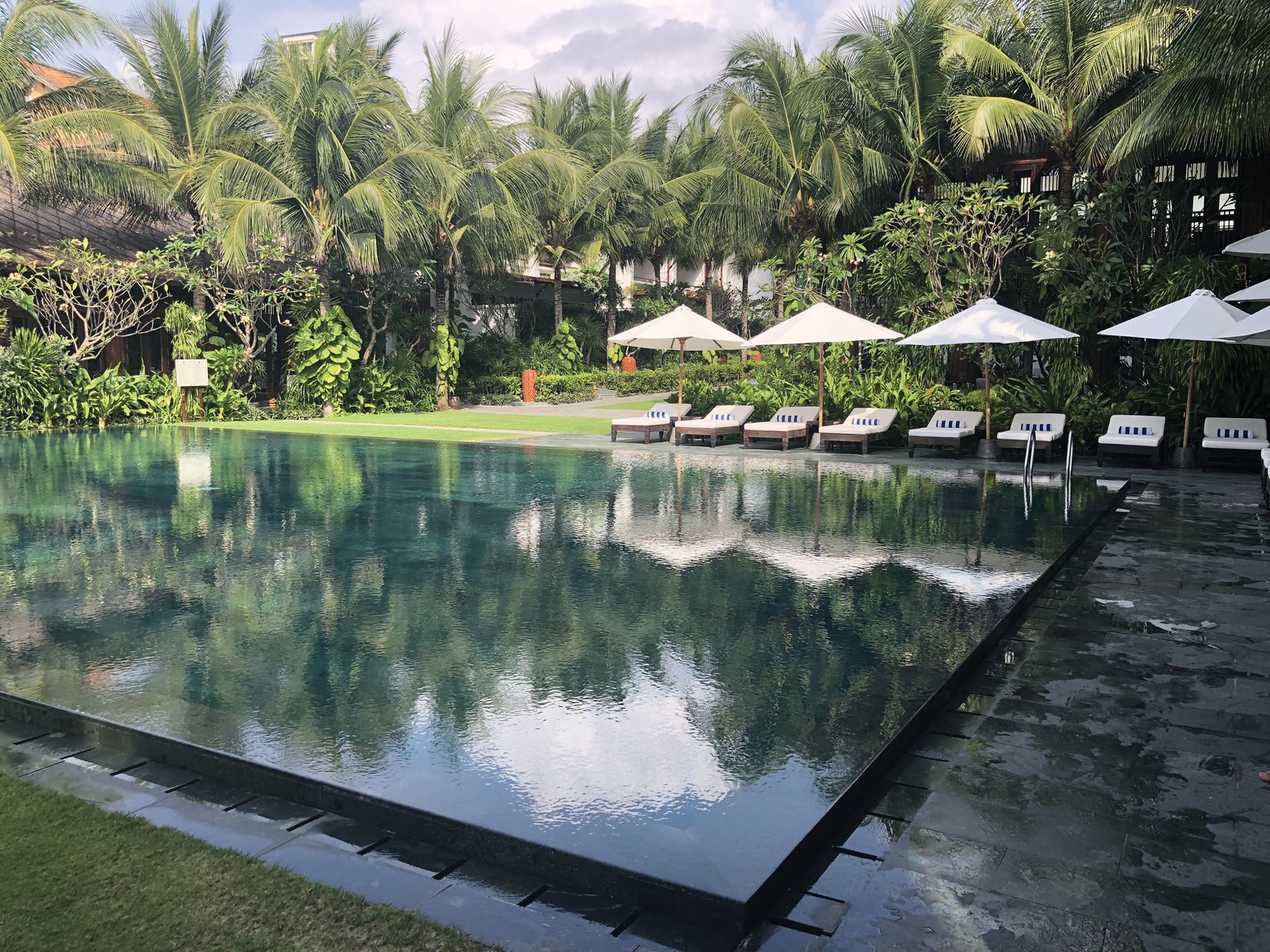
The inviting saltwater pool at the Anam Mui Ne resort. (Photo by Tom Stieghorst)
The inviting saltwater pool at the Anam Mui Ne resort. (Photo by Tom Stieghorst)
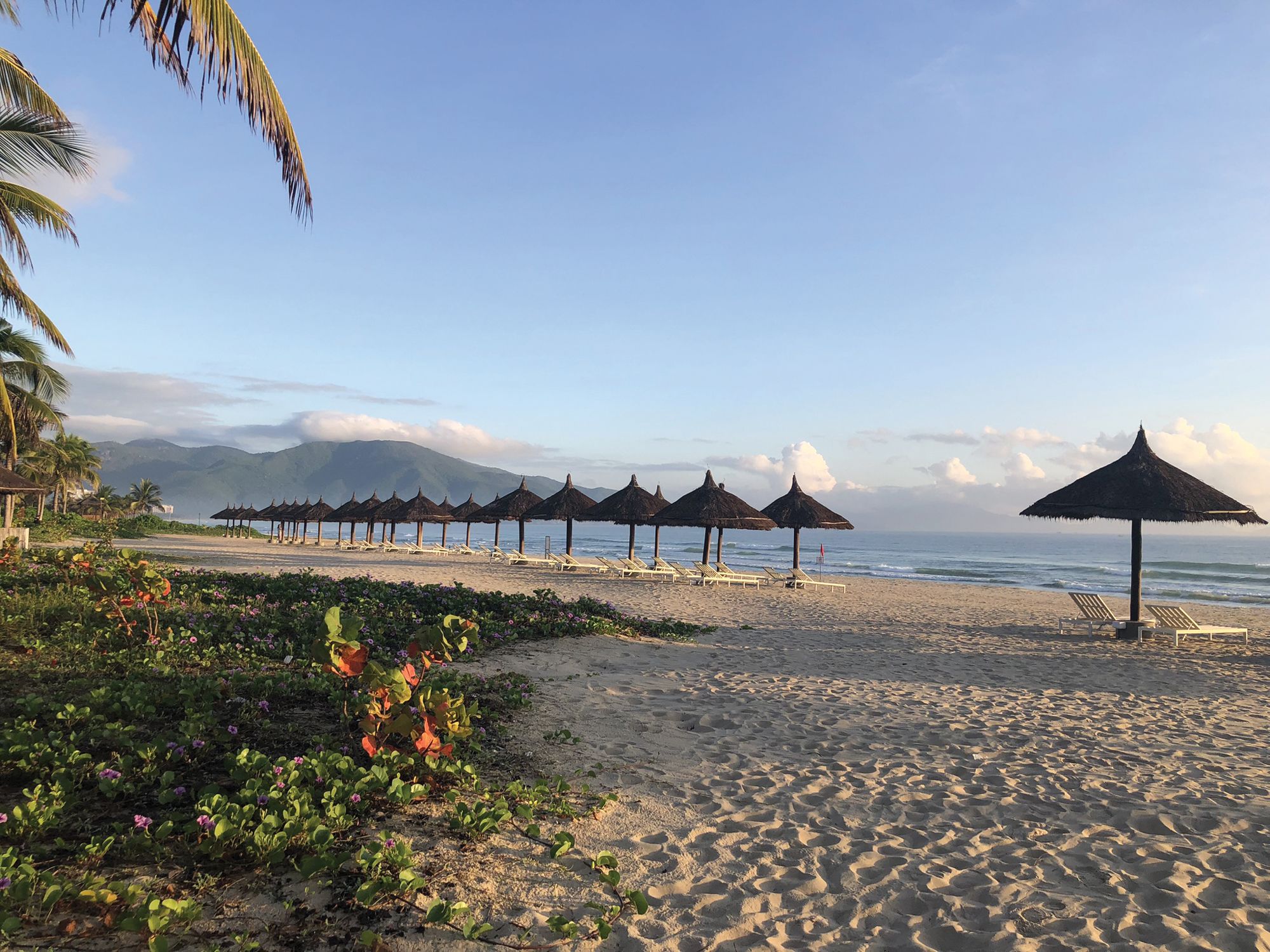
Thatched sun shades on timber poles at the beach in front of the Alma Resort in Cam Ranh. (Photo by Tom Stieghorst)
Thatched sun shades on timber poles at the beach in front of the Alma Resort in Cam Ranh. (Photo by Tom Stieghorst)
My room had a deep balcony, ideal for relaxing and having coffee in the morning. Of the two main restaurants, one specializes in Vietnamese cuisine and the other in Western fare. Rates this time of year for a premium king start at about $260 per night.
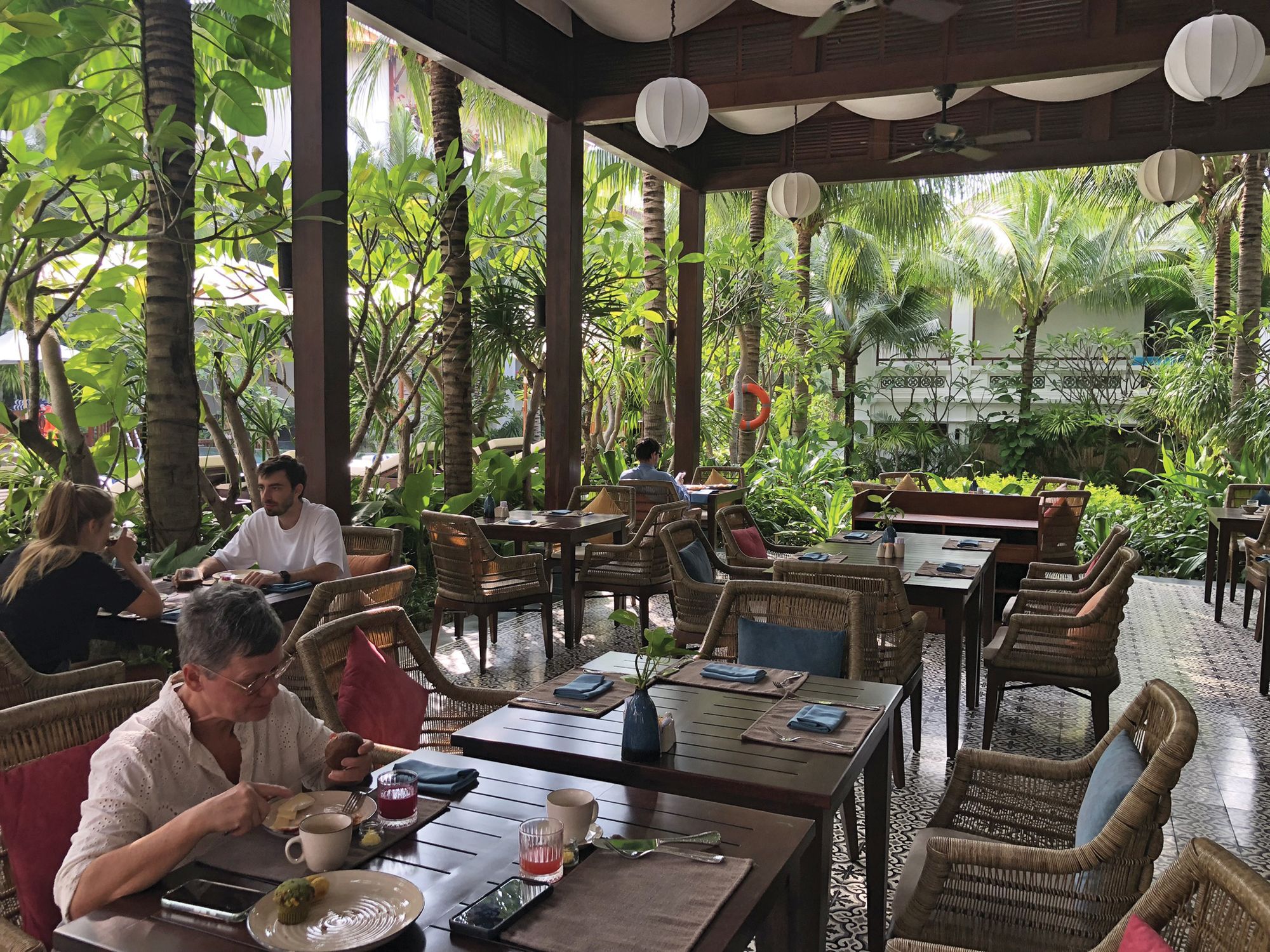
The open-air patio of a restaurant at the Anam Mui Ne resort. (Photo by Tom Stieghorst)
The open-air patio of a restaurant at the Anam Mui Ne resort. (Photo by Tom Stieghorst)
Both properties are located a few hours’ drive northeast of Ho Chi Minh City in a pocket that gets less annual rainfall than the rest of Vietnam. The extra sun and proximity to the former South Vietnamese capital has made this region a hub for resorts.
Embracing tranquility in Da Nang
DA NANG, Vietnam — On my first morning at the TIA Wellness Center resort, we rose before dawn for a sunrise meditation. It’s not something I’m in the habit of doing, but it was one of the highlights of my visit to Vietnam.
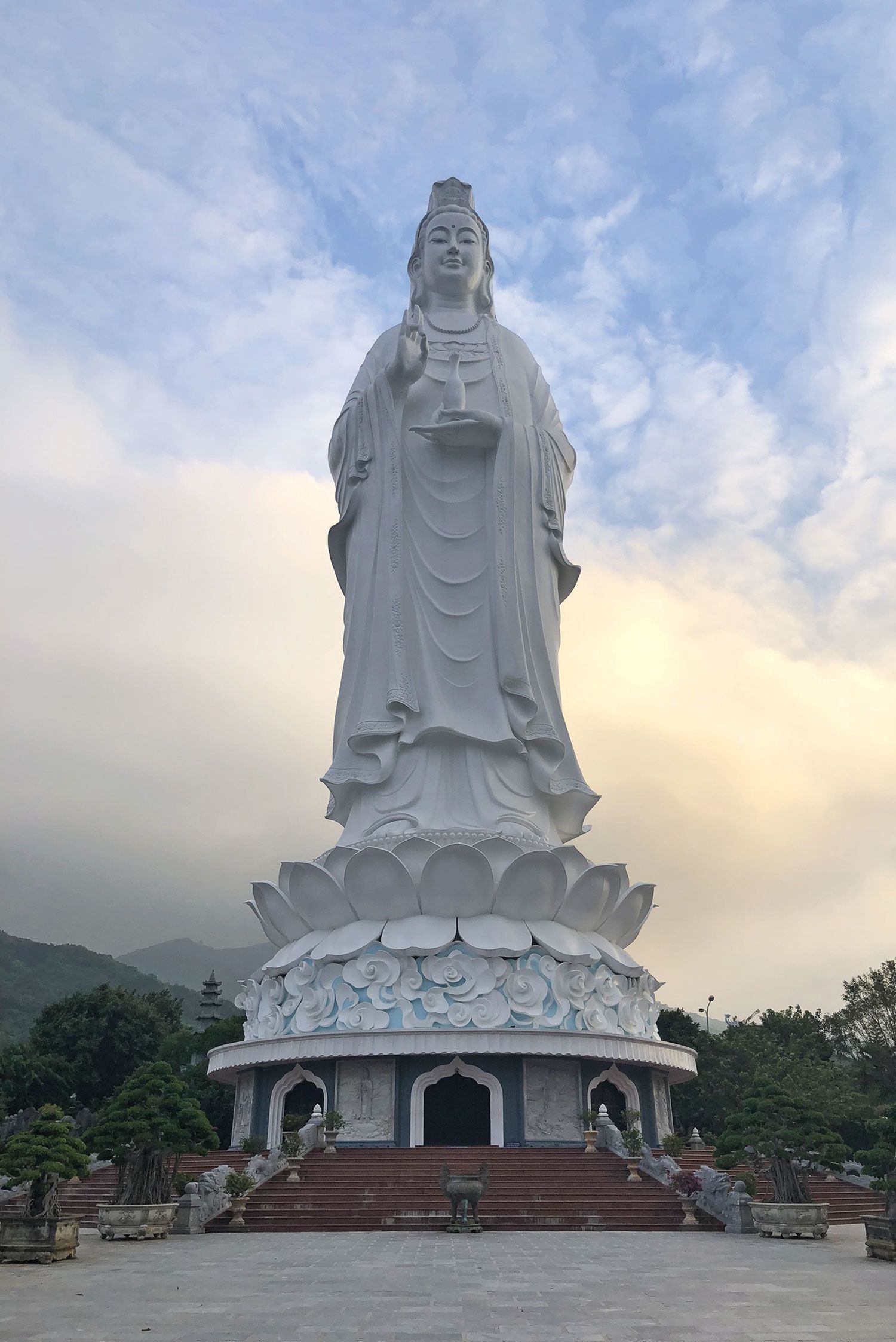
The setting made it special. We greeted the dawn at the Linh Ung Pagoda, seated in front of the 220-foot-tall statue of Lady Buddha. The devout are allowed to climb inside the statue structure, but I was happy just to have seen it.
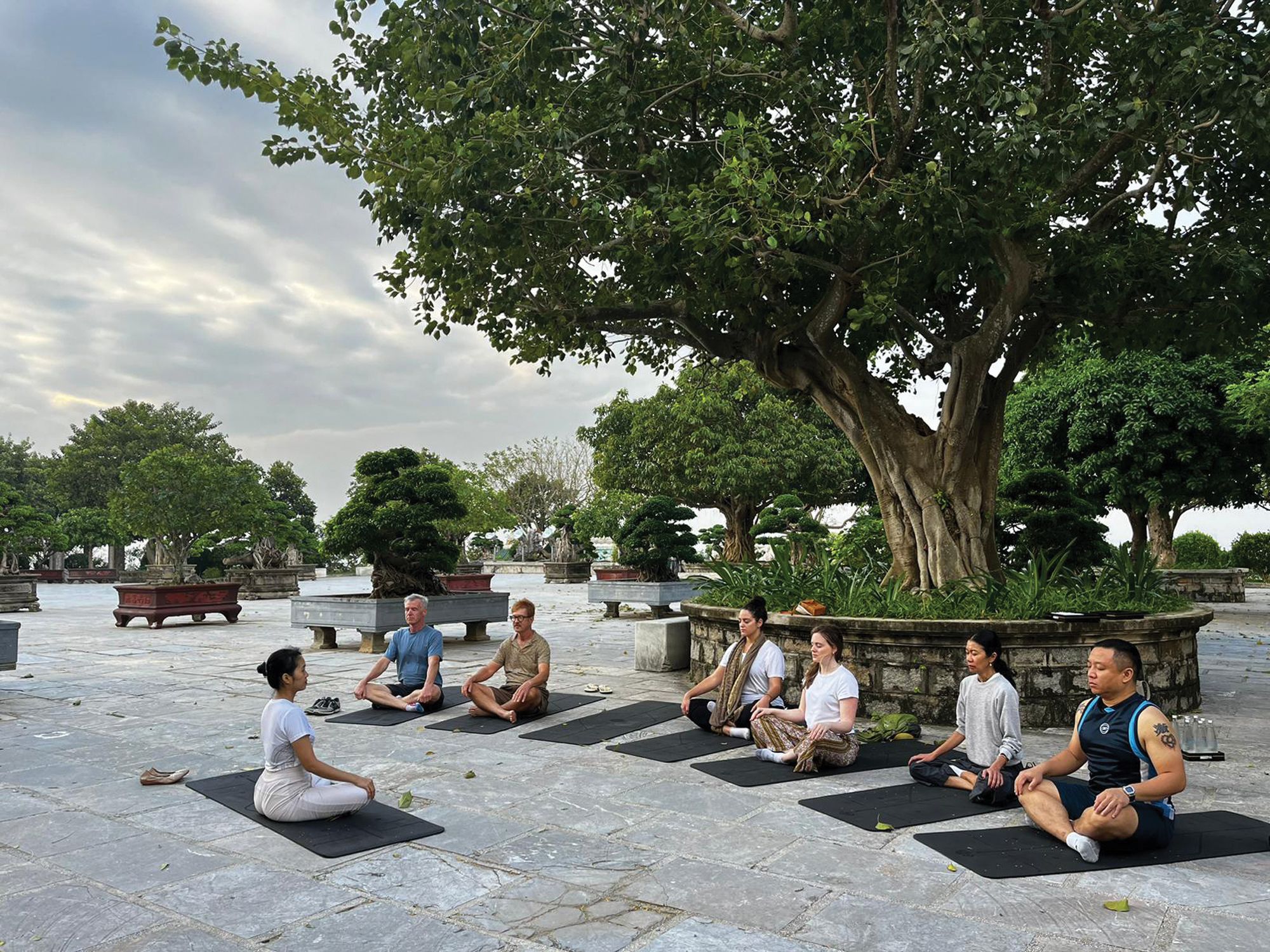
An early-morning meditation session at the Linh Ung Pagoda near Da Nang. (Courtesy of TIA Wellness Center)
An early-morning meditation session at the Linh Ung Pagoda near Da Nang. (Courtesy of TIA Wellness Center)
Beyond the imposing statue, the tallest in Vietnam, the pagoda grounds have amazing stone-carved dragons and lions. Courtyards are filled with elaborately trained and ancient bonsai plants. It is Da Nang’s top tourist attraction, but we were there in the cool of the morning before most people had ventured out of their hotels.
A 20-minute ride returned us to the oceanside TIA, a low-slung compound with a full menu of wellness features that make it more than a spa. Meditation, breathing, yoga, a high-intensity exercise supplement massage and other physical treatments.
The restaurant menu was full of delicious, fresh and healthful food as well as some heavier fare. Breakfast was an extravagant buffet of Asian and Western treats. It would have taken me a week to try it all.
On the more unusual side for me was my 50-minute encounter with sound. This meditative therapy uses brass bowls of various sizes that are either struck or rubbed around the rim with a mallet or other wooden baton.
The therapist moves to different positions around the prone, eyes-closed subject and produces tones that ring, reverberate and resonate. I could hear the overtones and undertones in octaves above and below the main note being struck. It was highly relaxing and a bit hypnotic.
The more traditional massages were among the best I’ve had, which made me wish for more time at the TIA.
Da Nang is about half an hour up the road from Hoi An, a historic trading port popular with tourists. I found it distressingly busy in the late afternoon but magical at night, when the crowds thin out and decorative lanterns light every street and building.
Echoes of war also can be heard in Da Nang. It hosts the surfing site made famous as China Beach during the Vietnam War and Red Beach, where the first contingent of U.S. combat troops made an amphibious landing in 1965.
Across the road from the TIA Wellness Center sits what’s left of the Marble Mountain Air Facility. Over a six-foot wall, one can still see the concrete hangars that shielded Marine helicopters at the base, which is the size of a dozen football fields.
Fifty years ago, mortar shells and satchel charges detonated on the airfield during periodic Viet Cong attacks. Today, it is hard to imagine such cacophony amid the tranquil setting.
—T.S.
Colonial past, conflict landmarks
After the war, Saigon was renamed for the patriot Ho Chi Minh, although Saigon remains in use colloquially. We took a walking tour of the metropolitan center of the city of 9 million people, which straddles the winding Saigon River.
We saw ornate lobbies in the French-built Majestic, Grand and Continental hotels, all now government-run. We had alfresco lunch atop the Rex and saw the Caravelle, where CBS ran its bureau during the war and hosted anchor Walter Cronkite.
After a stop at the beautiful 1891 beaux arts post office, we spent a few hours at the Independence Palace, including its underground bunkers and residential wing where some foreign embassies kept apartments during the war.
Although we didn’t tour it, I loved seeing the Pittman Building, where a top CIA official lived and in 1975 organized a dangerous 11th-hour helicopter rescue of U.S. government officials. The landing site is now a rooftop cafe and bar.
After the war, Vietnam shunned Western tourists for more than 20 years, only reopening in 1997 in an economic liberalization. Since then, U.S. veterans and their families have made up a stream of tourism to Vietnam: About 2.7 million American service personnel cycled through Vietnam between 1965 and 1973.
Through discussions I had with veterans and those who offer tours here, I’ve found that some veterans have made their peace with Vietnam; others haven’t.
“Some people go for closure,” said John Powell, president of Military Historical Tours in Woodbridge, Va., which offers tours for veterans. “It happens.”
It isn’t known how many veterans have returned.
Nearly 780,000 Americans visited Vietnam in 2024, making the U.S. the country’s fourth-largest source market after South Korea, China and Taiwan. What is clear is that visits by U.S. veterans have been tailing off, and the anniversary of the fall of Saigon isn’t expected to change that.
“And the reason is, it’s [the Vietnamese people’s] anniversary,” said Ed “Tex” Stiteler, president of Vietnam Battlefield Tours in San Antonio. “They are celebrating the end of their war.”
The American military departed Vietnam by early 1973. For Stiteler, his business was booming in 2018 and 2019, 50 years after peak U.S. involvement in the war. Today, not only are there no anniversaries to commemorate, but the warriors are in their late 70s.
“If they were an officer, they’re probably in their 80s,” Stiteler said. “Our draw is going away.”
Meanwhile, younger generations, people born after the war ended, are also going to Vietnam.
Terri-Ann Mattadeen visited Vietnam last year on a tour with Contiki, a brand of The Travel Corporation aimed at 18- to 35-year-olds.
The 31-year-old high school history teacher from the New York borough of Queens said she was drawn to vacation in Vietnam by its affordability and her love for Asian food. “And as a history teacher, I wanted to explore Vietnam’s past and present,” she said.
Mattadeen found the people in Vietnam friendly and patient and the cities accessible. “I can easily walk from the hotel to the nightlife area or market to buy souvenirs [or] visit the museums,” she said.
On her 12-day Contiki tour, Mattadeen traveled with Australians, South Africans, Canadians and Brits as well as fellow Americans. Part of the group got tattooed together in Hanoi. “It was a great bonding experience … we’re all connected now.”
Trip highlights included spending a night on a junk boat in Halong Bay and staying with a local Vietnamese family in Ho Chi Minh City, which introduced the group to the local custom of catch-by-hand fishing.
The war was neither emphasized nor neglected. The group toured the extensive Cu Chi tunnel complex built by the Viet Cong near Ho Chi Minh City and visited the city’s War Remnants Museum, full of relics from the conflict.
In Nha Trang, Mattadeen took a run on the beach and a day cruise in the South China Sea and enjoyed a group dinner at a restaurant. Along with a few others, she crossed the bay to Hon Tre Island to visit the Vin Wonders amusement park there.
“The buildings were colorful, the rides were fun,” she said. “There was greenery and statues capturing art from around the world.”
Helping war Veterans retrace their steps
A consistent source of American tourism to Vietnam has been returning veterans of the 1965-73 U.S. military involvement there.
Veterans have been revisiting their service in Southeast Asia, drawn by memories of a place and time where they came of age, fought harrowing battles, discovered a foreign culture and forged enduring friendships.
Several tour companies founded by veterans specialize in Vietnam battlefield itineraries. Many form groups of veterans whose combat experience gives them a shared understanding of the ways of war.
One such outfit, San Antonio-based Vietnam Battlefield Tours, has been operating since 2005. “It started with one tour, and then two tours. And it built to where we were doing sometimes eight tours a year,” said company president Ed “Tex” Stiteler.
This year he plans to offer four tours. Among them is a 15-day itinerary departing March 23 focused on “I Corps,” the northernmost of four military sectors in South Vietnam. A tour description is full of references that only resonate with history buffs or soldiers.
Names like Hill 55, LZ Baldy, the Rockpile and the Dog Patch stud the itinerary. At Hue, site of the most intense battle of the 1968 Tet Offensive, there are stops planned at the Shell Gas Station, the Treasury and Hue University, places that mean nothing to most people and everything to the Marine units that fought there.
There’s some R&R, too. Midway through, participants get a day of leisure in Hoi An, a historic trading port popular with tourists that was relatively untouched by the war. The tour costs $4,995 per person, double, including round-trip air from Los Angeles.
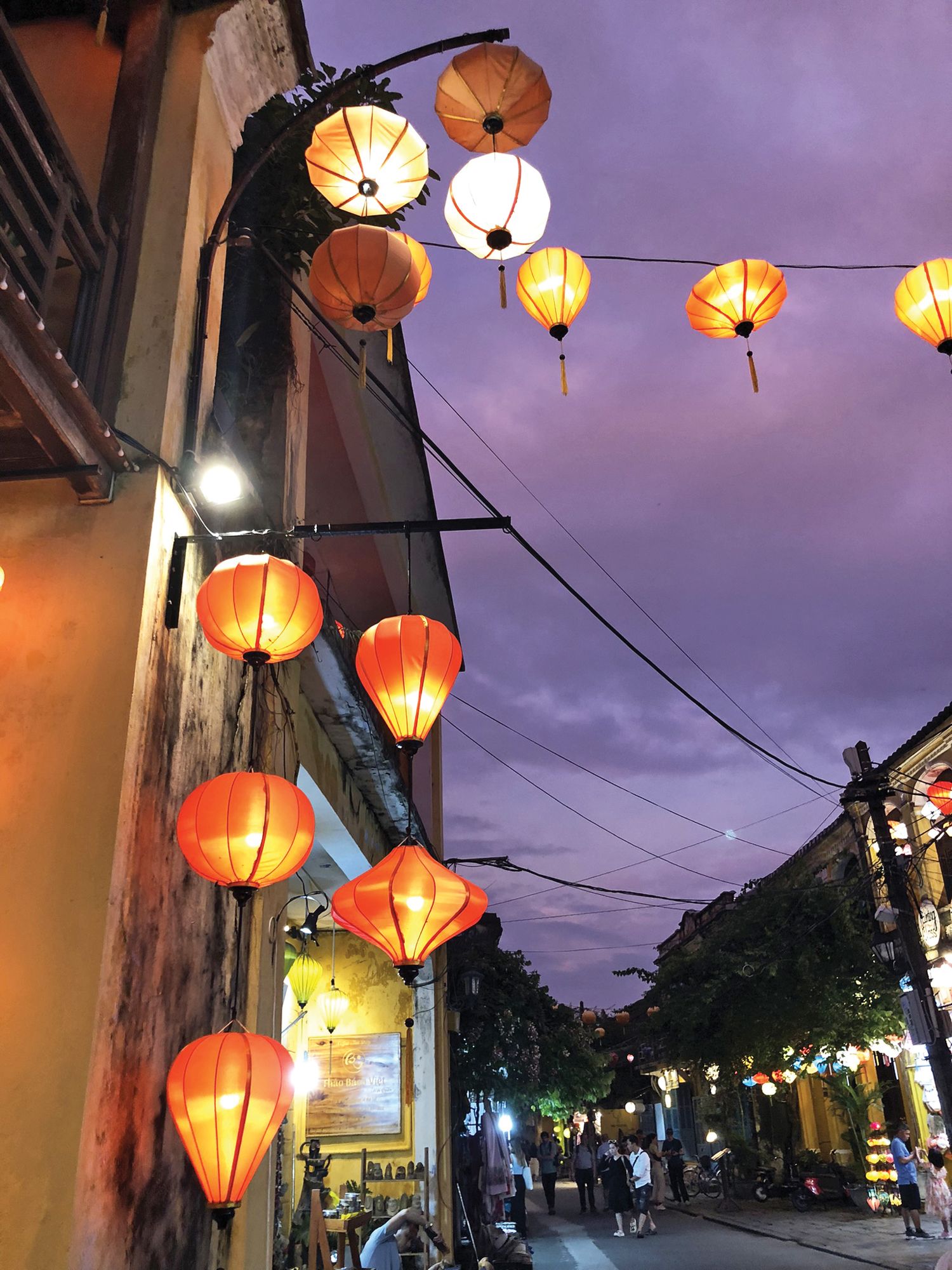
Hoi An is known for its lanterns, which illuminate the city’s streets and buildings at night. (Photo by Tom Stieghorst)
Hoi An is known for its lanterns, which illuminate the city’s streets and buildings at night. (Photo by Tom Stieghorst)
Another operator that tours Vietnam through a military prism is Military Historical Tours. John Powell, president of the Woodbridge, Va.-based company, said many of his tours are half military and half cultural and that some have no military component but revolve around golf or cater to high school groups.
A 13-day military tour in April from Ho Chi Minh City to Hanoi is priced at $3,395 per person, excluding air. Powell said his tours can be a third of the cost of comparable ones by other operators because the company’s founders have prioritized mission over money.
“This company is a for-profit company that has never made a profit,” said Powell, who provides free WWII and Korean War tours to veterans of those conflicts and their families.
Powell said Vietnam is very different than Normandy, where re-enactors gather every June and military vehicles fill the roads.
“There is no evidence that we were ever [in Vietnam] in a war situation,” he said, other than sites such as the Cu Chi tunnels near Ho Chi Minh City, which are promoted as a tourist experience by the Vietnamese government.
For the Vietnamese, Americans were just one more foreign power in a line that goes back to the French in the 19th century. Fifty years after the war’s end, I saw remarkably little animosity while there and few Soviet-style monuments on display.
Powell said he tries to avoid the Westernized parts of Vietnam in favor of more Indigenous experiences.
“I always make sure we go to this one restaurant, which is run by a lady who used to shoot at me,” said Powell, a former helicopter pilot with the 1st Cavalry Division. “She’s the second-highest-decorated female in the [North Vietnamese Army]. She’s a grandmother now. I told her I’m glad she was a bad shot.”
—T.S.
 Built with Shorthand