
Caribbean resilience
After the dual shocks of the 2017 hurricane season and the Covid shutdown, tourism stakeholders in the region were determined to build back better and smarter.

Tourism is the lifeblood of the Caribbean. It fuels economies, provides jobs and showcases the region’s natural beauty to the world.
But as hurricanes Irma and Maria proved in 2017 — and the Covid-19 pandemic reinforced in 2020 — this vital industry is vulnerable to crises that can shut it down overnight. Stakeholders here have increasingly realized that the Caribbean cannot afford to simply react to each disaster; it must proactively build a tourism sector that is resilient, adaptable and prepared for future shocks.
Resilience in Caribbean tourism is no longer a buzzword; it’s a necessity. Discussions with Caribbean hoteliers, tourism leaders and development experts indicate that lasting resilience means rebuilding smarter, communicating better and ensuring that communities, businesses and visitors are always prepared for the unexpected. That means not only being able to recover, but maintaining operations, minimizing disruptions and making sure the world knows when the Caribbean is open for business.
“Resilience is not just about bouncing back, it’s about bouncing forward,” said Adam Stewart, executive chairman of Sandals Resorts, which owns 20 properties across 10 Caribbean islands. “It means building an industry that is agile, sustainable and prepared to weather any storm. True resilience comes from strong public-private collaboration, smart infrastructure and a commitment to our communities.”

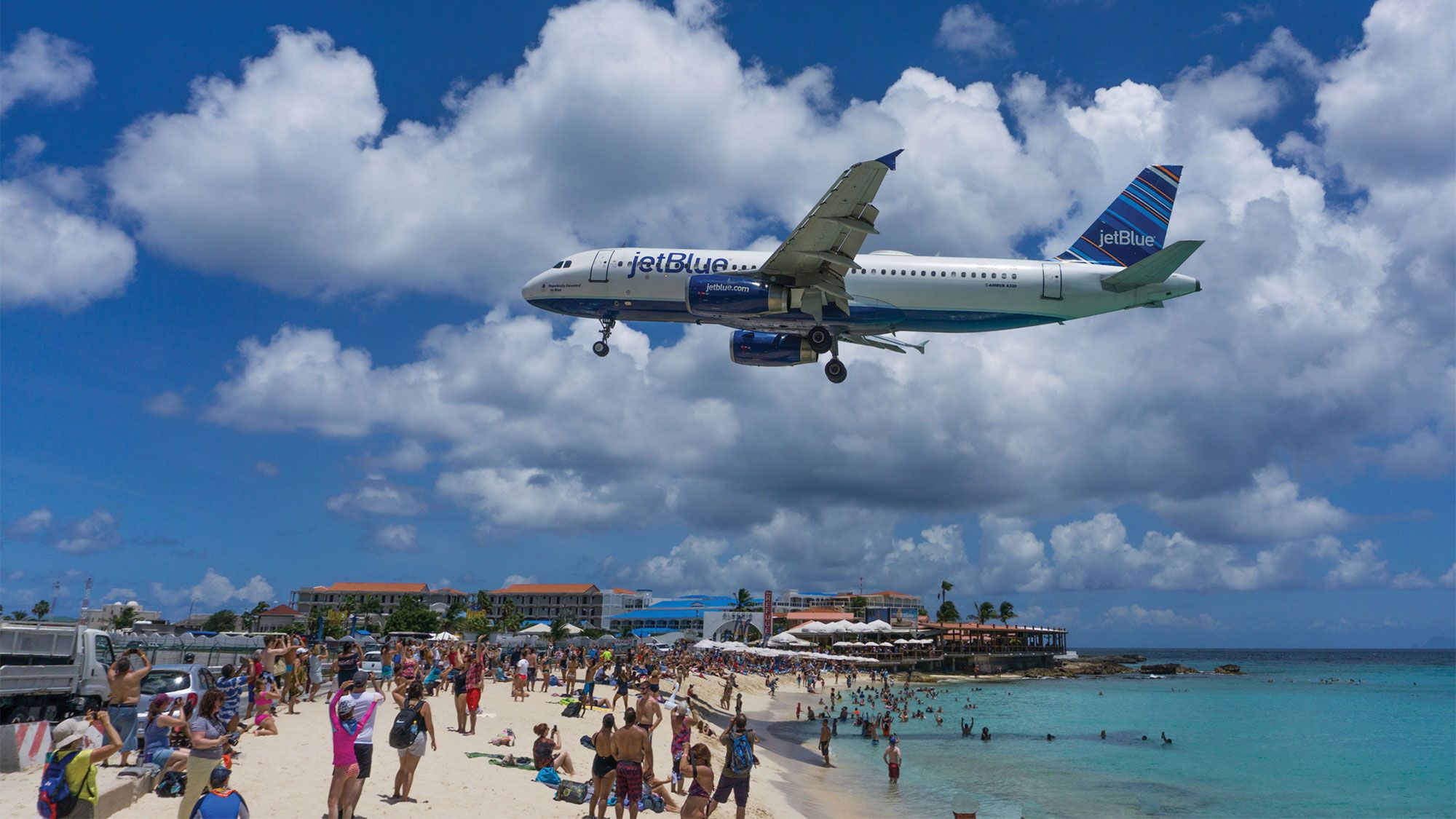
Maho Beach adjacent to Princess Juliana Airport. The airport was one of the worst affected pieces of infrastructure in St. Maarten, taking years to fully reopen. (Courtesy of St. Maarten Tourism Board)
Maho Beach adjacent to Princess Juliana Airport. The airport was one of the worst affected pieces of infrastructure in St. Maarten, taking years to fully reopen. (Courtesy of St. Maarten Tourism Board)
Challenges to resiliency
The devastation caused by Irma and Maria was a wake-up call for the Caribbean. The storms obliterated infrastructure and crippled tourism, leaving lasting economic scars. In St. Maarten, where Irma damaged 90% of infrastructure, the tourism-dependent economy contracted by 12.5%, according to the report “Strategic Framework 2019-2025: Sint Maarten Reconstruction, Recovery and Resilience Trust Fund.” And in Puerto Rico, power wasn’t fully restored for more than a year, leaving some hotels, resorts and attractions unable to operate for months.
The immediate halt to tourism was especially devastating for economies that are dependent upon it. Tourism accounts for approximately 45% of St. Maarten’s GDP, and the island is a hub for cruise tourism, welcoming 1.7 million passengers annually.
“There was no precedent for this,” said Michele Olivier, complex director of sales and marketing at Sonesta Resorts in St. Maarten. “We realized we needed to be better prepared for future events. Rebuilding stronger was crucial, but we had to act quickly because we depend on tourism for the economy.”
Just three years after the 2017 hurricane season, the pandemic shut down borders and grounded tourism to a halt worldwide. With travel bans in place, Caribbean economies saw a staggering $33.9 billion loss in GDP, according to the World Travel & Tourism Council.
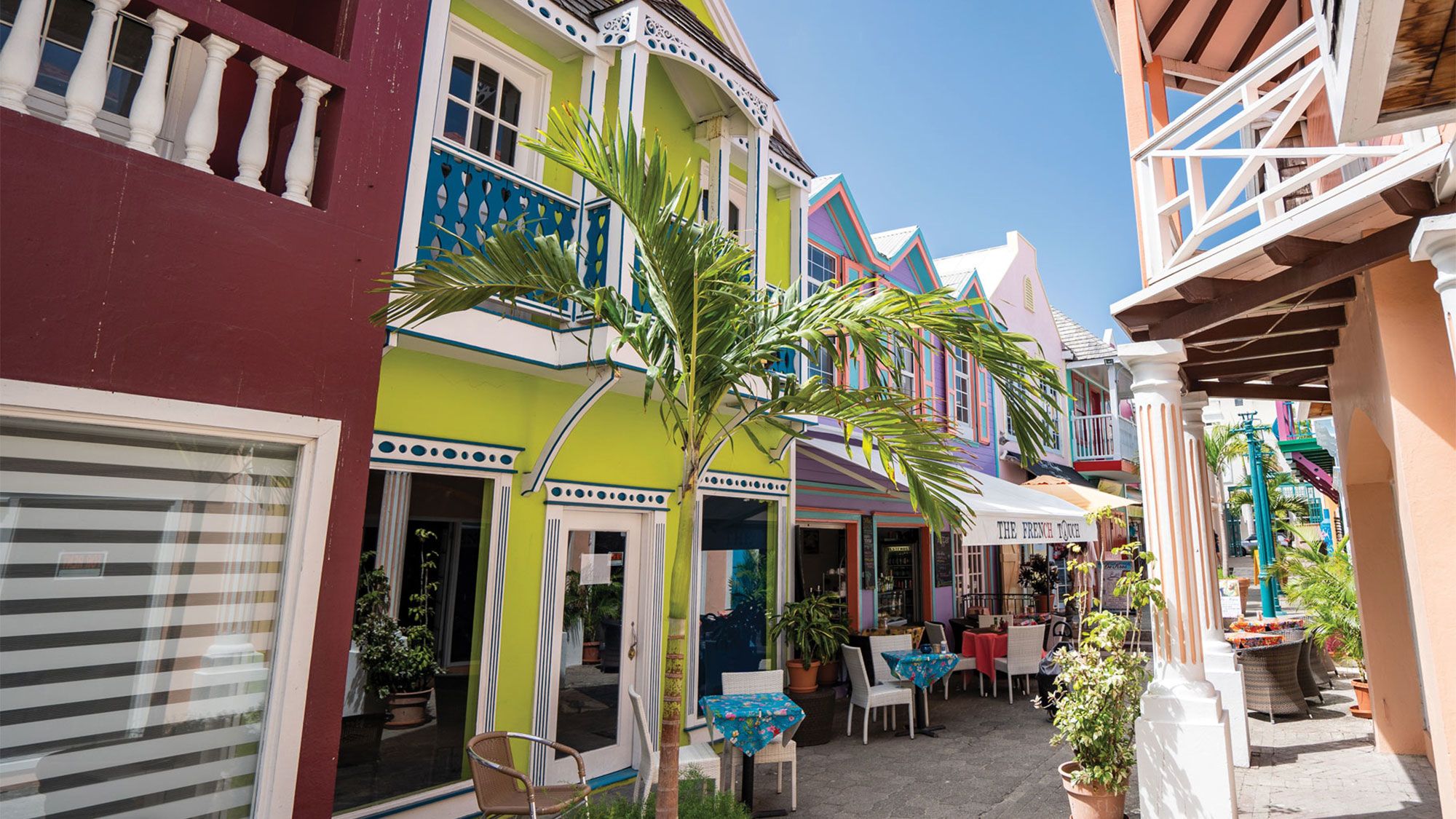
Colorful buildings in St. Maarten. (Courtesy of St. Maarten Tourism Board)
Colorful buildings in St. Maarten. (Courtesy of St. Maarten Tourism Board)
Future-proofing the industry
Rebuilding efforts after Irma and Maria focused not just on repairing physical damage but on future-proofing infrastructure.
Islands like St. Maarten and Dominica took bold steps, rebuilding with hurricane-resistant materials and integrating renewable energy sources.
The upgrades aren’t just about making the region more resilient to storms but are part of a larger vision to build a more sustainable tourism model.
“Resort construction is getting smarter, with materials and designs that can better withstand extreme weather,” Stewart said. “Renewable energy is a game-changer. The more we can rely on solar, wind and other sustainable solutions, the less vulnerable we are to external supply-chain issues. The future of Caribbean tourism depends on building smarter, operating more sustainably and embracing technologies that strengthen our ability to weather challenges.”
Sandals also sources 56% of its produce and 59% of its seafood locally, another hedge against supply interruptions.

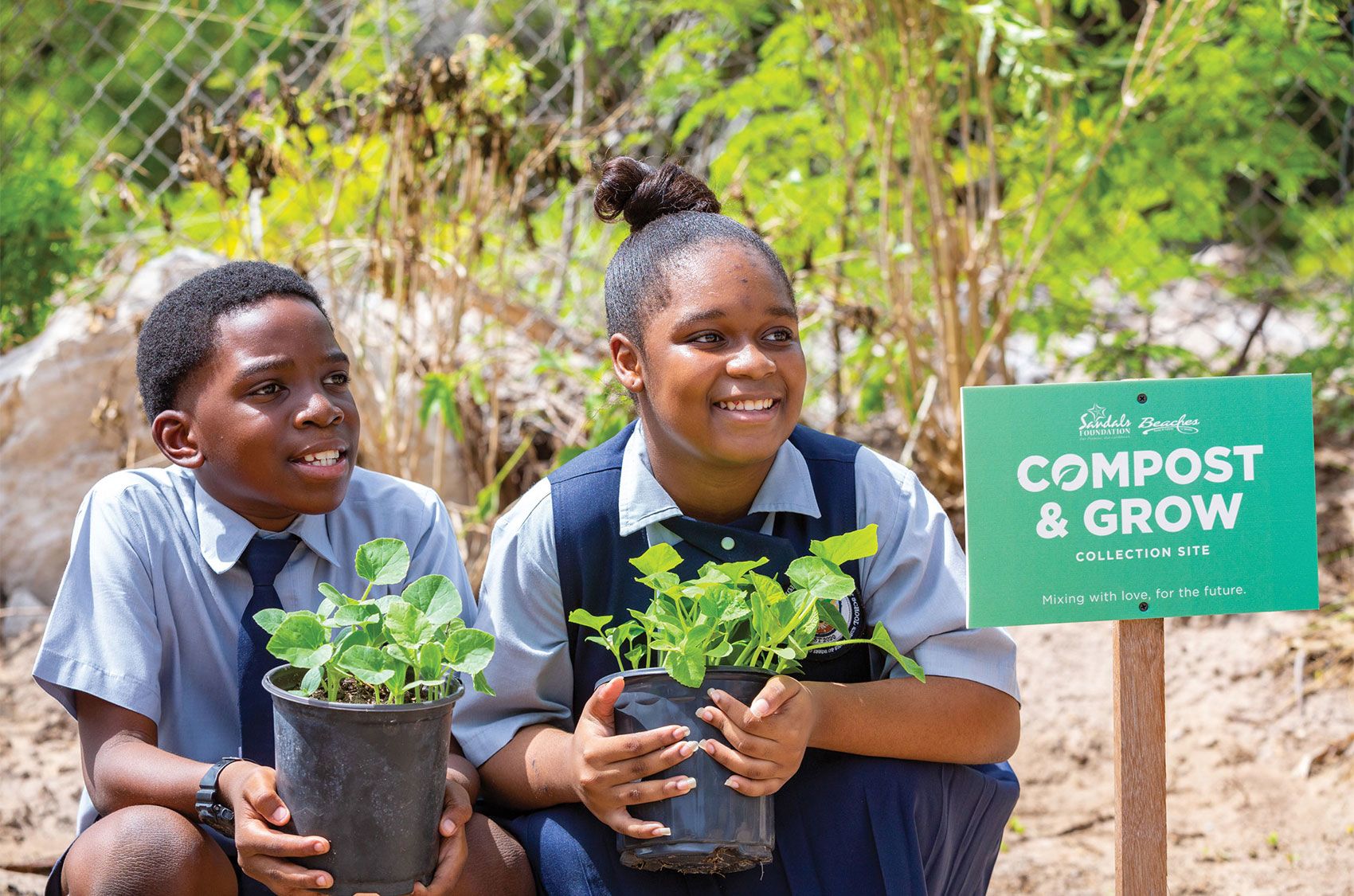
A Sandals Compost & Grow collection site in Turks and Caicos. Sandals sources 56% of its produce locally. (Courtesy of Sandals Resorts)
A Sandals Compost & Grow collection site in Turks and Caicos. Sandals sources 56% of its produce locally. (Courtesy of Sandals Resorts)
The World Bank invested more than $2 billion in the Caribbean to strengthen its disaster resilience after the 2017 hurricanes. The bank identified opportunities to rebuild structures to withstand storms, including roads, bridges and electric grids. The region has also invested in innovative technological solutions for disaster response. Drones are now being used in parts of Latin America and the Caribbean to assess damage in real time, according to the World Bank, and they can also be used to deliver medicine and food to inaccessible areas, monitor disasters and assist farmers.
One of the hardest hit structures on St. Maarten was Princess Juliana Airport, which only fully reopened operations in October. Thanks to major investments — $72 million from the St. Maarten reconstruction fund and a $50 million loan from the European Investment Bank — the airport reopened as a much stronger and more energy-efficient structure with features like hurricane-resilient jet bridges, the World Bank said.
Dominica, aiming to become the world’s first climate-resilient nation, has committed to rebuilding infrastructure that can withstand extreme weather, reducing carbon emissions and improving disaster preparedness as part of its Climate Resilience and Recovery Plan for 2020-2030.
That includes goals aimed at a fast rebound for Dominica following a natural disaster. Part of the vision outlined includes enabling airports and ports to reopen within one week of a major event, roads and bridges to reopen within three days and that at least 90% of power be restored within three days.
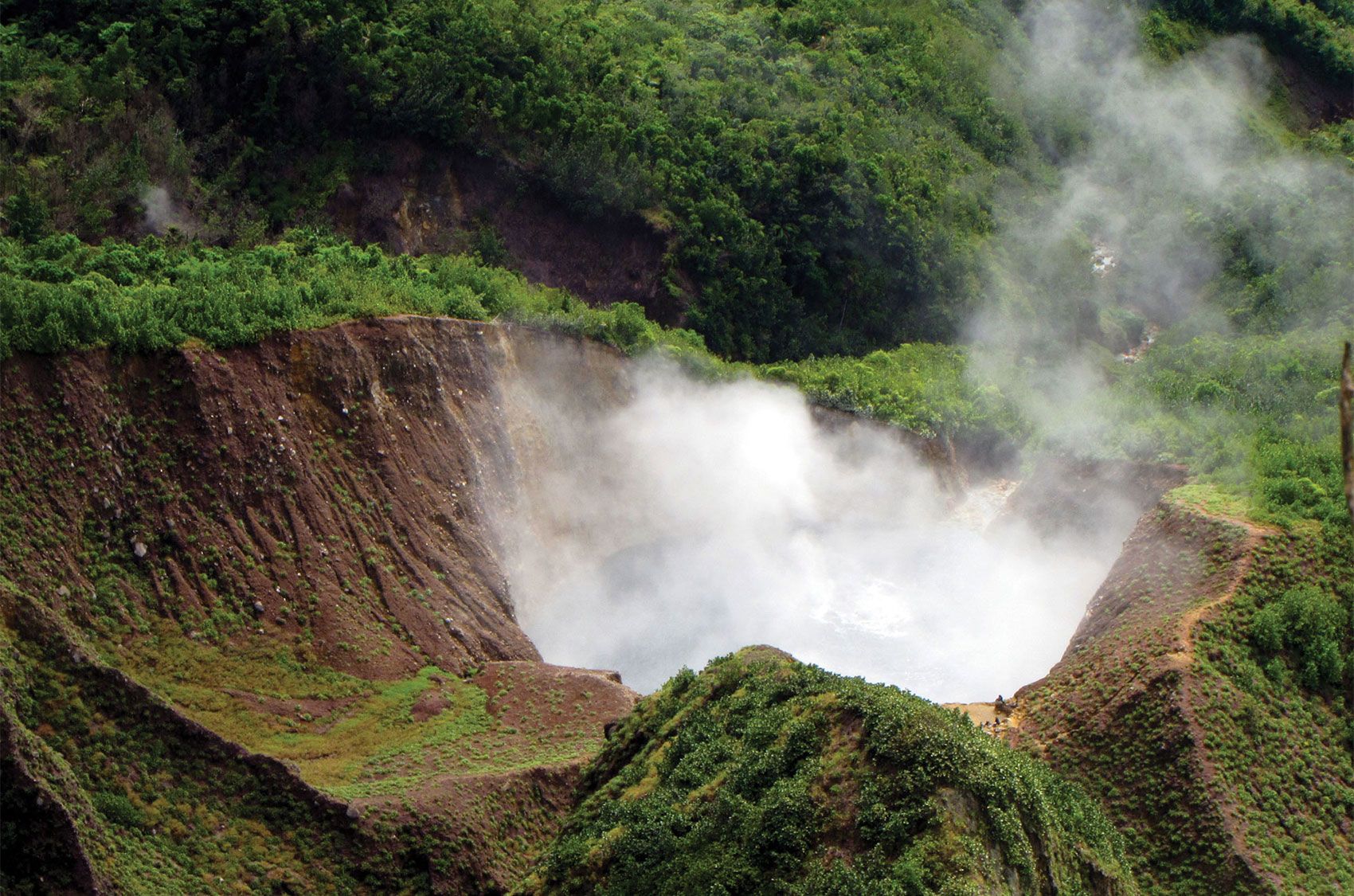
Boiling Lake on Dominica. The island nation has committed to rebuilding infrastructure that can withstand extreme weather, reducing carbon emissions and improving disaster preparedness. (Courtesy of Discover Dominica Authority)
Boiling Lake on Dominica. The island nation has committed to rebuilding infrastructure that can withstand extreme weather, reducing carbon emissions and improving disaster preparedness. (Courtesy of Discover Dominica Authority)
“Some islands are doing well in building their resilience but still face challenges in terms of limited human resources to implement necessary strategies,” said Emily Wilkinson, director of the Resilient and Sustainable Islands Initiative at the Overseas Development Institute. “The costs of building resilience on smaller islands are higher because there are fewer people to do the work. It’s not for lack of trying.”
Such discrepancies exist because the Caribbean is a collection of islands not connected by any one government, meaning varying access to disaster relief funding and rebuilding. This fragmentation, as Sandals’ Stewart described it, is among the challenges to creating regional resiliency.
“The Caribbean isn’t a single entity; it’s a collection of independent nations, each with different regulations, policies and resources,” he said. “That can make it harder to implement unified strategies for things like sustainability, disaster preparedness and tourism development.”
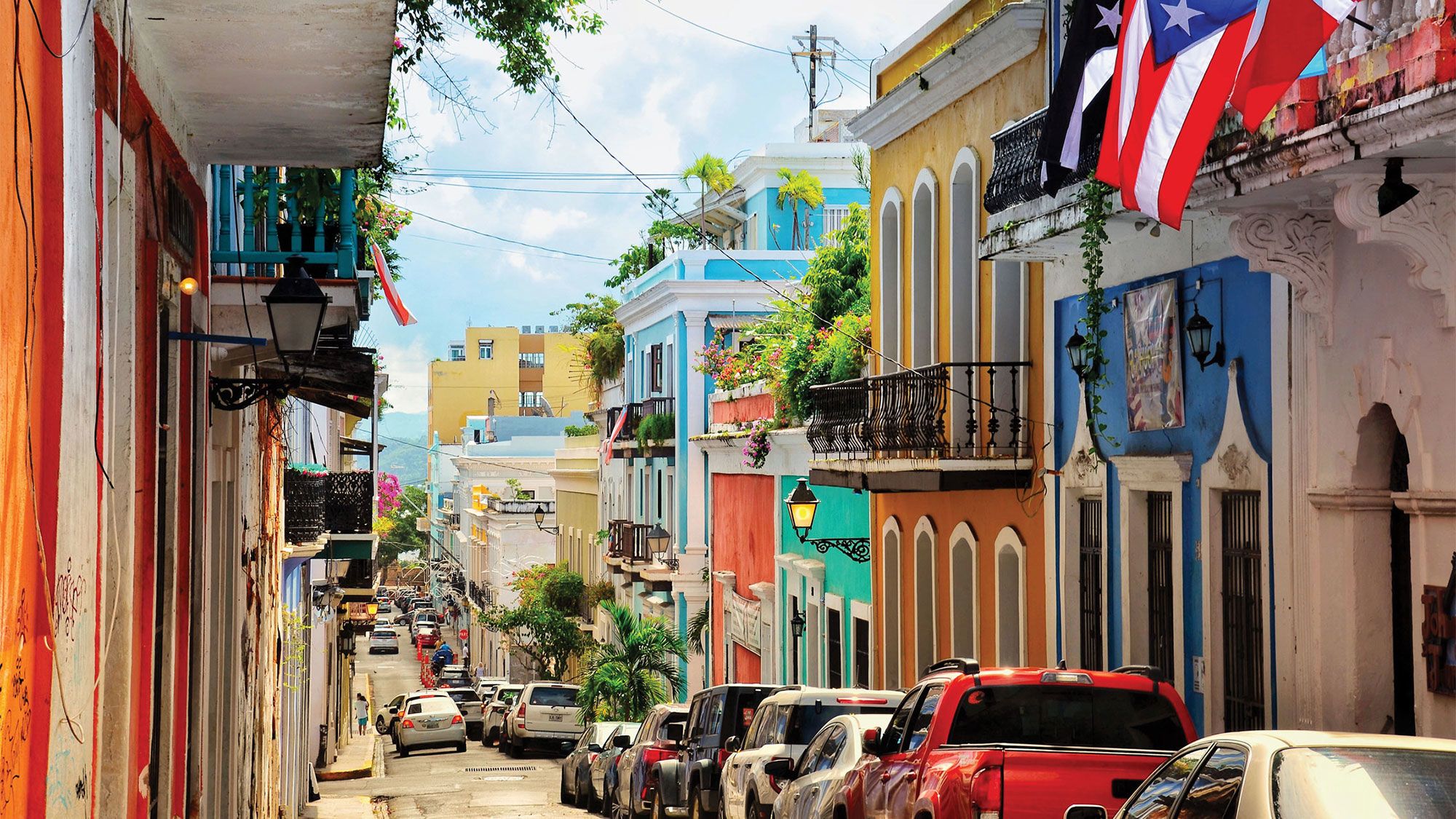
Old San Juan. Puerto Rico was hammered by hurricanes Irma and Maria in 2017, with power not fully restored for more than a year after the storms hit. (Photo by PQK/Shutterstock.com)
Old San Juan. Puerto Rico was hammered by hurricanes Irma and Maria in 2017, with power not fully restored for more than a year after the storms hit. (Photo by PQK/Shutterstock.com)
Changing perceptions
One of main challenges the Caribbean faces after a crisis is not physical. It’s perception.
Misinformation can lead travelers to believe an entire island is devastated when only certain areas are affected. Industry experts emphasize the importance of rapid, transparent communication to address these misconceptions.
“From a communications standpoint, the slow rebound isn’t always due to actual conditions on the ground but rather to perception,” said Nicola Madden-Greig, former president of the Caribbean Hotel & Tourism Association. “Our focus has been on effectively communicating with all stakeholders — travel advisors, tour operators and the media — to ensure they understand the geography of the Caribbean and each specific country.”
Jamaica has taken significant steps to improve crisis communication by leveraging technology. The country has implemented AI-powered chatbots on
VisitJamaica.com that provide real-time information to advisors and tourists alike. This technology helps combat misinformation by offering immediate, accurate updates about conditions on the ground.
When crises occur, the industry must quickly coordinate to inform travelers and adjust marketing strategies, said Steven Defontes, president and founder of Big Idea Advertising, whose clients include Antigua, St. Maarten and Anguilla.
“We need to be as transparent as possible, highlighting the positives and outlining the timeline so people understand what to expect,” Defontes said. “Travelers want to feel safe. As long as you communicate safety — whether for volunteers, those returning for luxury vacations or the bridal market — people need to know they are secure.”
Immediate communication is key to recovery, he added, saying that if a destination is temporarily closed, the marketing message can pivot to other aspects like supporting volunteer efforts and keeping travelers informed.
He also said it is important to get eyes on the ground, such as journalists and influencers, who can give travelers an understanding of which areas are affected by a crisis, which aren’t and what experiences are available.
“Even if only some parts of the destination are ready, that’s where influencers can be especially helpful in showcasing what’s available,” Defontes said. “Advertising has its place, but during times of crisis, people want authenticity. They want to see what’s happening now, not just an ad. They need to know, what can I expect if I travel there today?”
Advisors play a critical role in that communication process, as well, serving as a key conduit to travelers about the reality of a situation.
Travel advisors can also use knowledge about resilience strategies in place to reassure clients about returning to areas that have been struck by disasters by highlighting safety and preparedness measures, from hurricane-resistant infrastructure to advanced disaster response systems, while emphasizing sustainable tourism initiatives to ensure long-term regional health.
Puerto Rico, despite being so badly damaged by the storms in 2017, is among the islands that saw its tourism numbers rebound only two years later. In 2021, it set a visitor arrival record. Much of that had to with Discover Puerto Rico’s campaign to communicate the island’s rebuilding efforts following the hurricanes and being open to U.S. residents during the pandemic. The DMO marketed heavily after the storms, engaging celebrities like Lin-Manuel Miranda, who brought the hit musical “Hamilton” to the island to help with the recovery, and using what it had learned about disaster recovery then to confront the pandemic.
“Credit must go to the proactive, nonpoliticized way the government, our health authorities and the private sector as well as our marketing, sales and research teams adapted to the crises and responded,” Brad Dean, Discover Puerto Rico’s then-CEO, told Travel Weekly in 2022.
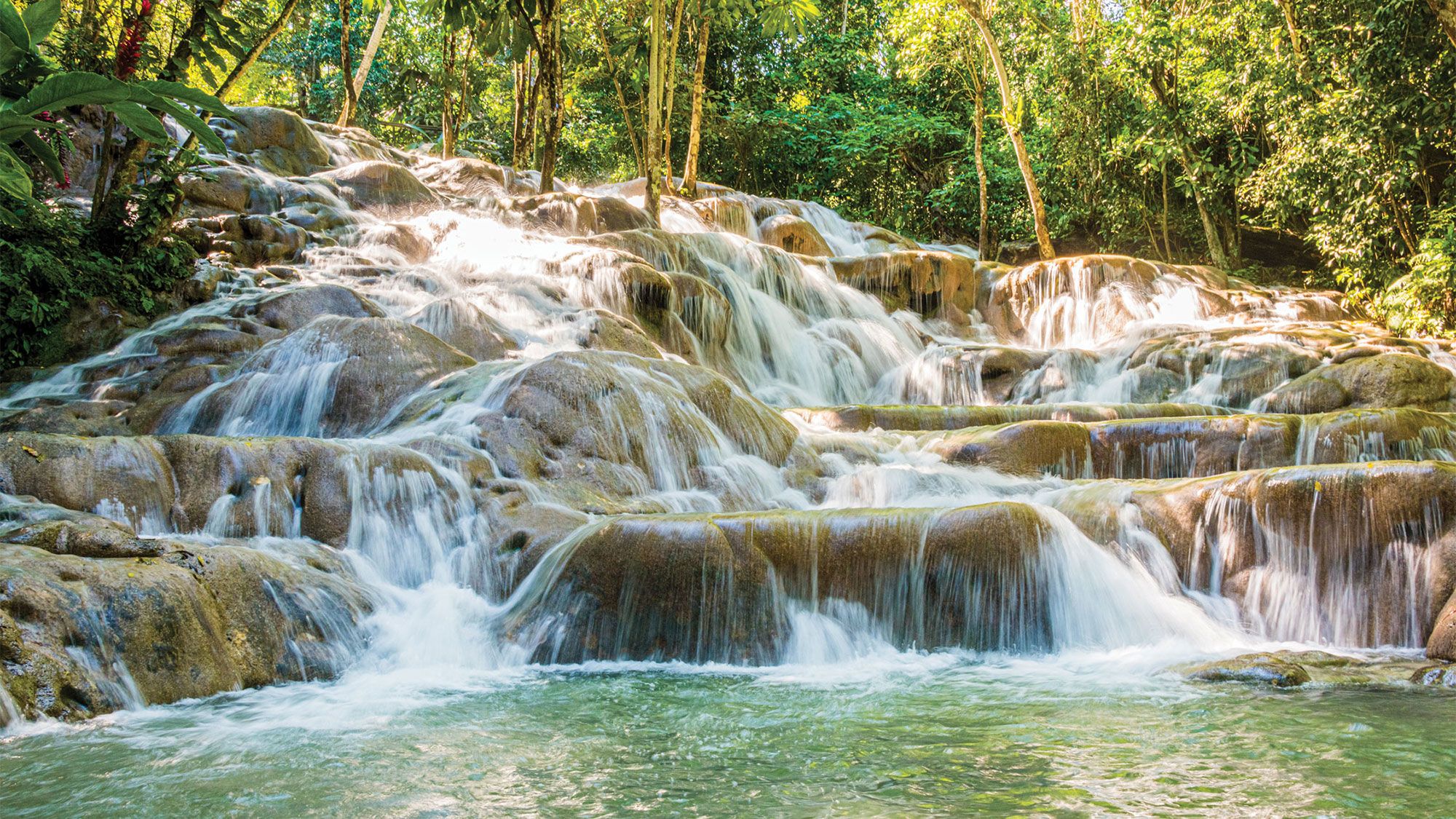
Dunn’s River Falls in Jamaica. Jamaica has taken steps to improve crisis communication. (Photo by Greg Meland/Shutterstock.com)
Dunn’s River Falls in Jamaica. Jamaica has taken steps to improve crisis communication. (Photo by Greg Meland/Shutterstock.com)
Rebuilding together
While resilience efforts have focused on physical infrastructure and communication strategies, true preparedness starts with the people who live in these destinations and are the backbone of the tourism industry. Caribbean nations are increasingly recognizing the importance of fostering a culture of disaster preparedness and education at the community level.
“What I’m beginning to hear now is a shift in mentality, where people must live in a constant state of preparedness,” said the Overseas Development Institute’s Wilkinson. “The focus on having more resources in place for recovery is really important, because you can’t eliminate the risks. You can’t stop these events from coming, but you can be in a better situation to respond.”
Living in the tropics means accepting extreme weather as a reality. Governments and businesses are investing in education initiatives to ensure that residents and tourism workers know how to respond in times of crisis. Hotels and tourism boards have implemented training programs for staff on emergency protocols, while governments are working on improving evacuation plans and community response efforts.
Jamaica’s Ministry of Tourism established the Global Tourism Resilience and Crisis Management Centre at universities both at home and abroad, with the intention of building out a space for research and academic study around resilience-building.
“The objective overall is to heighten awareness of building resilience in tourism,” said Edmund Bartlett, Jamaica’s tourism minister. “It’s recognizing the vulnerabilities that are inherent in tourism. But the capacity we have is to foretell, mitigate, manage, recover — and recover quickly — and then to thrive.”
The Caribbean’s resilience also depends heavily on public-private sector collaboration. Governments, businesses and tourism boards must work together to create a resilient tourism model.
“The way the region responded to Covid-19 was a testament to how far we’ve come,” Stewart said. “At Sandals, we moved swiftly, developing our Platinum Protocols of Cleanliness in partnership with the CDC, [the World Health Organization] and the ministries of health across the islands we operate.
“What made the protocols truly impactful was that they didn’t just benefit Sandals, they benefited the entire region.”
Sandals shared its approach with competing hotels, tour operators, transportation companies, educational institutions and governments.
“Resilience is not just about government action but leveraging the expertise and resources of the private sector,” Wilkinson said. “Together, they can create a tourism model that adapts to challenges like hurricanes, pandemics and economic instability.”
 Built with Shorthand