


Windstar's Tahiti turn
As French Polynesia works to bring visitor numbers back to pre-pandemic levels, Windstar is making a bid to become the destination’s “hometown” cruise line.

Beneath an open-air island restaurant built of bamboo and jungle timber, Windstar Cruises president Chris Prelog stood and faced the dining room. Before him, for the first time, were some of his most valued allies in the travel industry, including his brand’s top sellers.
And he wanted their help.
As members of Windstar’s Club 180 agent-recognition program, they were at Bloody Mary’s, a restaurant and bar on Bora Bora in French Polynesia, while on a Star Breeze sailing in January. The 118 islands and atolls that dot the South Pacific destination are known for their turquoise lagoons, white sands, panoramic mountain views and deeply rooted cultures, each different from the last.
Prelog told the advisors that he wants his luxury small-ship line to become Tahiti’s “hometown” cruise line — and wants them to help him get it there.


Windstar Cruises president Chris Prelog is positioning the line for expansion in French Polynesia. (Photo by Tom Stieghorst)
Windstar Cruises president Chris Prelog is positioning the line for expansion in French Polynesia. (Photo by Tom Stieghorst)
Despite the clarity of the area’s waters, growing the premium cruise line to become the dominant brand here is complicated: Not only do the islands and cruise industry need to rebound from the pandemic, but Windstar would have to outmaneuver dominant brand Paul Gauguin, an established luxury player that calls the market home.
But Prelog has a plan. He stood before the advisors in the open-air restaurant and declared, “We definitely want to be the ones owning Tahiti.”
The Tahitian Situation
Like many destinations, Tahiti is trying to restart its tourism industry. Before the pandemic, nearly 237,000 people visited French Polynesia, about 89,000 of them from the U.S., its largest market. Those numbers crashed in the past two years, with less than 83,000 total visitors last year, 41,000 from the U.S. The goal, local tourism officials say, is to double last year’s numbers in 2022.
That goal comes with a self-imposed cap on large-ship cruising. Shortly before the pandemic, one of the region’s most popular islands, Bora Bora, banned large cruise ships and limited daily visits, citing concern for preserving the beauty of its lagoon and the quality of service its people can provide on land. No more than 1,200 passengers are allowed to call at the island at a time.
The French Polynesian government would prefer to cap cruise ships at fewer than 700 passengers and limit them to sailing year-round in the destination. In January, French Polynesia president Edouard Fritch limited ships doing turnarounds on transpacific cruises to 2,500 passengers and those doing stopovers in Tahiti to 3,500 passengers.
The limits are about more than overcrowding, said Kristin Carlson, managing director of Tahiti Tourisme, the region’s tourism bureau. Instead, she said, it is about “slow and sustainable tourism” prioritizing connections to local people, culture, food and music to educate and foster an emotional impact with visitors while promoting sustainability for the communities and the environment.
Ships from 300 to 500 passengers are the sweet spot for Tahiti, Carlson said, especially if they stick around the region. “We’re appreciative of being part of a world itinerary or a South Pacific itinerary, but obviously getting cruises to do more itineraries within the islands of Tahiti and not just stop [on their way] to another destination is a huge desire for the country.”
The limits are ideal for cruise lines like Windstar and Paul Gauguin Cruises, with smaller ships that sail in Tahiti year-round. Normally, Windstar’s 148-passenger tall ship, the Wind Spirit, cruises the islands all year. Temporarily replaced by the recently stretched, 312-passenger Star Breeze while in dry dock, the Wind Spirit was expected back in Tahiti on March 17.
The small-ship strategy is one Windstar believes positions it well as people emerge from the pandemic and begin cruising again. While people want to start traveling again, they “don’t want to be around a lot of people right now,” said Steve Simao, Windstar’s vice president of sales.
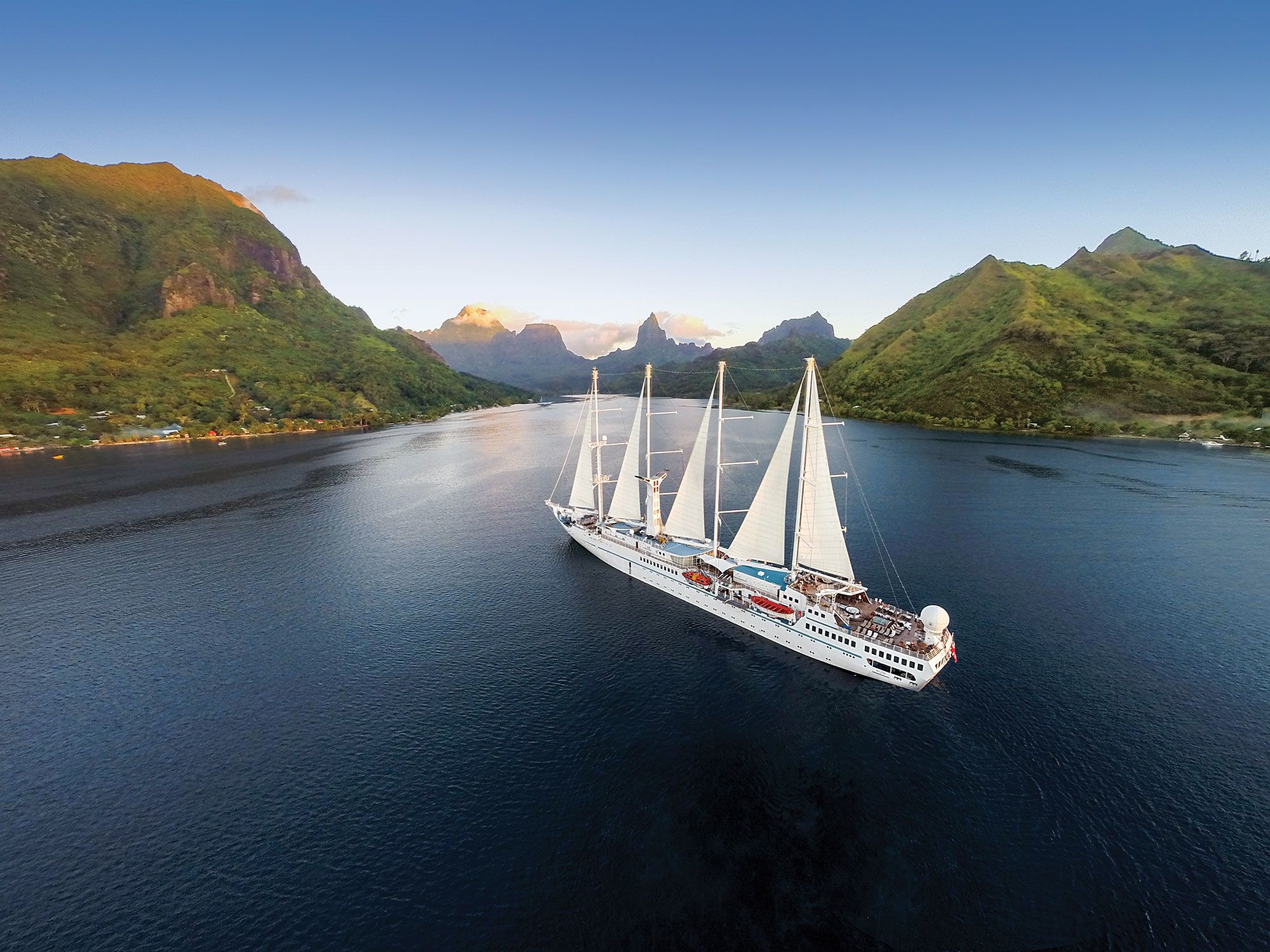
Prelog’s strategy includes a swap. He wants to stock Tahiti with Windstar’s largest wind-powered vessel, the 342-passenger Wind Surf, whose picturesque sails capture the romanticism of the region. The switch would build capacity by nearly 200 guests per voyage. He said that switch could come by the end of 2023 or in 2024.
The formidable Windstar competitor, Paul Gauguin, has one 330-passenger, eponymous ship. French cruise company Ponant liked Paul Gauguin’s presence in French Polynesia so much, it bought the line in 2019 and planned to cross-market the two brands.
Ponant quickly made a play to expand the Gauguin brand, placing a $332 million order in November 2019 for two newbuilds to join the Paul Gauguin in French Polynesia. They were to be a pair of 230-passenger vessels modeled after Ponant’s Explorer-class ships. Those plans were spoiled during the pandemic, and the expansion was eventually abandoned. Ponant deferred those orders and later canceled them.
Ponant is mum on its plans for the Paul Gauguin brand and declined an interview. However, the brand maintains deep French Polynesian roots. Even its name is a nod to the region, with the ship named after the French post-impressionist painter who lived in Tahiti in the 1890s.
Windstar and Ponant are the only lines with a full-time presences in Tahiti, although others often stop by on transpacific sailings, most often Oceania Cruises. Prelog said he’s not worried about competing with Paul Gauguin.
“Frankly, Paul Gauguin is a small player. I think we’re different just by default because we have sailing ships, and there’s definitely a different guest who looks for that,” he said onboard the Star Breeze. While the Paul Gauguin ship has its own following, he said, Windstar has a deeper database of Windstar cruisers who have sailed on its six ships.
AirLift on the rise
Prelog said he has reason for optimism that tourism will grow in Tahiti enough to justify a larger ship, pointing to an uptick in airlift. Air Tahiti Nui, a niche carrier with planes awash in tropical colors, is rebounding operations from three flights a week during much of last year to up to a dozen during the summer.

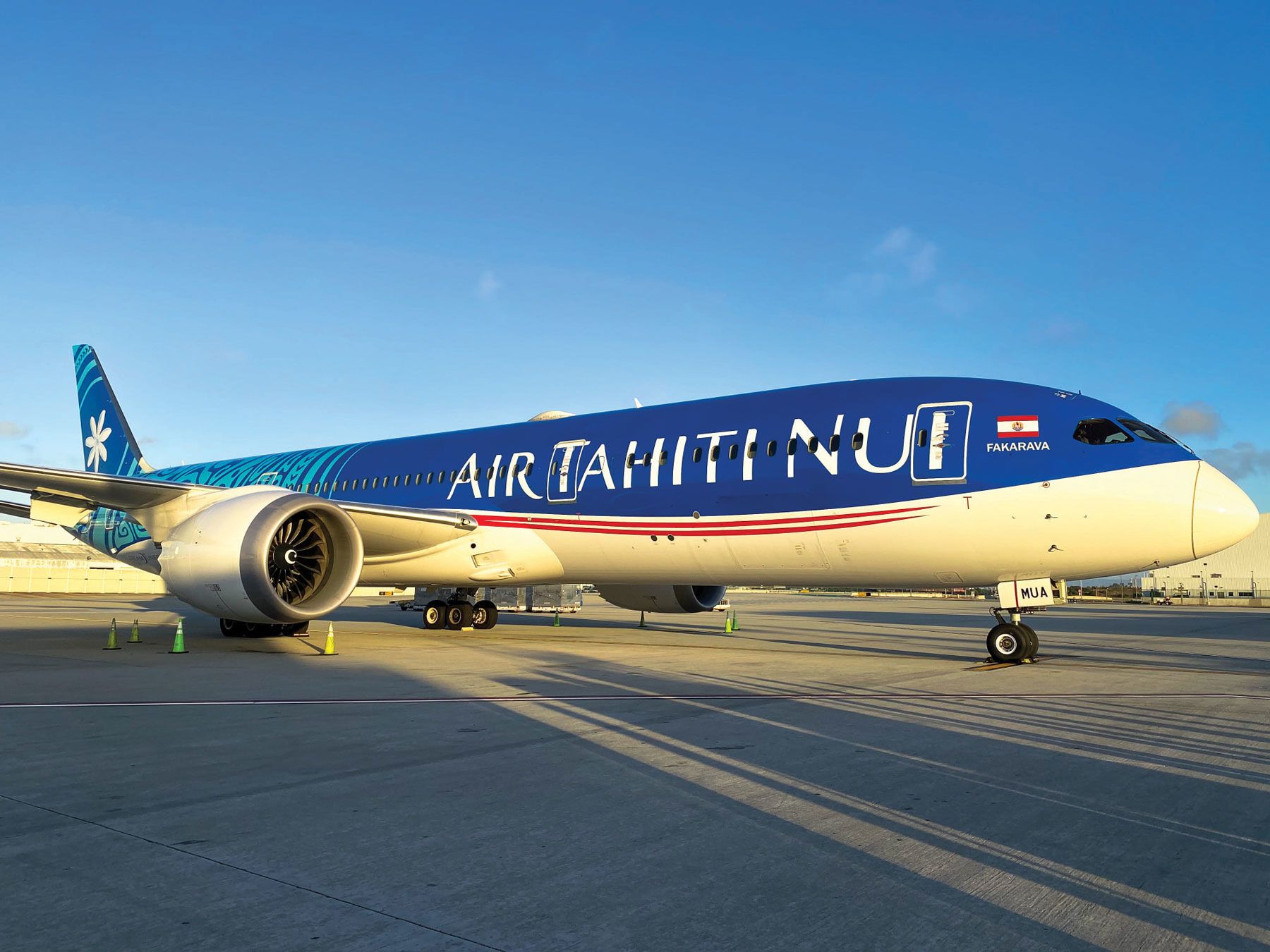
An Air Tahiti Nui Boeing 787 Dreamliner. The airline is ramping up U.S. service from three flights a week during much of last year to up to a dozen during the summer. (Courtesy of Air Tahiti Nui)
An Air Tahiti Nui Boeing 787 Dreamliner. The airline is ramping up U.S. service from three flights a week during much of last year to up to a dozen during the summer. (Courtesy of Air Tahiti Nui)
That’s still below the 14 flights a week the carrier was offering during peak season in 2019, but Nicholas Panza, Air Tahiti Nui’s vice president of the Americas, said the increased capacity from last year to this one reflects the expectation that passenger demand will follow.
“Forward booking numbers are good, and we’re seeing very positive response from the marketplace with Tahiti being open and more people vaccinated. Covid concerns are always, of course, there,” he said, “but we feel Tahiti has the right protocol in place for people to travel with confidence regarding safety and enjoy their vacation without an overriding fear of having a Covid situation occur.”
As the hometown airline, Air Tahiti Nui provides the most flights to the islands from the U.S., daily or twice daily, although other carriers also regularly service Tahiti. United Airlines launched year-round service from San Francisco in 2018, offering three flights a week, which Carlson at Tahiti Tourisme called a “game-changer.” This year, both United and low-cost airline French Bee are looking to offer flights five days a week, and Air France also flies to the destination.
The Hawaii factor
Hawaii, one of French Polynesia’s nearest neighbors, is also a main competitor, offering a similar mix of natural beauty, rich culture and sandy beaches. Hawaii is a more comfortable destination for Americans who are intimidated by the longer flight or want to remain stateside, advisors said, making the Aloha State far more popular: The number of people who visit Tahiti in a year is equal to the number Hawaii sees in seven days, Carlson said. But that’s a good thing.
“We think this is quite the selling point … right now, because people are really looking for the noncrowded, pristine experiences,” she said.
Travel advisors agree. “So many people fly to Hawaii. For two more hours, you’re here,” said Eric Goldring, a luxury specialist and owner of Goldring Travel. “This is the other Hawaii, the good one.”
Thomas Carpenter, the founder of Huckleberry Travel, said travelers perceive Tahiti as difficult to get to and think it’s on the other side of the international dateline.
“People think it’s a farther flight than to Australia. There’s a lot that people don’t know,” he said. “I pitched it to a couple of people, but when they saw the length of the flights and the price tag, they opted for Hawaii instead.”
Land and sea
When the pandemic decimated tourism, it led several hotels in French Polynesia to fold and hotel capacity to shrink. The closures were mostly among the 4- and 5-star properties that U.S. guests frequent most and that advisors most often sell, according to Tahiti Tourisme.
The region’s two most popular islands collectively lost 300 rooms during the pandemic. Bora Bora lost 20% of room inventory due to the closure of several Sofitel properties and Le Meridien, which is undergoing renovation and is expected to reopen in late 2022. Moorea, the nearest island to Tahiti, lost 28% of its room capacity with the closure of the InterContinental Moorea Resort and Spa.
Fewer hotel beds creates an opportunity for cruise lines. If it’s difficult to string together nine hotel nights during peak season, travelers can consider a cruise instead and add a few land nights, Panza said.
“There’s a wonderful opportunity for the cruise lines to have very good occupancy and to take advantage of both the combination of consumer demand and the reduction in hotel rooms that exists at the present time,” Panza said.
That said, only about 10% to 12% of Air Tahiti Nui passengers are taking a cruise, he said.
According to Tahiti Tourisme, only about 28% of the roughly 48,000 U.S. travelers who arrived in Tahiti in 2019 were there for a cruise.
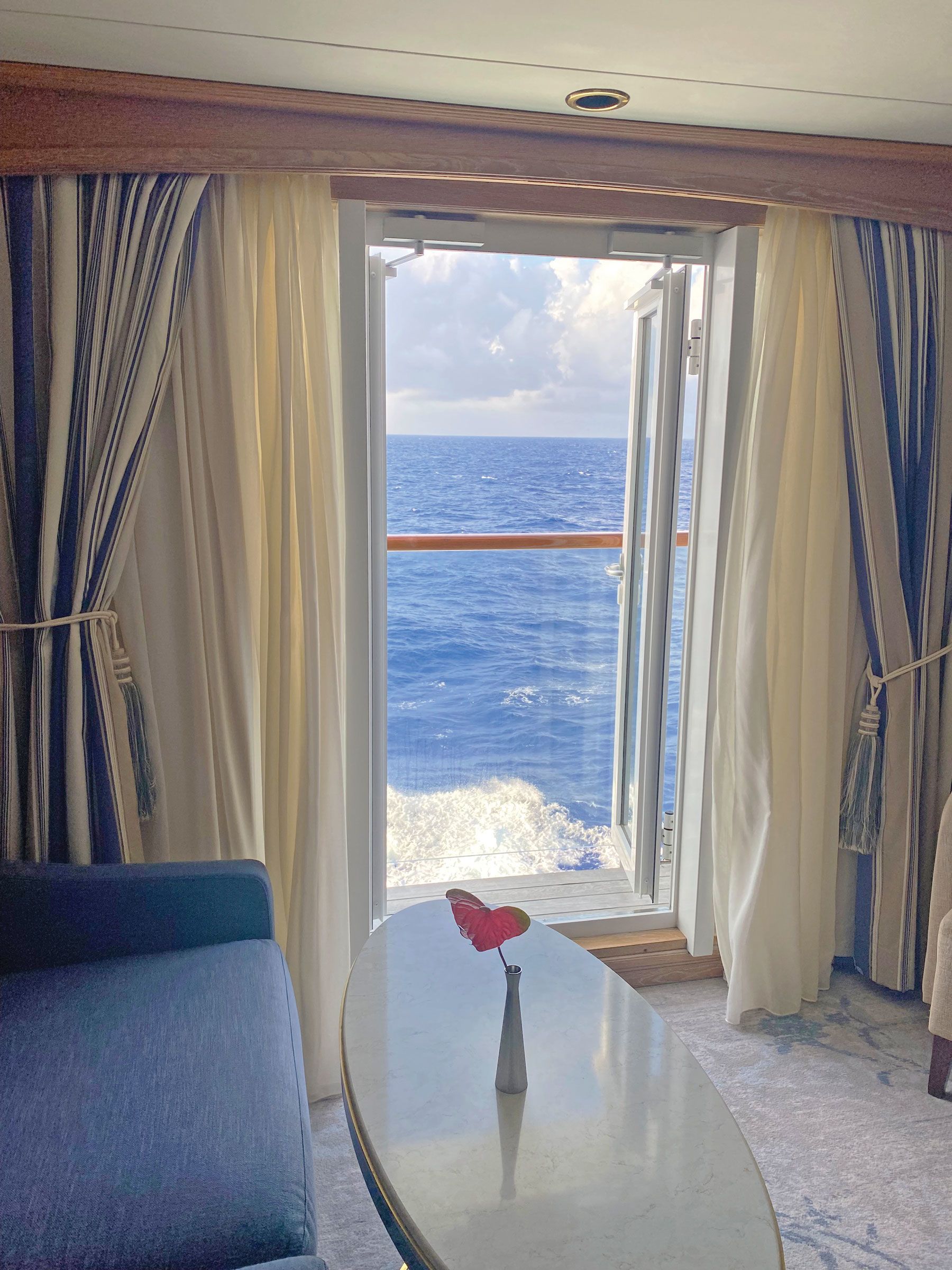
The view from a stateroom on Windstar’s Star Breeze as it sails to the island of Tahiti. (TW photo by Andrea Zelinski)
The view from a stateroom on Windstar’s Star Breeze as it sails to the island of Tahiti. (TW photo by Andrea Zelinski)
Convincing vacationers to opt for a cruise of French Polynesia rather than a stay on land is difficult, some travel advisors say. The islands are viewed as a once-in-a-lifetime destination and are popular among honeymooners and couples celebrating big anniversaries. These visitors often envision romantic nights in iconic overwater bungalows, not setting off on cruise ships with a lot of people, said Jeannie Carter Sauleau, an advisor who specializes in Tahiti and other islands. “A cruise doesn’t sound very romantic” to that audience, she said.
Sauleau, president of Sixth Star Travel, which has offices in Fort Lauderdale and St. Louis, estimates that 75% of her Tahiti clients opt for the land experience over sea voyages. She tries to sell her customers on the value of cruising: the ability to see multiple islands with all food and drink provided. Unlike the Maldives, where visitors generally stay on one island, visitors to Tahiti tend to visit multiple islands anyway, she said.
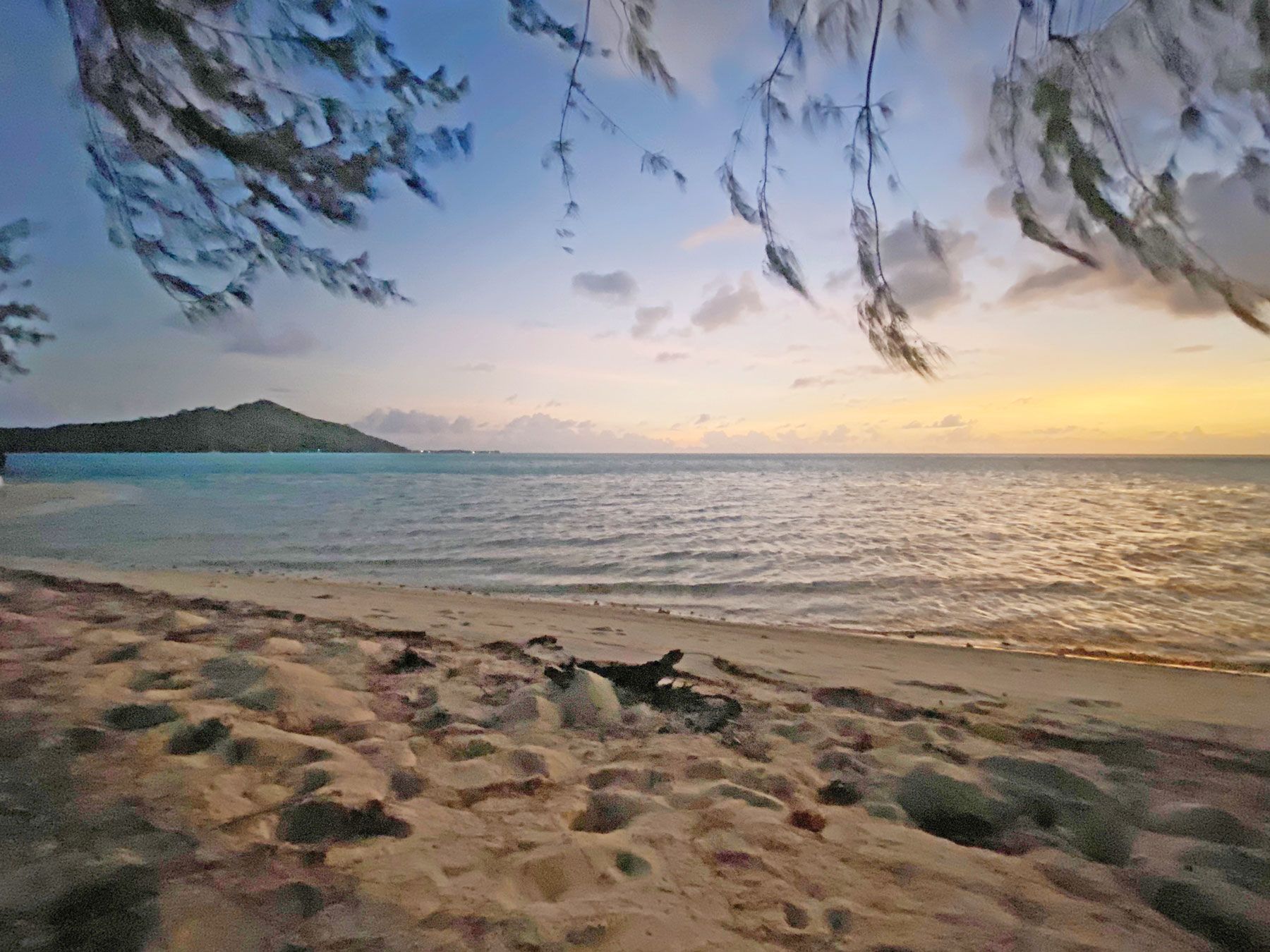
Windstar’s Dreams of Tahiti itinerary in early February included an evening excursion to a private island off Huahine. (TW photo by Andrea Zelinski)
Windstar’s Dreams of Tahiti itinerary in early February included an evening excursion to a private island off Huahine. (TW photo by Andrea Zelinski)
Windstar has better name recognition than Paul Gauguin due to the size of its fleet cruising worldwide, said Sauleau. And, she said, the Windstar brand attracts a younger crowd.
But Windstar has to bring the experience of Tahiti onto the cruise ship, she said. Aboard the Star Breeze in early February as part of Club 180, she noted a lack of Tahitian products on the ship and not enough on-ship local entertainment — although Windstar does rent an island with Tahitian fire dancers — and said fragrant leis should be a default upon arrival.
With just one major competitor in the market, Windstar is really competing against the land experience rather than with Paul Gauguin.
“They’re looking for that experience. If you’re selling against overwater bungalows, then at least have the flair of Tahiti,” she said, because compared to a land vacation, a cruise in the islands is “a hell of a value.”
 Built with Shorthand