
Space tourism’s slow ascent
Interest in space tourism soared following Blue Origin’s high-profile, all-women spaceflight, but the growth of the sector is hindered by high costs and limited availability.
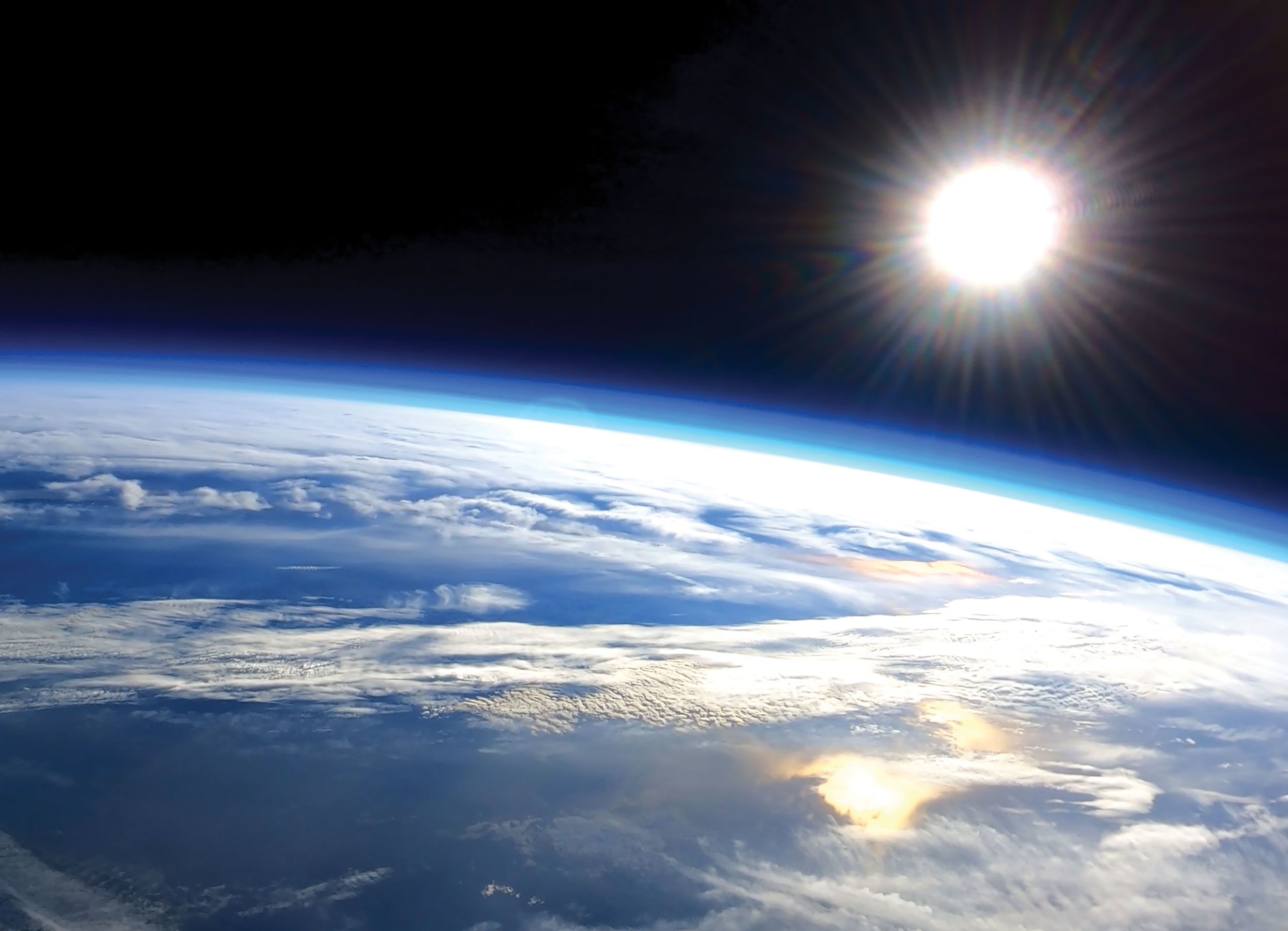

Blue Origin’s successful launch of a celebrity-studded, all-women spaceflight on April 14 had lots of people seeing stars.
Google searches related to space tourism skyrocketed in the days after, and searches for space tourism companies have grown 130% since.
But despite the interest and the fact that the technology for space tourism has arrived, the fledgling industry might still be several years away from taking off.
The astronomical cost of these flights, paired with limited options, have clients waiting until technology advances and operations become more streamlined, travel experts said.
One of them, Craig Curran, president of DePrez Group of Travel Companies and an accredited space agent for Virgin Galactic, said he expects to see a bookings boom when technology advances and operators begin offering regular departures. That’s also the mindset of Jimmy Carroll, the co-founder of luxury tour operator Pelorus, who thinks the space tourism industry will pick up by 2030 as options expand, such as the addition of space stations being constructed that can host tourists overnight.

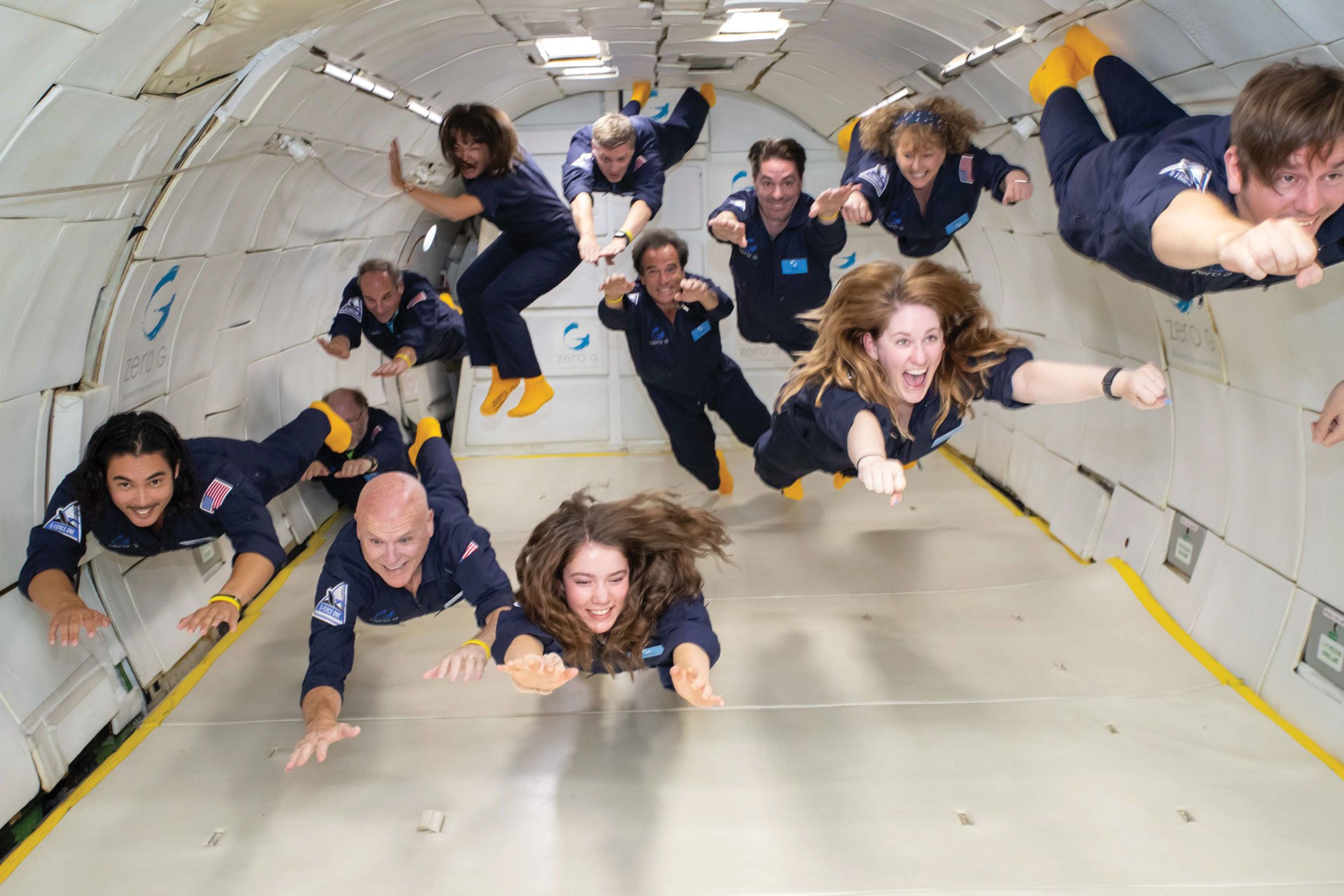
Craig Curran chartered a zero gravity flight in Rochester, N.Y. On a zero gravity flight, passengers float as if they were in space. Curran can be seen in the center of the photo. (Courtesy of Craig Curran)
Craig Curran chartered a zero gravity flight in Rochester, N.Y. On a zero gravity flight, passengers float as if they were in space. Curran can be seen in the center of the photo. (Courtesy of Craig Curran)
“We need to see it operational,” Curran said of the industry. “There’s virtually no product. … People have been waiting and saying ‘show me.’”
The three options that are operational are Blue Origin, SpaceX and Virgin Galactic. However, given the cost and work it takes to launch spacecraft, the companies do not operate frequently or regularly, which Curran said is a barrier to expanding the industry.
Jeff Bezos’ Blue Origin, which does not publicly disclose its product costs but requires a $150,000 deposit, has launched 11 crewed spaceflights since 2021 as part of its New Shepard program, most recently the all-women flight that included singer Katy Perry, TV personality Gayle King and aerospace scientists. The first seat on the New Shepard rocket went for $28 million.
SpaceX, Elon Musk’s venture, has launched 16 crewed orbital flights since 2020. Though the price of a seat on the aircraft is not publicly advertised, passengers have reported paying $55 million for a spot.

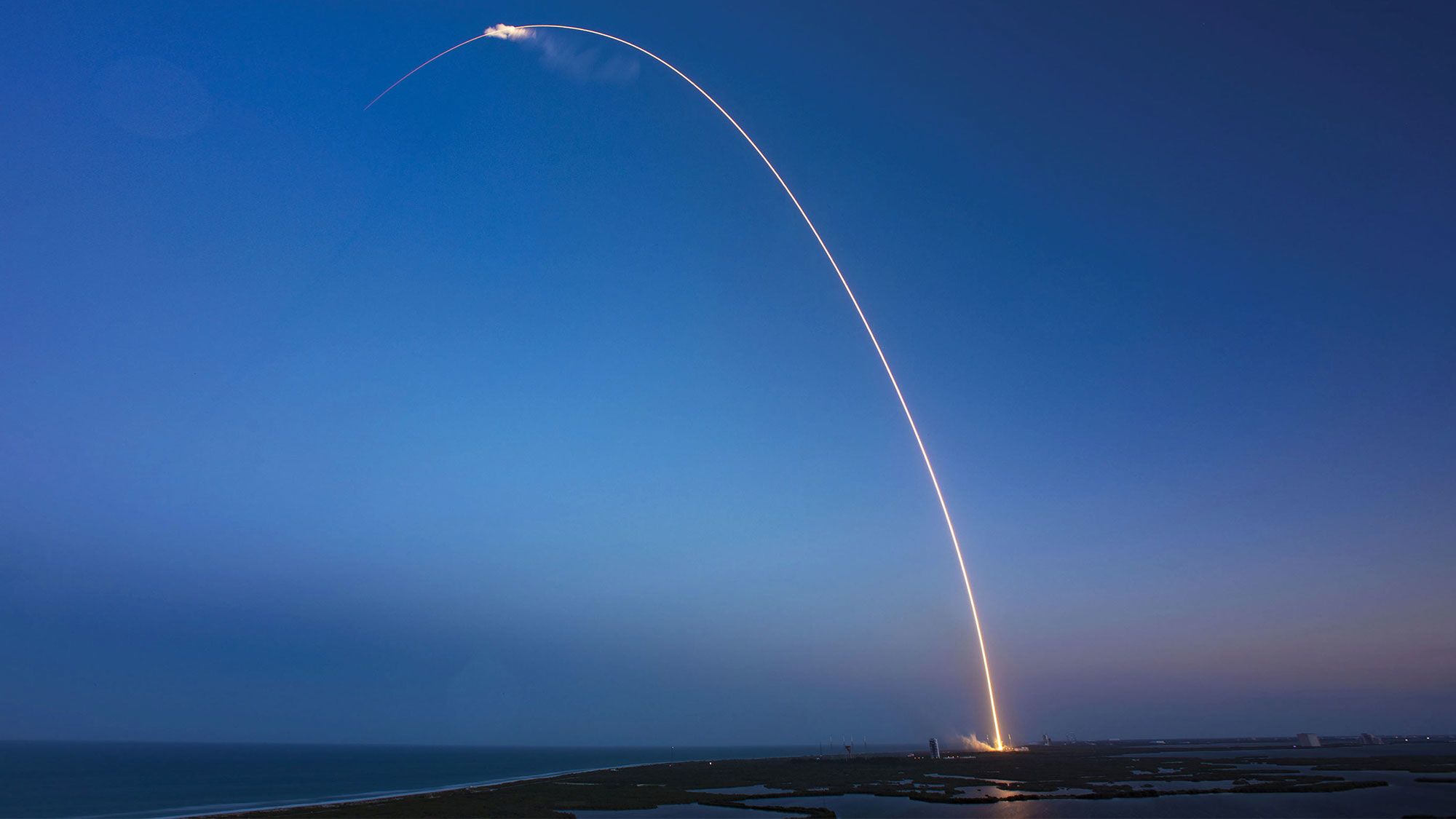
SpaceX Falcon 9 rocket launches the SES-18 and SES-19 Mission on March 17, 2023. (Courtesy of SpaceX)
SpaceX Falcon 9 rocket launches the SES-18 and SES-19 Mission on March 17, 2023. (Courtesy of SpaceX)
Richard Branson’s Virgin Galactic offers seats for a reported $600,000 — a steal, compared to the competition — though, that’s a jump from the initial cost of $250,000. The California-based company was the first to sell commercial spaceflights, in 2005, and has completed a dozen flights.
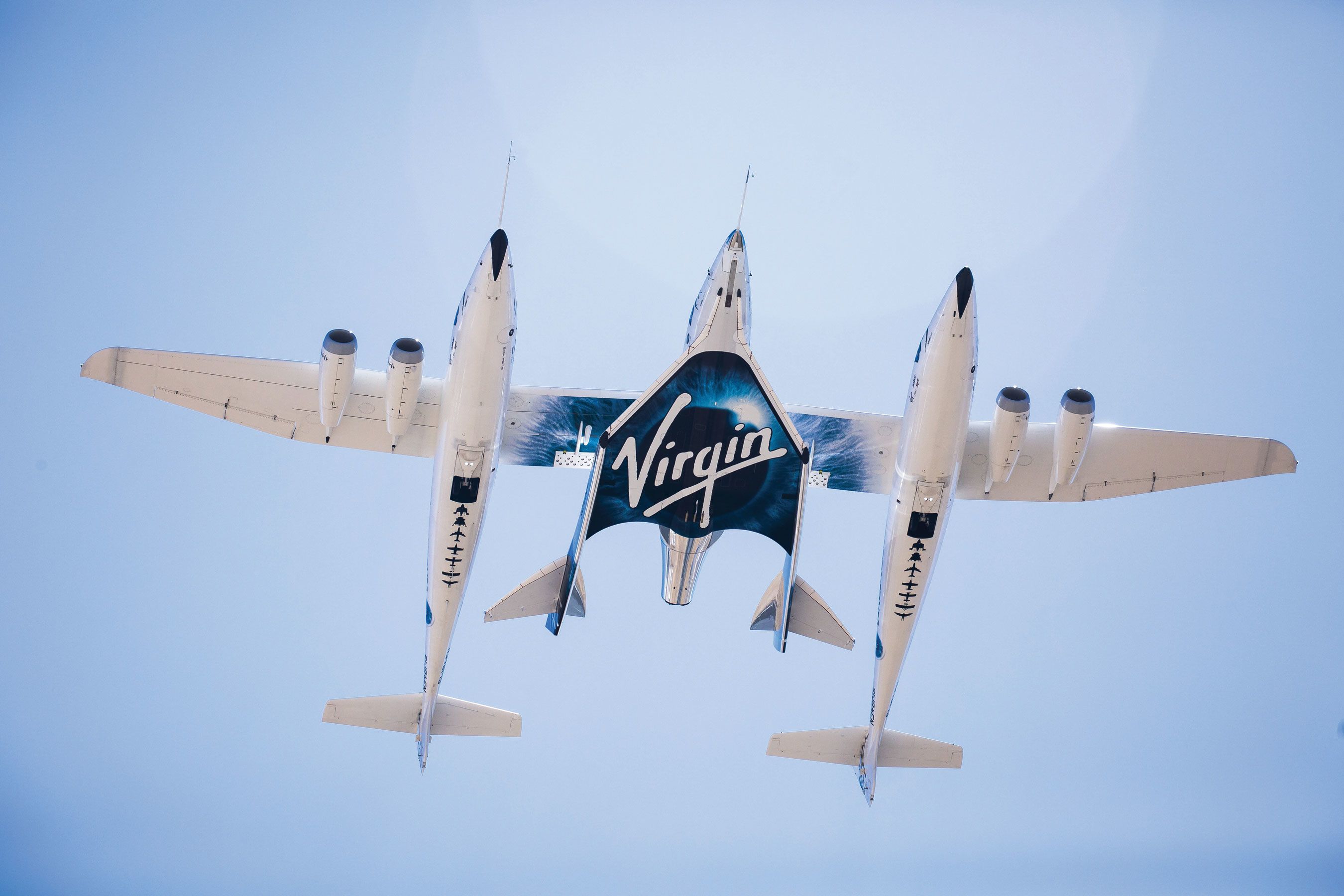
A Virgin Galactic spacecraft slung underneath a launch aircraft. The California-based company was the first to sell commercial spaceflights, in 2005, and has completed a dozen flights. (Courtesy of Virgin Galactic)
A Virgin Galactic spacecraft slung underneath a launch aircraft. The California-based company was the first to sell commercial spaceflights, in 2005, and has completed a dozen flights. (Courtesy of Virgin Galactic)
Those sky-high rates are a barrier to the industry taking off, said Rachel Fu, chair and professor of the Department of Tourism, Hospitality and Event Management at the University of Florida.
The price, coupled with technological limitations, ethical concerns and public perception, “add layers of complexity,” said Fu, who also directs the university’s Eric Friedheim Tourism Institute.
“These factors are slowing widespread adoption, keeping space travel largely out of reach for all but a small group of ultrawealthy individuals,” she said.
But clients who have the money aren’t necessarily clamoring to board a spacecraft right now, even if they are interested in visiting space, Carroll said. He referenced a father-son duo who can afford to buy seats but are waiting for technology to advance before dropping the funds, saying they would probably be more willing to pay those prices for an overnight experience.
Curran has sold flights on Virgin Galactic — he did not specify how many but said it’s under 10 — which has a partnership with Virtuoso to train agents to sell the company’s space products. He has even purchased a seat for himself and hopes to blast off in 2027 or 2028.
Neither Virgin Galactic nor Virtuoso responded to requests for comment on the specifics of their partnership.
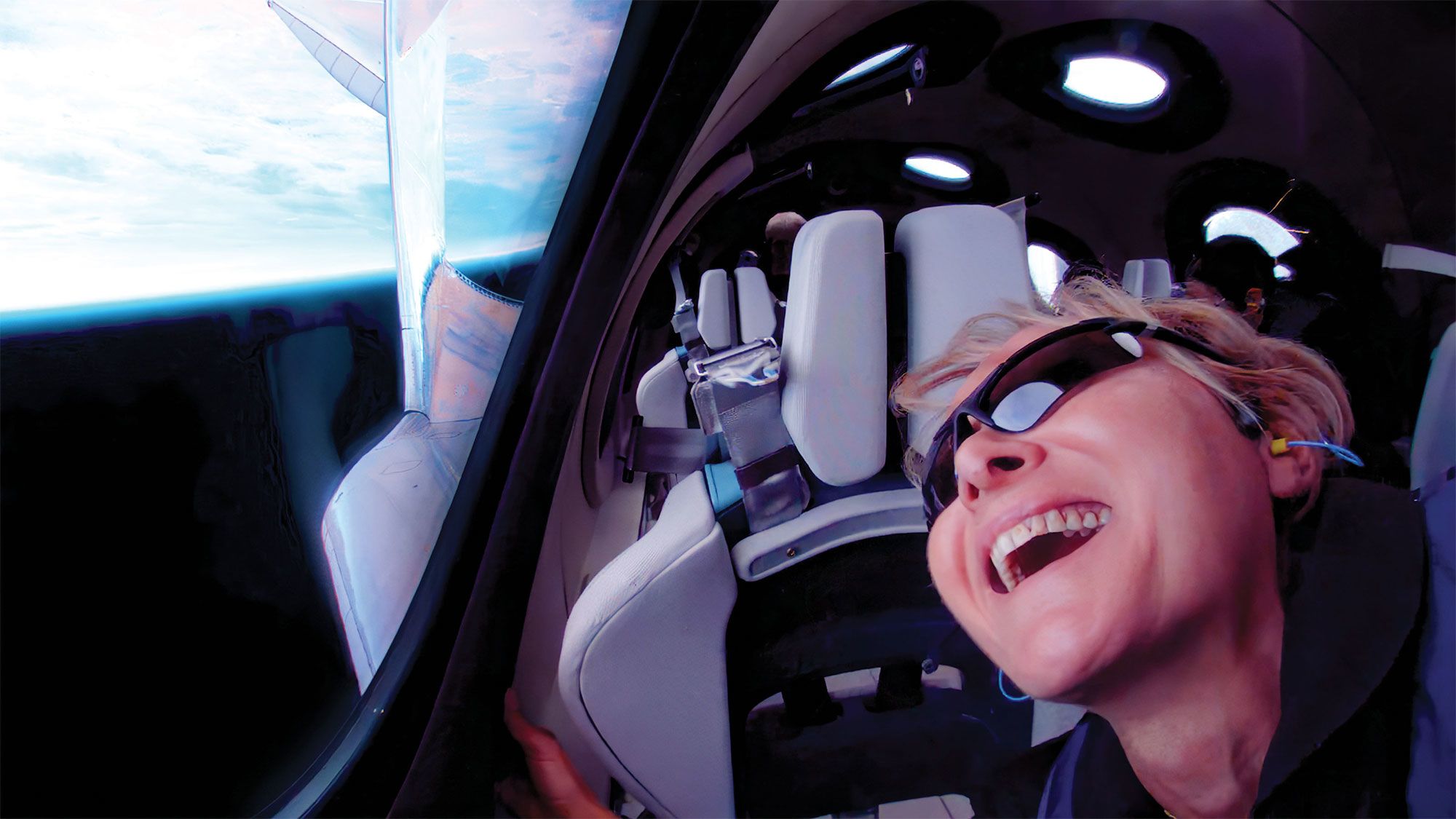
Space tourist Ketty Pucci-Sisti Maisonrouge onboard Galactic 05 with Virgin Galactic. She paid a reported $250,000 to visit space on the 2023 flight. (Courtesy of Virgin Galactic)
Space tourist Ketty Pucci-Sisti Maisonrouge onboard Galactic 05 with Virgin Galactic. She paid a reported $250,000 to visit space on the 2023 flight. (Courtesy of Virgin Galactic)
Does it count?
Another reason some space travel enthusiasts might be holding out is the perception of what counts as going to space.
Consumer spaceflight operators make both orbital and suborbital flights. Orbital flights reach a speed high enough to stay in orbit around Earth, while suborbital flights do not reach that speed and do not enter orbit. Both types of flights reach space.
SpaceX operates both orbital and suborbital flights, while Virgin Galactic and Blue Origin operate suborbital flights. And in the case of Blue Origin, the flights last less than 11 minutes, begging the question of what “counts” as visiting space, Carroll said.


Jimmy Carroll, co-founder of Pelorus Travel, in Iceland, where the company created developed an itinerary that includes an astronaut-training program. (Courtesy of Pelorus Travel)
Jimmy Carroll, co-founder of Pelorus Travel, in Iceland, where the company created developed an itinerary that includes an astronaut-training program. (Courtesy of Pelorus Travel)
“What we currently have with the likes of Blue Origin, etc., is this incredible amount of money and, let’s say, debatable matters on if you’re actually going to space or not,” he said. “Yes, you are touching on it, but [are] you really getting there?”
Carroll said he expects commercial space stations where guests can stay overnight to give the budding industry a boost. NASA in 2021 signed agreements with three U.S. companies to develop the designs of space stations and commercial destinations in low-Earth orbit: Blue Origin, Nanoracks and Northrop Grumman.
Overnight space station stays were the original form of space tourism, with the first space tourist visiting the International Space Station (ISS) for eight days in 2001 for a cool $20 million.
Blue Origin plans to develop a mixed-use business park called Orbital Reef, which will enable people to live and work 250 miles above Earth. Nanoracks and Northrop Grumman joined forces in 2023 to support Nanoracks’ development of the Starlab commercial space station. Axiom Space, which is constructing its own space station, called Axiom Station, was tapped by NASA in 2023 to create spacesuits for the administration’s ISS spacewalking capabilities.

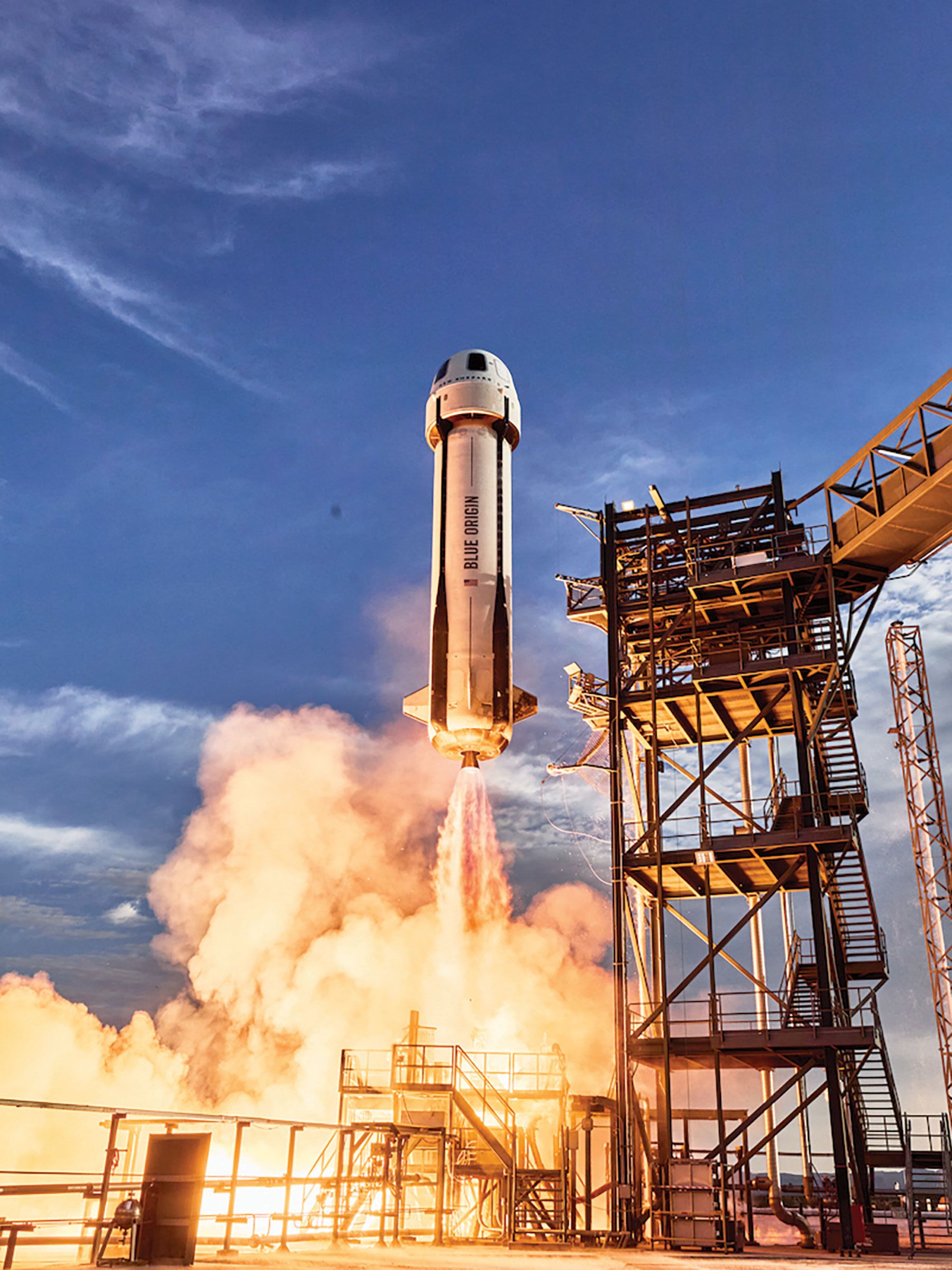
Blue Origin’s New Shepard blasts off. The Blue Origin rocket’s booster, capsule, engine, landing gear and parachutes are all reusable, which the company says not only reduces waste but decreases the cost of its flights. (Courtesy of Blue Origin)
Blue Origin’s New Shepard blasts off. The Blue Origin rocket’s booster, capsule, engine, landing gear and parachutes are all reusable, which the company says not only reduces waste but decreases the cost of its flights. (Courtesy of Blue Origin)
The ideas sound grand, evoking images of people leaving Earth behind for a futuristic stay aboard a floating hotel. But they’re not far off from fruition, the companies said. Blue Origin’s venture could be operational as soon as 2030, when the ISS is scheduled to be decommissioned. Starlab is slated for a 2028 launch, as is Axiom Station.
“I think people would be willing to pay more money to have that full space experience,” Carroll said.
Meanwhile, the University of Florida’s Fu said she anticipates the industry will continue its focus on developing suborbital flights and short orbital stays over the next decade.
“These early ventures are essential — they will help test protocols, develop infrastructure and normalize public engagement with space,” she said.
But even with the developments and advancements underway, the industry has not been without challenges, including the recent apparent closure of Space Perspective, the suborbital space-tourism operator that was evicted from a Florida airport earlier this year.
The company had planned to operate balloons this year to bring passengers to the edge of space during a six-hour journey for $125,000. The company’s financial troubles and eviction shook travel advisor confidence, despite the company showing initial promise. Advisors said that they have not received any official communication from the company.
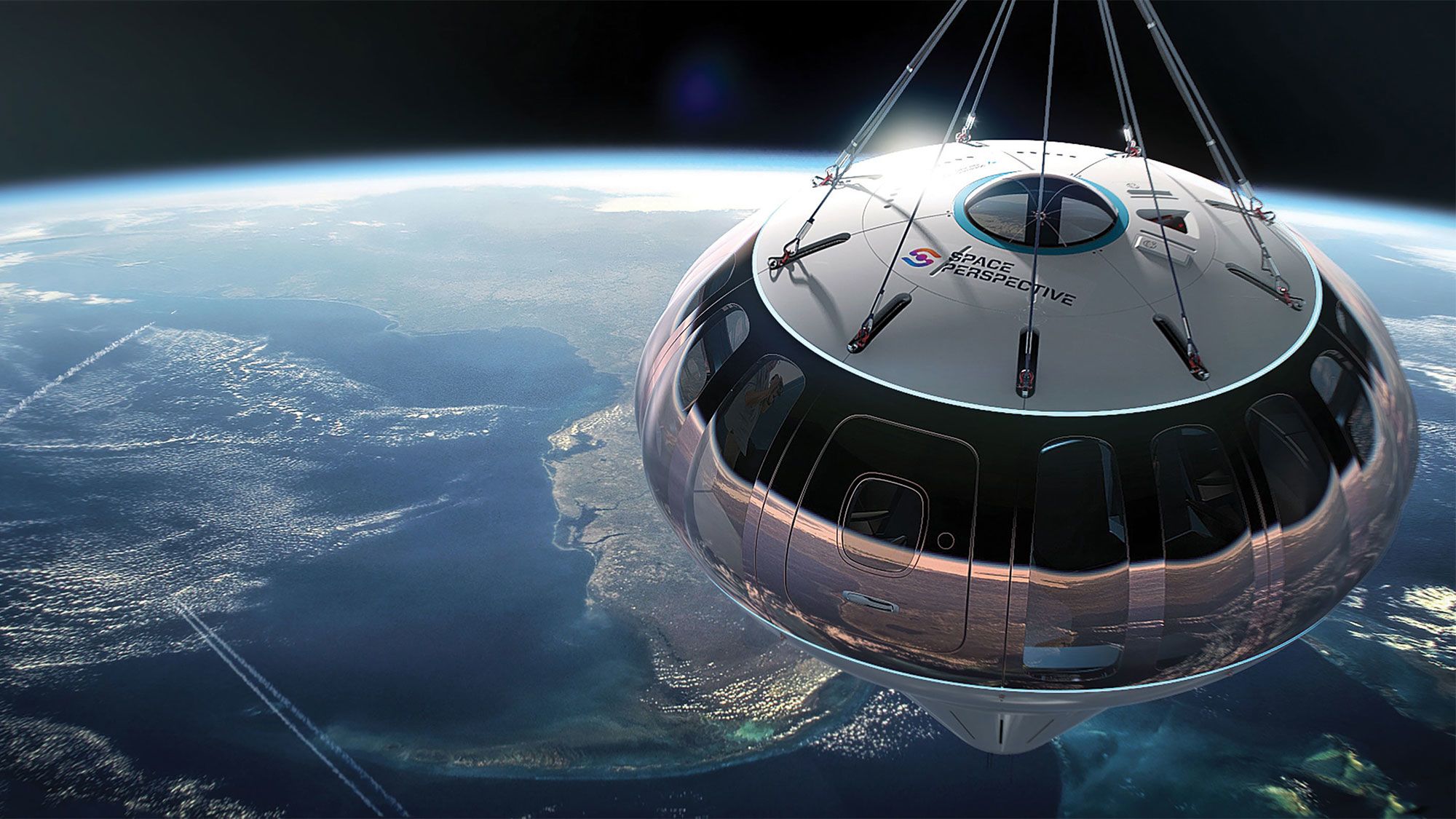
A rendering of the Space Perspective passenger pod. The space-tourism company was evicted from a Florida airport earlier this year. (Courtesy of Space Perspective)
A rendering of the Space Perspective passenger pod. The space-tourism company was evicted from a Florida airport earlier this year. (Courtesy of Space Perspective)
Broadening access
The ability to rocket away from Earth may currently be accessible to only the very few, but that may change in the near future.
“Space tourism is currently in its infancy, but progress is steady,” Fu said. “If technological advancements, regulatory harmonization and infrastructure development continue on pace, we can reasonably project that by the early to mid-2030s, space travel will become accessible to a broader group of participants — especially affluent adventure travelers, researchers, educators and/or artists.”
Fu likened the budding industry to the beginnings of aviation, which was initially only an option for the wealthiest.
“By the 2040s, we may begin to see more democratized access through government partnerships, educational sponsorships and reduced commercial costs, much like early aviation transitioned from luxury to mainstream,” she said.
Carroll echoed the sentiment, saying that increased frequency and advanced technology will likely drive the cost down in coming years. For example, the Blue Origin rocket’s booster, capsule, engine, landing gear and parachutes are all reusable, which the company says not only reduces waste but decreases the cost of its flights.
And for those who can’t quite afford six- and seven-figure tickets to the stars, there are space-inspired experiences here on Earth.
Pelorus developed an astronaut-training program designed to be conducted over four days in Iceland. The itinerary includes both physical and mental training, including underwater exercises. Carroll likened it to “a lunar landing camp” and said it was developed with input from space agencies and former astronauts.
Curran chartered a zero gravity flight in Rochester, N.Y., where he is based. On a zero gravity flight, passengers float as if they were in space.
“You bounce around the cabin and you experience weightlessness,” he said. “It’s a blast.”
Some clients have placed deposits with Orbite, Curran said, which is developing virtual reality to experience simulated missions. There’s also the National Aerospace Training and Research Center near Philadelphia, which offers spaceflight programs.
What’s next?
Beyond short-range visits, Fu said the next phase of space tourism could contain low-orbit space hotels, educational missions for students and researchers and cultural or artistic collaborations.
“Space tourism could revolutionize the travel industry; create new career pathways in aerospace, hospitality, engineering and ethics; and spark public fascination that drives STEM education worldwide,” she said.
Curran pointed out how meaningful the “overview effect” is said to be. The effect, caused by the observance of Earth from space, is said to leave a lasting and transformational impact upon the viewer, an experience he thinks should be shared by space travelers, perhaps publicly, like by speaking at a school, because “this is a privilege that you’ve got.”
(The term was coined in the 1980s by author Frank White, who wrote a book on the subject called “The Overview Effect.”)
“Everyone who has been to space has said it changes them,” Curran said. “To me, that’s a pretty damn good reason to go to space.”