
A virtual tour through Israel’s wine regions and its history



A virtual tour through Israel’s wine regions and its history
By Johanna Jainchill
Although hotel brands, cruise lines and destinations have been holding virtual culinary events throughout the pandemic — cooking instruction, experts talking about what makes a country’s cuisine unique — the ultimate goal of these classes is replication of authenticity rather than a taste of the real deal.
So when the Israel Ministry of Tourism asked whether I (and 170 travel advisors) would like to attend a virtual wine tasting featuring not only some of the country’s winemakers but a chance to taste the wines they make, the invitation went from interesting to exciting.
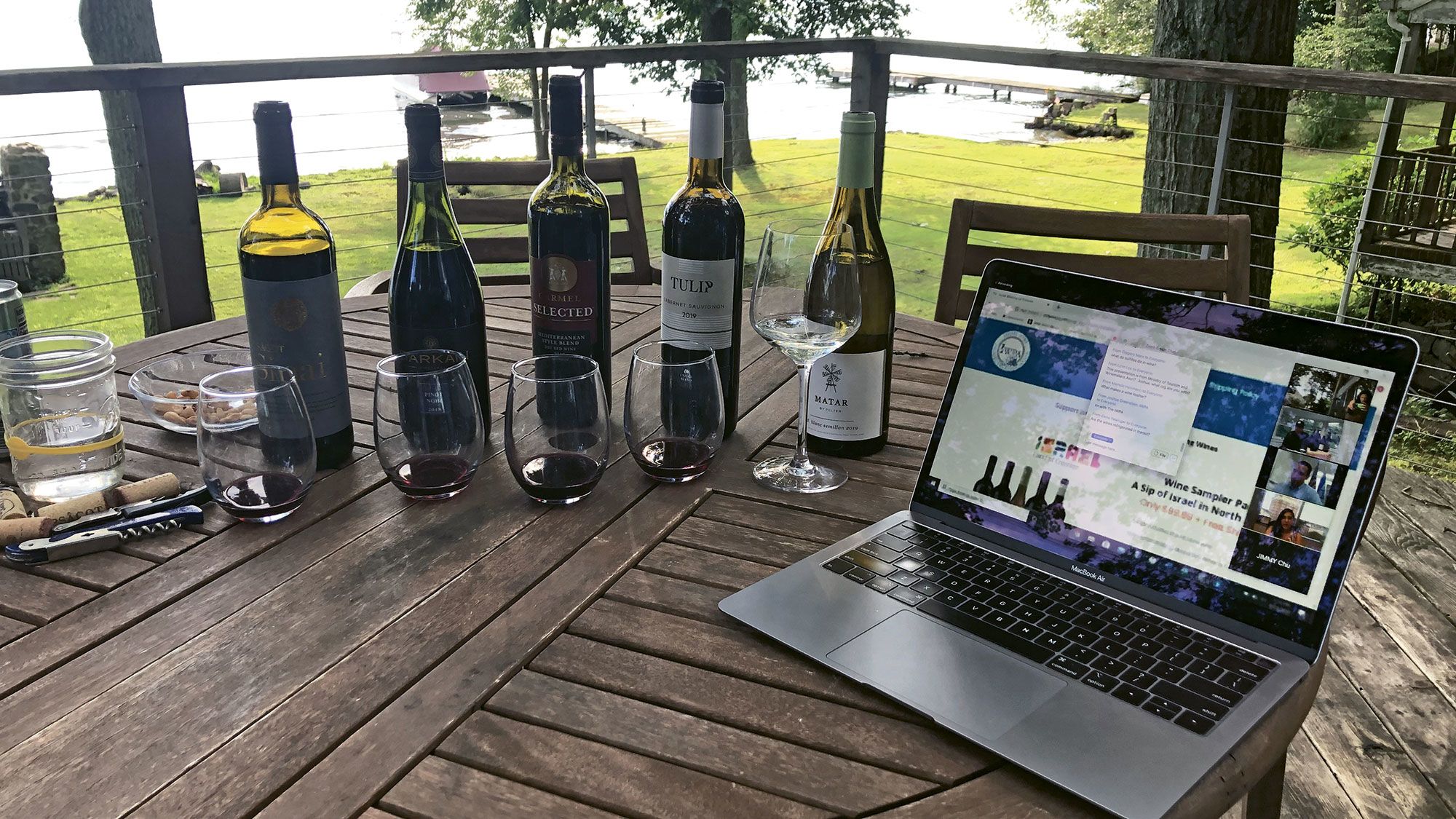
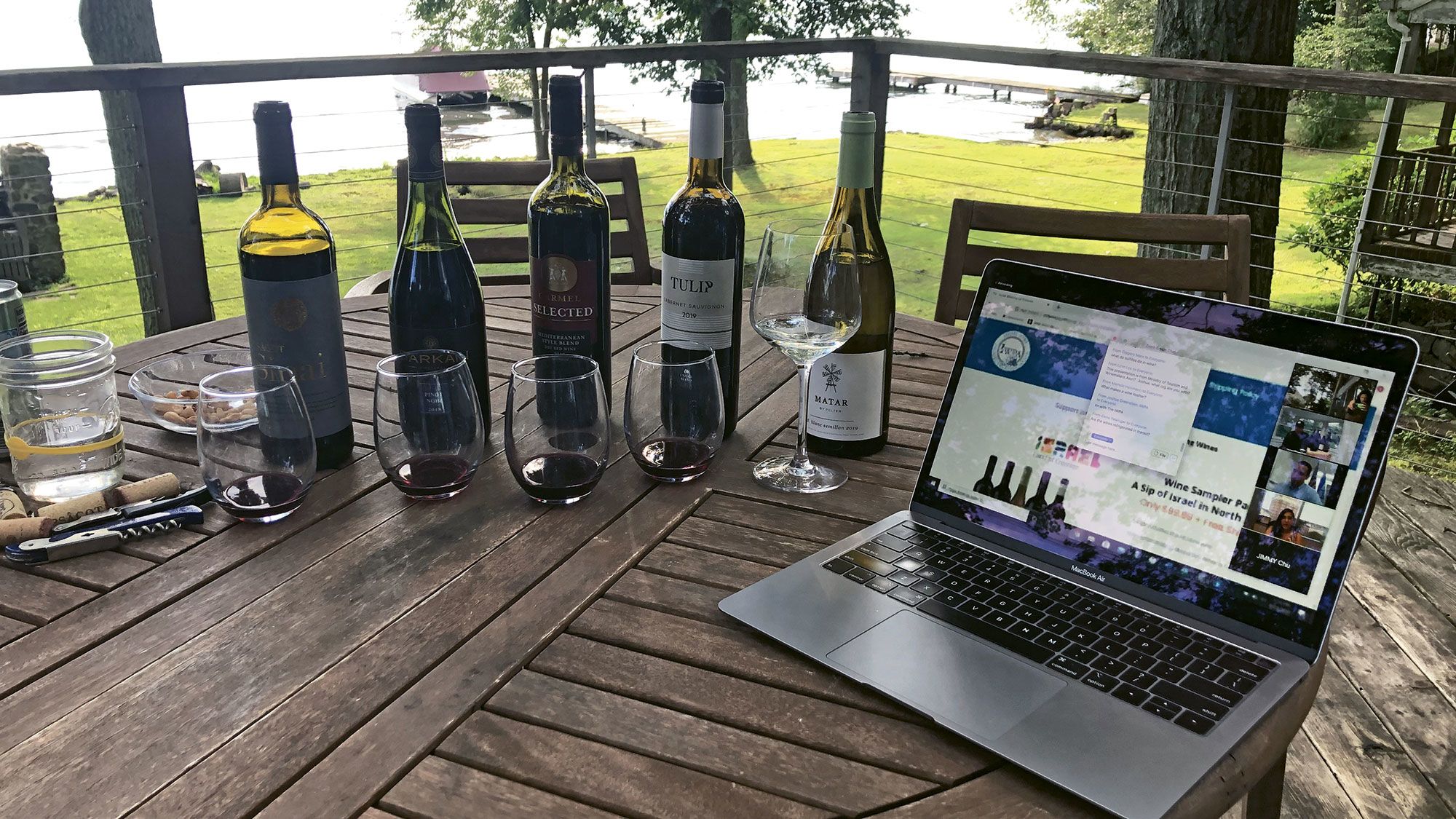
“A Sip of Israel in North America” wine tasting event, hosted by the Israel Wine Producers Association and the Israel Ministry of Tourism.
For a reasonable $99, the Israel Wine Producers Association (IWPA) offered to send participants the five bottles featured in the online event.
Hosted by Joshua Greenstein, executive vice president of IPWA, the tasting was also a virtual tour of Israel, with a wine featured from each region and information about what visitors can do in those regions. I’d done a day of wine-tasting in the country itself eight years prior, but I had no idea that so many parts of Israel produced wine and how the small country’s diverse terrain — desert, mountain, forests — contributes to a great diversity of the wines’ characteristics.
Each winery either shared a video or had a live feed of a winemaker explaining what makes its wine unique.
What I found made the wines most interesting was that Israel’s ancient history was a part of so many of them. As Greenstein explained, the winemakers combine “ancient lands with modern technology.”
The Psagot Winery in the Judean Hills outside of Jerusalem, for example, is built on the site of a cave that was discovered with gold coins and broken ceramic wine jugs from around A.D. 66. Those coins now adorn the Psagot label.
“Psagot brings history back to the same vineyards from thousands of years ago,” Greenstein said.

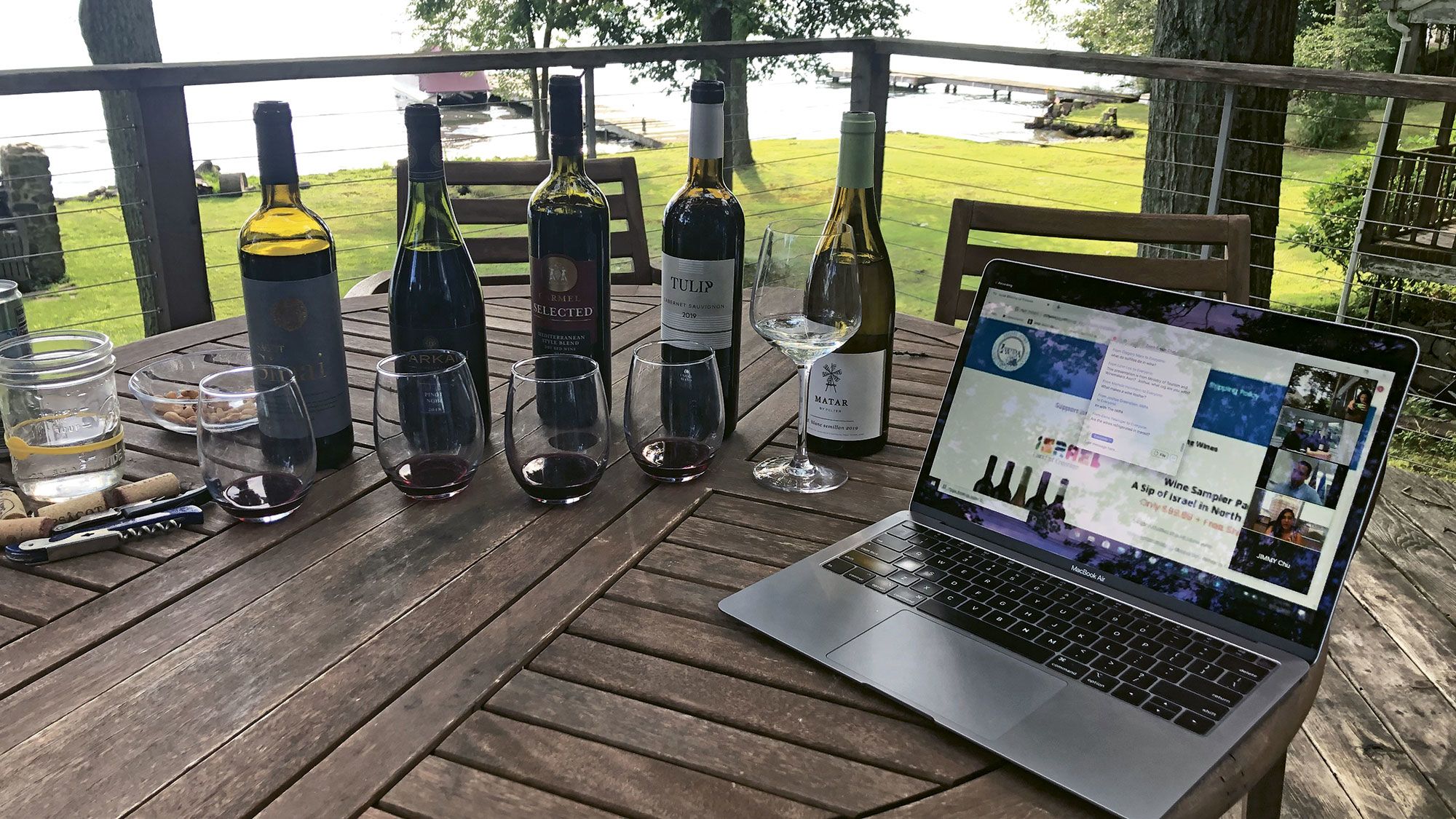
News editor Johanna Jainchill’s home setup for a virtual wine tasting with the Israel Wine Producers Association in conjunction with the Israel Ministry of Tourism. (TW photo by Johanna Jainchill)
News editor Johanna Jainchill’s home setup for a virtual wine tasting with the Israel Wine Producers Association in conjunction with the Israel Ministry of Tourism. (TW photo by Johanna Jainchill)
Greenstein also showed us examples of the soils in different parts of Israel: Sand from the Negev Desert; limestone from the Judean Mountains; and both volcanic soil and red clay from the Golan region, explaining that they all produce different characteristics in the wine.
One of the best background stories that we heard had to do with the Tulip Winery, located inside Kfar Tikva, or “Village of Hope.” This residential community was designed for adults with special needs, and Tulip employs about 40 of the community’s residents.
And while Israel has traditionally been seen as a producer of red wines, one of the bottles we sampled was a sauvignon blanc-semillon blend from the Matar winery in the Galilee region. Greenstein said that the rose and white wine scene in Israel was “really starting to take off.”
And to that, I say, “L’chaim.”


 Built with Shorthand