
Tourism's housing crunch
A shortage of affordable housing is making it difficult for workers in tourism-dependent communities to find places to live. This is how three destinations are addressing the problem.


The vacation towns of one U.S. region are justly famous for their world-class ski resorts. Another region is home to sun-drenched getaways. A third summons visitors to a stunning Midwestern network of lakes and dunes.
But all three have one thing in common: An acute shortage of workforce housing.
The pandemic-era surge in U.S. housing costs has had a particularly strong impact in tourism-dependent communities around the county, accelerating existing affordable housing shortages for the local workforce to the level of urgency.
The shortages stem from several issues. Property values in these towns can be astronomically high, making it difficult for service workers and many working professionals to buy or rent. In addition, pandemic trends drove many second-home owners to live full-time in their vacation properties, and it sparked a boom among those who wanted to relocate and work remotely in outdoorsy communities where social distancing comes naturally, which sapped the supply of rental properties and drove up home prices still further.
In just one example, in Summit County, Colo., which draws tourists for skiing at Breckenridge, Copper Mountain, Keystone and Arapahoe Basin resorts, the housing crunch has worsened during the pandemic. “Pre-Covid, we didn’t have the restaurants that couldn’t open,” said Jason Dietz, the county’s housing director.

‘Pre-Covid, we didn’t have the restaurants that couldn’t open.’
This perfect storm has employers, public officials and concerned residents in tourism-driven destinations around the country asking the same simple question: where is our workforce going to live?
In the face of this housing crunch, destinations from coast to coast are looking for solutions, both quick and long-term, to ensure that workers can be housed and operations can move forward at full capacity.
Examples are numerous. For instance, Nemacolin resort in the Pennsylvania Alleghenies will begin renting 33 newly built employee housing units in November. The new community includes a grocery store and a pub.
In Ketchum, Idaho, a new hotel brand named Appellation, which emphasizes the culinary experience, is building 15 units in the heart of the posh ski town to house employees. The mixed-use project will be subsidized by the sale of seven penthouse units in the same development. And last year, Whitefish Mountain Resort in Montana closed its 26-room Hibernation Hotel and converted it into housing for seasonal foreign workers.
In this report, we focus on the housing shortage in three disparate, tourism-dependent regions: Summit County, the Florida Keys and the northwest portion of the lower peninsula of Michigan, which is anchored by Traverse City and includes a number of smaller tourism destinations, including Glen Arbor, Charlevoix and Petoskey.
Here are some ways that businesses and governments in those areas are working to address the problem.
Florida Keys
The typical value of a Key West home jumped 50%, to $1.1 million, between August 2020 and August of this year, according to the Zillow Home Value Index.
For workers in the island chain, the robust second-home and vacation-rental market contributes sharply to the affordable housing deficit. According to the local property appraiser’s office, just 41% of Key West residences are protected by Florida’s homestead exemption, which full-time residents typically claim to reduce their tax burden.
The Keys’ remote location, with Key West lying 130 miles from the mainland, makes addressing the housing shortfall especially tricky. And strict limitations on new development, imposed on the Keys by the state of Florida, are yet another complication.
All of those factors played a role as finding workers became an ever more daunting challenge for Florida Keys resorts over the course of the pandemic.
“The dynamic that I’ve seen in the last few years is that the housing situation has just become tightened,” said Steve Robbins, manager of the four small Key West lodges that operate under the Key West Hospitality Inns banner. “It appears that there are fewer workers. You do not get many applicants when you have positions open. They just don’t seem to be in the market.”
The hotel group, which comprises Wicker Inn, Olivia by Duval, An Island Oasis and Colors on White, is addressing the problem head-on. As of September, three of the guest houses’ 18 employees were living at one of its lodges, including one who was temporarily being housed free of charge in a guestroom, Robbins said.


Owners of Key West Hospitality Inns, which runs Wicker House, seen here, have recently purchased six properties around the island town to house workers. (Photo by Jason Dietz)
Owners of Key West Hospitality Inns, which runs Wicker House, seen here, have recently purchased six properties around the island town to house workers. (Photo by Jason Dietz)
In addition, another four employees were living at subsidized rental rates in some of the six houses and townhomes that company ownership has purchased over the past three years. Robbins, a minority owner, said he is also using the three townhomes he acquired last year to offer subsidized housing to workers employed by other Key West service industry businesses.
Farther up the Keys, at Hawks Cay Resort on the island of Duck Key, management has looked to technology to address a marked increase in staffing challenges.
“After the pandemic, we had a shortage we’d never seen before,” said managing director Sheldon Suga. “It forced us to be creative.”

‘After the pandemic, we had a shortage we’d never seen before. It forced us to be creative.’
Hawks Cay already has on-site housing for 120 people. But happily, robots don’t require housing. So the resort purchased two robots to serve as food runners at its casual Angler and Ale restaurant and four others for vacuuming and scrubbing floors.
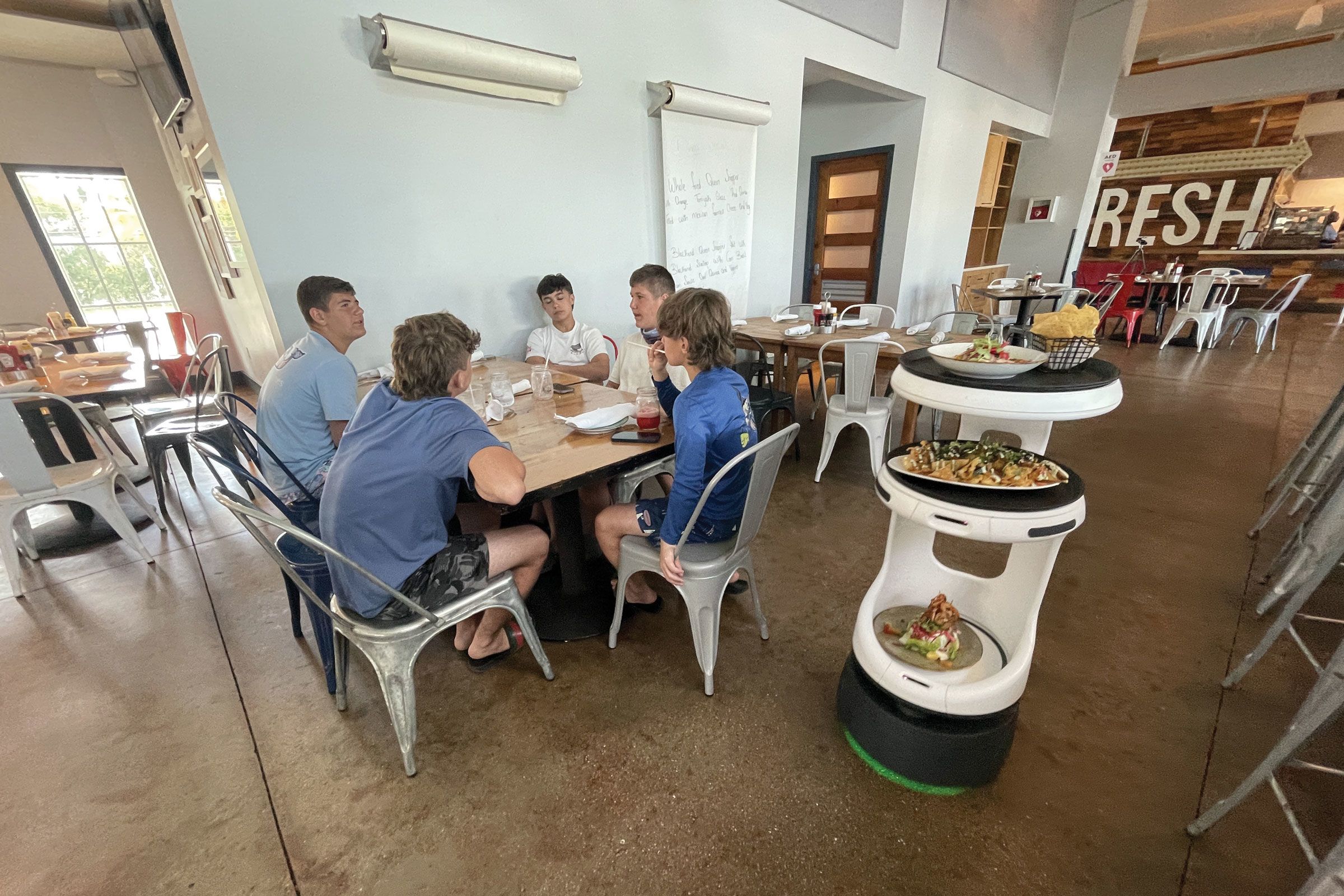
Hawks Cay Resort in the Florida Keys is using robots to assist with food service. (Courtesy of Andy Newman)
Hawks Cay Resort in the Florida Keys is using robots to assist with food service. (Courtesy of Andy Newman)
At Angler and Ale, the robots mostly ferry food between the kitchen and tables, reducing the workload for servers and enabling operations with a lower staff count.
Suga said the robots are popular. “People have their cameras out taking photos all the time,” he said.
The initiative, he added, has been successful enough that Hawks Cay has ordered two more robots to operate as bussers’ assistants.
Local governments are also working on the workforce housing shortage. Notably, the Key West Housing Authority began work on a 103-unit complex of one-bedroom apartments last October, with completion slated for 2023.
“It’s going to work itself out somehow, someway, but there’s just a number of avenues that have to be addressed,” Robbins said.
Summit County
An early 2020 report prepared for the local housing authority presented an ominous picture for Summit County, home to the popular ski town of Breckenridge, as well as the towns of Frisco, Silverthorne and Dillon.
“Colorado’s mountain and resort communities have become synonymous with almost entirely out-of-reach housing costs,” read the report’s opening sentence.
The report went on to project a gap in affordable rental units of 3,400 by 2023 for the 31,000-resident county. And that was before the pandemic drove up home prices and brought an influx of remote workers to compete for housing with the local workforce.
For the 12 months that ended in July, Summit County had a median home sale price of $922,000, according to Rocket Homes, a year-over-year leap of $117,000.
“The pandemic definitely made an already existing problem worse. So, some of our mountain towns have been declaring a workforce housing crisis,” said Rachel Tuyn, economic development director of the Northwest Colorado Council of Governments, which counts Summit among its six member counties. “In the face of a crisis, we have to do something quickly.”
Absorbed by the pressing dilemma, Summit County’s housing authority has advanced a multifaceted campaign designed to make affordable residences available as fast as possible to workers.
One strategy is hotel conversion. Last summer, the county entered into a master lease on the 38-room Alpine Inn in Dillon, where it now rents rooms to local workers for $850 per month. In August, in combination with the town of Breckenridge, the county picked up another 38-room lodge via a $6 million purchase of the Loge Hotel in Breckenridge.
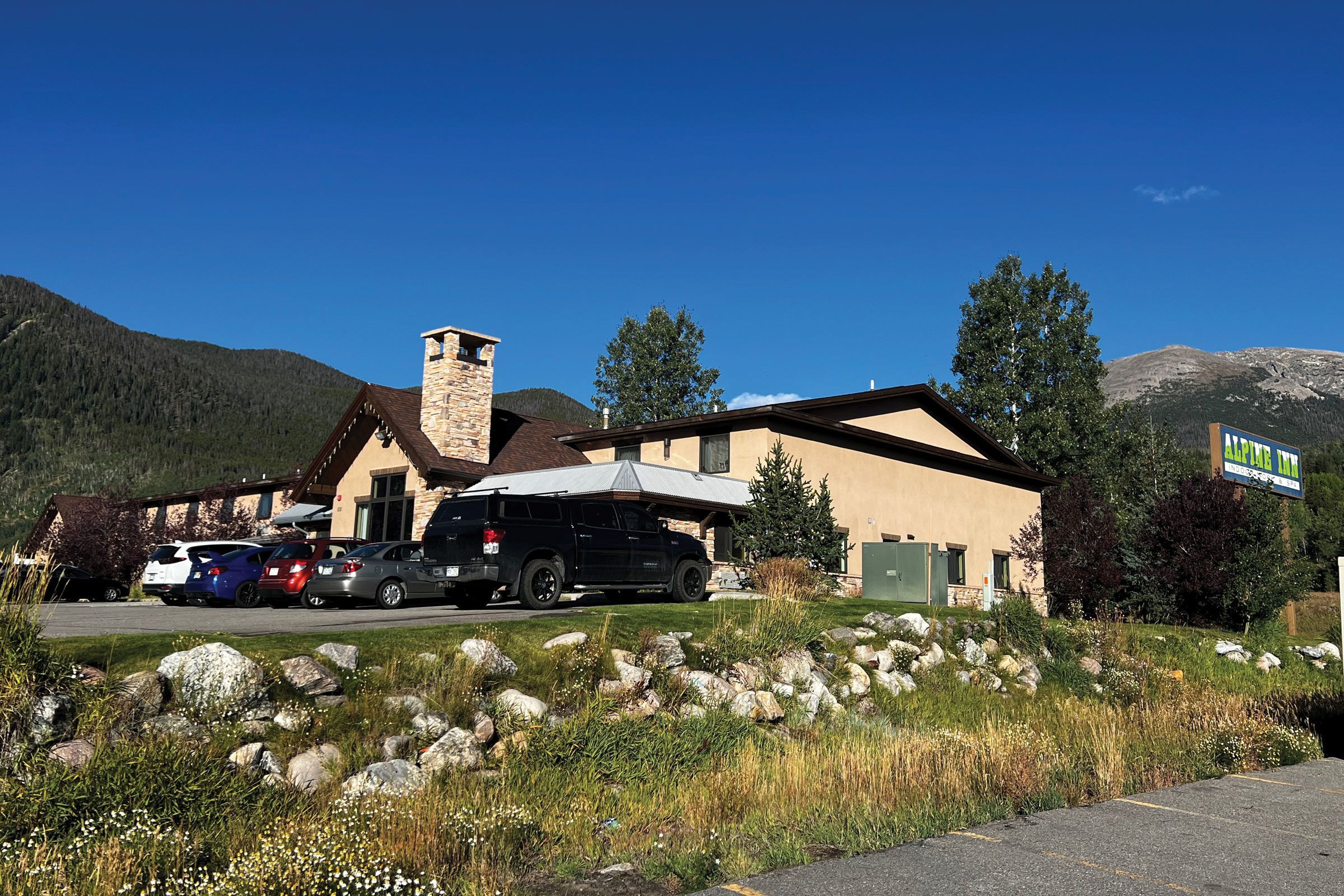
Summit County, Colo., took out a master lease on the Alpine Inn last year to house workers. (Courtesy of Key West Hospitality Inns)
Summit County, Colo., took out a master lease on the Alpine Inn last year to house workers. (Courtesy of Key West Hospitality Inns)
Summit has also looked to more creative solutions.
One is the Lease to Locals program, which it implemented last October in partnership with a Truckee, Calif.-based company called Landing Locals. Under the program, Summit County will pay the owners of existing vacation-rental units up to $22,000 per year, depending on the bedroom count of their property, to convert the home to a workforce rental, said Landing Locals co-founder Colin Frolich.
During Lease to Locals’ first nine months, the county was able to persuade the owners of 45 properties to convert to workforce rentals.
Dietz, who heads the Summit County Housing Authority, said he considers the program a short-term fix only, but Summit has re-upped the program for 2023.
Summit also accelerated its Housing Helps program, put in place shortly before the pandemic, under which the housing authority will pay homeowners 10% to 15% of their home’s existing value to put a perpetual deed restriction on it that requires the owner or tenant to work locally. As of July, 34 units had been added under the program since 2021.

‘The rush to frantically buy vacation homes and condos has threatened the normal path to homeownership.’
But more needs to be done.
“The rush to frantically buy vacation homes and condos in a place like Summit County or Truckee has threatened the normal path to homeownership for the people working there,” Frolich said.
Northwest Michigan
The year before the pandemic, a study by the nonprofit Housing North, which advocates for affordable housing in the 10-county region surrounding Traverse City, concluded that the area of roughly 300,000 people had a shortage of approximately 15,000 homes.
Since then, the problem has only gotten worse as the pandemic-fueled growth in remote work, combined with increasing interest in outdoor recreation, drove an influx of second-home purchasers.
The median home sale price in Traverse City in August was $403,000, up 23% from just two years earlier, according to Realtor.com.
Further driving Northwest Michigan’s affordable housing shortage is a robust vacation rental market. A 2021 National Association of Realtors study found that vacation homes account for more than 20% of homes in every county in the region, placing all of those counties within the top 10% nationally in that statistic.
“The more desirable the resort community, the greater the housing challenge,” said Chris MacInnes, the president of Crystal Mountain, a ski area and all-season resort in Benzie County, which sits just west of Traverse City.

‘The more desirable the resort community, the greater the housing challenge.’
Crystal, which employs about 650 people in the winter and 500 in the summer, is Benzie’s largest employer, according to MacInnes. And the resort, which has a total of 225 keys, has long had challenges housing its workforce. Crystal built its first four workforce dwellings more than two decades ago. And with housing costs exploding in the region, the resort has built four more on-site residences over the past two years. This winter Crystal will be able to house 50 seasonal workers.
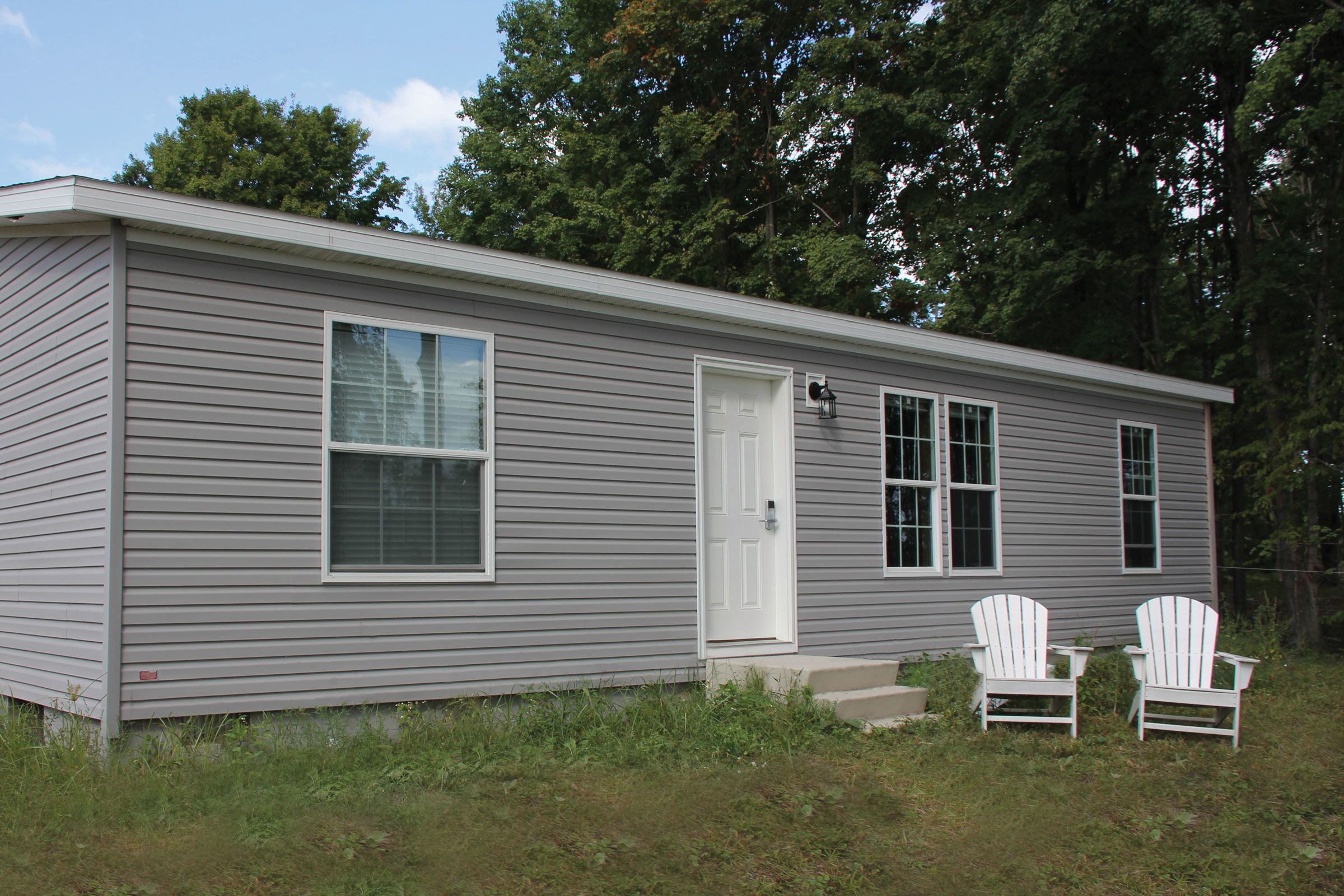
Crystal Mountain in northwestern Michigan built two on-site houses for its workforce last year and is building two more. (Photo by Brittney Buti)
Crystal Mountain in northwestern Michigan built two on-site houses for its workforce last year and is building two more. (Photo by Brittney Buti)
Cherry Republic, a cherry-product confectioner whose three locations in Northwest Michigan are popular tourist draws, is also getting into the housing business. Over the summer the company purchased a building in downtown Traverse City, just a couple of doors down from their current retail location, with an eye toward moving the retail store and using the second floor for employee dormitory-style housing and efficiencies.
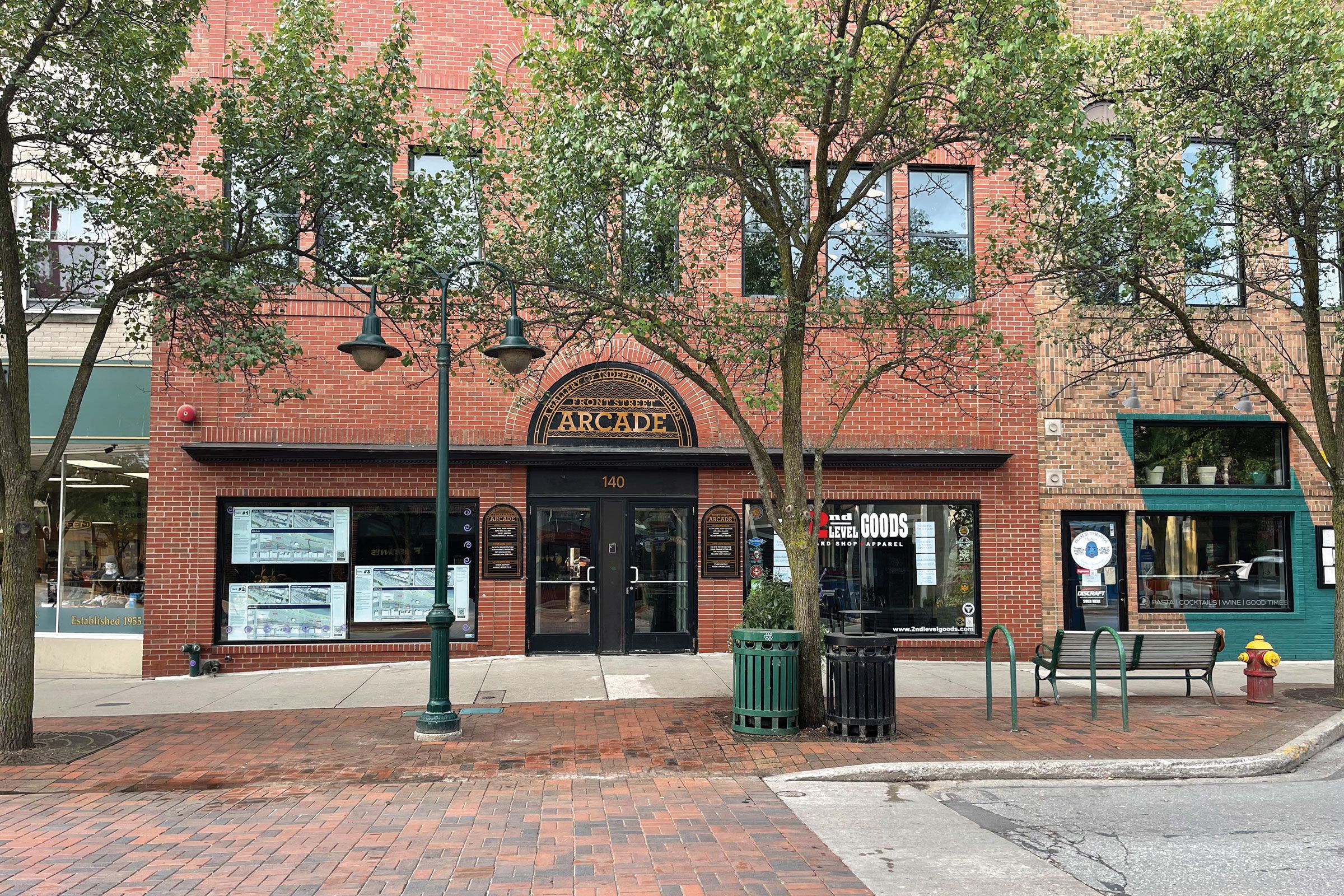
Cherry Republic just purchased this building in Traverse City, Mich., to house a retail location and to offer dormitory-style housing and efficiencies for employees. (Photo courtesy of Cherry Republic)
Cherry Republic just purchased this building in Traverse City, Mich., to house a retail location and to offer dormitory-style housing and efficiencies for employees. (Photo courtesy of Cherry Republic)

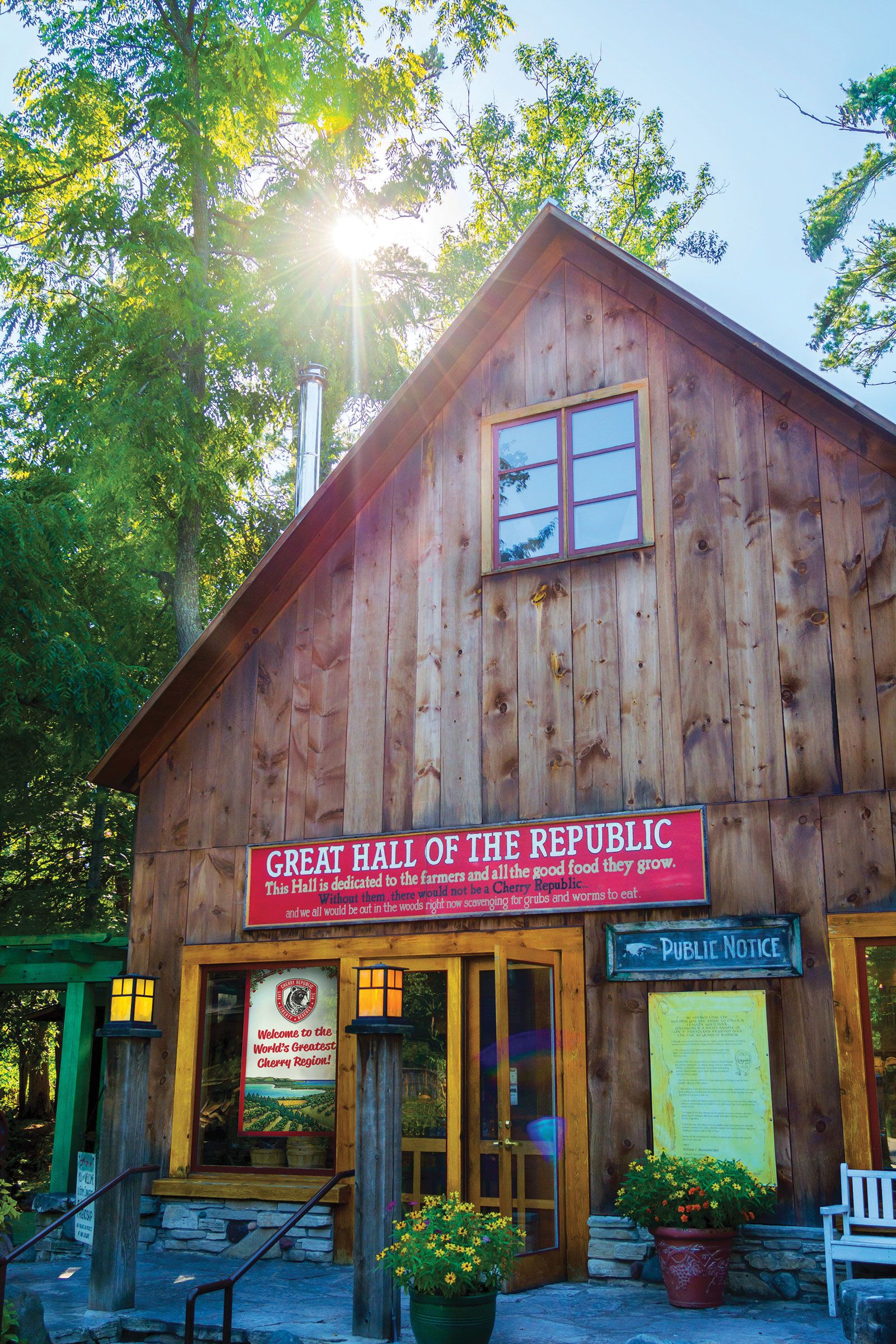
A Cherry Republic retail location in Glen Arbor, Mich. (Photo courtesy of Cherry Republic)
A Cherry Republic retail location in Glen Arbor, Mich. (Photo courtesy of Cherry Republic)
Cherry Republic, which employs 400 people across Michigan, is also exploring longer-term housing solutions with a variety of potential for-profit, nonprofit and government partners, said the company’s vice president of climate and community impact, Sara Harding.

‘Every day at Cherry Republic, I’m having a discussion with an employee about housing issues.’
“It’s probably every day at Cherry Republic that I’m having a discussion with an employee about housing issues,” Harding said.
The challenges extend beyond entry-level positions, impacting the recruitment of senior staffers. “It’s an overwhelming and complex problem,” she said.
 Built with Shorthand