
Unearthing new tours


Operators are constantly on the hunt for new itineraries and destinations. But tour development can be a lengthy, intense process — and not without its challenges.

When Yves Marceau visited Pakistan, the G Adventures vice president of product knew he’d found a destination that had “it.”
Marceau had been weighing G Adventures expansion to the country for a few years, unsure if it was the right time. When he finally visited Pakistan himself, he was sold on bringing travelers there to experience it themselves.
G Adventures debuted its Pakistan tours this year, and already “people are in love,” Marceau said.
Tour operators regularly introduce new itineraries, but bringing a tour to life, especially in a new destination, can be years in the making. And depending on the location, it may require extensive research, exploratory trips and relationship building in the region to identify suppliers that best share the company’s values.
Tour operators G Adventures and Collette as well as the river cruise lines AmaWaterways and Viking are among suppliers that recently expanded their operations to new countries, decisions spurred by a need to diversify offerings and give travelers products in destinations that are rising in popularity or off the beaten path.
At G Adventures, the decision to expand into new territory comes after considering travel statistics and trends, air capacity and what the destination offers, Marceau said.
The company is committed to debuting a handful of new destinations annually, he said, including to regions in a country G already visits, like Spain or Morocco. It can take two or three years for a destination to grow from an idea to a marketed itinerary.
“We’re always looking to see where we can take travelers and give them a phenomenal experience and go to someplace where we have an impact on how tourism gets developed,” Marceau said. “That’s an important piece for us at G.”
For Collette, the first considerations for expansion are technical, such as airline routes. The company surveys its travelers and travel advisors about what is lacking in its catalog. Most important, said Diana Ditto, vice president of product marketing and growth strategy at Collette, is getting boots-on-the-ground research.
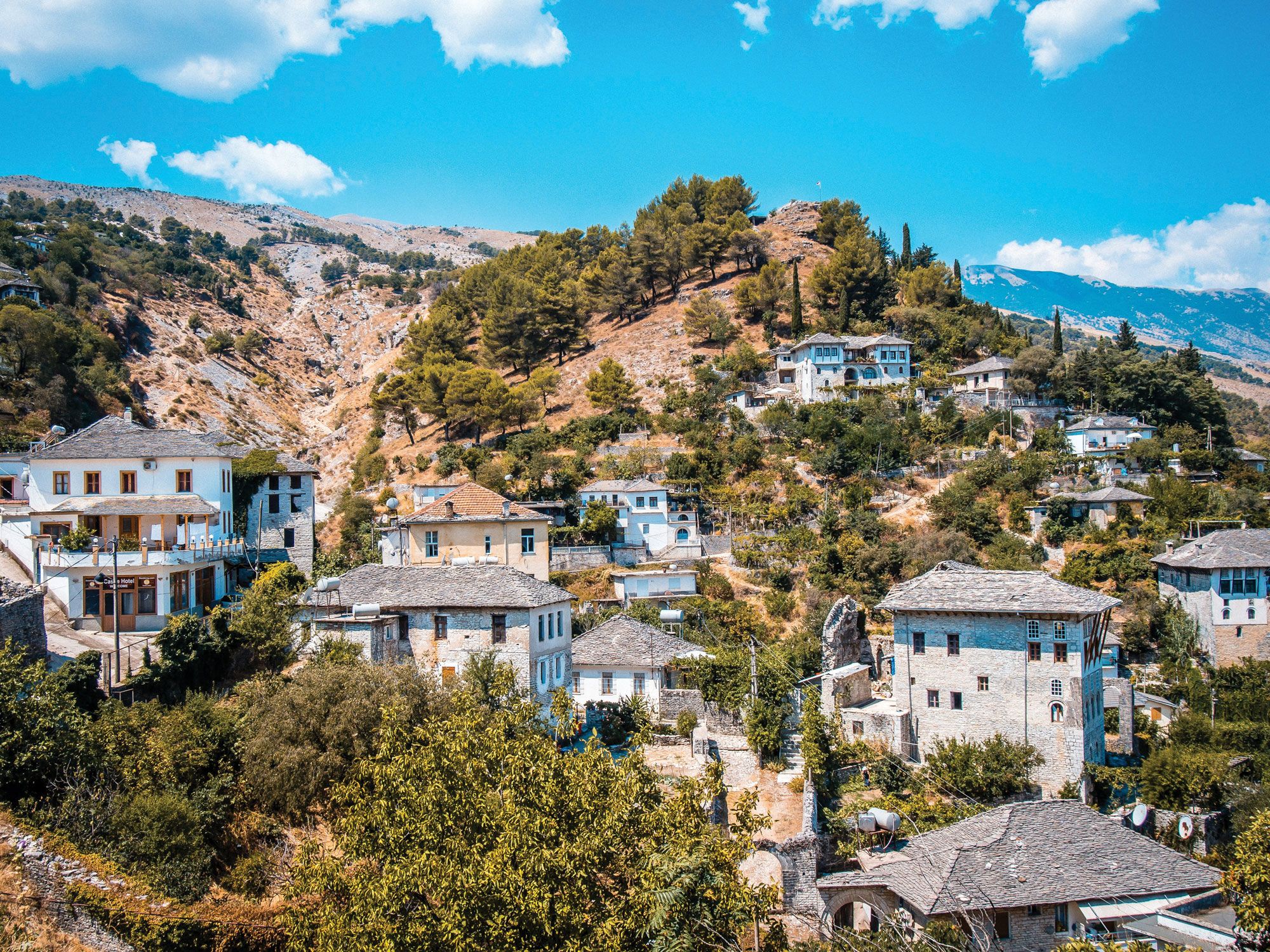
Collette this year launched its first itineraries in Albania, and the Balkan country has already proved popular.
“What we’re finding is travelers … want to see the must-sees, but they also want to see the off-the-beaten-path stuff,” Ditto said. “But it’s becoming harder and harder to find, which is why the Balkans are doing well for us.”
Marceau echoed the importance of on-the-ground research and investigating the country by embarking on potential excursions, even though it’s a costly investment in time and money. Simply repeating another operator’s itinerary with some adjustments and tweaks won’t make a lasting impression on customers or a positive impact on destinations, he said.
“If all you’re going to do is rely on a local DMC or copy someone else’s tour, you’re not really going to be able to build the kind of product that resonates with your client,” he said. “We invest in going on the ground, looking and assessing and building the right partnerships.”
For G Adventures, those partnerships are often discovered in small, family-run operations, like hotels or wineries, that offer a unique, localized perspective to travelers. A piece of the operator’s budget is specifically earmarked for these exploratory trips, where the employee is tasked with uncovering hidden gems and working with the local supply chain to build out itineraries.
Moldova, a landlocked country in Eastern Europe that was formerly part of the Soviet Union and borders Romania and Ukraine, found itself on G Adventures’ radar due to its popularity in the food and wine scene. The country has a “phenomenal wine-producing region,” Marceau said, and is likely already on the radar of foodies and wine lovers.
G will launch its first tours there in April, and among the experiences will be a visit to an underground winery where visitors can sample wine in limestone caves and snack on Moldovan cheese.
Moldova is an example of a country so off the beaten path that had G Adventures relied on internal surveys among its past travelers to steer its decision-making on expansion, only about 10% of respondents might have indicated interest in the country. In this case, Marceau had observed chatter about Moldova on culinary-focused social media, sparking the company’s interest. While Moldova tourism has been increasing, Europeans have largely driven its growth.
But only a few weeks after launching sales, one departure had almost sold out, “just with a press release,” Marceau said.

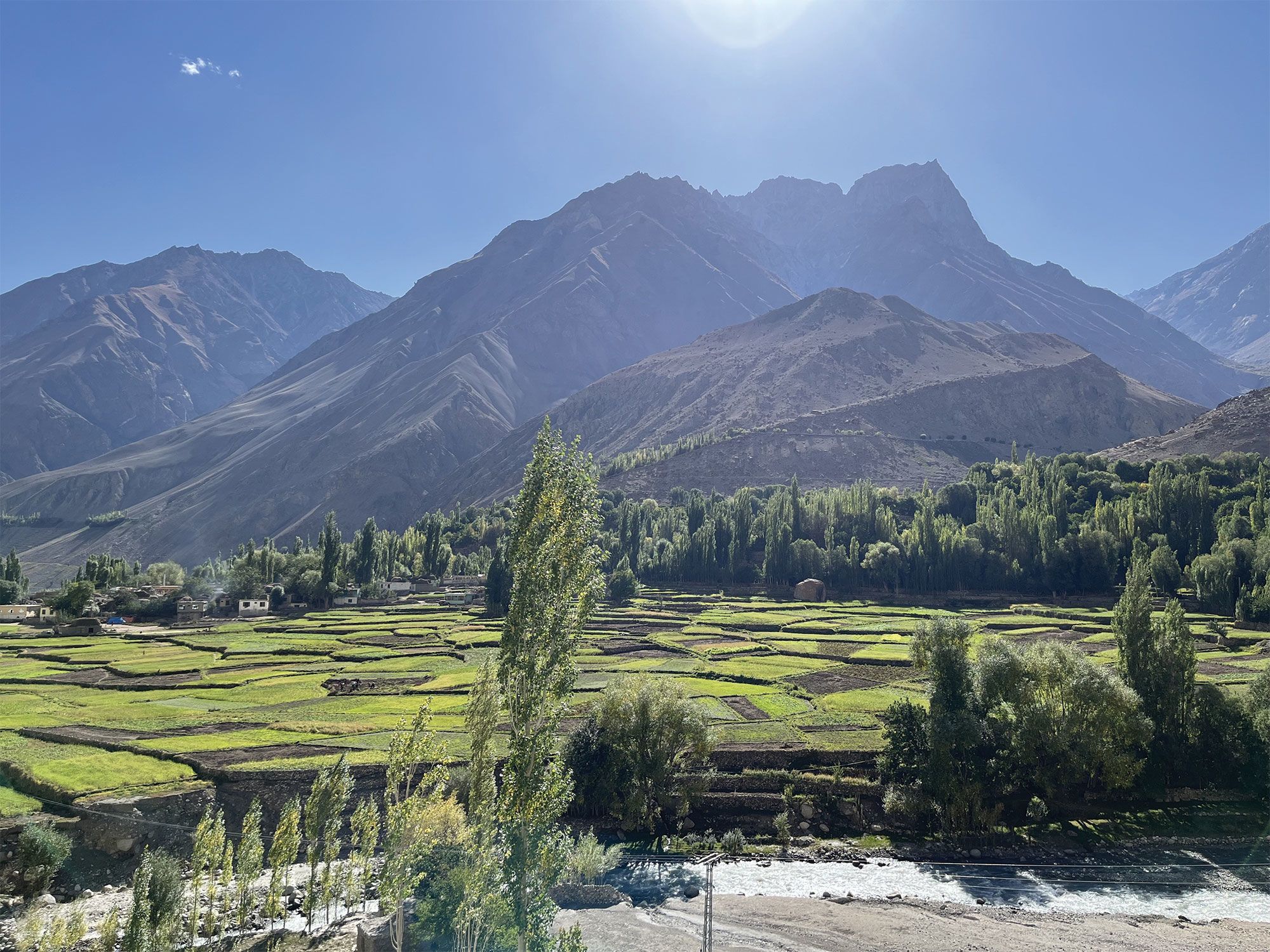
G Adventures is offering trips to Pakistan for the first time. (Courtesy of G Adventures)
G Adventures is offering trips to Pakistan for the first time. (Courtesy of G Adventures)
Searching for ‘it’
G Adventures added Pakistan, which earned a spot on the 2025 New York Times list of 52 places to go, to its portfolio this year. Marceau said G’s itineraries incorporate communities that could benefit from group tourism, including along the Thallay La Trail, which is mostly visited by backpackers.
The seed to debut tours in Pakistan was planted more than three years ago by G’s operations partner there, who routinely nudged Marceau about expansion. Marceau finally visited the country after a trip to India and spent about 12 days there to scope it out and identify lodging, excursions and communities that would benefit from tourism.
He left the country sold.
“When I came back from Pakistan, I knew the destination would make travelers love it,” he said. “It’s a mixture of calling on your experience and knowledge in this industry.”
That gut reaction proved right.
“They’re coming back and saying they love it,” he said of the Pakistan itineraries. “What they love the most is how much connection is possible with local people.”
Collette’s Ditto also spoke about “gut intuition” team members have while on the ground, such as a chance encounter in Crete that changed the company’s approach to tourism there.
A Collette itinerary designer was driving across the Greek island when she happened to pass by a women’s cooperative, which captured her curiosity and compelled her to swing by, even without an appointment.
She spent several hours there, later reporting to her team: “This is one of the best experiences I’ve had in my life. These are the types of experiences that resonate with our travelers, 60% of whom are female. We’ve got to get this place on our radar.”
Now, Collette travelers spend five nights on the island and visit the co-op during their stay.
A similar experience happened with a Collette itinerary designer who was exploring Albania. Based upon a local’s recommendation, a new experience in agriturismo, a family-run farm, will be included in Albania itineraries for 2026 and 2027, Ditto said.
She said part of destination’s draw is its ability to provide “untouched” experiences, which are proving hard to find as travelers visit almost every corner of the globe. Albania is an exception, Ditto said, though she added, “That is changing quickly.”
There, Collette travelers can immerse themselves in the local culture at family-run vineyards and wineries and farm- and food-based excursions.
Albania caught the tour operator’s eye due to a joint campaign between its tourism board and Greece, which marketed their destinations to the other’s citizens. Though Albania’s infrastructure can be lacking, Ditto said the coordinated campaign with Greece signaled the country’s seriousness about growing as a tourism destination and developing tourism as a meaningful part of its economy.
Maria Jose Merino, vice president of operations and product development at Central Holidays, said investigating a destination as a place for expansion is a “huge financial investment” for a company.
It can take Central Holidays years, if necessary, to assess the feasibility of a destination, Merino said, but it’s a level of investment and research that can give travel advisors who are unfamiliar with new destinations confidence in a company’s handling of operations there. In recent years, the operator has launched its first tours in Saudi Arabia and several countries in Africa.
“We develop all their marketing, all the support information for agents,” Merino said. “If an agent, says, ‘Oh, I’m not very familiar with the destination,’ come right to me, and we have an internal tool for training.’”
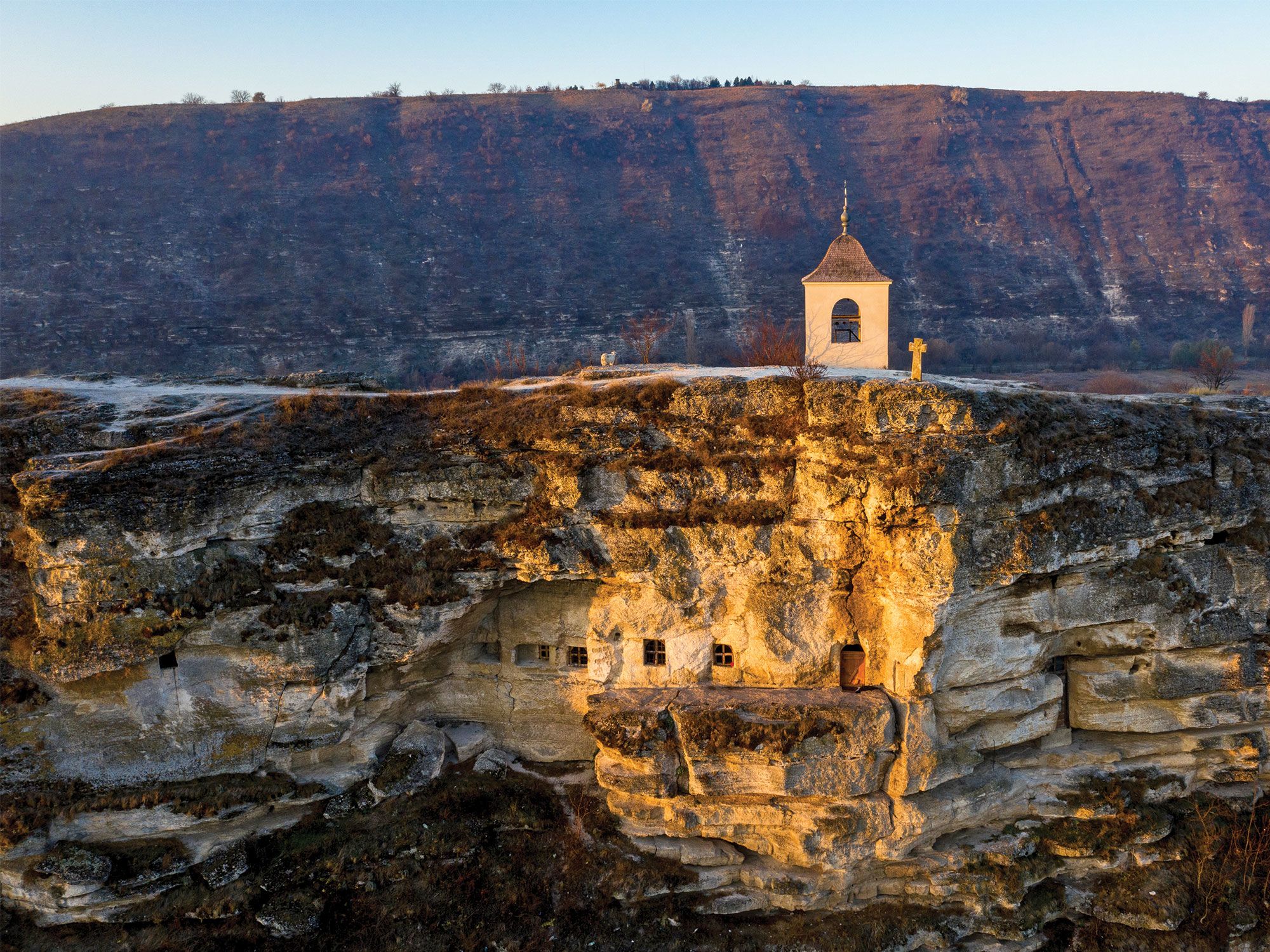
G Adventures will launch itineraries in Moldova next year, which will include a visit to Orhei Monastery. (Courtesy of G Adventures)
G Adventures will launch itineraries in Moldova next year, which will include a visit to Orhei Monastery. (Courtesy of G Adventures)
Expansion as an overtourism solution
For travel companies like Collette, new destinations provide an opportunity to offer alternatives to places seeing a tourism backlash.
“As Europe continues to suffer from overtourism, you’re going to see that organic push to places like Albania, particularly from younger generations,” she said.
Collette is also addressing overtourism concerns by expanding operations into the offseason — such as Alaska in the winter, where cold-weather itineraries have soared in popularity, Ditto said. Similarly, the company is expanding deeper into Nordic countries. Rather than just visiting capital cities like Stockholm, it is taking travelers to places where “very few go,” she said, like Finland’s Lapland, the country’s northernmost region, above the Arctic circle.
As these companies enter relatively untouched territory, they also know their presence makes them less untouched.
As G Adventures expands, it thinks big picture and long-term, knowing that it’s possible, even likely, that other operators may follow suit as they expand their own destination catalogues.
“What we do now could impact future overtourism,” Marceau said. “If everyone copies the same itinerary, next thing you know, these are the cities that are getting overtourism.”
Marceau has been in the travel industry for more than three decades and remembers traveling to Portugal for the first time in 2008, when few operators were offering guided trips there. The country now struggles with overtourism. He said Bhutan is another place that has quickly risen in popularity.
“As a destination becomes super popular, every operator says we need to enter this market,” he said, which can contribute to overtourism woes.
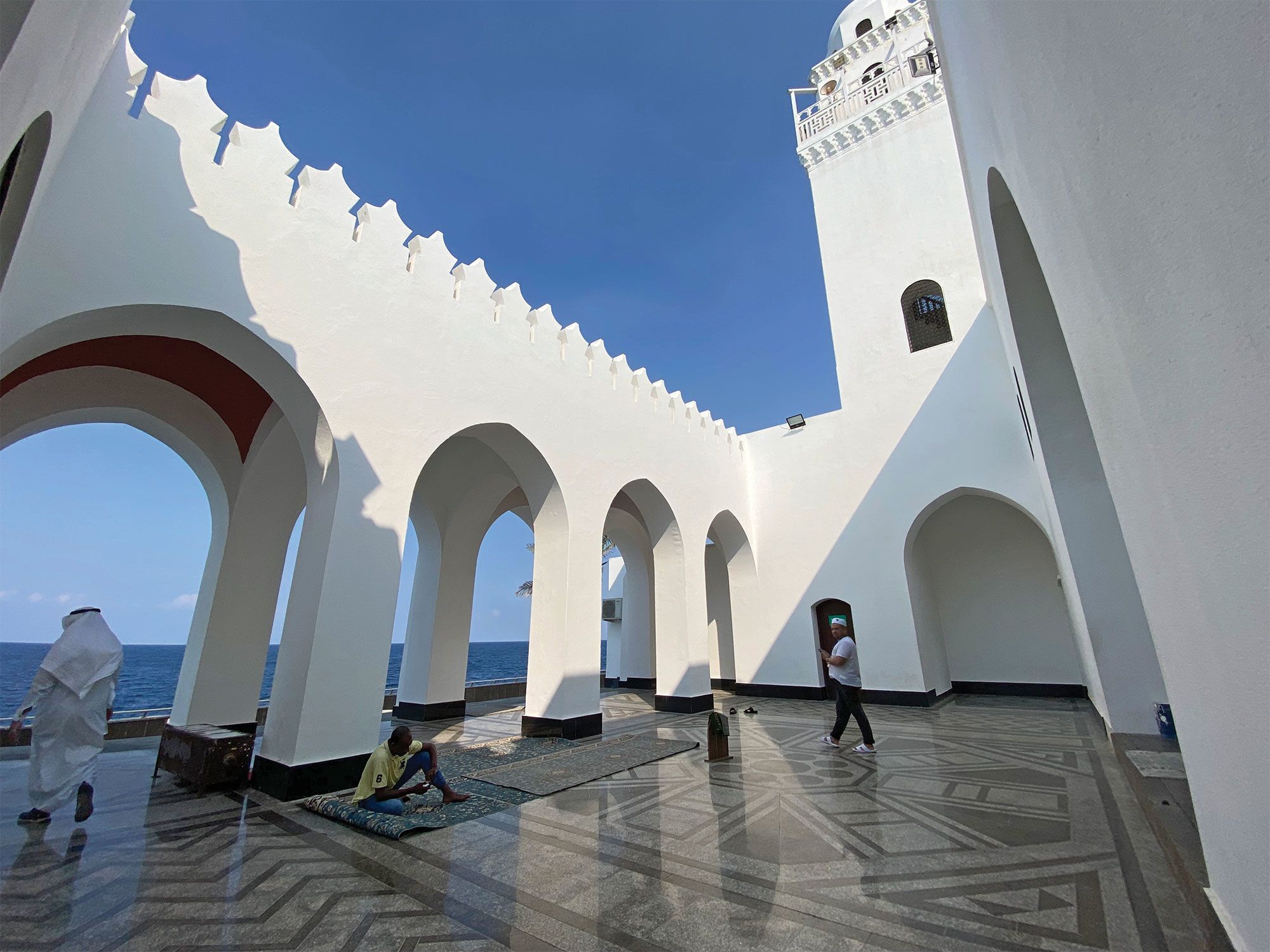
The Island Mosque on Jeddah’s Red Sea waterfront. Central Holidays launched its first tours to Saudi Arabia in 2022. (Photo by Johanna Jainchill)
The Island Mosque on Jeddah’s Red Sea waterfront. Central Holidays launched its first tours to Saudi Arabia in 2022. (Photo by Johanna Jainchill)
Uncovering river routes
Tour operators are not the only companies searching for new destinations.
River cruise brand AmaWaterways this year became the first major river cruise line to operate on Colombia’s Magdalena River, while Viking will launch its first India river cruises on the Brahmaputra in 2027.
AmaWaterways co-founder Rudi Schreiner toiled for seven years to make river cruising in Colombia a reality, his efforts slowed by the pandemic and local elections.
He and Kristin Karst, company co-founder and chief brand ambassador, visited the country to develop relationships with locals, particularly those in small riverside villages where a lack of infrastructure makes it difficult if not impossible for travelers to visit.
Schreiner has his sights set on other rivers, and while he stepped down as CEO of AmaWaterways in July, he is still chairman and hopes the company will expand to India or Africa’s Congo River and return to Myanmar, where it paused cruises due to unrest. New CEO Catherine Powell said Ama would continue to expand globally, though she did not share specific places being considered.
Viking CEO Torstein Hagen was succinct in explaining the India expansion to investors during an earnings call this summer: “People like to go to a new place where they haven’t been before.” He also cited the popularity of India stops among ocean cruise passengers.
Meanwhile, G Adventures is scoping out places in Europe and the Middle East, with Africa identified as a big opportunity, according to Marceau. Team members are now assessing West Africa, he added.
Collette is considering the Mediterranean islands of Sardinia and Corsica after finding success with Malta itineraries; and Armenia, Georgia and the Caucasus.