
Introduction: Advisor age, nothing but a number



Introduction


New — but not young — blood is flowing into travel
“We had to stop producing ‘The Lawrence Welk Show.’”
That was Bill Maloney in 2006. At the time, he was executive secretary of ASTA and was explaining changes he had made for TheTradeShow (equivalent to today’s ASTA Global Convention). The idea was to move away from years and years of traditional programming focused on a profession whose median age seemed to only rise.
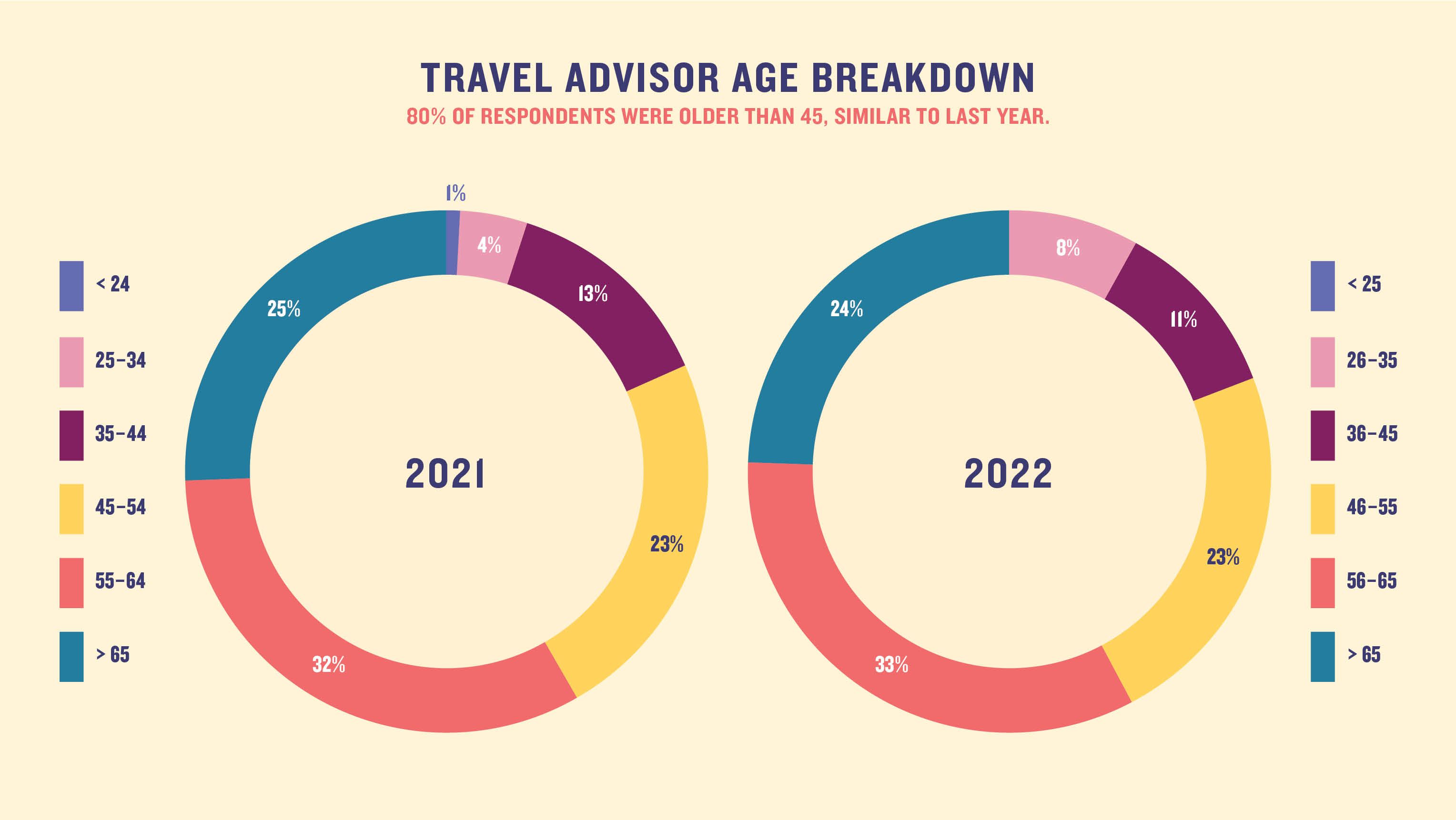
How much has changed since then? Data in this year’s Travel Weekly Travel Industry Survey suggests that I may not need to explain to most readers who Lawrence Welk was. (For the 19% of you under 45, he was an accordionist/television host whose career began in the 1920s and whose TV audience was largely made up of fans who had grown old with him.)
Concern about attracting young people to the profession has been on the minds of suppliers and professional travel association leadership for at least 20 years. At an ASTA national gathering in 2003, I had been asked to speak to the newly formed Young Professionals Society, comprising ASTA members 40 years old or younger, which was formed to try to engage younger advisors.
The turnout was — to understate — light, and about half of those in attendance were volunteers from local travel schools. Down the hall, however, in a room three times as large, was a raucous gathering of the “25 Year Club,” members who had been with the organization 25 years or more.

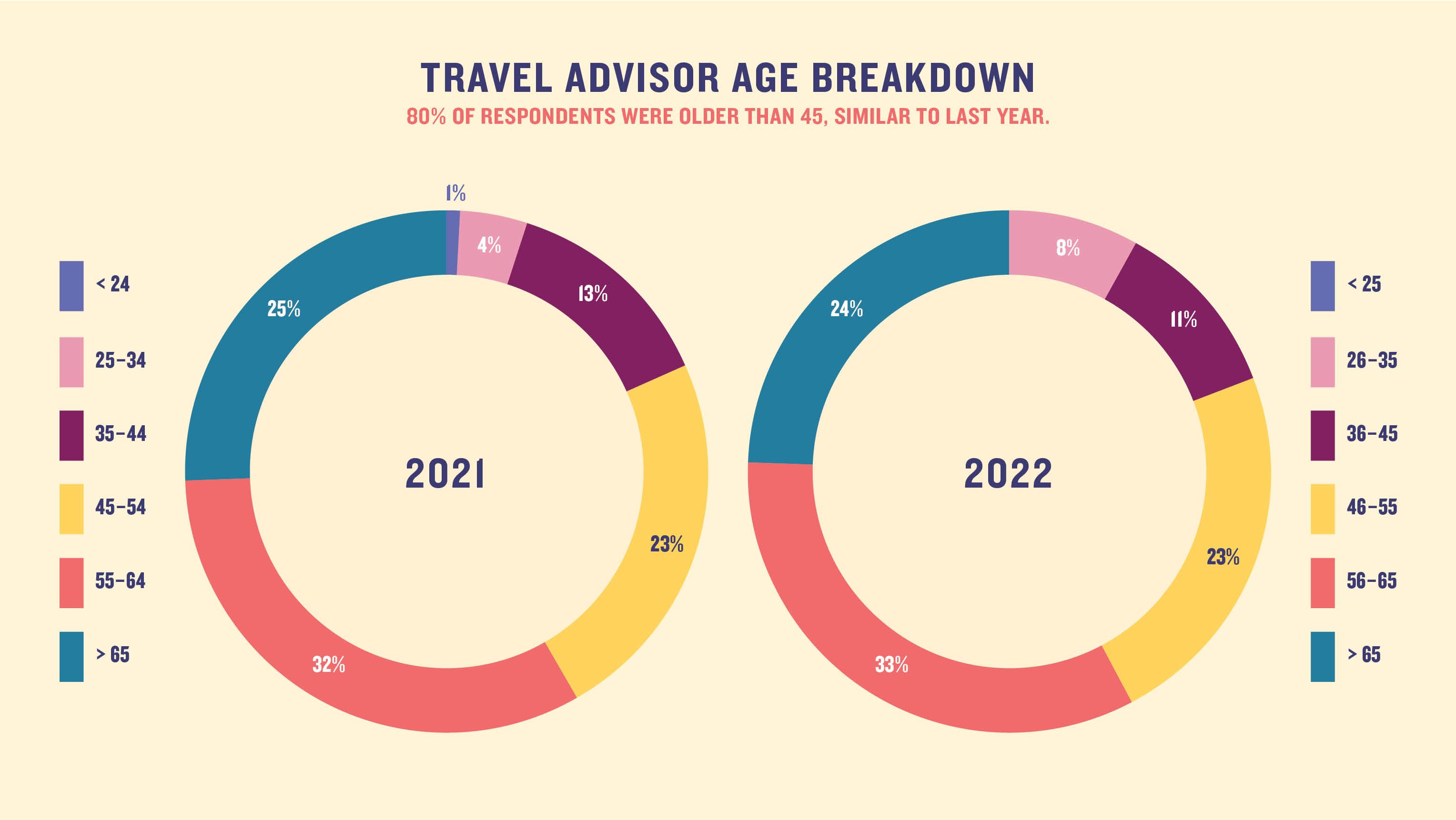
This year’s survey results won’t do much to calm those worried about backfilling retiring agents with young entrants: The percentage of those under the age of 25 went from 1% last year to zero this year.
But it could be that the worry over a lack of young talent is somewhat misplaced. As noted on Page 18, the industry isn’t necessarily attracting young agents, but it’s refreshing its ranks nonetheless: Three years ago, only 21% of advisors said they had less than 10 years’ experience. This year, almost half fall in that category.
And, also noted on Page 18, 23% of agencies are 5 years old or less. That’s more than double the 2019 figure of 10%.
Why? The pandemic had many people rethinking their career choices, and I think it struck some people as a good time to begin training for travel’s resumption. Travel Weekly reported on people who were choosing travel counseling as a pandemic-
induced career switch and, as also noted on Page 18, the Travel Institute reported that attendance at its introductory webinars is up 50% since 2019.
And perhaps more important than enticing millennials to become travel advisors, millennials use travel advisors. This was first reported in a 2017 ASTA survey and reinforced by Virtuoso surveys during the pandemic that consistently showed young travelers leading the recovery. (It was at a Virtuoso Travel Week conference that I heard a millennial explain why his cohort turns to travel advisors, saying, “Millennials’ expertise is finding who the experts are.”)
There are likely other reasons that becoming a travel advisor at a young age isn’t as popular as in decades past. Just prior to expressions of concern about an aging profession, two elements that provided young people with a common path to the profession — travel schools and brick-and-mortar agencies — began to decline. Today, a young person would have to have a strong entrepreneurial streak to set up a business as a newbie home-based agent, even with a training package provided by a host or franchisor.
The reassuring bottom line is that, although young people still may not see becoming an advisor as an attractive first career, the profession does attract those with a bit of maturity and experience elsewhere. Which, upon reflection, is not such a bad thing for the profession, or for clients.


Arnie Weissmann
Executive Vice President and Editor in Chief, Travel Weekly




 Built with Shorthand