
What advisors are booking
Combine large, bold images with the beautifully crafted words of your story.



What advisors are booking

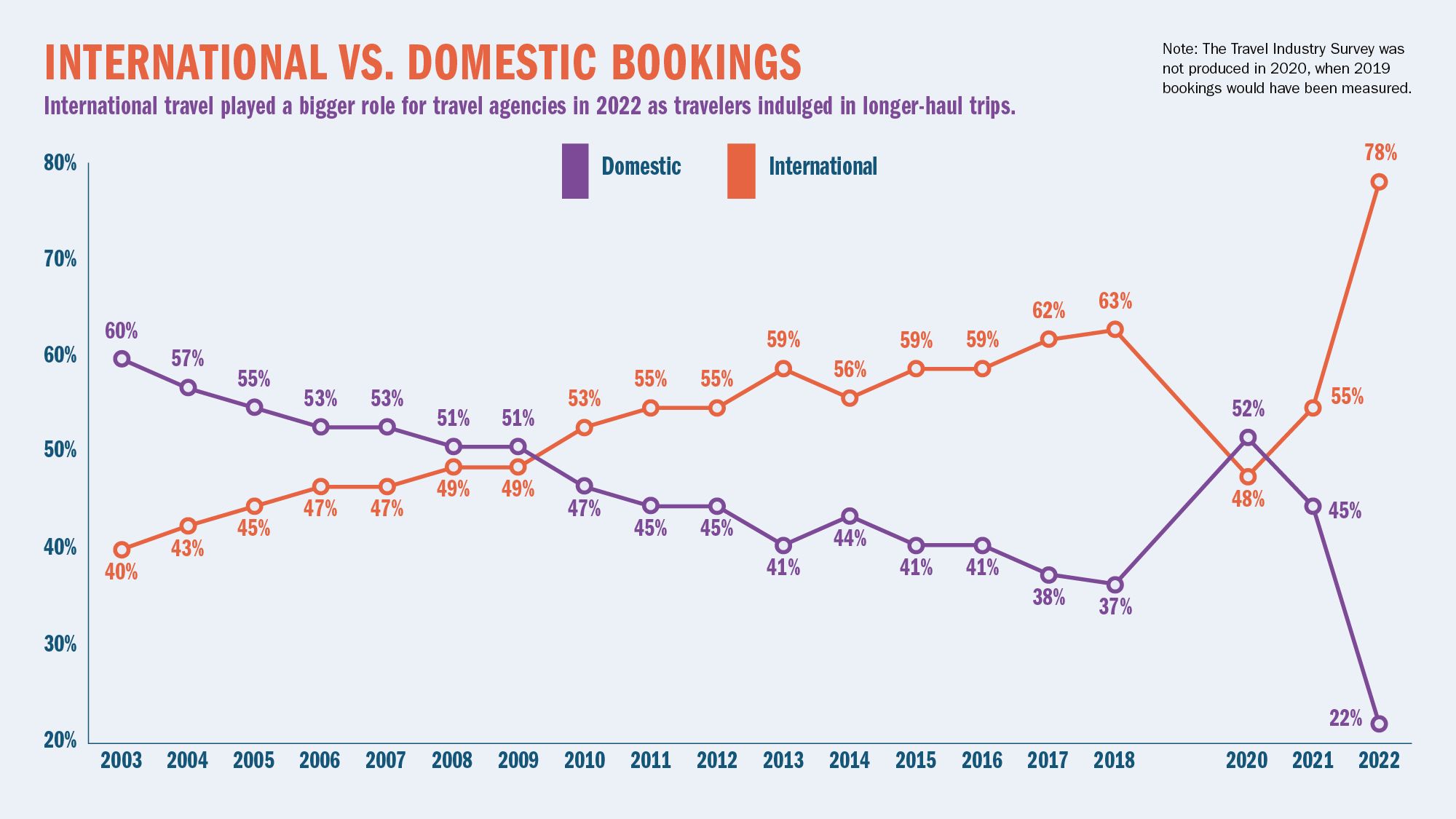
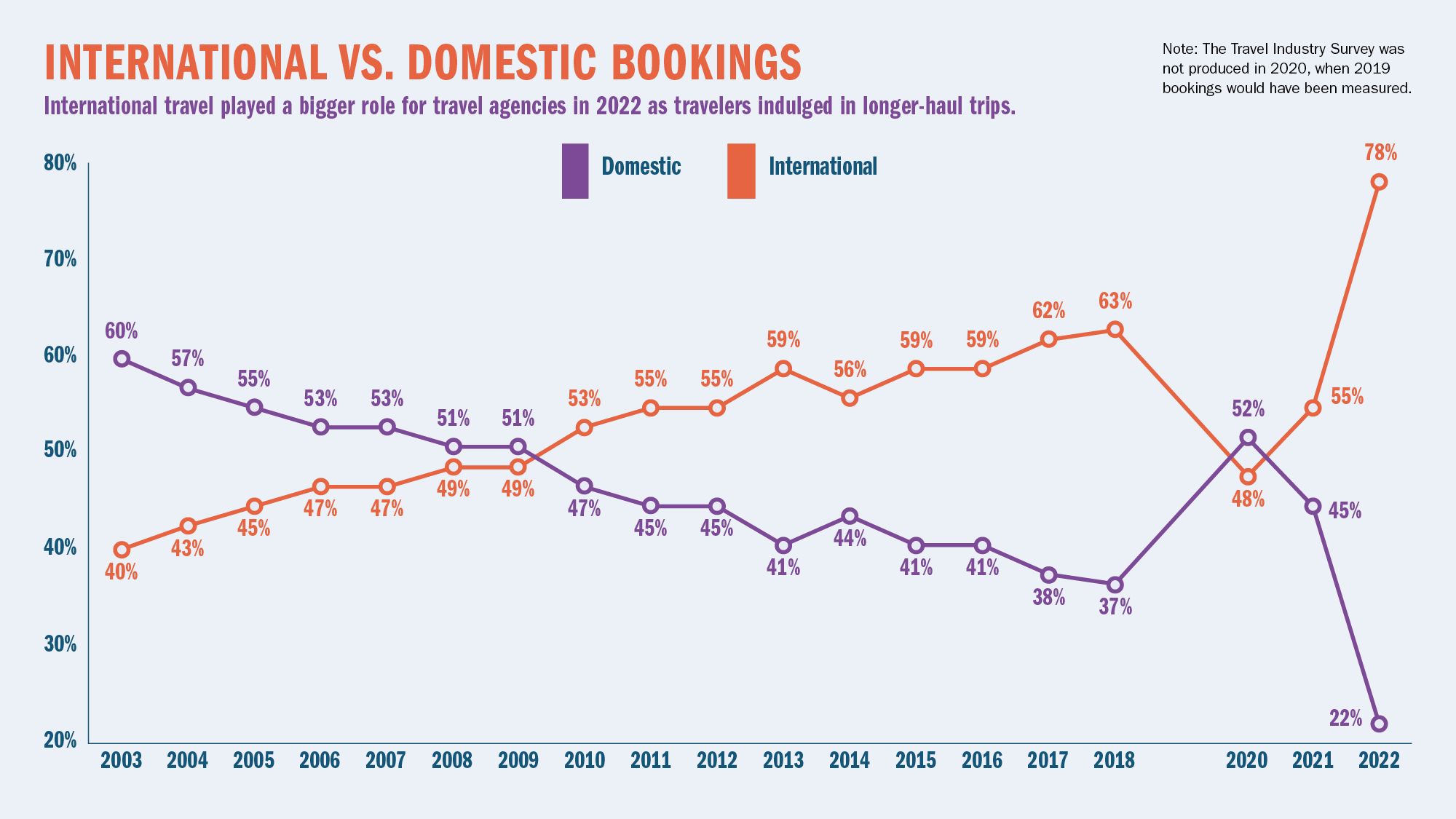
In the 20 years since the Travel Industry Survey began tracking domestic vs. international bookings, never has the international share been higher than in this year’s survey. Travel abroad accounted for 78% of agency bookings in 2022, shattering the previous record high set in 2018 and only two years after falling below domestic bookings for the first time in 11 years. While people began leaving the U.S. again in 2021 with the loosening of pandemic-era restrictions, other factors helped push the surge abroad to that high, such as the continued strength of the U.S. dollar and the materialization of the predicted pent-up demand from travelers wanting to make up for lost time.
—Nicole Edenedo and Johanna Jainchill
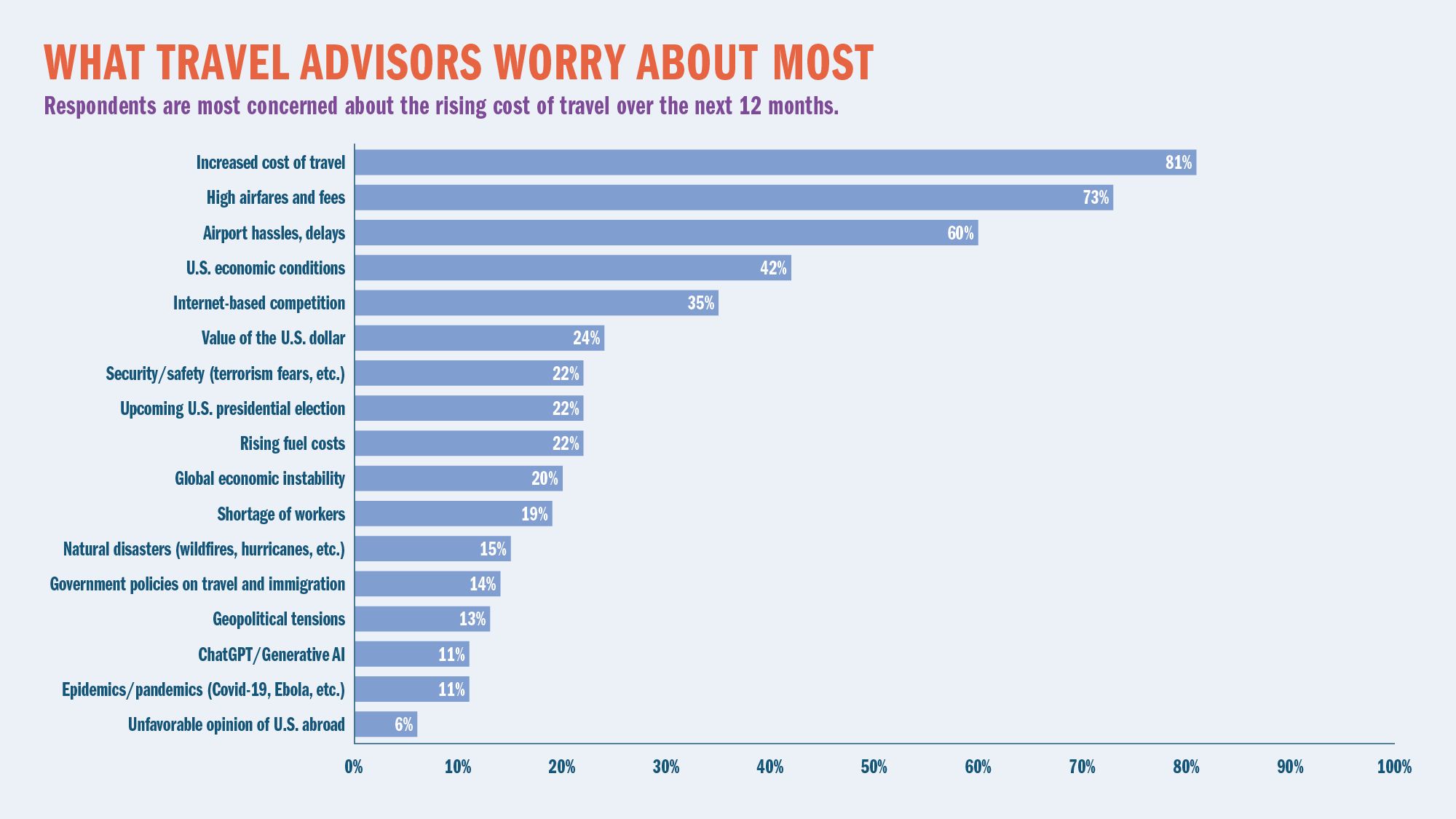
In last year’s survey, 43% of advisors said they expected increased travel costs to have the greatest impact on business in the next 12 months, followed by rising airfares and fees; this year, that number jumped to 81%. Higher travel costs took the top spot from concerns about epidemics/pandemics, which plummeted to only 11% this year, down from 55% in last year’s survey.
The cost concern makes sense: Few factors have had as significant an impact on the travel landscape in recent years as inflation and elevated pricing. And while price hikes have been felt across virtually every travel vertical, airfare and hotels and resorts have posted some of the industry’s steepest increases. According to the consumer price index, airfares increased 28.5% over the course of 2022, far outpacing 8% inflation. Hotel ADR growth across most U.S. markets also exceeded inflation in 2022, reaching a record-high ADR of $150 as average rates rose 13.6% on the year prior, according to data from STR and Tourism Economics. Airfares have come down some this year — about 13% year over year in September — and U.S. hotels have since seen demand normalize and rate growth start to moderate. But ADR continues to climb, with STR predicting that nationwide ADR will be up 3.6% for 2023.
—Johanna Jainchill and Christina Jelski
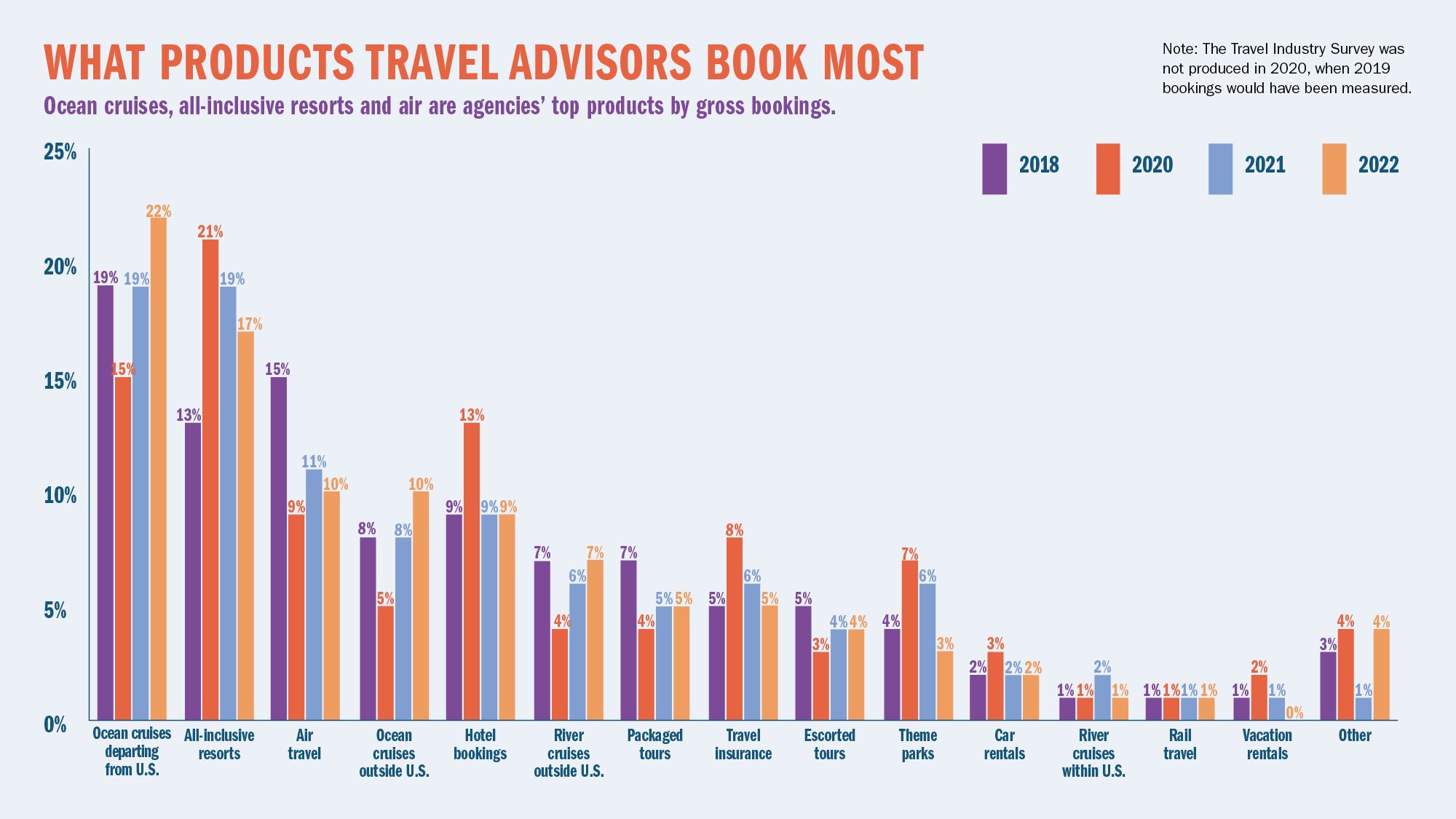
Over the past few years, all-inclusive resorts and ocean cruises from the U.S. have jockeyed for the top spot in the category of which product travel advisors book most.
Cruising regained some of the share it lost to all-inclusive resorts during the pandemic, reclaiming its No. 1 position after losing it to all-inclusives in 2020 and tying last year. With cruising mostly shut down during the first two years of the pandemic, many cruise enthusiasts pivoted to all-inclusives as an alternative.
As cruise lines redeployed their full fleets and the CDC dropped masking and testing requirements last year, cruise bookings regained traction. Gross bookings from cruises departing outside the U.S. also grew, with ocean cruises climbing to 10% of what advisors book, up from 8% the year before, and river cruises gaining an extra percentage point of market share.
—Christina Jelski and Andrea Zelinski
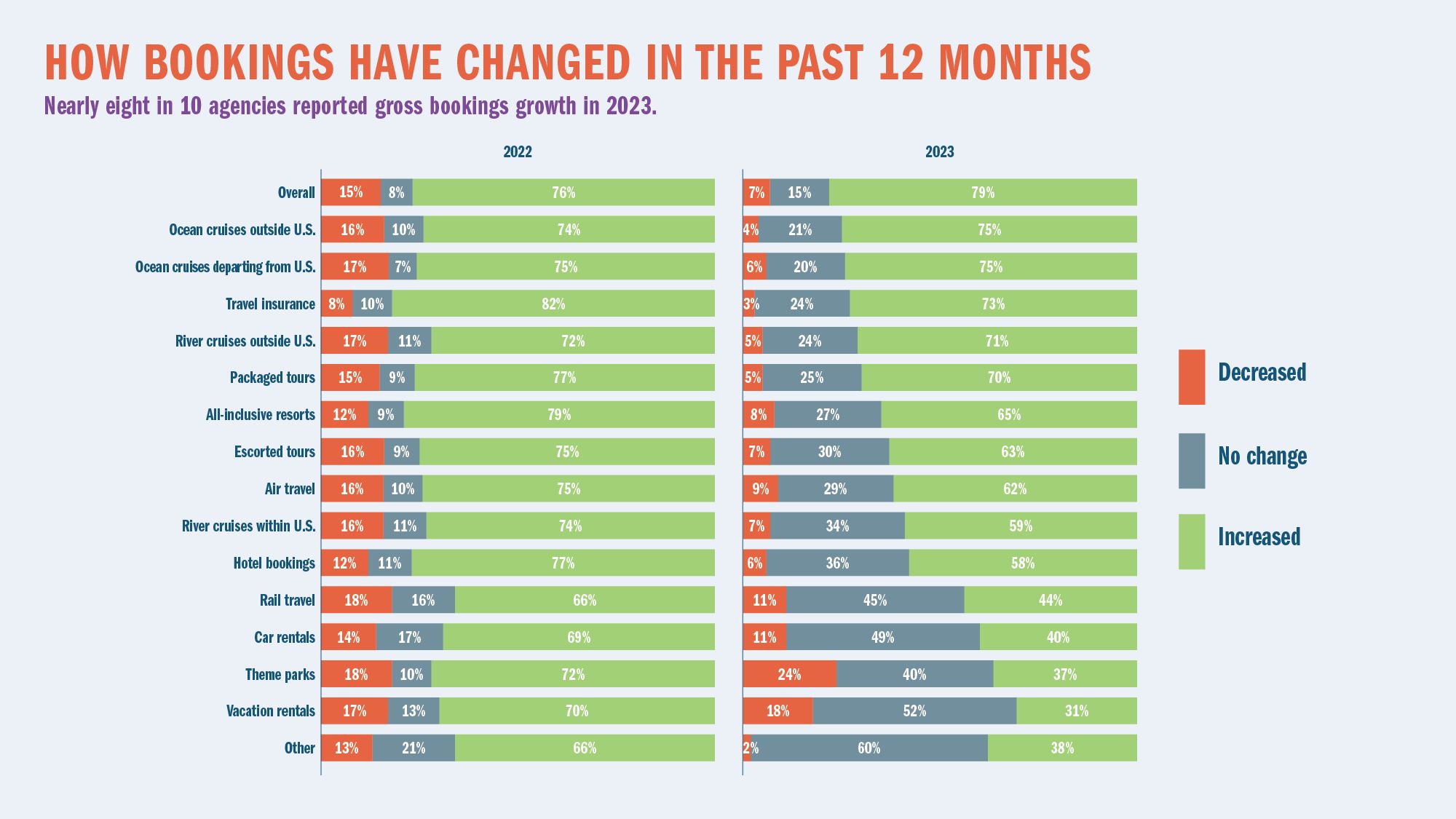
Coming out of the pandemic shutdown, travel advisors and agencies reported growth in almost every travel category in our 2022 survey. As travel patterns began to normalize, the rate of growth has changed, in some cases reflecting new consumer preferences and in others an indication that some of the industry’s pandemic success stories, such as vacation rentals and car rentals, lost steam as people got back on planes and felt comfortable with traditional lodging.
Some categories are continuing to surge: 65% of travel advisors reported that all-inclusive gross bookings increased in the past 12 months, compared with just 8% who saw that business shrink. And while that’s a lower increase than was reported in last year’s survey, it is no surprise the category continues to be popular, especially as travel advisors move toward more luxury specialization: It has seen an unprecedented influx of upscale product in recent years, thanks in part to continued all-inclusive expansion from boldface names like Marriott International, Hyatt Hotels Corp. and Hilton. Those products have moved the segment up the pricing ladder, with new concepts like Hyatt’s Impression by Secrets and Grupo Xcaret’s La Casa de la Playa raising the bar and attracting high-end jet-setters who may not have previously considered an all-inclusive vacation.
One segment that saw a big hit in growth was theme park bookings: Last year, travel advisors reported that category increased 72% for them, while this year, the reported increase was only 37%. The numbers jibe with what the parks have reported: Both Disney and Universal said attendance was down after “extraordinary” and “peak” visitation in 2022. What happened? Factors include people going abroad again, the strong dollar deterring international visitors and the relaunch of cruising.
—J.J. and C.J.
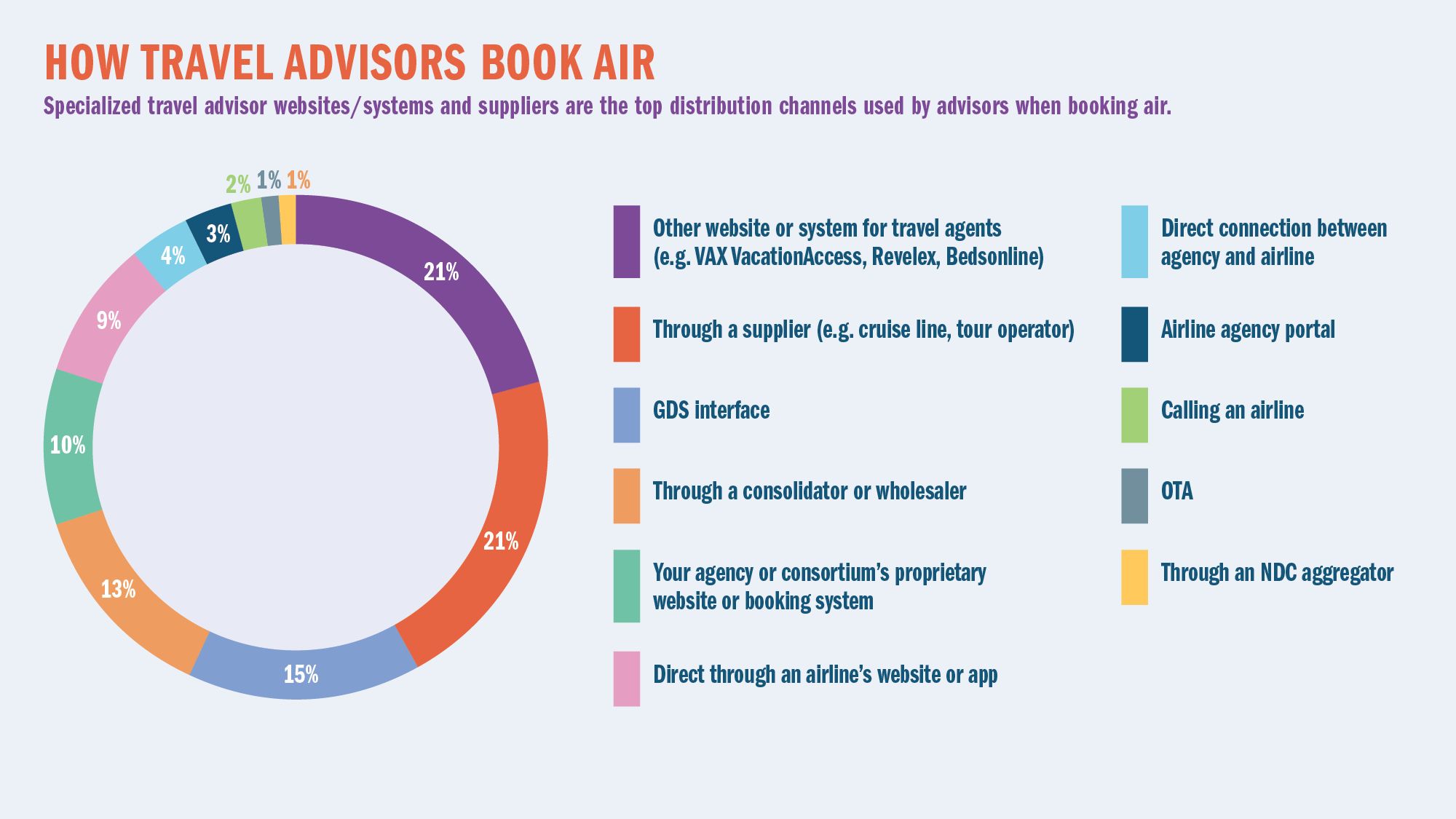
This year, the Travel Industry Survey included, for the first time, “through a supplier” as an air booking option. It turns out that’s how 21% of respondents book air, equal to the number who book through websites/systems for travel agents, the top choice in last year’s survey.
What the survey doesn’t address is ambivalence among many travel advisors about booking air at all: An online survey Travel Weekly fielded in the spring found that nearly a quarter of respondents don’t book air. Their leading reasons were lack of compensation; not wanting to be held responsible for delays and cancellations; not wanting to handle cancellations and rebooking requests; and lack of airline support.
—Robert Silk
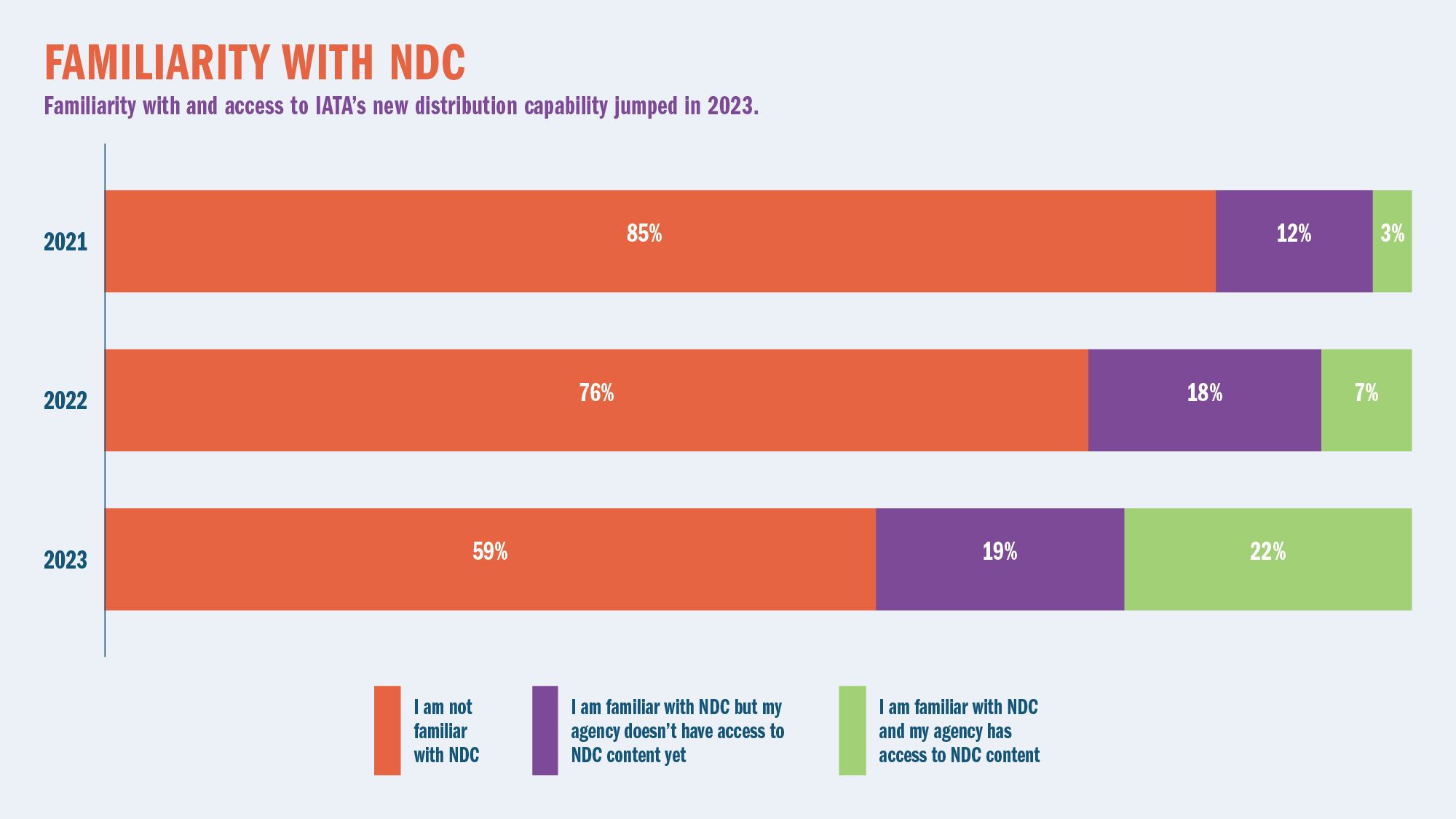
The percentage of travel advisors who say they are both familiar with and have access to NDC-supported airline product content more than tripled over the past year, to 22%. This should come as little surprise. American Airlines has shaken up the distribution landscape by pulling what is now slightly more than half of its content from the traditional, Edifact-supported GDS channels. Other airlines, among them United, have also removed fares from legacy GDSs, though in a significantly more limited fashion. In addition, airlines have increased their NDC capabilities and through NDC are now offering more price points and ancillary products than ever before. Many travel agencies have decided they must adapt.
—R.S.
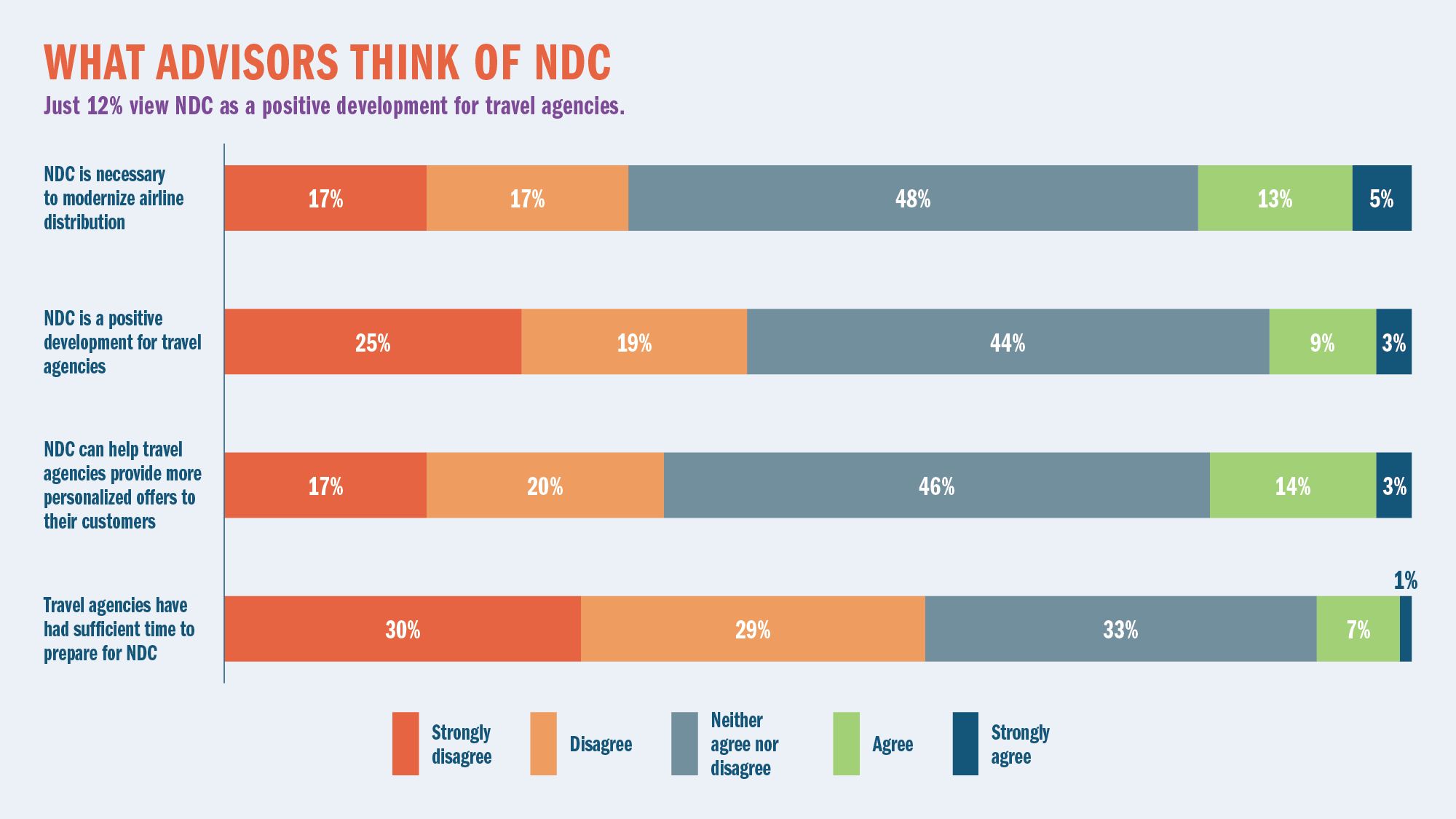
A growing number of airlines say they need NDC to offer a more diverse and tailored suite of fare products through agency channels. Travel advisors aren’t buying it. Less than a fifth said NDC is necessary to modernize airline distribution or that it can help them personalize offers for clients. Even fewer, just 8%, said travel agencies have had sufficient time to prepare for the sea change.
—R.S.
Update: The chart “How travel advisors book air” was updated Nov. 21 to change the name of Travelbound to Bedsonline. It was listed as an example of a website or system that travel advisors use to book air.
 Built with Shorthand