



Advisor trends

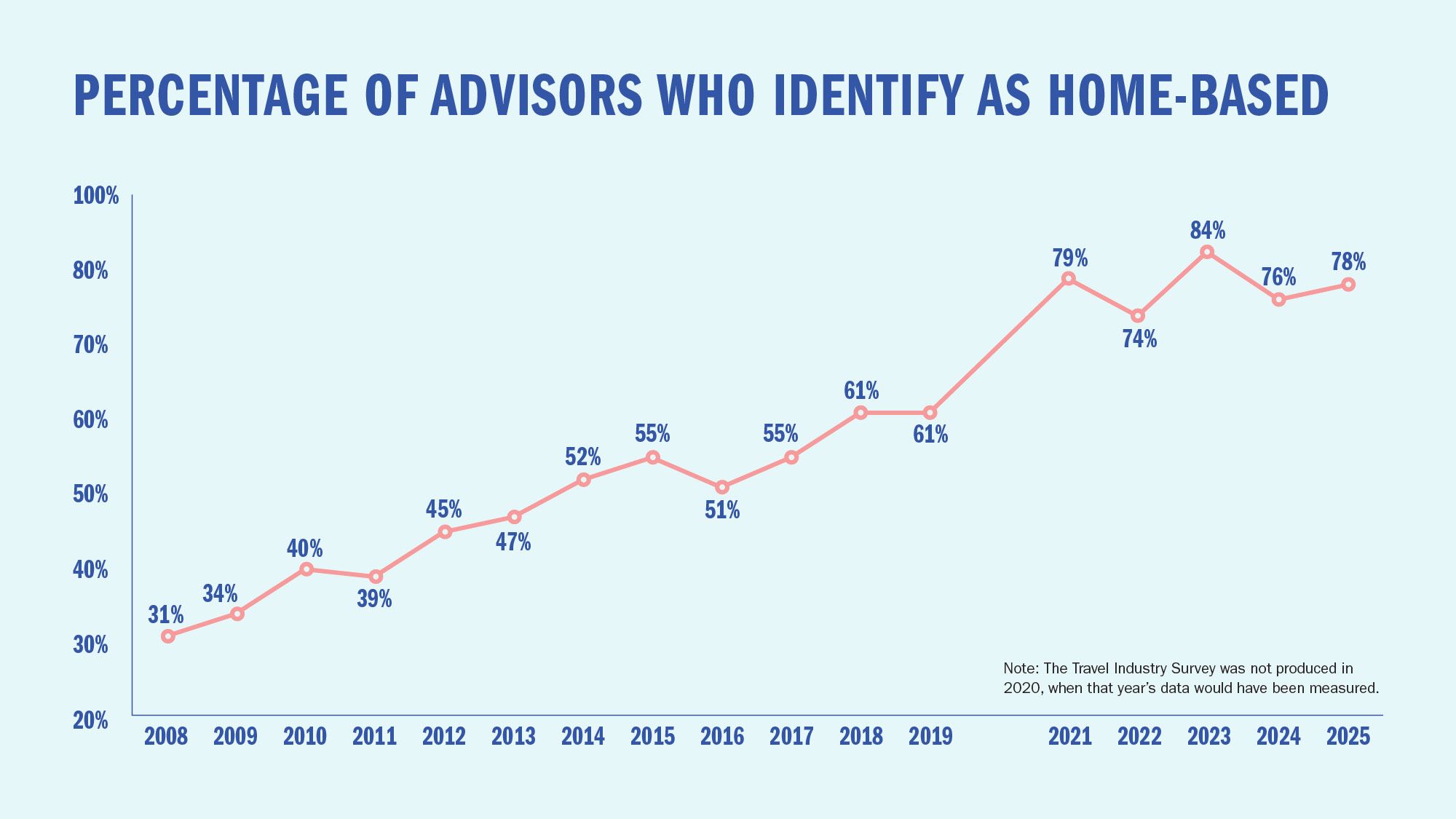
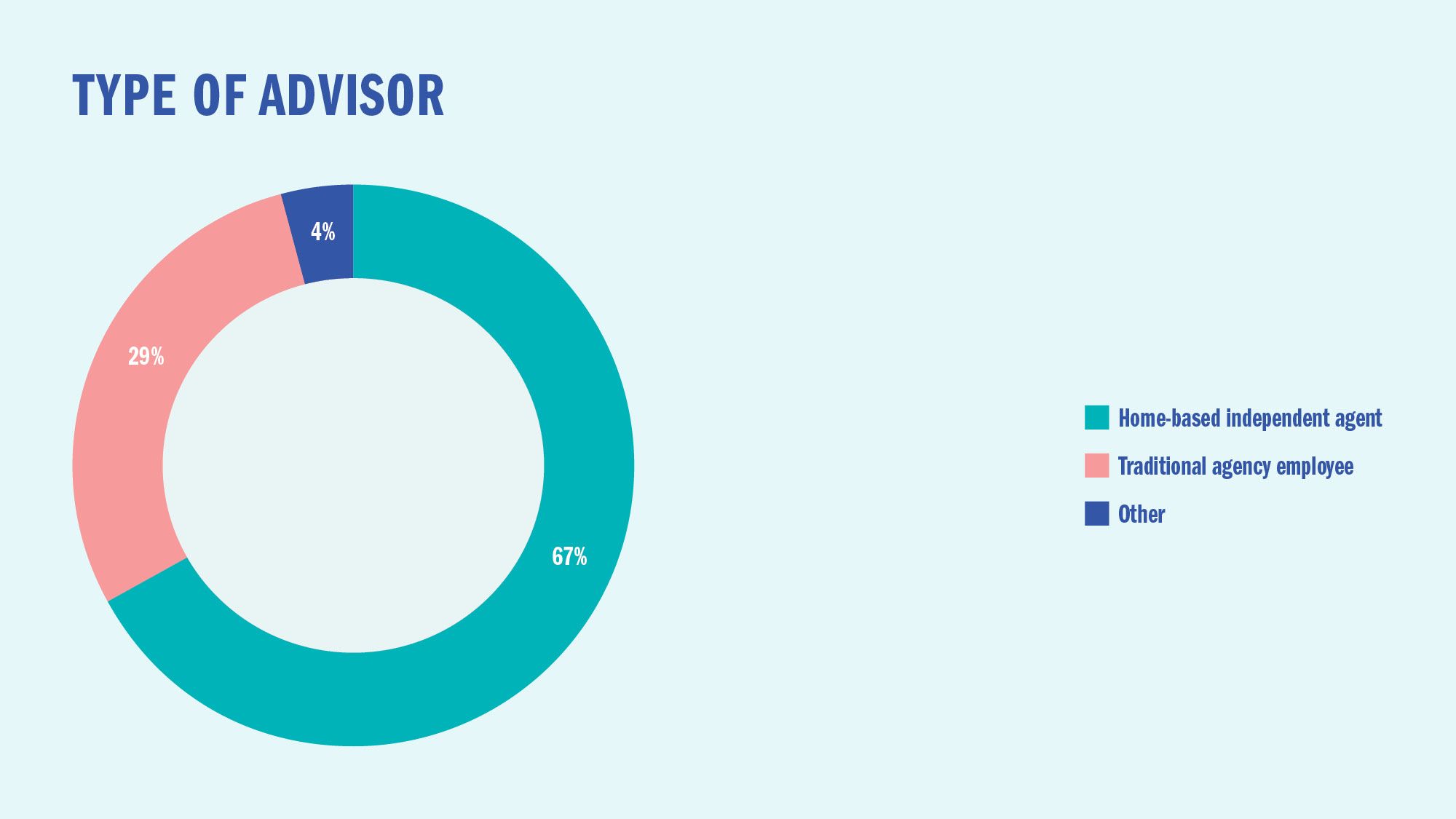
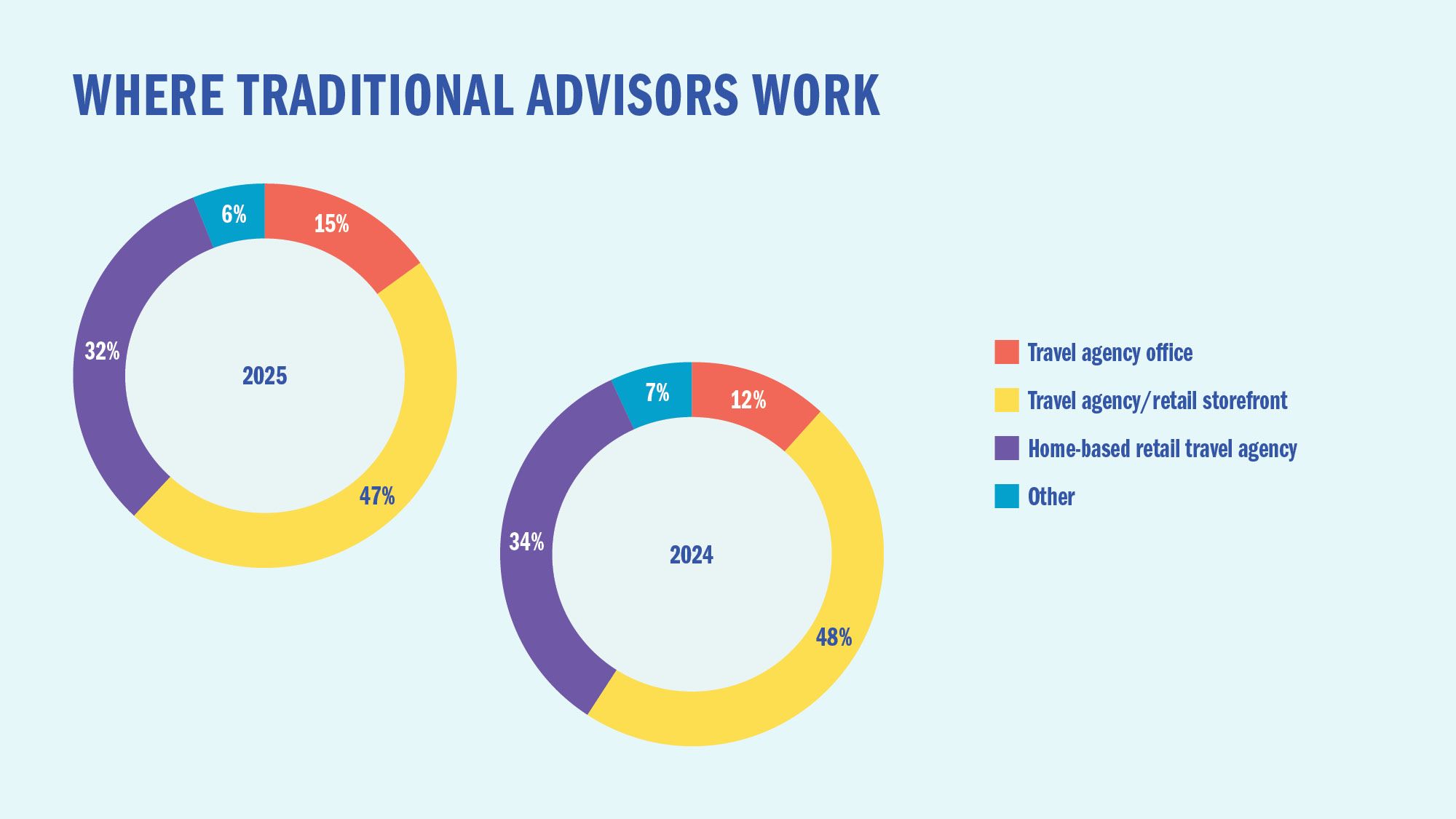
The travel advisor community’s shift to a primarily home-based, independent contractor (IC) model has continued. This year, 67% of advisors reported that they are home-based ICs, up from 63% of respondents last year (In total, 78% report being home-based, including those who are retail agency and TMC employees). Only 29% said they are traditional agency employees. While a small share of traditional advisors are returning to the office this year (home-based employees decreased 2 percentage points compared to last year), the overall trend sees most advisors working from home as ICs.
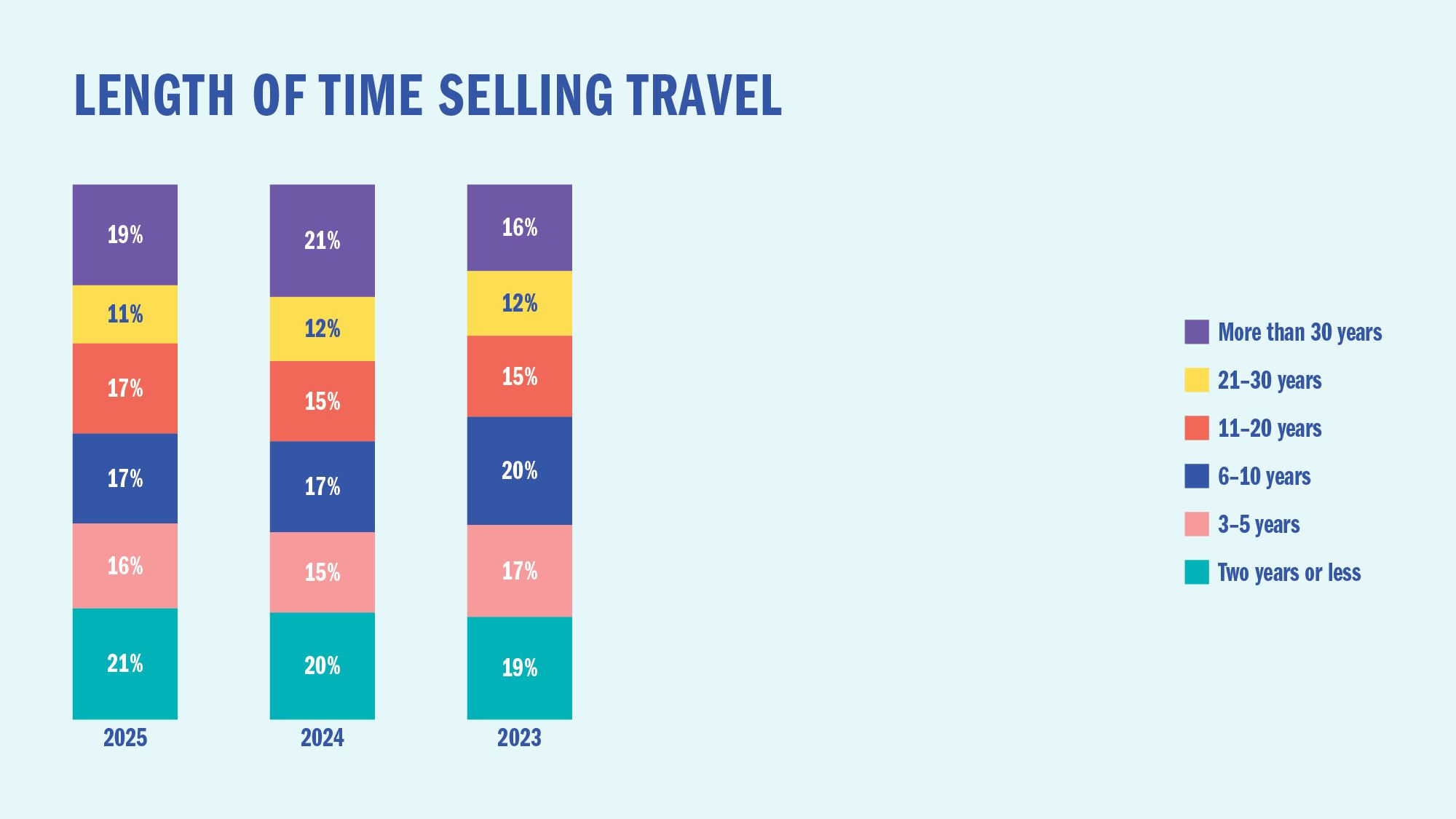
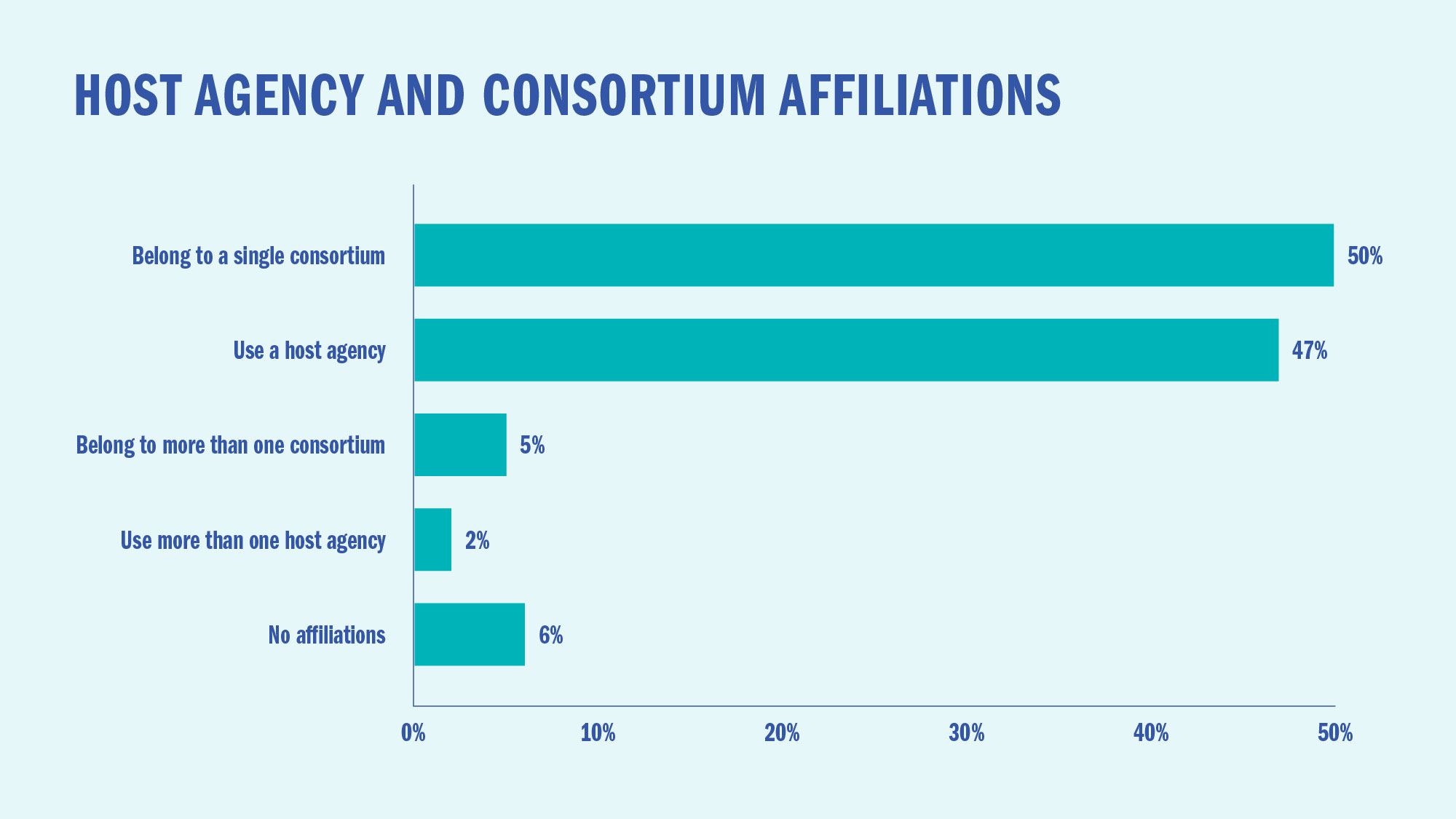
More survey respondents this year said they are affiliated with a host agency, 47% compared to 35% in 2024. The host channel often courts new advisors, a likely reason behind the growth of new entrants to the industry that the survey found this year: 37% began selling travel in the past five years, up from 35% last year, while 8% started in the past year, compared to 6% last year.
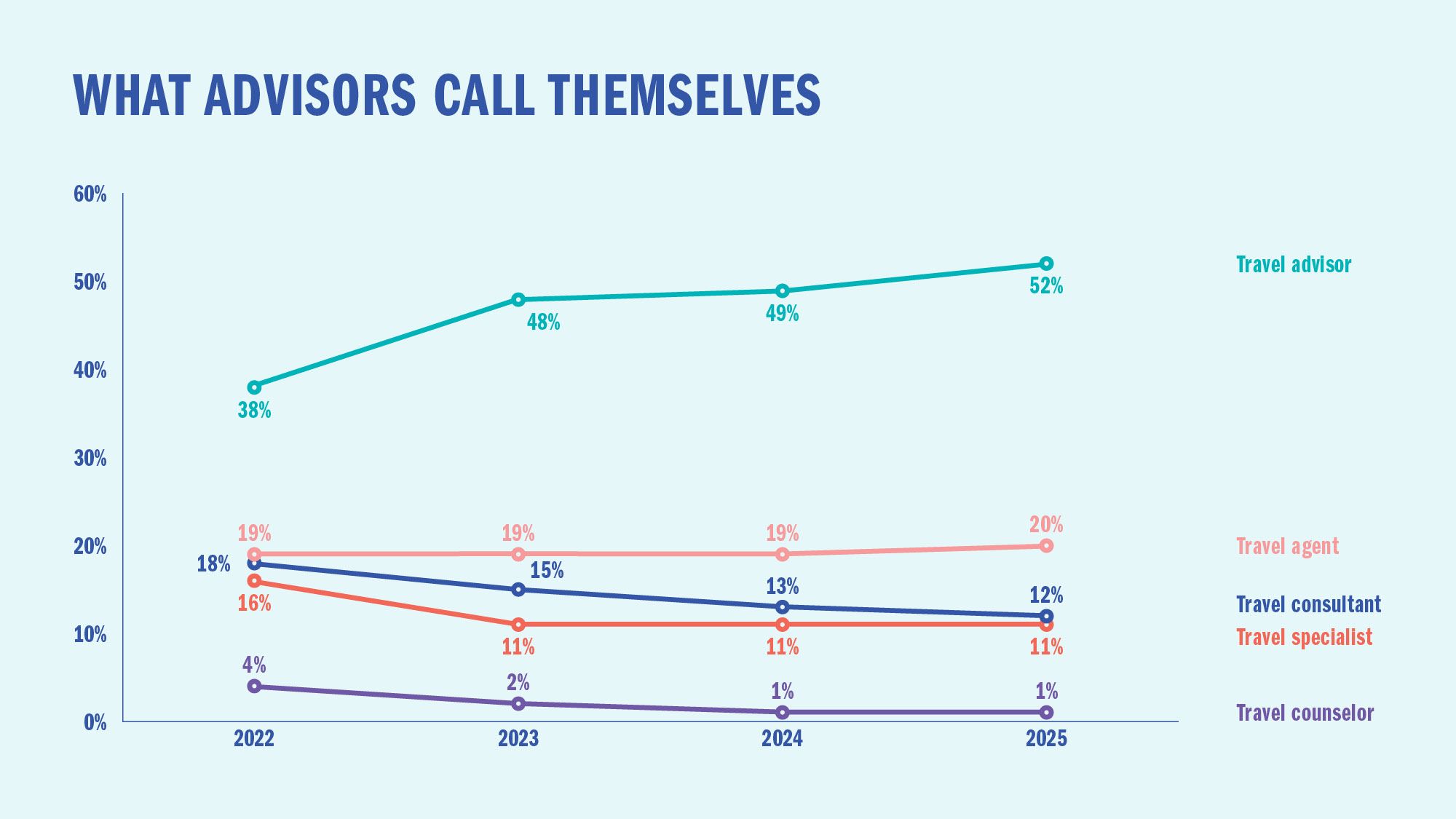
Respondents overall are increasingly firm on one thing: What they call themselves. More than half, 52%, prefer the term “travel advisor.”
—Jamie Biesiada


Connecting with clients and demonstrating value
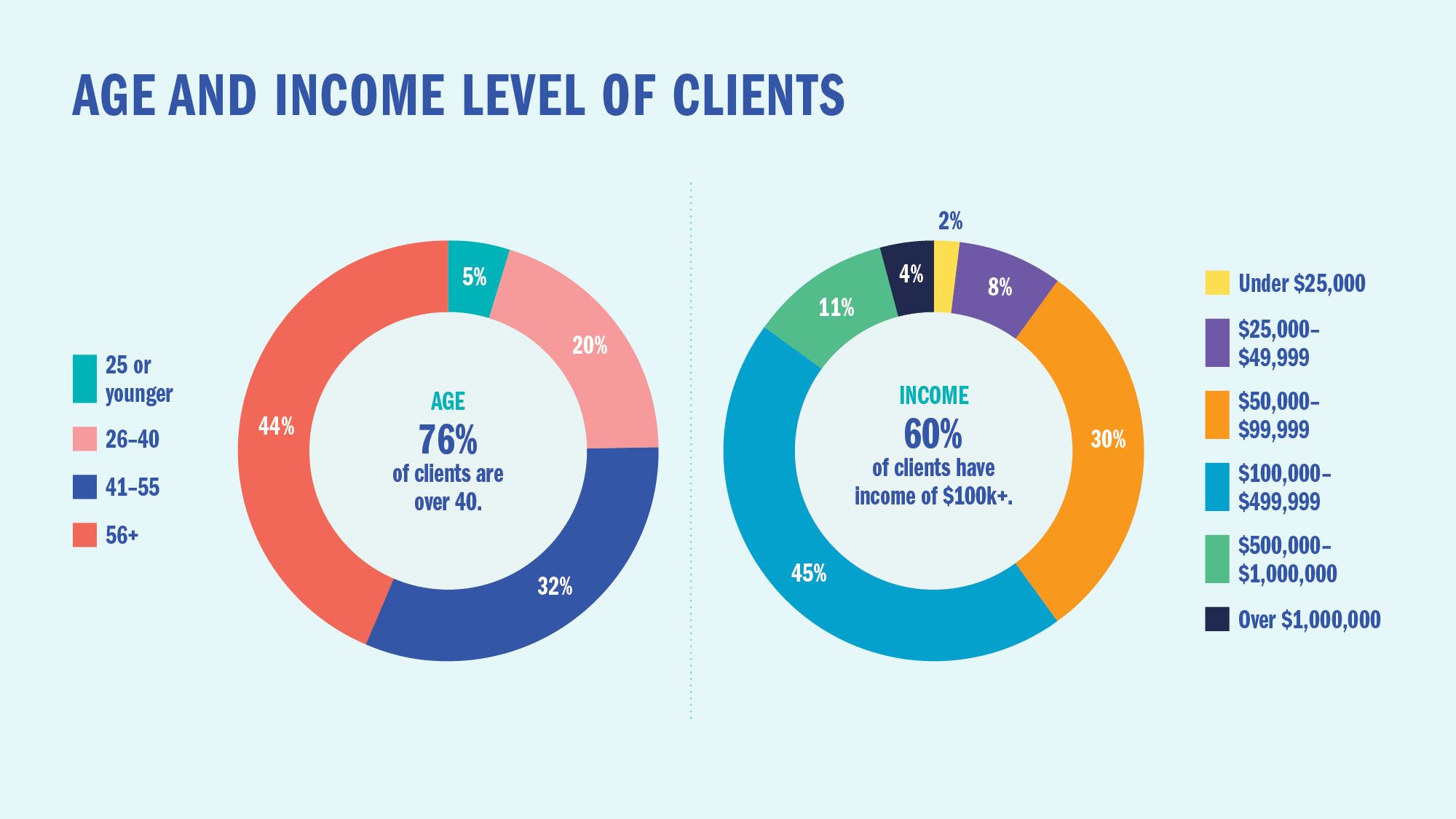
Travel advisors’ clients tend to be older and wealthier than the average traveler. The Travel Industry Survey found 76% of clients are over the age of 40 and 60% have incomes of $100,000 or more — nearly half fall into the $100,000-$499,999 bracket.
So how do advisors — many who are new to the industry and without much experience — tap that market and prove their value?


Take a “client-centric approach” and specialize in that client, said Jack Ezon, founder and managing partner of Embark Beyond in New York.
“We like to help our advisors hone in on a specific client profile and [do a] deep dive into their personal lifestyle, from where they eat, where they like to go after work, what they read and who they follow,” Ezon said. “This gives us a clear direction on channels of communication and strategy.”
Then it’s a matter of connecting via “passions and pain points,” he said, with an emphasis on how an advisor can help.
To demonstrate value, Ezon emphasized the importance of familiarity: The more an advisor knows a client, the better they can serve them, wherever their destination might be.
“A trusted relationship will help an advisor add value as a tastemaker for the client,” he said.
—Jamie Biesiada
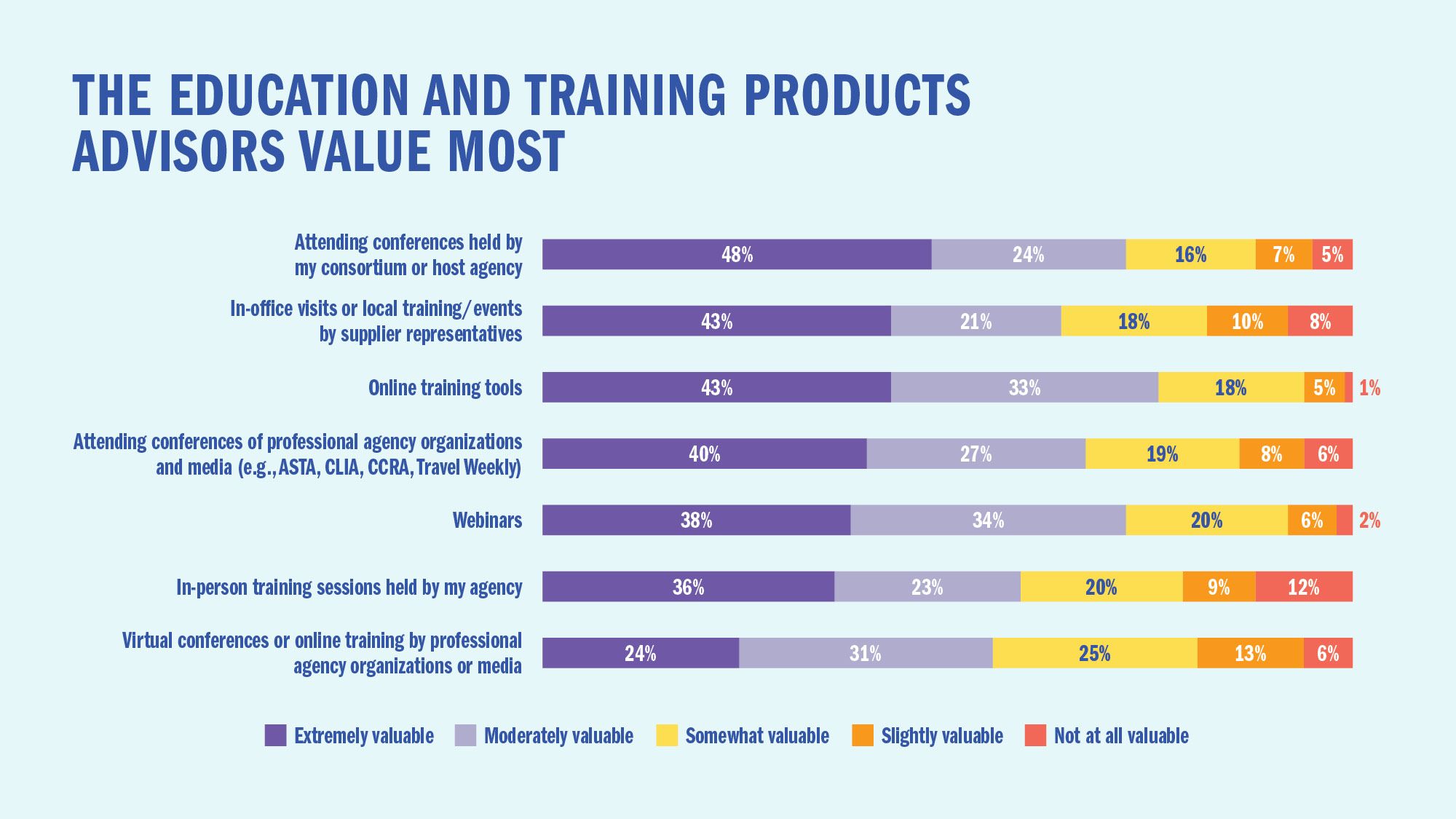
As an influx of new advisors enter the industry, training programs are more valuable than ever. When asked what the most valuable services provided by preferred suppliers are, educational programs was the No. 3 choice. Survey respondents also indicated that training is more valuable when it is conducted at conferences held by their consortium or host agency. Advisors have also made it clear that virtual is no match for in-person: Only 24% found virtual conferences and online training extremely valuable, the lowest of all options.
—Johanna Jainchill
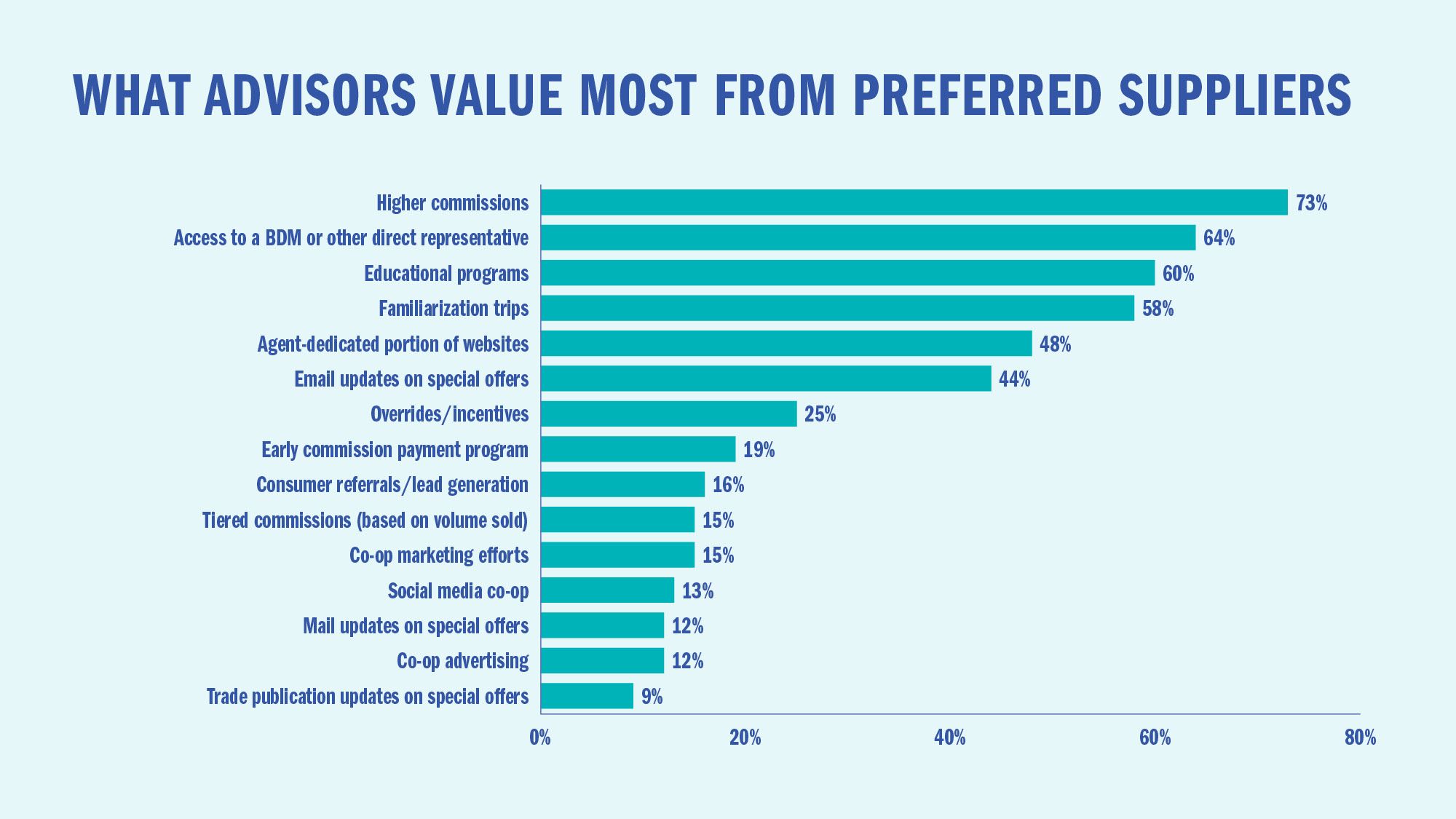
Higher commissions jumped back into the lead this year for what advisors consider the top service offered by preferred suppliers. It had held the top spot in 2023, when 77% selected it as a top service, but it fell last year when a new option, access to a business development manager or representative, was introduced and became the most popular response.
The importance of fam trips has lessened over the past few years. This year, 58% of respondents cited it as a top service, down from 65% in 2023.
—Teri West and Johanna Jainchill
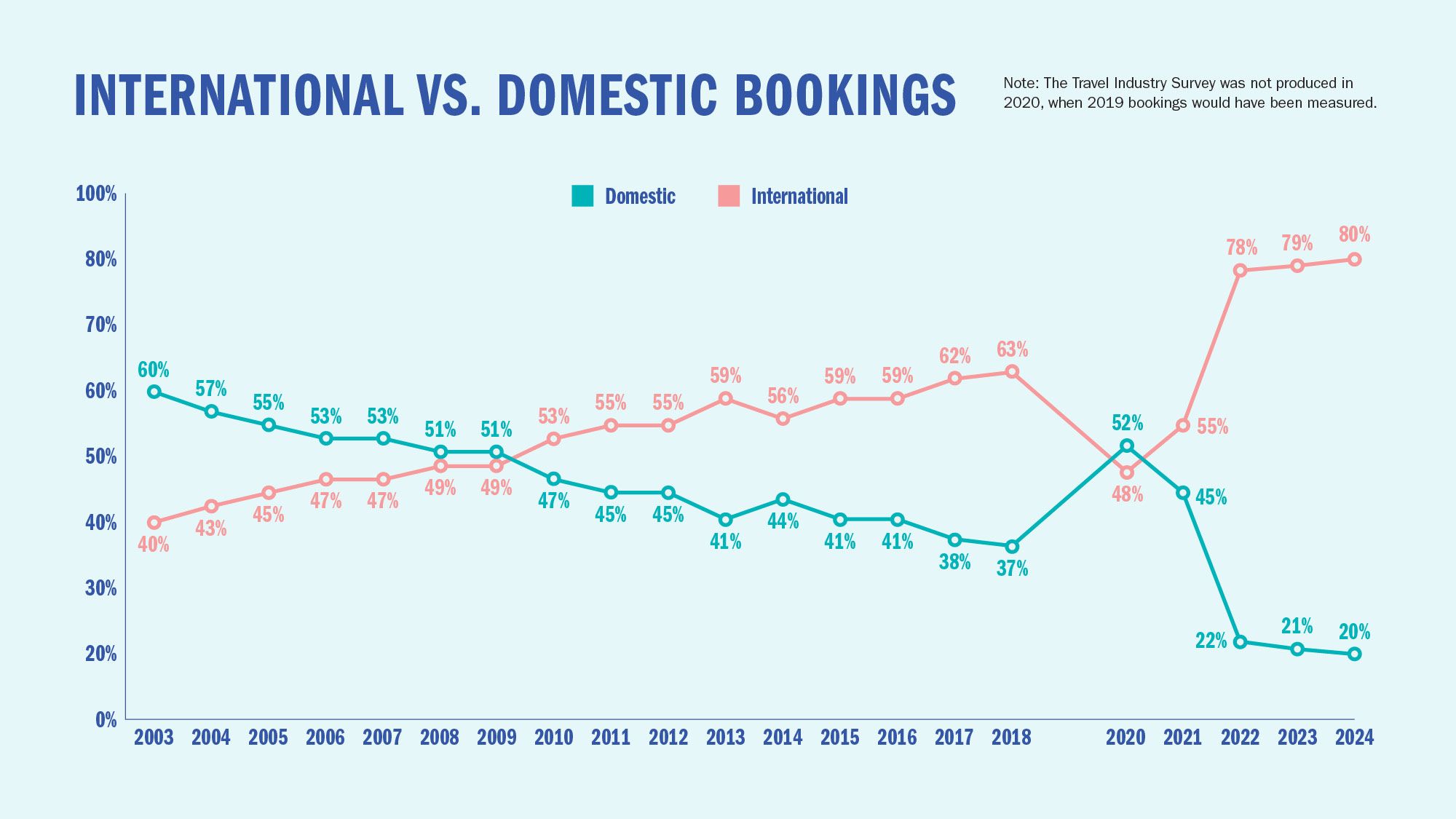
International travel took the most share ever of total bookings in 2024, 80%. It’s a trend that has continued to grow since the pandemic shutdown, buoyed by a strong dollar, pent-up demand and the growing consumer preference for experiences.
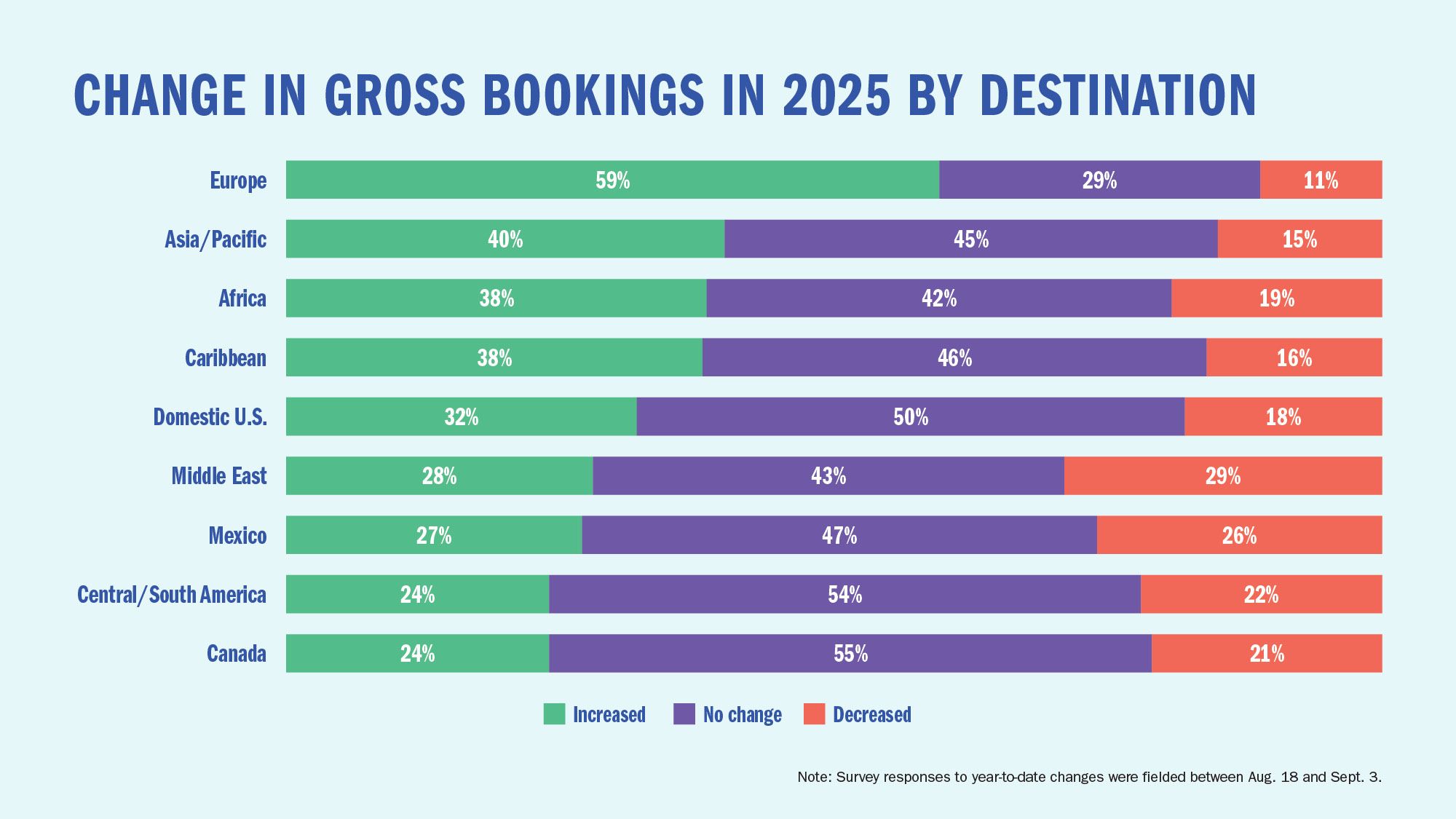
Domestic travel fared less well, a trend that has trickled into 2025. This year, nearly six in 10 respondents (59%) reported increased bookings to Europe, compared to just 32% seeing gains in domestic U.S. bookings. These trends are reflected in U.S. hotel industry performance, with STR and Tourism Economics citing overall domestic hotel demand and revenue declines.
A decline in international inbound travel to the U.S. this year has made headlines, but the good news for U.S. travel advisors is that outbound travel continues to grow, especially among upper-income travelers who demonstrate an increasing willingness to spend on international trips. Like our survey, STR and Tourism Economics data shows that U.S. outbound demand is expected to be up 4.8% for the year, and Europe continues to be a standout, with August data showing strong room revenue gains across European hot spots like Spain and Italy.
—Christina Jelski and Johanna Jainchill
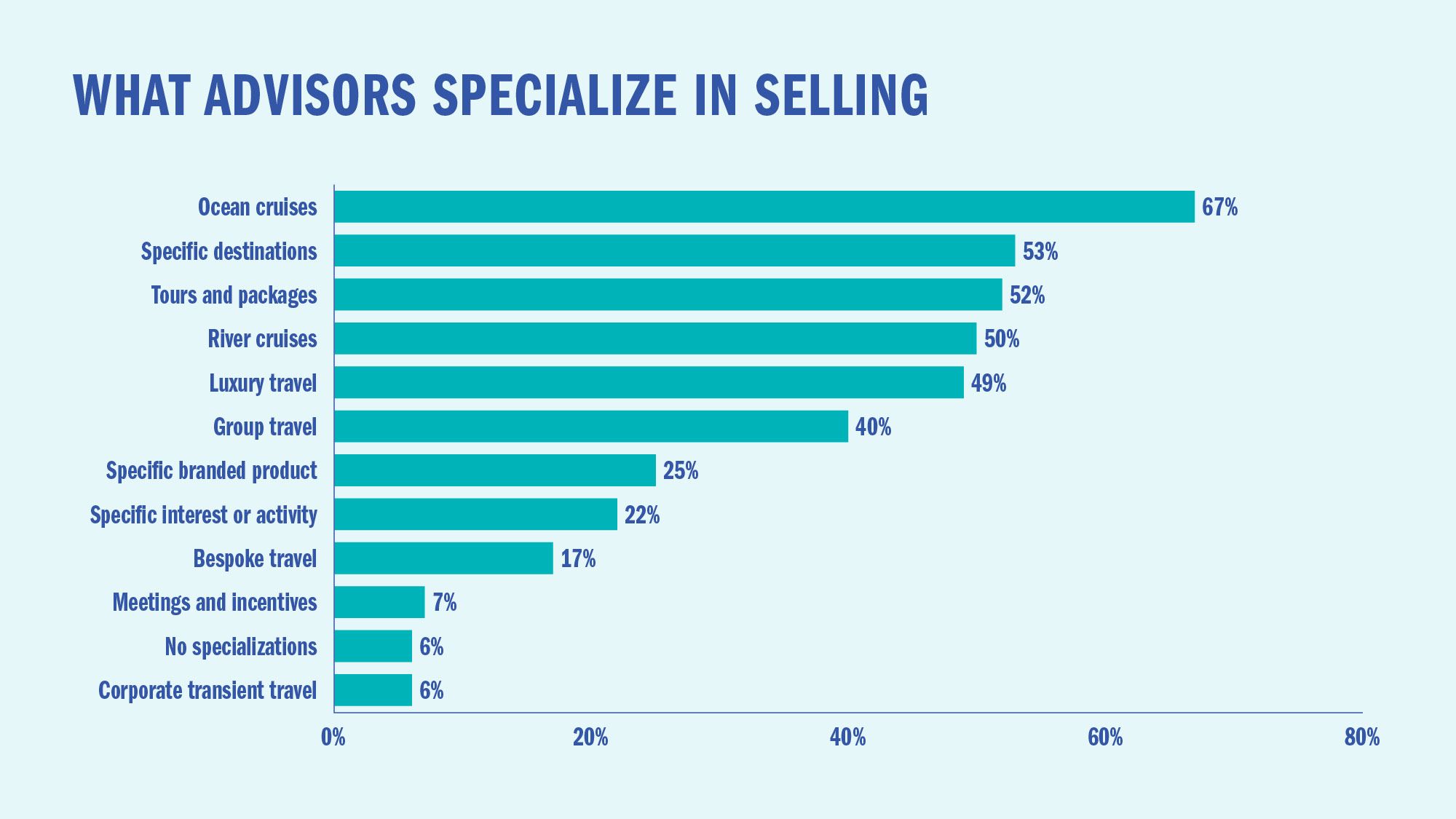
Ocean cruises are still the top specialization among advisors, an indication of their investment in cruising. Cruise lines continue to offer strong commission plans (advisors rank commissions as the most important service offered by preferred suppliers), and the complexity of cruising means many consumers look for an expert advisor to help them navigate.
—Teri West
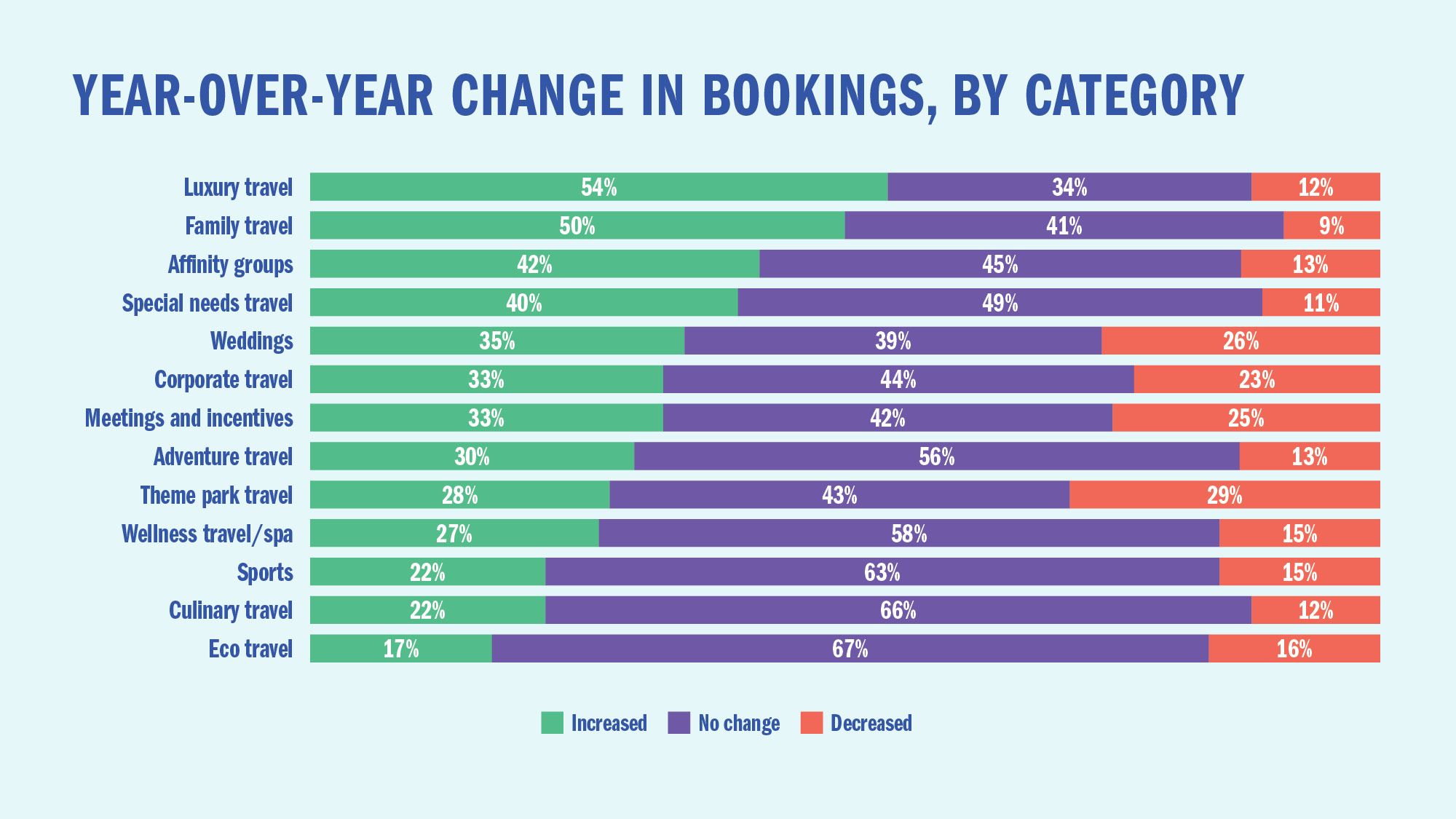
Upscale travelers have proven to be insulated from some of the pullback in travel spending this year, with luxury travel specialists and major hotel companies indicating that bookings from high-end clients have not slowed down. The luxury cruise sector has taken note, with more luxury capacity, larger suites and an influx of luxury-hotel-branded ships.
—Johanna Jainchill and Teri West