




Attitudes toward technology

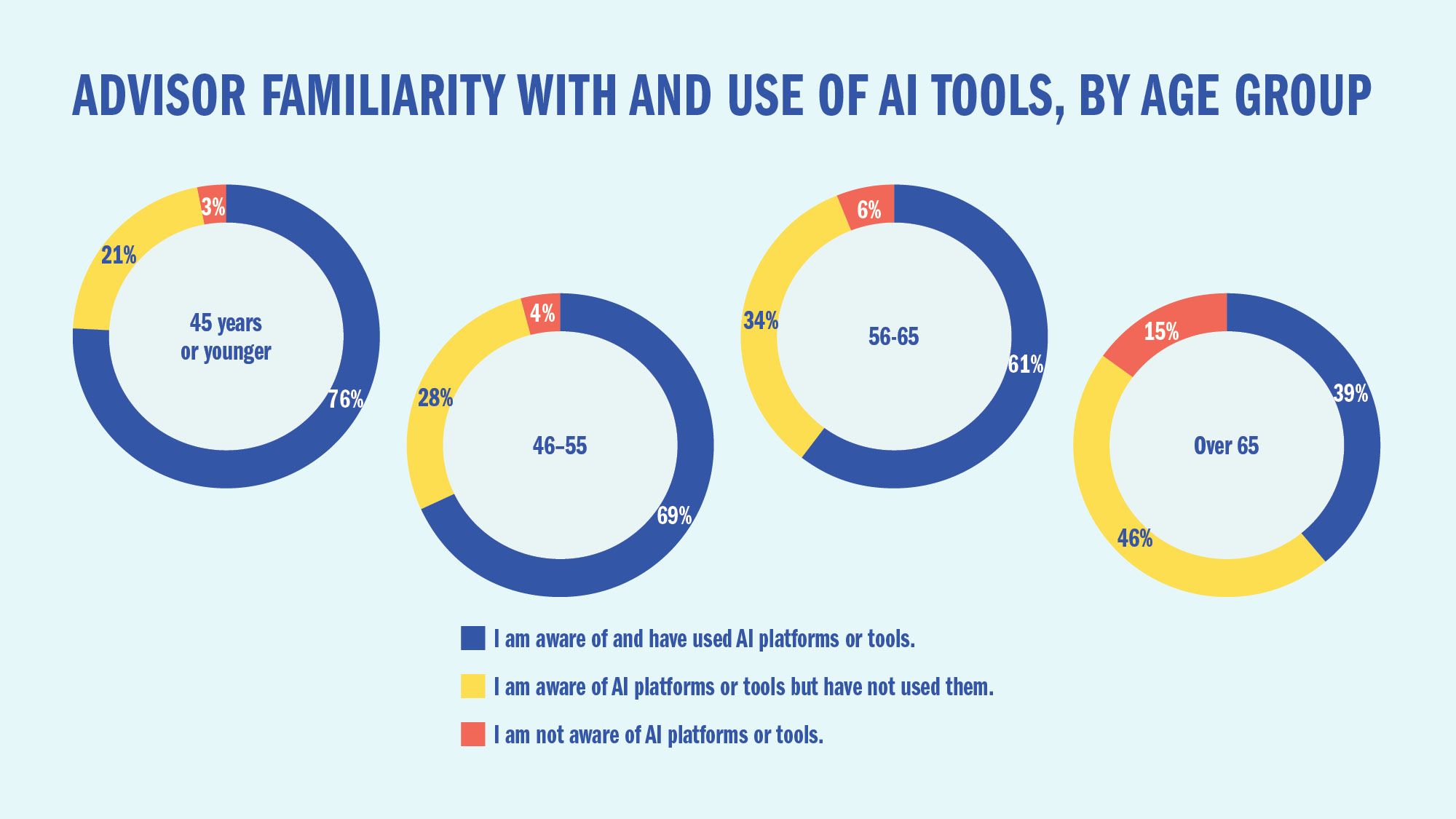
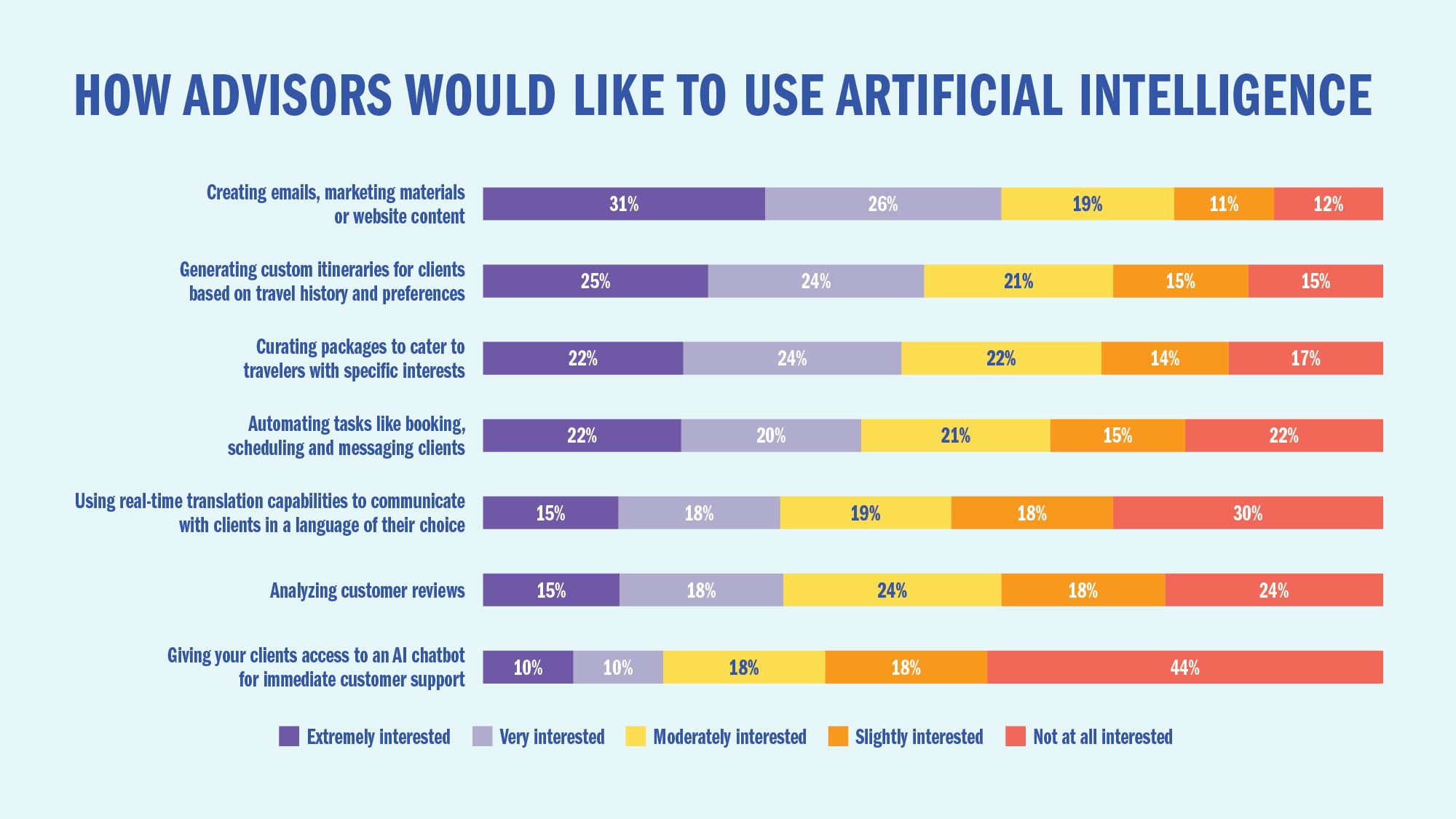
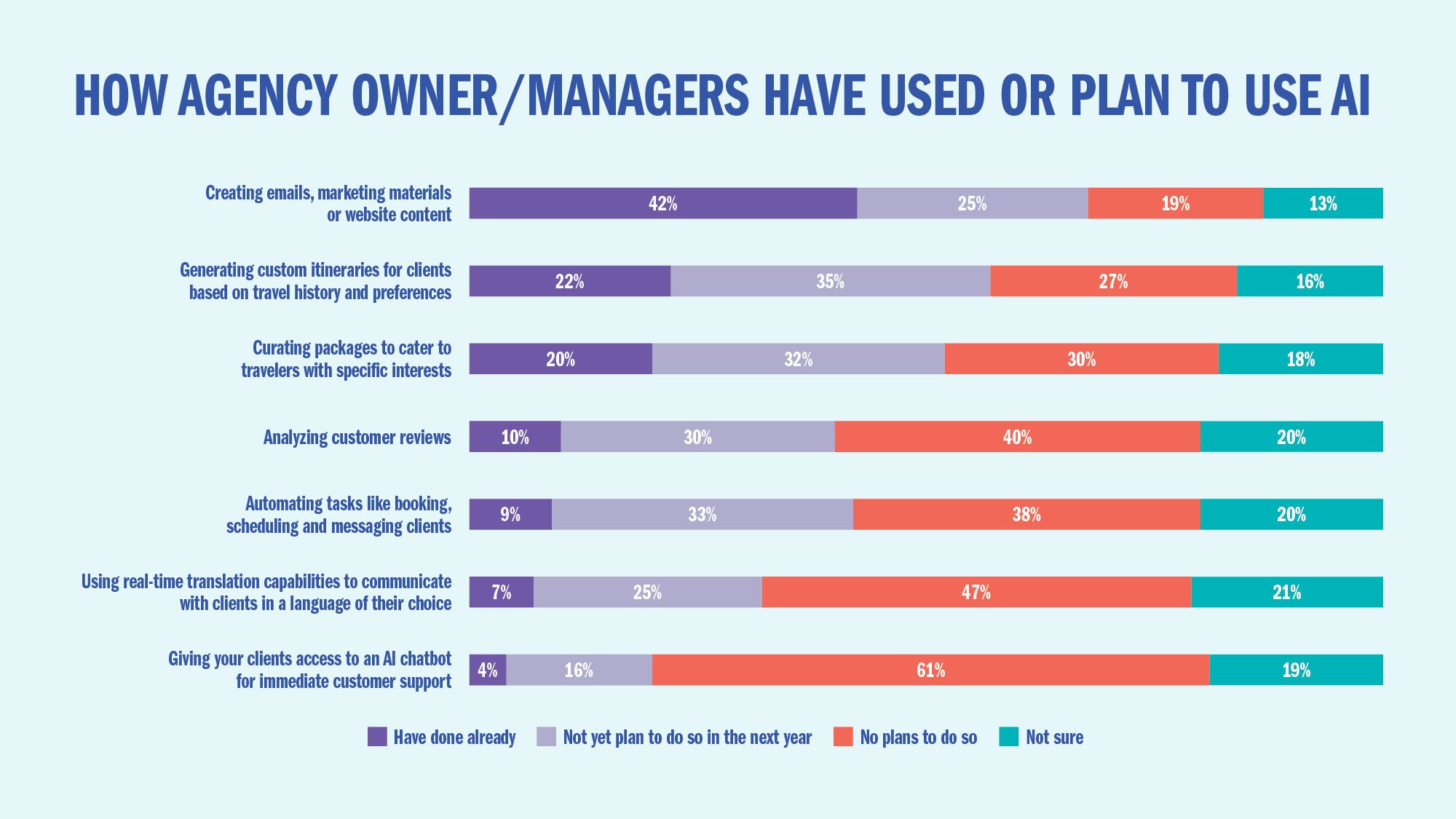
Both familiarity with and interest in AI — and particularly, generative AI, which creates content like text, images and videos — are on the rise. This year, 59% of respondents said they have used AI platforms and tools, up from 41% last year (see chart on Page 16). More than half of respondents (57%) are very or extremely interested in using the technology to create marketing material and website content, which also happens to be what the highest percentage (42%) of agency owners and managers said they are currently using AI for. Interest is also high in AI-created itineraries based on client preferences.
And while younger advisors are generally more familiar with AI tools (76% this year, up from 58% last year), use is growing steadily among the older crowd, too. Last year, only one-quarter of those 65 and up reported using AI platforms; this year, that’s up to 39%. While more than one-third cite privacy concerns with the technology (see chart on Page 16), well over half are much more concerned with the degree of accuracy provided by AI and the lack of a personal touch when using the tech.
—Jamie Biesiada
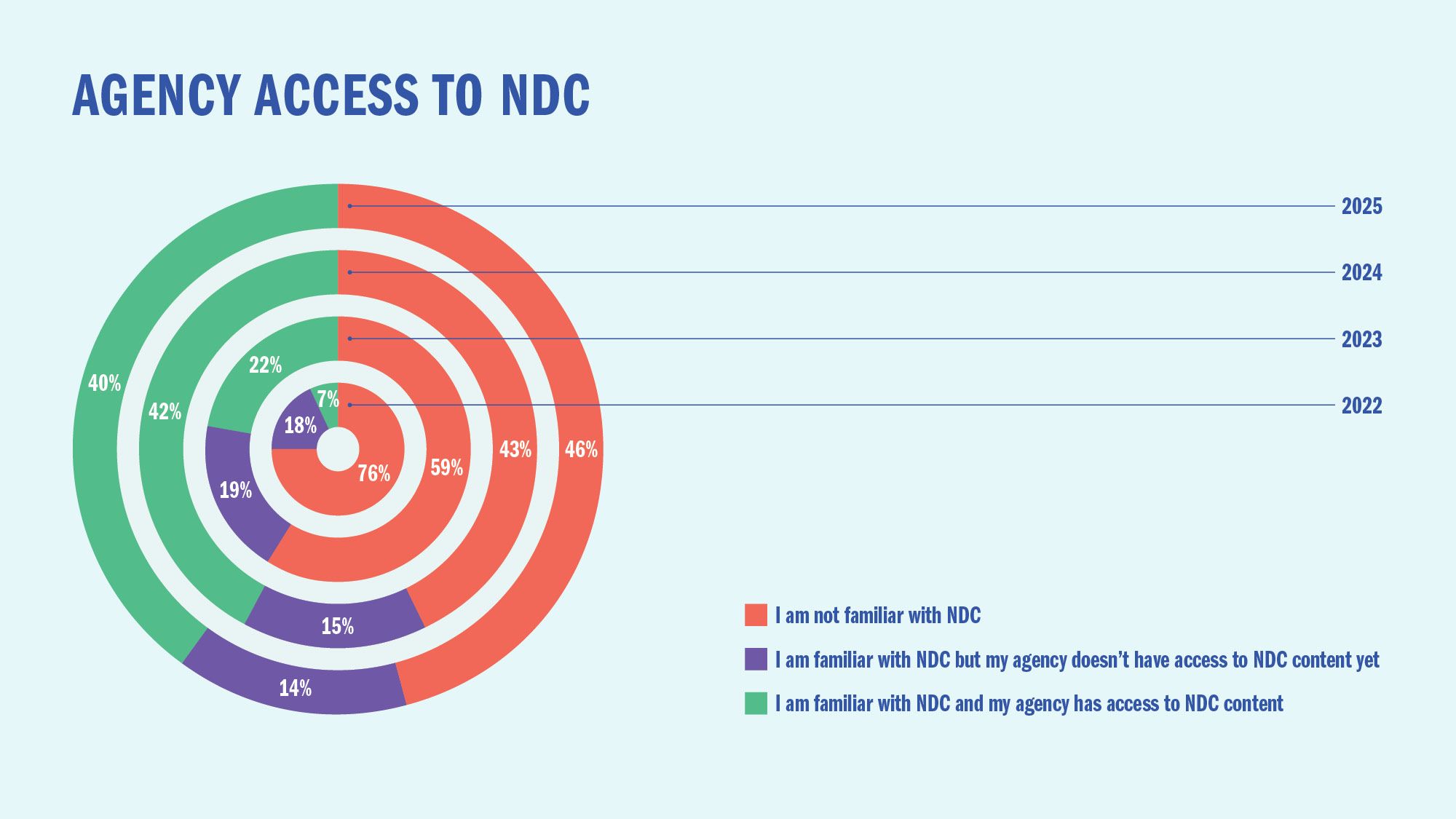
The portion of travel advisors who are familiar with NDC distribution technology stalled this year after rapid gains over the past couple of years. As NDC adoption by TMCs and large leisure agencies grows in the coming years, those gains could return.
—Robert Silk
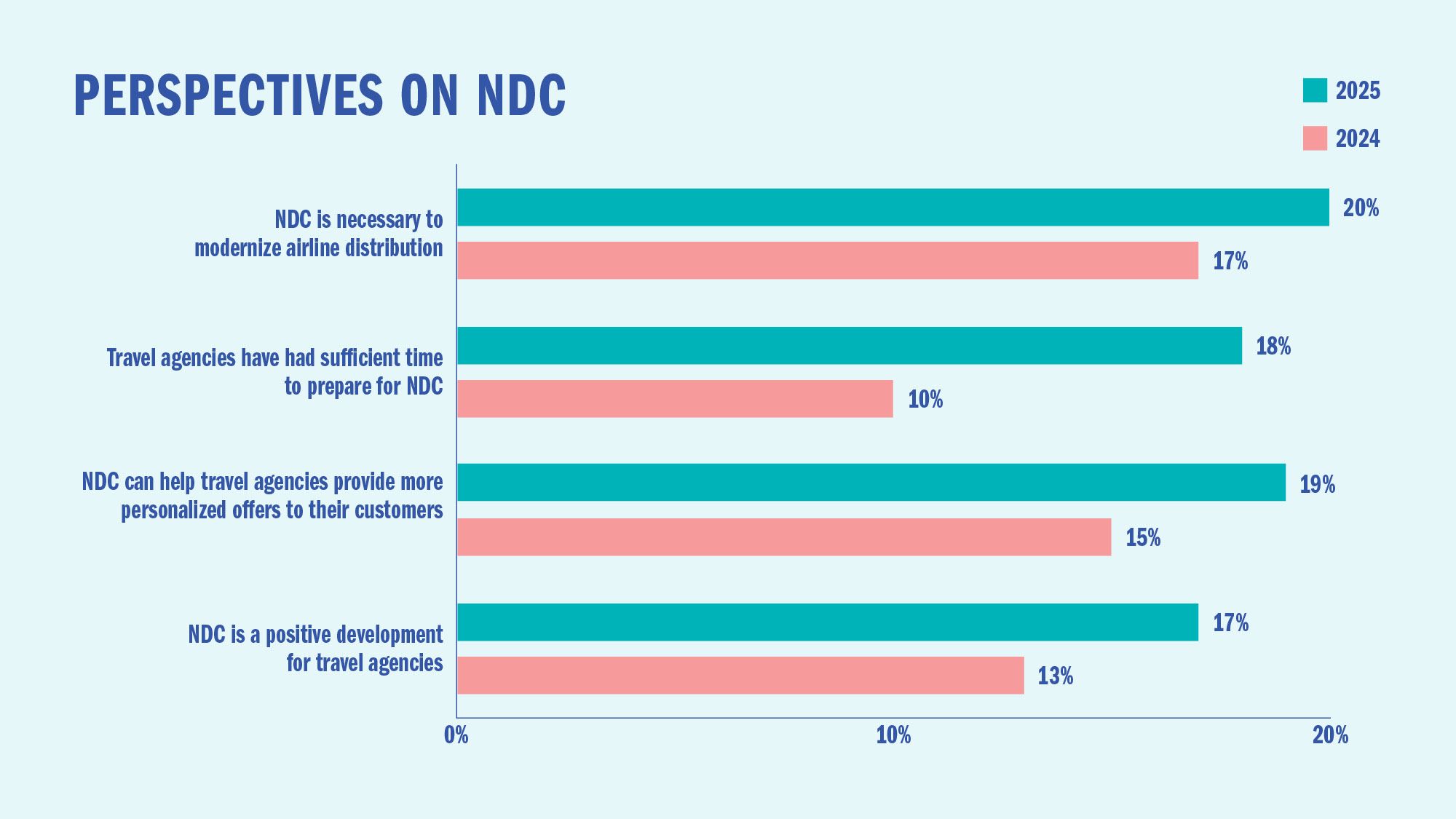
A growing number of airlines are offering NDC-supported fares, ancillary services and fare bundles, and the Sabre, Amadeus and Travelport GDSs continue to improve their capabilities in servicing NDC-enabled bookings. That combination of more content and better back-end support could explain why the advisor community’s attitude toward NDC, though still negative, improved in the past year.
—Robert Silk


Why NDC fears have faded
For travel advisors, concerns that adoption of NDC digital distribution technology will disrupt workflows and increase servicing challenges have long been pervasive. But over the past year, those fears faded measurably.


Tye Radcliffe, chief customer success officer for modern retailing software provider Accelya, thinks he knows why.
“The GDSs have done a great job of enabling more servicing capabilities,” he said. “Both the agencies themselves and home-based contractors working for larger agencies are getting information now from multiple sources that are helping them feel more confident about what NDC is all about. And because the GDSs have made servicing available to them, when they see a lower fare in the GDS — if it happens to be NDC and they book it — they’re finding that they’re able to service better than they were before.”
Those improvements, Radcliffe said, have been no accident. Lots of efforts continue to close servicing gaps. For example, Accelya founded NDC FastTrack in partnership with Sabre and Amex GBT to facilitate open cross-industry problem-solving.
—Robert Silk
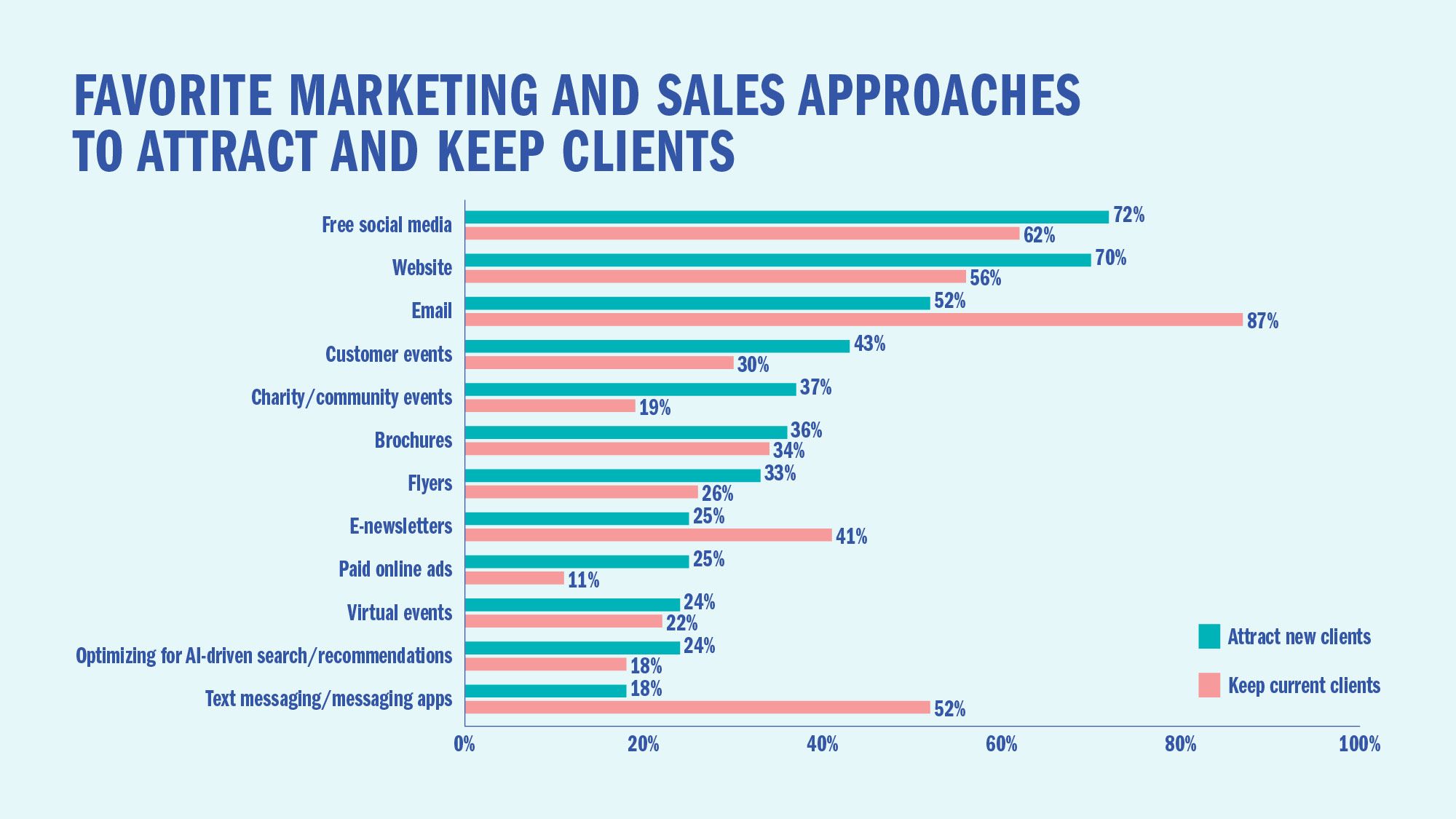
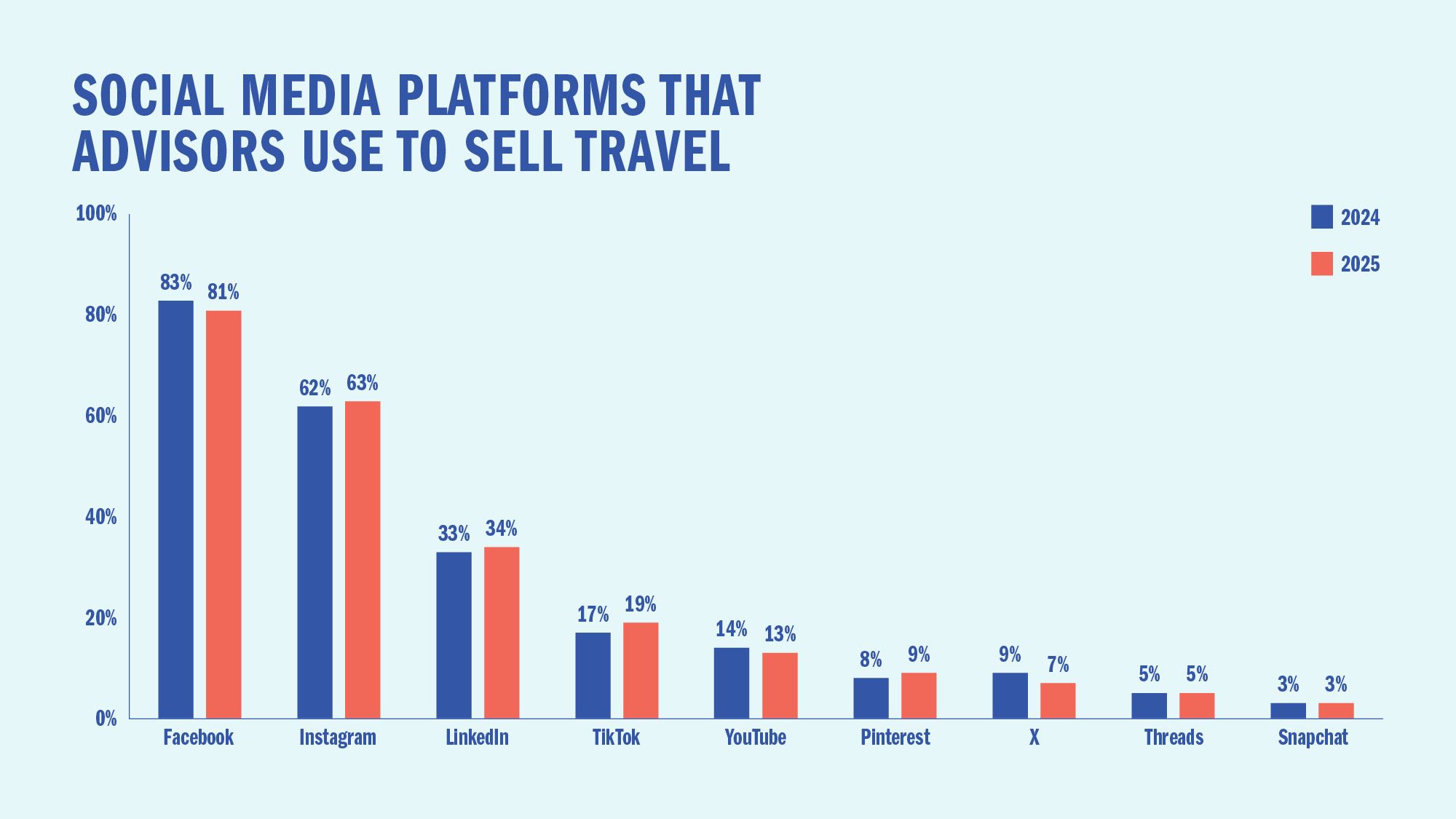
It’s no surprise that social channels are the most popular methods for advisors to solicit and keep clients. Last year, the use of free social media became advisors’ most preferred method to attract new clients, and it’s stayed the same in 2025. As to what they use, not much has changed year over year: Advisors still prefer Facebook and Instagram; X has dropped back. But go back in the Travel Industry Survey time machine to 2016, the first year we broke out platforms by brand, and we can see how far Instagram has climbed: 33% of respondents that year said they used Instagram for business (LinkedIn was No. 2, at 41% of respondents). The survey data at that time noted that all platforms we measured were far behind Facebook in popularity, “presumably due to lack of their reach and functional suitability as a marketing approach.”
TikTok continues to rise in popularity for advisors who use social media to connect with clients and market their services, while Facebook has dropped. In the 2016 Travel Industry Survey, 94% of advisors reported using Facebook; this year’s survey showed that 81% use the social media platform.
Only 6% of advisors reported in 2021 that they used TikTok, the first year the survey mentioned that social media platform. Now, nearly 1 in 5 advisors use the video app.
—Rebecca Tobin and Brinley Hineman