




Introduction
AI-curious advisors: Check out agentic AI
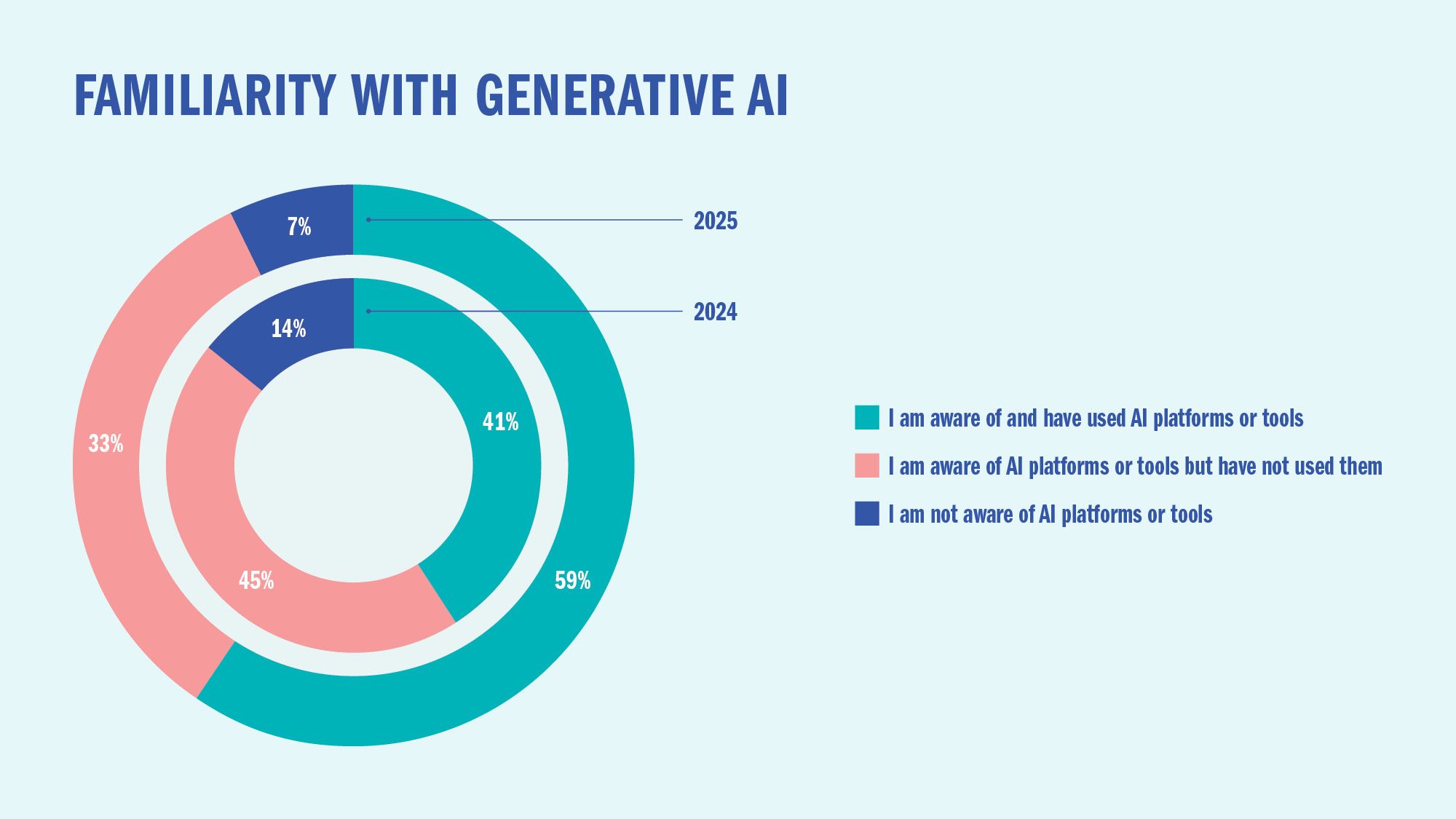
It’s not terribly surprising that there was a significant bump in awareness of generative AI by travel advisors in the 12 months since our last Travel Industry Survey was released. In fact, what’s most surprising about the first chart on this page is that in 2025, 7% of those surveyed are still
unaware of AI platforms and tools.

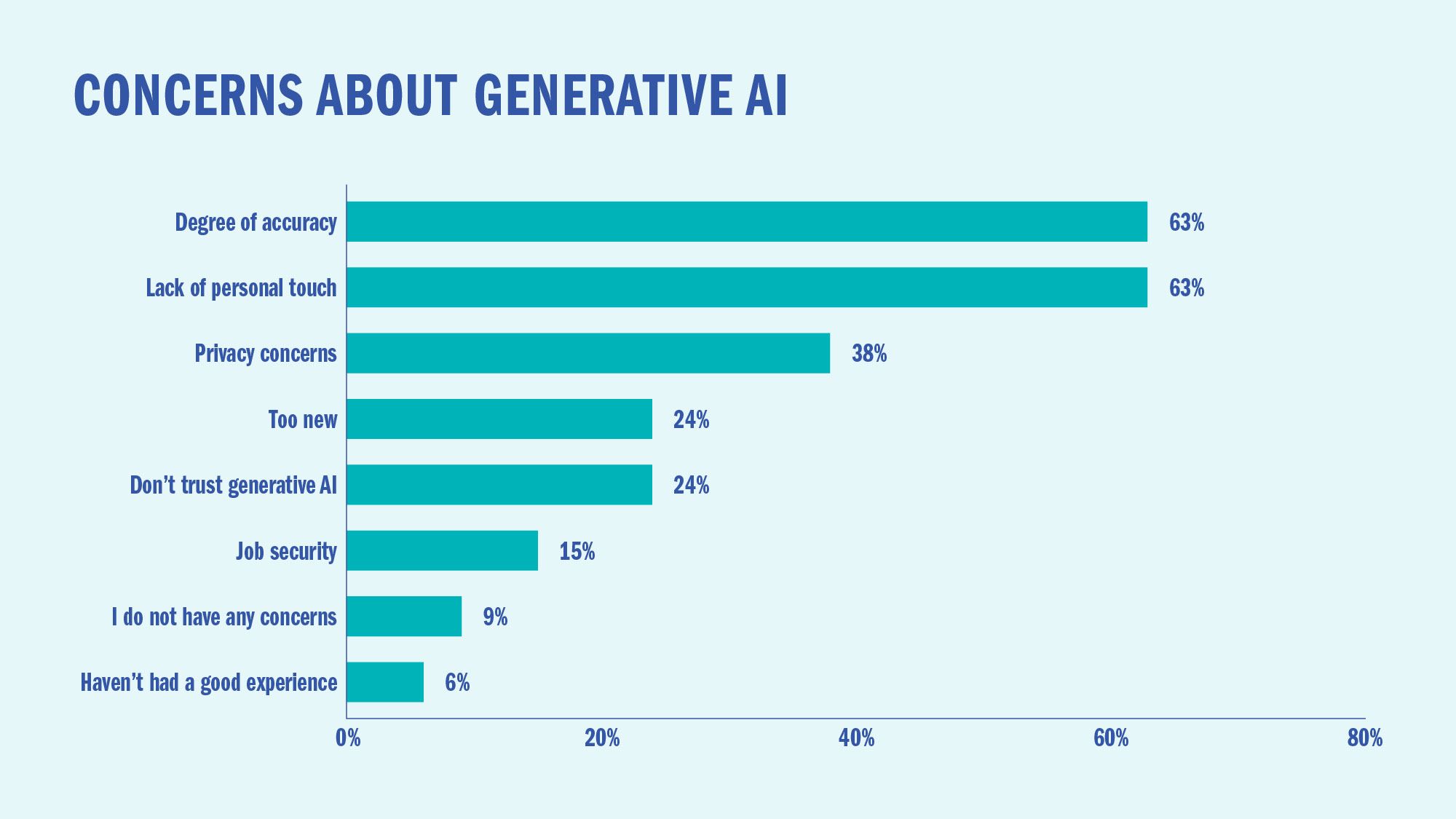
Of more interest: On Page 27, you’ll see a chart showing that, of those advisors hoping to use AI in their businesses, just under 50% are very or extremely interested in using AI to create custom itineraries for clients, but as the second chart here shows, 63% have reservations about the degree of accuracy and lack of personal touch in the content that AI produces.
(I, for one, share the concerns about accuracy, especially after, in response to one of my queries, Google’s Gemini AI noted that its reasoning was based on its belief that “2/3rds is slightly less than 1/2.”)
Of course, our survey only shows half (2/3rds?) the story; if 49% of travel advisors are interested in generating itineraries, it’s not unreasonable to think that half of consumers are thinking about the same thing. Consumer travel media has been featuring a steady drumbeat of stories about AI trip planning. Some tout success, but most find it only partly satisfying, with one app being particularly good at one aspect of planning — flights, for example — but unable to really home in on more complex recommendations like hotels.
And the writers of several articles I’ve come across find AI is useful in producing a generic itinerary but encounters difficulties when the user wants something tailored to their specific desires.
For now, travel advisors have an edge because there’s still a significant delta between information and expert advice. As AI improves, however, its advising capabilities are likely to get better.
But before that occurs, there’s another AI development — agentic AI — that may actually tip the balance more in advisors’ favor, provided they are true specialists, have expertise bordering on proprietary, are well-connected in the travel ecosystem and have a high emotional quotient.
With agentic AI, a consumer provides buying information to an AI agent that goes out and does the actual shopping for them online. While agentic purchases of tube socks, instant oatmeal and point-to-point air tickets may gain traction relatively quickly, the road to adoption to shop for more complex, considered purchases is going to be longer, if indeed it happens at all.
I’m not sure what advantage there would be to train and empower an AI agent to make decisions about what I want out of a vacation versus just speaking to a knowledgeable advisor. And I don’t think that those who have stuck with human travel advisors in the OTA era are going to be terribly interested in delegating a complex travel purchase to a robot.
In fact, the evolution of nomenclature in travel retailing reflects the advantage humans may hold: Today’s travel advisor moved away from calling themselves “agents” because an advisor can do so much more than an agent can do.
And while a technologist may think that the increasing complexity of trip planning over the years means a consumer may want to outsource that task, I think the opposite is true — the more decision points the traveling public encounters, the more likely they will want expert, human guidance.
And, unless hotel general managers, ticket brokers and maitre d’s are replaced with robots who form deep relationships with specific agentic AIs, travel advisors will still be the source for upgrades, exclusive experiences and hard-to-get reservations. Some things just can’t be automated.


Arnie Weissmann
Executive Vice President and Editor in Chief, Travel Weekly