

Women of progress
The number of women filling top roles in travel has increased, and they are working to bring greater gender balance to the industry.


Five years after the #MeToo movement promised changes for women in the workplace, progress has been made, but there remains significant room for improvement.
That is true in the travel industry, as well.
Women hold a majority of management and professional jobs in the United States, but Bureau of Labor statistics show they hold only 29% of C-suite jobs. Last year, Challenger, Gray & Christmas' annual CEO report found that 25% of newly named CEOs were women, up from 12% in 2010, when the firm began tracking gender.
Still, in aviation, travel agencies, hotels and cruise, the companies are largely led by men.
“We need female role models in this business,” said Leora Lanz, assistant dean of Boston University School of Hospitality, which is seeing strong enrollment numbers for students, including women. “It’s much better now than it was eight years ago, even five years ago,” she said, adding, “but we still need more female voices.”
In this report, we look at various segments of the travel industry and what’s being done to advance the numbers of women at the top.
Cruise
Celebrity Cruises CEO Lisa Lutoff-Perlo likes to say she started a trend.
After spending decades working for cruise lines and finding herself the lone woman at the conference room table, she realized once she became CEO that she could change things.
She had “power,” “influence” and “control,” all words she uses with air quotes.

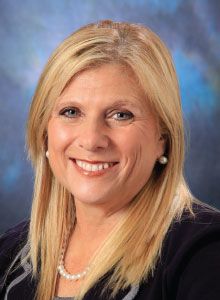
Lisa Lutoff-Perlo, Celebrity Cruises
Lisa Lutoff-Perlo, Celebrity Cruises
Lutoff-Perlo got to work increasing the percentage of women in leadership. Today, Celebrity is home to the first American female captain of a major U.S. cruise ship, who commands a bridge team on the Celebrity Beyond that is 70% women. Across the fleet, under Lutoff-Perlo, female bridge team members grew from 3% to 32% today.
“Unless I make a difference for other women, then me being in this role isn’t really important or changing anything,” she said. “You can’t just say, ‘I’m going to hire more women. I’m going to hire more people of color. I’m going to hire more people of different faith. Unless you create a culture and environment where they feel welcome, and feel like they have equal opportunity, they’re not going to stay.”
While women make up 50% of mid-level positions or higher in the global cruise industry, they only make up a small fraction of C-level positions, according to a survey from the International Maritime Organization and Wista International.
The four largest cruise companies are led by male CEOs. However, women lead several of the individual cruise brands, including Lutoff-Perlo at Celebrity; Christine Duffy, president of Carnival Cruise Line; Carol Cabezas, president of Azamara Cruises; and Jan Swartz, group president of Holland America, Princess Cruises, Seabourn and P&O Australia.
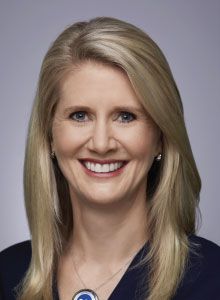
Jan Swartz, Holland America
Jan Swartz, Holland America
“You have to create an environment that is inclusive of a diverse set of personalities and perspectives,” said Swartz, “and if you do that in a way that encourages trust in one another, then people will share their ideas and those different life experiences or vantage points and help you see an opportunity or a challenge from all sides so you can propose better solutions faster.”
Duffy, who wanted to be a Pan Am flight attendant when she was younger, started as a travel agent in a Philadelphia retail store, eventually becoming president of Maritz Travel Company, CEO of CLIA and then Carnival president in 2015.
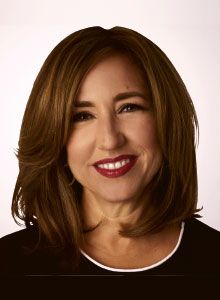
Christine Duffy, Carnival Cruise Line
Christine Duffy, Carnival Cruise Line
The pandemic, she said, offered Carnival an opportunity: to recruit diverse candidates for job openings. Today, one in four of Carnival’s top shoreside executives are women and 11% of new hire officers and cadets are female.
Women have “a skill set sometimes that is a little softer, but not weak," Duffy said, "And there is a difference. We care a great deal, and we want to find win-win solutions for everybody. I think that’s part of our DNA as women.”
Senior vice president of sales Vicki Freed has long been the face of Royal Caribbean International to the travel advisor community, so much so that CEO Michael Bayley will on occasion call her his boss, she said. While she never felt there was a glass ceiling, she recalls often being the only woman in important meetings early in her career.
Women bring an important perspective to the table, she said. “We are the decision-makers, by and large, in vacation planning so I think we look at it from a set of eyes that may be a little bit different from men.”
Hotels
Among hospitality’s largest global companies, few women have risen to the C-suite. They include Marriott International president Stephanie Linnartz, Marriott CFO Leeny Oberg and Hyatt Hotels Corp. CFO Joan Bottarini.
Some smaller companies have women at the helm, such as Preferred Hotels & Resorts, with CEO Lindsey Ueberroth; Rosewood Hotels & Resorts, led by CEO Sonia Cheng; and Salamander Hotels & Resorts, overseen by CEO Sheila Johnson. Still, these organizations remain the exception rather than the rule.
The nonprofit Castell Project reports that the hospitality sector has made modest headway on gender equity in recent years, with women holding one hotel company leadership spot for every 10.3 men, versus one to 11.2 in 2019.
Impact from the pandemic, however, threatens to erase that progress, said Peggy Berg, who founded Castell in 2016 to help women in hospitality advance to leadership roles. It merged with the American Hotel & Lodging Association’s AHLA Foundation charitable arm this year.
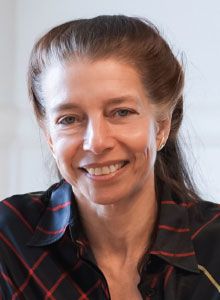
Peggy Berg, Castell Project
Peggy Berg, Castell Project
According to Berg, Covid caused a growing number of women in hospitality to downshift careers or leave the workforce entirely, with the pandemic pushing them to prioritize family over climbing the corporate ladder. Over the past year, one in three women considered leaving the workforce or downshifting, up from 1 in 4 in the first few months of the pandemic, according to a report from McKinsey & Co.
When a woman downshifts, Berg said, the standard response is often, “‘Oh, that’s nice, you’re a mother and you have a family. But what women are actually saying is, ‘It’s worth me [giving up] a lot of money to not spend time with you.’ And that means we’re not being competitive.”
The AHLA Foundation’s Leadership Academy offers courses, including the Castell Project’s Build and Elevate hospitality leadership development programs, designed for women. They cover topics such as negotiation tactics, cultivating an executive presence, career planning and network building.
“When it comes to executive presence, for example, a woman will never walk into a room like a 6-foot-2 white guy,” Berg said. “So, how do you walk in, speak from a position of authority and have your ideas recognized? The way you do those things as a woman is different than how you’d do them as a man.”
Airlines
Approximately 9% of global airline CEOs are women, according to new IATA data from June, up from 3% in 2019.
In addition, women fill 12% to 13% of other airline industry C- suite positions, the trade group says.
Women have a ways to go to achieve parity in the industry, said TAP Air Portugal CEO Christine Ourmieres-Widener. “We are not there yet. It’s just a fact,” she said.
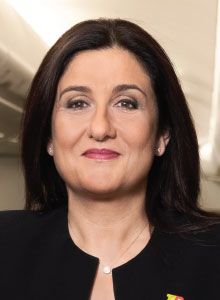
Christine Ourmieres-Widener, TAP Air Portugal
Christine Ourmieres-Widener, TAP Air Portugal
Still, Ourmieres-Widener pointed to the presence of other high-level female executives, including Air Transat CEO Annick Guerard and JetBlue president Joanna Geraghty. “I feel we have more exceptions than in the past,” she said.
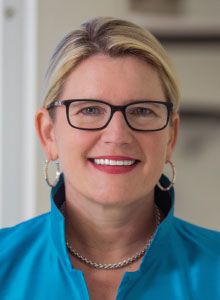
Joanna Geraghty, JetBlue
Joanna Geraghty, JetBlue
Geraghty is the highest-ranking executive officer at a mainline U.S. carrier. Other top executives include Southwest CFO Tammy Romo and Hawaiian Airlines CFO Shannon Okinaka. Within the regional airline ranks, Massachusetts-based Cape Air is headed by Linda Markham. Globally, Aer Lingus recently named Lynne Embleton CEO and Marjan Rintel will be CEO of KLM beginning July 1.
In recent years, the lack of women in airline leadership received more attention. In 2019, IATA launched the 25by2025 global initiative to increase gender balance in the industry. Signatories committed to increase women in senior positions to 25% by 2025, or otherwise to achieve a 25% increase in that metric by 2025. The commitment also applies to roles in which women are underrepresented, such as pilots.
So far, 111 airlines and other aviation industry companies have signed the initiative, including the Big Three U.S. carriers American, Delta and United, as well as JetBlue.
In an April message, Kathy Guilfoyle, president of the International Aviation Womens Association, told members that she is optimistic that gender parity improvement will continue, citing the recently named women airline leaders.
“We can have no better assurance that the goal of gender parity will be furthered,” she said.
River cruise and tour operators
Women leading river cruise and tour companies agree that the needle is moving in the right direction.
Ellen Bettridge has been CEO of Uniworld Boutique River Cruises since 2016, Pamela Hoffee is president of Avalon Waterways and Kristin Karst is the co-founder of AmaWaterways.
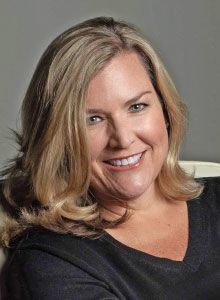
Pam Hoffee, Avalon Waterways
Pam Hoffee, Avalon Waterways
Hoffee said she did not get to where she is today alone, saying that a former director of operations at World Explorer, Ron Valentine, “valued diversity and made a real effort to create a diverse workforce.”
He made a commitment to recruiting and creating a diverse workforce of different races, genders, sexual orientations and cultures, Hoffee said, “because he knew that it made the team better.”
“I do not think that many people achieve success completely on their own,” she added. “Early in my career, I was the only person who looked like me at the table. I do believe I had to work harder and do more to be noticed to get ahead. I suspect that the women who paved the way for me experienced more of that than I did.”
Ann Chamberlin, Scenic Group USA’s vice president of sales since 2019, said her early career in travel looked very different from what it has become.
She recalls adverse treatment women faced in the workplace and a time when her pregnancy could jeopardize her career.
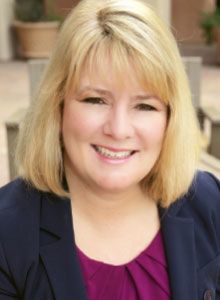
Ann Chamberlin, Scenic Group USA
Ann Chamberlin, Scenic Group USA
“‘Is she going to come back? She’s having a child. She’s a female. Is her position open?” Chamberlin said of the questions she faced at a male-dominated travel company in the late 1980s. “You had to really guard your position. [That] was the vibe that was felt. Whether it was intentional or not, it was just there.”
Chamberlin says she decided to seek not only promotions, but purpose.
“I noticed that women and people of color were treated as a quota in a position versus admired and promoted for their feedback, expertise, perspective and influence,” she said. “It was part of my nature to be a nurturer and assist, guide and help where I could and that was helping other female travel agencies or travel agents.”
Chamberlin’s advice to others: “If you can’t get what you need to continue to grow, then it’s okay to leave and move on. And that’s what I did — I moved on with my experience and expertise.”
Several tour operators have women at the helm, like Jaclyn Leibl-Cote, president of Collette, Melissa da Silva, president of the TTC Tour Brands and Helen Giontsis, president of Kensington.
Classic Vacations recently appointed a female CEO, Melissa Krueger, and is among the companies trying to create more space for women in leadership.
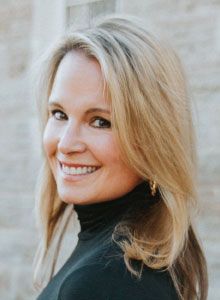
Melissa Krueger, Classic Vacations
Melissa Krueger, Classic Vacations
“Classic has always employed a disproportionately large number of women at all levels,” said Krueger. “Our culture is family-friendly and flexible for all employees. In fact, Classic’s Leadership Team has been 90% female for the past five years. I’m so proud to be the first woman to lead this amazing group of people.”
Travel agencies
Despite the majority of travel advisors being women, the leaders of most of the country’s largest agencies are men.
There are exceptions: Audrey Hendley, president of American Express Travel; Gloria Bohan, CEO of Omega World Travel; and Michelle Fee, CEO of Cruise Planners.
Internova Travel Group is largely made up of women: Some 71% of its employees are female. But of 17 executive leadership roles, women hold only five spots, or 29%.
The company recognizes the disparity
“We set upon a new culture,” said Angie Licea, president of luxury division Global Travel Collection. “Not an initiative, because initiatives begin and end. And, frankly, I was disinterested if we were going to do an initiative. We had to change our culture.”
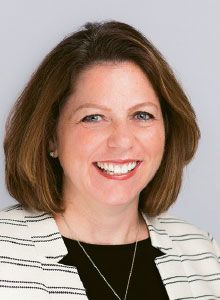
Angie Licea, Global Travel Collection
Angie Licea, Global Travel Collection
Enter Women of Internova, an employee resource group focused on enriching women and growing their careers. Launched in summer 2021, the group meets monthly. Guest speakers from within and outside the industry are invited, books are recommended and mentorship opportunities are made available.
The group, Licea said, is looking at how to get more women into executive leadership roles.
It’s a problem that spans the travel agency community, Licea said. While some agencies have women at the top, they were typically agencies founded by women. Historically, open executive positions have been filled by (usually white) men, she said.
“I think the industry as a whole, at the leadership levels, is getting better,” she said. However, “when you get to the boardroom and the C-suite, I don’t know that we’ve gotten a lot better.”
Internova is hoping to solve the problem by creating a bench of qualified candidates, including women, before positions open.
“We are grooming and mentoring the women in our company to be ready for those big positions when they come,” Licea said.
It is the kind of change that takes time, but Licea believes a deep bench of diverse, qualified candidates will help solve the problem.
“I would really love a day when there’s not a majority in any of those roles — there’s equality,” she said. “We have men, women, people of color, people of different sexual orientations, but we have everybody at the table. That will be the day we’ve arrived, and I look forward to that day.”
 Built with Shorthand