 Like hospitality enterprises around the globe, resorts in the Caribbean region have been making significant efforts to go green in recent years, moving well beyond simply placing cards in guest bathrooms regarding laundering of towels and turning out lights when leaving the room.
Initiatives today range from cooking classes in resort kitchens using resort-grown produce to turtle protection programs and reef preservation techniques. Guests are encouraged to volunteer, clean up walking trails and beaches and help harvest vegetables.
The San Juan Marriott Resort & Stellaris Casino, for example, has many basic initiatives in place, including recycling bins and graywater-collection units.
However, one of the property's efforts stands out. The Green Key 1000-5000 Microbial Food Digestor, affectionately referred to by resort staff as "The Stomach," is the newest piece of ecofriendly machinery to be introduced at the property. Inside the machine, micro-organisms convert solid organic waste into graywater, which can conveniently flow down any drain system, municipal or septic.
The hotel staff does its part for the environment by putting leftover waste from the cafeteria into the GK Digestor, preventing waste products from having to be carted off by sanitation trucks, trains and barges to distant and increasingly scarce landfills.
The machines "radically decrease the current carbon footprint created by food waste and encourage cost reduction," according to a company spokesman.
Sandals Resorts International underscored its sustainability credentials by launching an environmental management program last July called "Sandals Earthguard Powered by EarthCheck." (EarthCheck is an environmental certification organization.)
Sandals CEO Adam Stewart said the program "allows us to take practical, meaningful action, and we believe it will be seen as the most comprehensive and credible environmental program in the industry."
The first Sandals resort to be recognized by EarthCheck for its environmental efforts was Sandals Negril Beach Resort & Spa, which had to pass eight or more benchmarking indicators to be certified.
The resort passed with flying colors in all categories, including energy consumption, greenhouse gas emissions, water-saving, waste sent to landfill and community contributions.
Guests at the Westin St. John Resort & Villas in the U.S. Virgin Islands, meanwhile, who volunteer to maintain walking trails and clean up debris at historical ruins receive a $100 resort credit through Feb. 15.
A green focus on greens
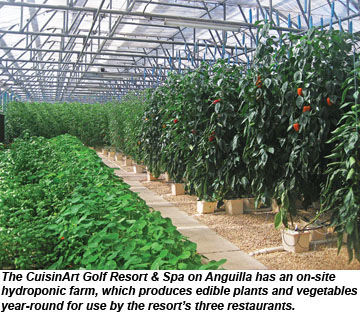
Several resorts put the eco-focus on food. CuisinArt Golf Resort & Spa on Anguilla features a working hydroponic farm, the process of cultivating plants in water and a nutrient-rich fertilizer solution without soil.
This type of farming method is ecofriendly and produces plants year-round that taste better and look better, according to a resort spokesman.
CuisinArt's half-acre farm produces a wide variety of vegetables, fruits, edible flowers and herbs that are used in daily meal preparations at the resort's three restaurants.
Vegetables currently harvested include tomatoes, lettuce, cucumbers, peppers, broccoli rabe, bok choy, arugula and watercress. Organic bio-agents and natural organisms are used to protect the produce from pests.
Reliance on local farmers and fishermen for produce and the "catch of the day" by chefs in resort kitchens has blossomed as the eco-initiative trend spreads throughout the region.
The Ritz-Carlton Grand Cayman created a special budget for purchases of food and fish from locals.
At the new Fatty Crab restaurant on St. John, menu items are based on what's available locally from farms and herb gardens, while Puerto Rico's St. Regis Bahia Beach Resort in Rio Grande flavors its culinary creations with basil, peppers, rosemary, cilantro and other herbs from the garden out back.
Hermitage Bay on Antigua has an on-site organic garden and a new spa menu that incorporates the garden bounty into its entrees and appetizers. The resort also introduced farm and garden tours and complimentary cooking classes for its guests.
Grace Bay Club on Providenciales, Turks and Caicos, takes guests to a nearby conch farm for tours. It supplements that excursion with cooking classes and recipes for preparing conch.
Caneel Bay on St. John employs an on-site beekeeper who harvests honey through the Virgin Fresh Beekeeping Project. The honey is used in the resort's cuisine, cocktails and spa treatments.
Turtle protection
The CasaMagna Marriott Cancun Resort and its adjoining sister property, JW Marriott Cancun Resort & Spa, involve their guests in their Turtle Protection and Release program.
 The beaches of Cancun have been the sites of the sea turtles' annual migration for thousands of years, typically from May through September. The resort's sea turtle program saves an average of 3,000 endangered baby turtles each year.
Guests are invited to join Marriott staff to help release the baby turtles into the water once they have hatched.
"We feel it is important to demonstrate to our guests the way in which our individual actions can make a difference in the lives of these endangered animals," said Christopher Calabrese, vice president and general manager of both resorts. "Participating in a turtle release -- watching over and protecting turtle hatchlings as their make their way to the ocean for the first time -- is one of the most important and profoundly emotional experiences we offer our guests."
Working with biologists from the Department of Natural Resource Ecology in Quintana Roo, Marriott's staff undergoes an annual training program that teaches them how to relocate turtle nests to a designated safe area.
Each night, the beach is scoured for turtles that have emerged to nest. When one is spotted, staff members secure the area to protect the turtle as she lays her eggs. They then relocate the eggs to the turtle nursery at the CasaMagna to protect them during the three-month incubation period.
"We're committed to the protection of these turtles and the conservation of their environment," Calabrese said.
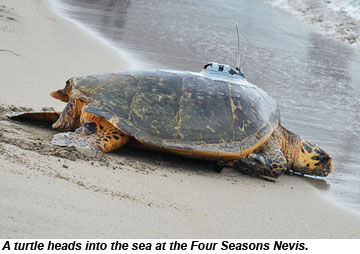
The Four Seasons Resort on Nevis also is involved in the protection of sea turtles and launched its turtle adoption program in 2004. Kids staying at the resort can adopt a turtle, get an adoption certificate and then track their turtle friend online, thanks to GPS tagging.
For Caribbean and Mexico news, follow Gay Nagle Myers on Twitter @gnmtravelweekly.