 What was it, I wondered, that could cause a coastal town in South Carolina to upend San Francisco on Travel + Leisure's list of Best Cities in America?
Charleston calls itself "The Holy City," a title reinforced by the many church steeples that dot the city's skyline. From its earliest days, Charleston exhibited a degree of tolerance, allowing French Huguenots and Jews alike to practice their faith. The Kahal Kadosh Beth Elohim congregation, for example, was founded there in 1749.
As I walked the sidewalks of this well-preserved American treasure, I was reminded of the words of the great South Carolina novelist Pat Conroy, who observed, "Walking the streets of Charleston in the late afternoons of August was like walking through gauze or inhaling damaged silk."
The heat was oppressive, but I took delight in that fact because, against all odds, I was falling for this place during the one month when the odds were stacked against it.
"Charleston has a landscape that encourages intimacy and partisanship," Conroy wrote. "I have heard it said that an inoculation to the sights and smells of the Carolina Lowcountry is an almost irreversible antidote to the charms of other landscapes, other alien geographics. You can be moved profoundly by other vistas, by other oceans, by soaring mountain ranges, but you can never be seduced. You can even forsake the Lowcountry, renounce it for other climates, but you can never completely escape the sensuous, semitropical pull of Charleston and her marshes."
Friends who live in Charleston suggested that the only way to truly feel its vibe was to get about by horse-drawn carriage. So, I figured out which stable ran the best operation and lined up for a noon departure. The wagon was drawn by two hinnies, strong, intelligent animals that result from mating a stallion and a female donkey. The driver informed me they seemed to be in love. But Fred and Myrna were not to take me out that day. Our departure was suddenly halted just as I was being seated, because the temperature had hit 98. The hinnies can't go out in temps above 97.
I started walking along State Street to Chalmers and Queen streets, popping into stores along the way and chattting up locals and merchants to try to get a handle on this place that held me in its emotional grip despite the humidity of an August afternoon. Fred and Myrna had stopped working, but I was on a mission.
The newly arrived cruise ships were a hot topic. There were those who said that the cruise passengers were not the big spenders they had been told to expect. But one wizened old man in a striped shirt, tie and wide red suspenders shook off this view, telling me as we shared a bench, "This place sells itself. The cruise ship visitors may not spend much, but they'll remember, and they'll come back, and they'll tell their friends."
My walk took me up State Street past haberdasheries that have been serving Southern gentlemen for years. In one, two salesmen sat just behind the glass of the front door in standard Charleston dress uniform -- seersucker suits worn with bowties -- peering out at passersby like a couple of hoot owls smiling at some private joke.
As one popular Charleston blog puts it, "We Charlestonians are collectively, dare I say it, the most fashionable and good-looking in all of the Southeast."
I would not question such modesty.
I stopped in at M. Dumas & Sons and scanned the seersucker, but I couldn't see it fitting in with a visit to Wrigley Field back home.
It was about this time that I began to realize I was becoming addicted to a purely Southern vice for which there was no known cure: sweet tea. I can't describe it; you just sort of know the real thing when you get it. All I know is that when you realize you can't walk more than two city blocks without a sip of the stuff, you are an addict.
I walked on to Chalmers Street and the Old Slave Mart. Charleston has been criticized for not officially recognizing its antebellum slave trade. But for many tourists who can trace their heritage back to relatives who entered the country aboard the fetid ships that served the trade, a visit to Charleston is fraught with meaning.
At one time, slaves were sold in batches on the steps of the old Customs House in the center of the city. But some of the local women thought it unfashionable to be walking past low tables where chained slaves were being sold. So, in 1856, the city fathers outlawed public sales of human beings.
In the early evening, as dusk was approaching, I went back to the horse stables. The temperature had dropped to 91, so Fred and Myrna were ready to show me their city. It was a lovely night, and I felt totally engaged with this place as the horses' hoofs clopped effortlessly along the darkening streets, stopping at an overlook facing Fort Sumter.
Our tour continued past the best real estate in Charleston, the homes "South of Broad," a demarcation separating the merely affluent from the wealthy with bragging rights. To live south of Broad Street was to cement one's pedigree among Charleston's upper crust, perhaps assisting with membership in one of the many private clubs in the city.
Such is the tenor of Charleston's lively "social season" that even after General P.G.T. Beauregard's men fired on Union troops stationed at Fort Sumter at the start of the Civil War, a number of local hostesses chose the fort as the location for some of the season's most elegant parties. As the "War of Northern Aggression" entered its second year, Charleston society was still awash in champagne, fine party foods and expensive clothing.
Still later that night, I enjoyed one of four spectacular meals I would have in Charleston. Having been a restaurant critic for several years, I'm not easily impressed by claims of great food. But I can assure you your clients can justify a visit to Charleston solely because it has (in my view, anyway) the best food per capita in the country.
I set out to challenge that view, and I failed miserably. I was done in by the Maverick shrimp and grits at Slightly North of Broad (SNOB) and the lobster and corn chowder and coconut cake at the Peninsula Grill.
As I was leaving the magazine shop at the airport on my way home, a woman paying for a magazine realized she was out of money and would have to use a credit card.
"Don't worry, darlin'," the cashier replied. "Just pay us the next time you see us. We know you'll be back."
Indeed.
(Read part 1 here.)
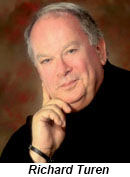
Contributing editor Richard Turen owns Churchill and Turen, a vacation-planning firm that has been named to Conde Nast Traveler's list of the World's Top Travel Specialists since the list began. Contact him at [email protected].