Biz travel trends
Click here to read Bill Poling's report about the extent of business travel cutbacks, as shown by the National Business Travel Monitor, a biennial study produced by Ypartnership and Yankelovich Inc.
Back in July, Phoenix was in a frenzy, and the news media were circling like a pack of hungry coyotes.
The cause of all this consternation would have gone unnoticed in any other era: The Social Security Administration had sponsored a three-day training conference for employees at the upscale Arizona Biltmore Resort & Spa in Phoenix, at a reported cost to taxpayers of $700,000 to $750,000.
The schedule included entertainment by dancers and use of the casino and resort facilities. Employees were coming from as far as American Samoa and Guam. Those facts left a scent of blood in the air around Phoenix at a time when meetings and incentives are often demonized as employer- or taxpayer-funded vacations.
But there were other, mitigating facts that reporters overlooked. For example:
• The tab covered about 700 participants, for an average of roughly $1,000 per person.
• Most participants were arriving from the Western U.S., which meant that travel costs were relatively low.
• The room rate at the Biltmore was only $85, the lowest bid the Social Security Administration received in a standard government competitive-bid process, and was well within the budget appropriated for the event.
• The casino option was cost-free to the government.
• Most reports neglected to mention that the event occurred in July, which, given Phoenix’s sweltering summers, is the area’s off season.
Nonetheless, Fox News, in its initial report, and ABC covered the event with eyebrows raised. ABC called the price tag "a tough pill to swallow for taxpayers."
Some local press jumped on this bandwagon, too, with the Phoenix New Times, a free newspaper, declaring: "Sometimes even bureaucrats need pampering, and what better venue than arguably the most exclusive resort in all of Phoenix — especially when taxpayers are paying the tab."
U.S. Rep. Trent Franks (R-Ariz.) was quoted by ABC as saying, "This is clearly a case of sheltered bureaucrats … deciding that the taxpayers’ money is their own personal bankroll."
The House Ways and Means Committee asked for more information about the costs of the conference, while the Senate Finance Committee asked for an audit of Social Security’s contracting process.
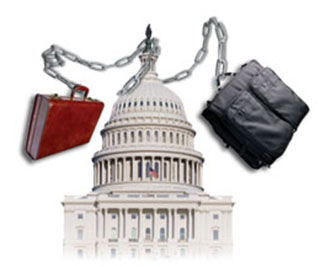 There was some effort at balance even in the initial coverage, with comments by a Social Security representative about the bidding process and the value of conducting training at a single site. Some reports quoted the local convention and visitors bureau about the value of the business to Arizona and its importance to local employment.
Local coverage was a bit more responsible, according to Steve Moore, president and CEO of the Greater Phoenix Convention & Visitors Bureau, who said the local Fox affiliate and the Arizona Republic newspaper offered balanced coverage.
However, the bigger question in cases such as this isn’t whether coverage was fair, but why it occurred at all.
According to statistics provided by StarCite, an electronic marketplace where meetings planners shop for event venues and services, requests for proposals for meetings in Phoenix-Scottsdale were off 44% in the first six months of this year, and some portion of that sharp drop was because the area is known as a vacation spot.
Moore figures Phoenix and some other Western sites also suffered in this era, because getting to them from population centers too often involves long-haul flights.
The July timing of the Phoenix gotcha game is a reminder that the so-called AIG effect lingers, even if muted considerably from its hysteria phase early this year.
As Kevin Maguire, president and CEO of the National Business Travel Association, commented: "The AIG effect is an umbrella that won’t go away."
Moore also thinks this kind of media coverage will be around "awhile longer … in this 24-hour-news society."
Meanwhile, most observers agree that the events of the past year will leave permanent scars well after the economy recovers and the government bailouts are history.
AIG residue
The phenomenon popularly known as the AIG effect can be defined succinctly as a backlash against any business travel that is seen as overly luxurious or just plain too much fun to be considered work-related.
It was born when an AIG subsidiary spent more than $400,000 on an incentive trip for 100 or so top-performing independent insurance agents at the St. Regis Resort in Monarch Beach, Calif., in late September, a week after AIG took its first billions in bailout funds.
The insurance agents were rewarded with a week at an upscale resort, a motivator well understood in the incentive travel business and in many sales organizations. However, the timing was terrible: It came to light just as AIG was about to take a second helping at the government trough.
But the brouhaha over the AIG event was minor compared with early 2009, when indignation spread beyond banks receiving Troubled Asset Relief Program money to just about any kind of meeting by any corporation.
While trade fairs, conventions and (usually) government conferences have escaped disapproving scrutiny, Roger Dow, president and CEO of the U.S. Travel Association, said that industry losses were huge in January and February, when companies canceled $2 billion in meetings. Cancellations have largely stopped, he said, "but the ‘all clear’ hasn’t been blown yet, either."
If the worst AIG effect is a 10 on a one-to-10 scale, the effect today rates a six or seven, Dow said. Negative news reports have been triggered by tips from disgruntled resort staff and unhappy personnel who didn’t qualify for their company trips. And, Dow said, "we had media in hotels looking at meeting boards."
When the huffing-and-puffing quotient was highest, the NBTA surveyed corporate travel managers, mostly to learn about the effects of a weakened economy on business travel. However, the group’s online survey in February and March also asked questions about perceptions.
Very few respondents acknowledged a drop in meeting or purchasing patterns based solely on worries about public perceptions. Only 5% said that meetings requiring travel had decreased in the previous four months due to perceptions, but another 37.8% pegged the decline to perceptions and the economy, while 42.9% said the decrease was due to the economy alone.
Among those whose firms arrange incentives or other employee recognition events, 6.4% said numbers were down due to perceptions, while 25.6% blamed a combination of perceptions and the economy. Again, a larger portion, 38.5%, cited the economy as the sole culprit.
In its ongoing research, Meeting Professionals International has in essence tracked the rise and decline of the AIG effect. Every two months, a panel of meetings planners is asked what single trend they believe will most affect meetings and events in the coming six months.
In December, 6% cited "poor perceptions/coverage of meetings"; in February, that factor went to the top of the list, cited by 26% of respondents. But in April, it dropped to 17%, and by June, it had slid to 12%.
Another top factor in February was concern that government would intervene in the meetings and events business, cited by 11%. That concern had largely dissipated by April, cited by 3% then and by 2% in June.
Collateral damage
For some cities, the AIG effect has been big. StarCite reported that three destinations lost more than half their potential business in the first half of the year when the number of RFPs dropped 50% or more. Those destination were Hilton Head, S.C., with a 58.6% drop; Reno, Nev., 52.3%; and Naples, Fla., 50.7%.
No. 4 on the list was New Orleans, still recovering from the devastation of Hurricane Katrina.
Orlando was No. 10, with a drop of 43.3%, while Las Vegas fell 35%. Their percentage losses were not the highest, but their absolute numbers were considerably larger. Chris Meyer, vice president of convention sales for the Las Vegas Convention and Visitors Authority, said the city counted 402 cancellations, worth $166 million, in Q4 2008 and Q1 2009.
Gary Sain, president and CEO of the Orlando/Orange County Convention and Visitors Bureau, reported 114 meetings lost in the first quarter.
Sain estimated that a third of Orlando’s losses were related to the AIG effect.
Kevin Iwamoto, StarCite’s vice president of enterprise strategy, said stats developed for Travel Weekly revealed that January-to-June RFPs for the 20 most popular destinations were off an average of 39%, while those for the next 20 destinations were off an average of 8.7%.
On the other hand, some second-tier cities saw their RFP rates rise. Oklahoma City got 22.4% more RFPs in the first half of the year than in 2008. Detroit received 18% more, and Little Rock, Ark., got 17% more.
Christine Ottow, StarCite’s director of corporate communications, cautioned that in absolute terms, the actual numbers aren’t up dramatically for second-tier cities, but those cities start with a low base. The bulk of meetings occur in the top-tier cities, which are the destinations that are seeing the biggest fall-off, she said.
StarCite helps buyers and suppliers find one another but is not involved in the deals, so it does not track how many of its link-ups actually produce a contract.
However, Iwamoto cited anecdotal indications that second-tier cities are getting more deals as companies meet closer to home. He speculated that Detroit’s numbers were up in part because the troubled car companies and related businesses are staying near to headquarters.
In addition, while resorts have suffered the most — and will likely suffer the most in the near future — urban hotels, particularly those at airports, will gain business that in other times would have gone elsewhere, according to Ypartnership research released in June.
In Ypartnership’s survey, more than 500 meetings planners said they expected to pay an average of $81,000 in cancellation fees this year and next. The economy and downsizing were more often the reason for pulling out of meetings, but the respondents attributed 41% of the resulting lost room-night revenue to negative publicity.
Although reaping the income from full-blown meetings is better, cancellation fees provide a measure of protection. Gaylord Entertainment, for example, was helped to a $10 million profit in Q2 because of $8.2 million in attrition and cancellation fees. That was more than double the $3.6 million in such fees collected in Q2 2008. The company operates Opryland and large meetings properties such as Gaylord National and Gaylord Texan.
The things people do
Meetings planners and prospective hosts have a mutual interest in staying below the radar, which has modified buyer and seller behavior in various ways. For one thing, "resort" has become a dirty word in certain circles.
Paul Dake, director of sales for Florida’s Amelia Island Plantation, told a reporter for Travel Weekly’s sister publication, Meetings & Conventions magazine, "Some properties have even been making a second set of letterhead without ‘resort’ in their name."
A government travel planner told M&C that during the booking and contract process for a meeting he’s arranging at the Orlando World Center Marriott Resort, he has been dropping "Resort" from the name.
Until early this year, the Renaissance Orlando Hotel at SeaWorld was the Renaissance Orlando Resort at SeaWorld. Gary Dybul, director of sales and marketing, said the property changed the name "for perception’ sake" but also because it doesn’t have some features generally associated with a resort.
Marketing reflects concerns about image, too. Ritz-Carlton Hotels, carrying one of the most evocative names in luxury, recently introduced its Meetings Within Reach package of value-added features; it is promoted using the theme, "It’s Not Extravagant if It Produces Results." The goal is to attract new meetings for this year and bring back some that were canceled.
The PGA National Resort & Spa in Palm Beach Gardens, Fla., this summer announced its Meeting the Need program, which provides opportunities for meeting delegates to participate in community service. Aside from the value of giving back, the program is offered to help protect the meeting sponsor’s image, according to marketing manager Janet Thornton.
Another example targets concerns about the destination. The Grand Hotel Marriott Resort, Golf Club & Spa in Mobile Bay, Ala., was promoted by email last month with the subject line "Fly under the radar and book your meeting in Alabama."
For some planners, the emphasis is not so much on a property’s name or glamour but on its ability to provide privacy.
Meetings planners shared advice in M&C magazine this summer on ways to ensure such privacy, beginning with property selection: Secluded is good, as is a property with a proven record for protecting guests’ privacy. Other tips included: Skip the limos; forgo lavish meals and offer cash allowances for dinners; forget those customized baggage tags that tell everyone at the airport who came to town.
For the really paranoid, other suggestions were: On site, use a pseudonym for the company name; collect branded or sensitive meetings materials left behind after sessions; create name badges that will be obscure to outsiders but recognizable to delegates; and finally, flag the names of VIPs for the hotel so the switchboard can block calls from the media.
The messages
Congress and President Obama have been vocal in their criticism of perceived wasteful spending of TARP funds, whether on corporate jets or high-end incentive trips. The rhetoric added fuel to a media frenzy, particularly during the first months of this year, that not only went well beyond TARP recipients but even influenced travel purchasing by the government itself.
Lawmakers can scorn waste, but they can be just as indignant when the rhetoric hurts their home districts. Senate Majority Leader Harry Reid (D-Nev.) sought and obtained assurances from the White House that it is not federal policy to blacklist specific destinations.
Rahm Emanuel, White House chief of staff, told Reid the issue was "the cost-benefit of travel rather than the perception of a location." Nevertheless, in the wake of alleged government blacklisting of certain cities and resort areas, Reid and others last month introduced legislation to prohibit the government from discriminating against any destination when buying travel.
In addition, the administration held an off-site staff retreat this summer that the White House said was modeled after similar corporate events.
U.S. Travel’s Dow said that the Obama administration led by example, "and the business community, media and policymakers should take note."
He said his association has focused much of its effort on "changing the story … to get out the story on who really gets hurt." He said U.S. Travel stopped much of the hyperbole, but more needs to be done because the general public does not have a "clear understanding of the value of meetings; they are still seen as fun getaways."
Some companies have gone public about why they are holding or expanding their meetings. Nevertheless, Dow said, "too many know they’re right, but they won’t talk," an indicator of the continuing power of the AIG effect.
Meyer said the Las Vegas Convention and Visitors Authority had already gone into "hypermarketing drive" last September, but after meetings became chewing gum for the news media, the organization "moved marketing directly to the media [talking about] our value proposition." He said the sound bites "started resonating when we started equating this with jobs."
The LVCVA is in the midst of a unique sales blitz this summer and expects to see business pick up for the city by 5% to 10% in the next six months. Sales-related events are coming back first, Meyer said.
For Orlando, Sain said, leads for association business are close to normal, but corporate leads are off in the double digits. He said if buyers focus on value, Orlando "will pick up a disproportionate share" of the market. "The focus should be on ROI and inspiration. Fun is an integral part of inspiration. … Boring meetings don’t work."
Moore said the Phoenix CVB conducted editorial board meetings at local print and electronic media to explain the value of meetings and who is affected if they are canceled. He used the occasions to note that the issue isn’t just jobs but lost taxes to support schools.
Nevertheless, Moore said, "there is no question that we’re concerned about the rampancy of this story, but we’ll recover … and we don’t want to say we are not a resort destination."
What’s permanent?
Close observers of the field believe the meetings business will be permanently changed by the fires of the last year, partly because of the AIG effect but also because the recession was such a shock.
Dow said people now talk about the "new normal," alluding to a heightened mphasis on return on investment for meetings. He said there will be "more rigor" applied to defining the purpose of meetings and selecting destinations.
Sain predicted some more long-term effects:
• A sharper focus on site selection, with emphasis on transportation and the local infrastructure. For example, he said, a good infrastructure would mean a meeting host ships fewer things to the site or that some speakers are found locally.
• Shorter events. Four-day meetings might become two- or three-day events, providing a "higher rate of delivery," while sacrificing some networking.
• Employing technology, including social media, to "build out" meetings attendance.
• A requirement that CVBs "provide more value to all stakeholders."
Other sources referenced videoconferencing and other alternatives to face-to-face meetings. Meetings planners responding to the Ypartnership survey said they expected to make more use of alternative meeting options, with 54% using more webinars, 48% stepping up the use of teleconferencing and 30% adding videoconferencing.
StarCite’s Iwamoto said there would be more virtual meetings, not just out of concern for travel costs or image but because the technology continues to improve. The rate of that shift will "depend on the appetite of management to take this on," he said. "It is not cheap, so if you buy it, you will force people to use it. It is a long-term commitment."
In other words, a permanent change.
Just the same, he said, relationship-building happens in person: "A flat-panel TV doesn’t work." There will be face-to-face meetings, but it won’t be enough to stay within budget. "Management also asks, ‘What does this meeting bring to us?’ … People are being forced to quantify the ROI."
With that "new normal" in mind, U.S. Travel and the Destination Marketing Association International commissioned an analysis by Oxford Economics to provide data on the benefits of face-to-face meetings. In a preliminary announcement, U.S. Travel said the results "reveal that companies should think twice before cutting back on business travel. The research quantifies the strong, bottom-line benefit of business travel on corporate revenues and profits."
Dow said these data on ROI will be something his members can share with customers when the details are announced in mid-September. As for meetings planners themselves, the crisis of the last few months may have a "platinum lining," said Jeff Busch, vice president of strategic communications for Meeting Professionals International, because of the opportunity it presents for determining how meetings and events can be reshaped to be more effective.
In addition, said Lori Cioffi, editor in chief of Meetings & Conventions, recent events "have quickly elevated the level of this industry. Meetings planners want to leave the party-planner image behind forever. You talk ROI or you perish."