The boutique hotels sector enters 2016 in a state of flux
as companies such as Morgans Hotel Group, SLS Hotels and Ace Hotel have found
themselves beset by a combination of leadership instability, tricky locations
and a rapid growth in soft-branding efforts by larger hotel chains.
Having been among the better-performing hotel sectors in
the years following the recession, the boutique and lifestyle sectors saw
demand flatten in 2015, while some of their most prominent members faced
challenges coping with the expanding scope of hotel giants Marriott
International, Hilton Worldwide and Starwood Hotels & Resorts.
Morgans, in particular, was marked by instability last year.
To raise cash and cut debt, the New York-based company, founded by boutique
hotel pioneer Ian Schrager, put the Hudson New York and Miami’s Delano South
Beach, two of its three fully owned properties, up for sale in December.
Last May, Morgans CEO Jason Kalisman resigned less than
two years after leading a shareholder proxy battle that ousted the company’s
previous board. Morgans last year also lost the management contract for what
was then New York’s Mondrian SoHo in a high-profile legal battle.
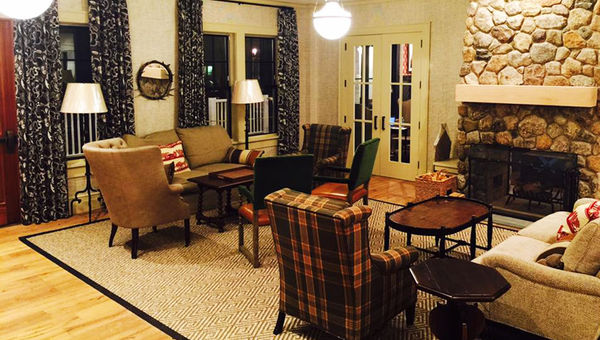
Kimpton's growth in revenue per available room was the slowest of IHG's brands in the third quarter. Pictured, the lobby at the new Taconic Hotel in Manchester, Vermont.
Meanwhile, Ace Hotel, which opens its ninth property in
New Orleans in March, continues to deal with leadership issues after founder
Alex Calderwood died in late 2013. While the flag debuted in Pittsburgh last
month, leadership questions remain, as Calderwood’s father and his late son’s
ex-business partner reportedly battle in court for company control.
Kimpton Hotels & Restaurants, the largest U.S.
boutique hotelier, has faced challenges since being acquired last year by
InterContinental Hotels Group (IHG). Kimpton last year lost management
contracts at seven of its nine hotels in its hometown of San Francisco because
of an effort by the hotels’ owners to head off unionization and potentially
higher labor costs.
Also, Kimpton’s third-quarter revenue per available room
(RevPAR) growth was the slowest of IHG’s eight brands in the Americas.
And while Schrager, who sold his Morgans stake in 2005,
continues to work with Marriott on expanding its Edition lifestyle brand, his
Public Chicago hotel was put on the market in 2015, less than four years after
Schrager revamped the former Ambassador East Hotel.
The boutique and lifestyle sectors had long outperformed
the industry in the years following the recession, but demand appears to have
flattened. Through October, U.S. boutique hotels’ RevPAR rose 3.7% from a year
earlier, according to STR. By comparison, RevPAR within the upper-upscale
sector, whose chains often compete with the boutique/lifestyle hoteliers, rose
5.5%
According to PKF Hospitality's regional vice president, Mark
Eble, the drop could largely be a result of chain hoteliers’ efforts to expand
their soft brands.
Marriott debuted its Autograph Collection of “independent” hotels in 2010 and now has
almost 100 properties in that collection globally. Hilton Worldwide started its
Curio collection last year and added its 20th hotel last month when the former
Four Seasons Philadelphia was officially reflagged the Logan.
“These soft-branding things are far more prevalent and
have more legs than a Schrager or a Morgans or an Ace,” Eble said. “There are
just so many markets where you can do one of these Manhattan-type hotels.”
The boutique and lifestyle sectors’ growing challenges
may be reflected by the plight of the 1,613-room SLS Las Vegas. Opened in 2014
on the site of the former Sahara hotel and casino, the hotel struggled under
the management of SLS parent SBE Entertainment. In October, SBE sold its
minority stake in the property and gave up management duties.
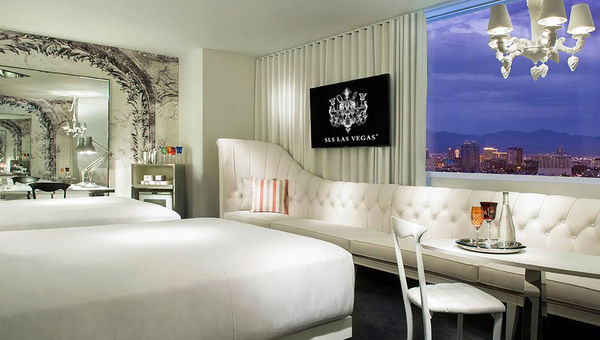
The SLS Las Vegas is now part of Starwood's Tribute Portfolio.
The hotel retained the SLS brand under a licensing
agreement, and Starwood Hotels & Resorts added it to its new Tribute
Portfolio soft brand. This year, the hotel’s 289-room Lux Tower will be
reflagged under Starwood’s W lifestyle brand.
Boutique hotels still get a 30% price premium over
upper-upscale hotels, while the sector’s 77% occupancy rate is 11 percentage
points ahead of the industry’s. And the sector’s hoteliers continue to add
U.S. properties as bankers get more
comfortable backing independent properties.
Commune Hotels continues to add hotels under its Joie de
Vivre and Thompson Hotels brands, as does Sixty Hotels, which is run by Jason
Pomeranc, Thompson Hotels’ co-founder. Proper Hotels, headed by the founders of
Viceroy Hotels, is readying its first hotel in San Francisco.
“On the consumer side across the board, people want the
personalization and authentic services and design of a lifestyle hotel,” said
Proper Hospitality President Brian DeLowe, speaking on a panel at the Boutique
Lodging & Lifestyle Association’s Leadership Symposium in October.
Additionally, some challenges might be more a matter of
location than an overall reflection of demand. The SLS Las Vegas’ issues stem
largely from its site on the Strip’s quiet northern end.
“These soft-branding things are far more prevalent and have more legs than a Schrager or a Morgans or an Ace.” — Mark Eble, PKF Hospitality
As for Morgans, some of last year’s challenges can be
attributed to its large presence in New York, where increased room supply has
cut room rates citywide, according to STR's senior vice president, Jan Freitag.
With room rates at Morgans’ New York properties dropping 7% and occupancy
falling almost two percentage points through the third quarter, the company’s
RevPAR through the first nine months of the year fell 1.2% from a year earlier.
Still, with Marriott slated to buy Starwood next year
while Hilton continues to expand Curio, independent boutique/lifestyle
hoteliers could find it increasingly difficult to maintain revenue growth.
“You’re competing with a lot of marketing and branding
dollars,” Freitag said. “Having cool furniture and a model behind the front
desk is not a sustainable competitive advantage.”