![]() The Las Vegas Strip’s anticipated record visitor numbers
this year are rewarding more traditional hotel operators like MGM Resorts
International, while spurring Caesars Entertainment and the SLS Las Vegas owner
to rebrand and upgrade hotels to better capitalize on the growing demand.
The Las Vegas Strip’s anticipated record visitor numbers
this year are rewarding more traditional hotel operators like MGM Resorts
International, while spurring Caesars Entertainment and the SLS Las Vegas owner
to rebrand and upgrade hotels to better capitalize on the growing demand.
With MGM Resorts’ Strip hotels at 96% occupancy and
third-quarter revenue per available room (RevPAR) up by 8% from a year earlier,
MGM Resorts appears to have taken the best advantage of the upswing by luring
more overnight guests and gamblers to its long-established Strip properties.
And the company is looking to bank on such results and
generate additional cash by forming a real estate investment trust (REIT).
While the newly formed MGM Growth Properties wouldn’t include the MGM Grand or
Bellagio, it would include Mandalay Bay and the Mirage among 10 pieces of real
estate that total more than 24,000 hotel rooms.
“Strong demand for convention and group business in Vegas is
driving the company’s results in addition to a significant recovery at its
lower-tier properties,” Barclays analyst Felicia Hendrix wrote in an Oct. 30
analyst note to clients.
With MGM Resorts improving its performance on the Strip,
higher visitor numbers has spurred Caesars and the SLS Las Vegas to play a bit
of catch-up.
Despite a massive debt load from being taken private in 2008
(a fraction of the company’s shares were sold to the public in a 2010
offering), Caesars, largely through its byzantine restructuring efforts, has
cleared out cash for rebrandings and improvements during the past couple of
years. Company executives said last week that the investments are starting to
pay off.
Caesars, which in January will reopen Caesars Palace’s
original 587-room Roman Tower as the Julius Tower after a $75 million
renovation, last fall completed the rebranding of its 2,253-room Quad Resort
& Casino as the Linq.
That followed the debut of two properties that marked a
departure from traditional Strip fare: the May 2014 opening of the 188-room
Cromwell boutique hotel at what was previously Bill’s Gamblin’ Hall, and the
2013 debut of the 181-room Nobu Hotel inside of Caesars Palace.
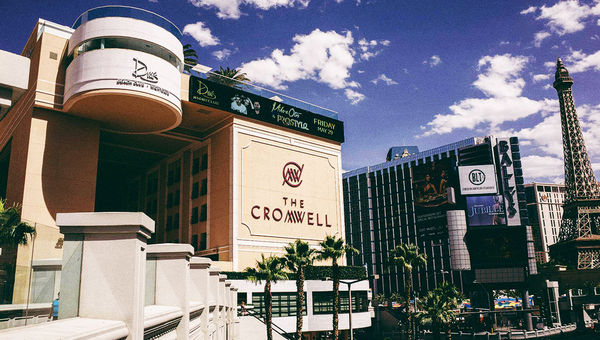
The Cromwell has helped Caesars boost average daily rate on the Strip.
As a result of such improvements, Caesars’ average room rate
on the Strip, which in 2012 was 20% less than the overall average, is now about
2% higher.
“During the recession, we pulled back on room-renovation
projects, and we’ve recently ramped those up,” said Caesars CEO Mark Frissora
on a Nov. 11 conference call with analysts. “When we look at the last five
years of capital-improvement projects and detail the ones with the highest
return and lowest risk, it’s the renovations.”
Hoteliers appear to have good reason to boost investments on
the Strip. Through September, Las Vegas’ visitor numbers were 2.4% ahead of
last year’s record clip at 31.9 million.
Occupancy on the Strip was 90%, while average Strip room
rates rose 1.2% from a year earlier, to more than $128 a night, according to
the Las Vegas Convention and Visitors Authority.
On the Strip’s northern end, the SLS Las Vegas, which opened
in August 2014 after investors Stockbridge and SLS parent SBE Entertainment
invested $415 million rebuilding the old Sahara site, is scrambling to take
advantage of such visitor increases.
Last month, SBE agreed to sell its 10% stake in the
1,613-room property and walk away from its management contract (the SLS brand
was kept in a licensing deal).
Earlier this week, Starwood Hotels & Resorts said it
would add the hotel to its new Tribute Portfolio by the end of the year, and
then convert one of the towers to the city’s first W hotel next year and assume
management of that part of the property.
Stockbridge and Starwood are trying to reverse
the hotel’s money-losing operations. Through June, the hotel took an $84
million net loss on $74.3 million in revenue, according to a Securities and
Exchange Commission filing, while its RevPAR was about 20% less than the
Strip’s