

Delta is celebrating its 100th anniversary this year, and fellow legacy carriers American and United are not far behind. What did it take for these three airlines to make it this far?
On Jan. 8, Delta CEO Ed Bastian stood on the stage of the Sphere arena in Las Vegas, where he kicked off the airline’s yearlong 100th anniversary commemoration with a rhetorical flourish.
“Our Delta story began a century ago, near the dawn of commercial flight,” he said. “It’s a story of how unparalleled innovation, technological advancements and fearless thinking changed the world.”
It’s also a story of survival.
In the years since Delta got its start in 1925 as a crop-dusting company called Huff Daland Dusters, hundreds of U.S. commercial carriers, large and small, have come and gone.
Numerous major legacy brands, including stalwarts such as Pan Am, Eastern, TWA and Northwest are among the dead — either through bankruptcy or via being subsumed in a merger.
So, as Delta became the first U.S. airline to hit the centennial mark this year, it’s one of just three legacy U.S. carriers whose liveries still mark the skies. American Airlines will enjoy its own centennial celebration year in 2026 and has already unveiled its centennial logo as it ramps up for the festivities. United will hit the 100-year mark in 2031.
But the explanation for how these three U.S. airline brands have stood the test of time when so many others have failed isn’t a straightforward one. Each have managed through bankruptcies of their own. They withstood the industry upheaval in the 1980s and early 1990s that followed deregulation in 1978. And both the United and American brands have survived through relatively recent mergers, even as their management teams were dispatched in favor of the merging partner.
“The fact that these carriers are still in existence, I think it's a combination of astute management and uniquely favorable conditions,” said aviation historian Shea Oakley, who runs an airline history consultancy.
Founding
To a certain degree, the official establishment dates of Delta, American and United are arbitrary.
Following its Huff Daland roots, Delta was incorporated as Delta Air Service in 1928. It flew its first passenger flight in 1929 and began operating as Delta Air Lines in 1934.
American, on its website, pegs its official 1926 launch date to a mail flight piloted by legendary aviator Charles Lindbergh for an entity called Robertson Aircraft Corp. In 1929, Robertson was one of two companies that were merged into what became American Airways. Numerous air carriers had been folded into the company when it was renamed American Airlines in 1934. American was then guided forward for the next 34 years by airline industry pioneer and legend C.R. Smith.
United came into existence in 1931 with the merger of four air carriers, including Boeing Air Transport, whose owner William Boeing would become much better known as an aircraft manufacturer. United would remain under the leadership of a single CEO, William Patterson, for 32 years, and in 1961 it became the largest U.S. airline through the purchase of Capital Airlines, which at the time was among the 10 largest U.S. carriers in its own right.
What each of these airlines, and many others, had in common is that their primary revenue stream in the early years was through U.S. Post Office Department air mail contracts. Indeed, noted Oakley, it wasn’t until 1936, with the production of the 21-seat Douglas DC-3, that an aircraft existed that could make money without carrying mail. The U.S. government paid mail subsidies to airlines until 1952 as a means of developing air mail routes.

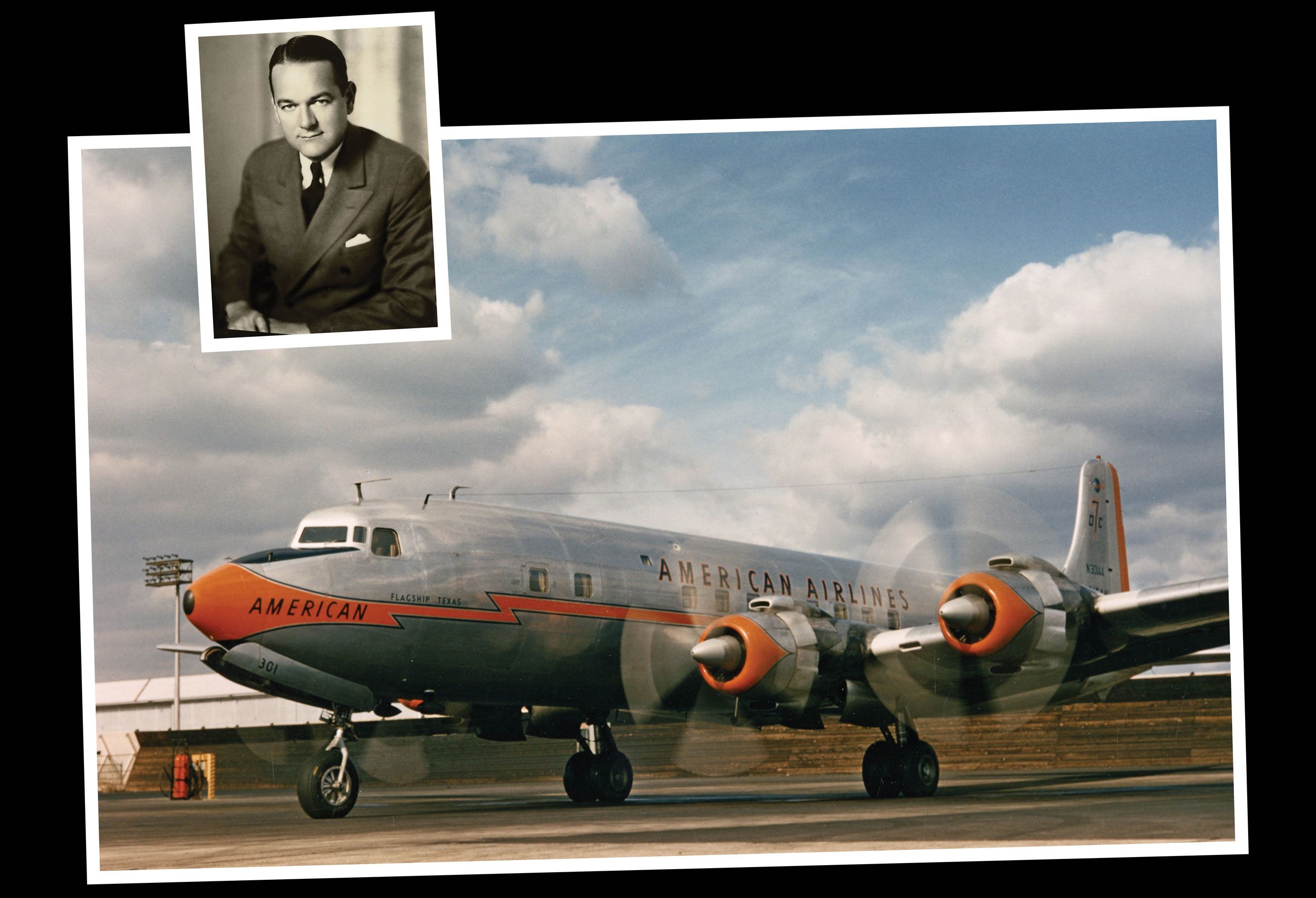
Top, C.R. Smith led American from 1934 to 1968, turning it into one of the largest carriers in the world. Right, American Airlines deployed the Douglas DC-7 on its New York–Los Angeles route in 1953. (Courtesy of American Airlines)
Top, C.R. Smith led American from 1934 to 1968, turning it into one of the largest carriers in the world. Right, American Airlines deployed the Douglas DC-7 on its New York–Los Angeles route in 1953. (Courtesy of American Airlines)
Regulation and stability
In 1938, the U.S. airline industry became federally regulated under the Civil Aeronautics Act. For the next 40 years, the industry was strictly controlled by the federal Civil Aeronautics Board (CAB), which awarded interstate and international route authorities and also set prices.
Regulation was designed to promulgate the industry’s development, said Bob Van der Linden, curator of air transportation with the Smithsonian’s National Air and Space Museum. It did so, in part, by limiting competition. For example, Pan Am, through most of its history, lacked domestic route authorities. But until after World War II, it was the only U.S. airline authorized to fly abroad. The CAB opened the international market somewhat under President Truman, enabling, for example, the emergence of TWA as a global operator and of Northwest as a leading transpacific carrier, but route authorities were still carefully controlled.
“The thought being, if you have 10 U.S. airlines flying to England, and Britain has one airline, it’s going to drive the 10 U.S. airlines out of business,” Van der Linden said.
Absent the ability to compete with prices, airlines during the regulated period tended to compete via service, a situation that led to the luxurious cabin layouts often associated with the early jet age.
Regulation, by limiting competition, ushered in an era of remarkable stability in the U.S. airline industry.
“There had never been a bankruptcy of a major U.S. airline prior to deregulation,” Oakley said.
When perennial loss-maker Northeast Airlines, a Boston-based carrier that was at the time the 12th largest U.S. airline, appeared to be on the brink of failure in the early 1970s, the CAB helped facilitate a merger with Delta, Oakley said.
The regulated period also brought an original Big 4 to the U.S. airline industry, with American, TWA and Eastern joining United, Oakley said. When deregulation came in 1978, United was the largest, followed by TWA, American and Eastern. Delta was sixth largest, behind Pan Am, according to a timeline published by the nonprofit American Business History Center.
Fighting to survive
Regulation accomplished its purpose, Van der Linden said, by helping the U.S. airlines gain a foothold against more mature forms of transport, notably railroads and ship lines. But by the late 1970s, the mood in Washington had shifted, with many believing government price-setting was keeping airfares artificially high, to the detriment of consumers.
For example, Van der Linden said, flights from Boston to New York cost approximately $450 at the time. But regulation didn’t apply to intrastate flights, and tickets between Los Angeles and San Francisco could be found for $99.
The end of regulation brought a flood of new entrants into the market, and with it, put an end to the legacy airlines’ period of relative safety. In the 1980s, said Oakley, hundreds of U.S. airlines started flying, ratcheting up competition with a surge of capacity and low prices. One example was People Express, based in Newark, which rapidly expanded before merging with Continental in 1987 amid rising debt problems.
Nearly all of the new entrants eventually failed, but in the meantime, they drove ticket prices down to a level that legacy airlines, saddled with higher structural costs, couldn’t sustainably match.
“Post-regulation, everybody got hurt,” Van der Linden said of the airlines. “All of them.”
The first legacy carrier to collapse was Dallas-based Braniff in 1982. Others would follow in the coming years, notably including Pan Am and Eastern, each of which were liquidated in 1991. TWA held on until 2001 through three bankruptcies before merging into American.
“United and American survived simply because of their size and their access to capital,” Van der Linden said. “But it was ugly.”
Delta struggled, too, said Van der Linden, but has benefitted through the years from consistently strong management. Geography has also been its friend. For much of its history, Delta was primarily a regional carrier, anchored in the South’s dominant market of Atlanta.
“They were running a hub-and-spoke system well before anyone knew what a hub-and-spoke system was,” he said.
David Banmiller, a former American vice president who authored the 2020 book “Turbulence” about the U.S. airline industry, offered a similar appraisal.
“Delta always had a Southwest, Southern states charm in a way — and stability,” he said, referencing the service approach that would eventually help Southwest Airlines grow into an industry juggernaut.

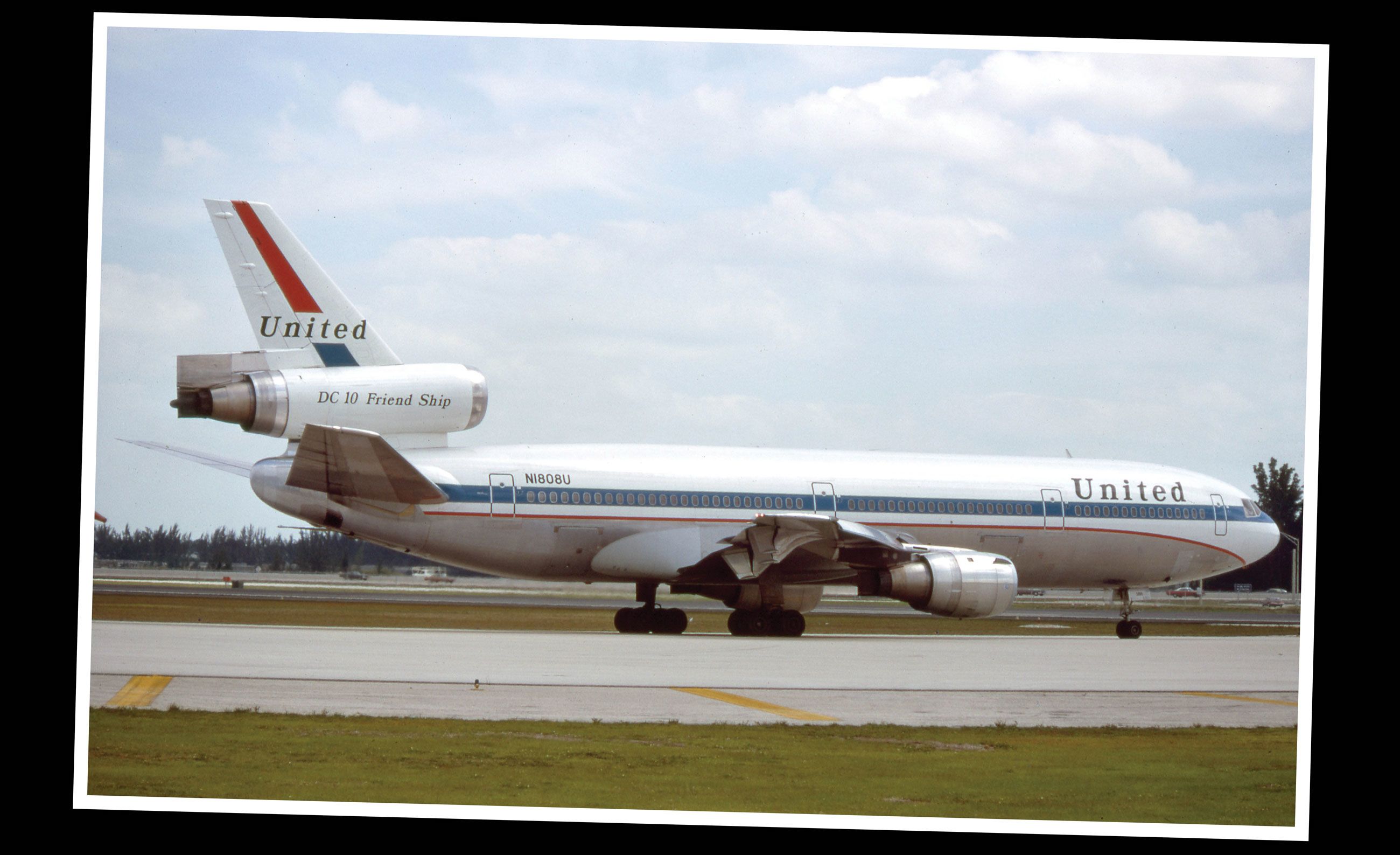
A United McDonnell Douglas DC-10 in Miami in 1973. (Courtesy of Open Source ShareAlike 2.0)
A United McDonnell Douglas DC-10 in Miami in 1973. (Courtesy of Open Source ShareAlike 2.0)
American’s innovation
It wasn’t just size, though, that pulled American through the rough decades that followed deregulation. The carrier was also a multifaceted industry innovator, Banmiller said.
Long before deregulation, American collaborated with IBM to develop the airline industry’s first automated reservation system, Sabre, in 1964.
Under the direction of marketing director Bob Crandall, American first gave travel agencies access to the Sabre booking system in 1976. With Crandall taking over as CEO in 1985, and with airline pricing having grown far more complicated after deregulation, travel agency usage of Sabre exploded in the 1980s and was running on over 130,000 terminals worldwide by 1990.
Though Sabre sold airfares for other carriers, American’s ownership was a strategic advantage. Banmiller said there was a period of five to 10 years when Sabre paid advisors premium commissions for selling American.
United was also in an advantaged position as the developer of Apollo, which at the time dominated the market alongside Sabre.
As a result, in 1984 the CAB banned display bias, functionality bias and discriminatory booking fees within the reservation systems, a 2018 Business Travel News article explained, though the rules were not immediately effective.
American was also a loyalty program pioneer. AAdvantage, founded in 1981, is the oldest remaining frequent flyer program, and in the years after deregulation it emerged as the industry’s largest program, driving repeat customers.
Finally, American was early to embrace the hub-and-spoke system after deregulation, running its first hub out of its base at Dallas-Fort Worth beginning in 1981 and then expanding the approach to other stations.
“They mastered it in a way,” Van der Linden said.

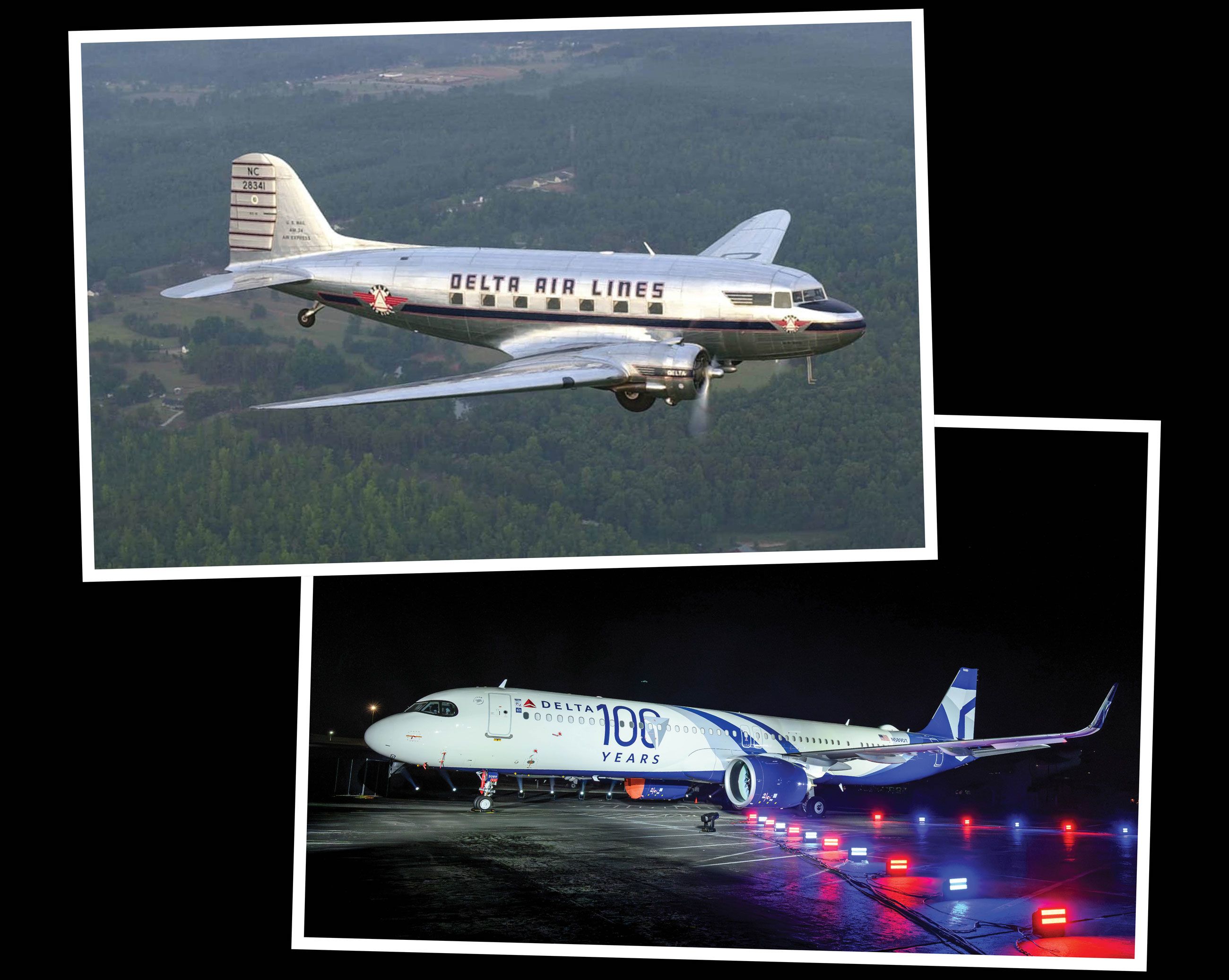
Above, a Delta Air Lines Douglas DC-3. The aircraft made it possible for an airline to make money without carrying mail. Right, Delta unveiled its 100th anniversary livery at a celebration in March. (Courtesy of Delta Flight Museum, Courtesy of Delta Air Lines)
Above, a Delta Air Lines Douglas DC-3. The aircraft made it possible for an airline to make money without carrying mail. Right, Delta unveiled its 100th anniversary livery at a celebration in March. (Courtesy of Delta Flight Museum, Courtesy of Delta Air Lines)
Bankruptcies and consolidation
The terror attacks of 9/11 were the first salvo in what would end up being a wave of U.S. legacy airline bankruptcies and consolidation over the next 15 years. High fuel prices, especially after Hurricane Katrina, were another major noose on an industry still working its way through the post-deregulation readjustment. And the success of Southwest, coupled with emerging low-cost carriers like Spirit, was placing pressure on higher-cost operators.
TWA, which filed for bankruptcy prior to 9/11, was the first legacy brand to disappear in the new millennium, merging into American in late 2001. Bankruptcies would follow at United, Delta and eventually American, along with Northwest, US Airways, Continental and several smaller carriers.
Out of the wreckage, the Northwest brand folded into Delta, flying its last branded flight in 2010. Continental merged into United, flying its last flight in 2012. And US Airways last took to the sky in 2015, merging with American.
Brand power was a key factor in which airline names survived these 21st century mergers of legacy carriers. In the case of Delta/Northwest, it was the Delta management team that took control. But in the cases of United and American, the names survived, while the management teams didn’t.
Oakley said that United’s reputation was among the worst in the industry at the time of its merger with the more respected Continental, leading to widespread consternation among Continental employees.
But, noted Van der Linden, the United brand name took the day even as the Continental leadership took control. After all, United had for most of the previous several decades been the largest U.S. airline.
“In marketing, a lot more people were familiar with United than they were with Continental,” he said.
American used its merger with US Airways to navigate out of Chapter 11, which it had entered into in 2011.
Out of the merger, control was turned over to the US Airways management team — the same team that several years earlier had graduated to US Airways from America West, also through a merger. But the US Airways brand gave way to more prominent American.
“American is an iconic brand and is our flag carrier for the country,” Caroline Clayton, the airline’s chief marketing officer, said in a recent interview. “When you have a brand with that kind of power, that loyalty, that affinity and dedication from team members and customers, you use that.”
With Delta having reached 100, and American and United set to follow soon, Van der Linden said the three remaining U.S. legacy airlines can expect to be around for a while to come.
“We’re back, in a way, to before 1978 with an oligopoly,” he said, referencing the date of deregulation. “It has taken 40-plus years for the dust to settle, but the industry has settled down.”