
WHERE DO
WE GO
from here?


(Illustration by Oleg Nesterov/Shutterstock)
(Illustration by Oleg Nesterov/Shutterstock)
From political turmoil to pandemic, travel has weathered many challenges. Now, industry experts give their predictions for what AI and changing trends will mean for the future.
Ten years ago, terrorism in Europe; the Zika virus; and the first commercial flights and cruises to Cuba in decades all made headlines. It would have been hard to believe then what the next decade would hold for travel, from a crippling pandemic to the travel boom to the AI frenzy we live in today. But what do the next 10 years hold?
Travel Weekly asked leaders from varying sectors of the travel industry for their predictions of the biggest shifts that will occur in their verticals in the next decade.
Their answers highlight an industry that has been moving toward increased personalization in an experience economy, highlighted by, of course, advances thanks to AI. Add in predictions of better distribution technology, more long-haul flights and even more child-free cruise products and you get an idea of what the future of the industry could hold.


AI will make for a more cohesive booking process


JOSH BUSH, CEO, Avenue Two Travel
Josh Bush, CEO of Avenue Two Travel in Bryn Mawr, Pa., said that when thinking about big shifts that could occur in the next decade, it’s hard not to jump down a rabbit hole on AI.
And while AI may play a role, he said he believes the most seismic shift for the travel agency community will be “simpler” than what most people might predict. It will be in hotel distribution and the advent of tools that make it easier for advisors to find and book the right properties and bolster communication between agents and hoteliers.
Right now, the hotel distribution landscape is a fragmented one.
Many hotels plug rates into the GDS; others use aging legacy systems; some are building new ones.
Communicating with a hotel and completing a booking, Bush said, can take multiple steps — sometimes up to five — especially in the luxury space when an advisor wants to VIP a client.
“If there is a way to be able to access that content, to access that inventory, in a way that we reduce the friction, you will see advisors become more efficient,” Bush said. “You will see less things fall through the cracks, and you’ll see clients’ satisfaction dramatically go through the roof.”
Efficiency gained would help solve the biggest challenge Avenue Two agents face: not having enough time.
If there is a way to be able to access that content in a way that we reduce the friction, you will see advisors become more efficient. You’ll see clients’ satisfaction dramatically go through the roof.
“The more that the industry is pushing forward in ways that we can get product faster — the right product for the right client at the right time, in a very detailed fashion — is going to be a big game changer in the next five to 10 years,” he said.
But where would such technology come from? Hotels? Third-party tech providers? Larger agencies with big tech budgets? It could be any and all of the above, Bush said, but easier, more complete bookings would be welcome news for the travel agency community.
And rabbit hole or not, Bush said he believes AI will be a part of making it happen.
— Jamie Biesiada
Immersive tours will foster deeper experiences

MELISSA DaSILVA, Deputy CEO, TTC Tour Brands
The future of the tours industry will be one in which deep access is no longer special but an expectation and where clients do more to shape their itineraries, said Melissa DaSilva, deputy CEO of TTC Tour Brands.
It’s something that’s already started in the tours space, she said, with travelers wanting to get “under the skin” of a destination. But the shift DaSilva predicts is that excursions and experiences that are special one-offs now — take TTC’s Make Travel Matter or Be My Guest experiences, more immersive ways to experience locations — will become routine and an expectation of any guided tour.
“Travelers are going to want that more intimate travel experience that really gets them even deeper to the heart of the destination,” she said. “You’re going to see even more of those [tours] where we’re providing those locally hosted experiences, and we’ll expand those to have even deeper immersion.”
DaSilva also predicts that the next decade will see a rise of what she calls “stackables.”
“Mix-and-match experiences that you can put together to create your own — I don’t want to call it fully bespoke — but your own specific trip that meets your needs,” she said.
This could look like trip extensions or itinerary add-ons, or the flexibility of picking a specific excursion, enabling travelers some flexibility and freedom on their trip without sacrificing the access and expertise of a guided tour.
— Brinley Hineman


Artificial intelligence can have many uses, such as helping advisors be more efficient in serving clients or processing guest data for hotels to offer custom experiences. (Photo illustration by 13_Phunkod/Shutterstock)
Artificial intelligence can have many uses, such as helping advisors be more efficient in serving clients or processing guest data for hotels to offer custom experiences. (Photo illustration by 13_Phunkod/Shutterstock)

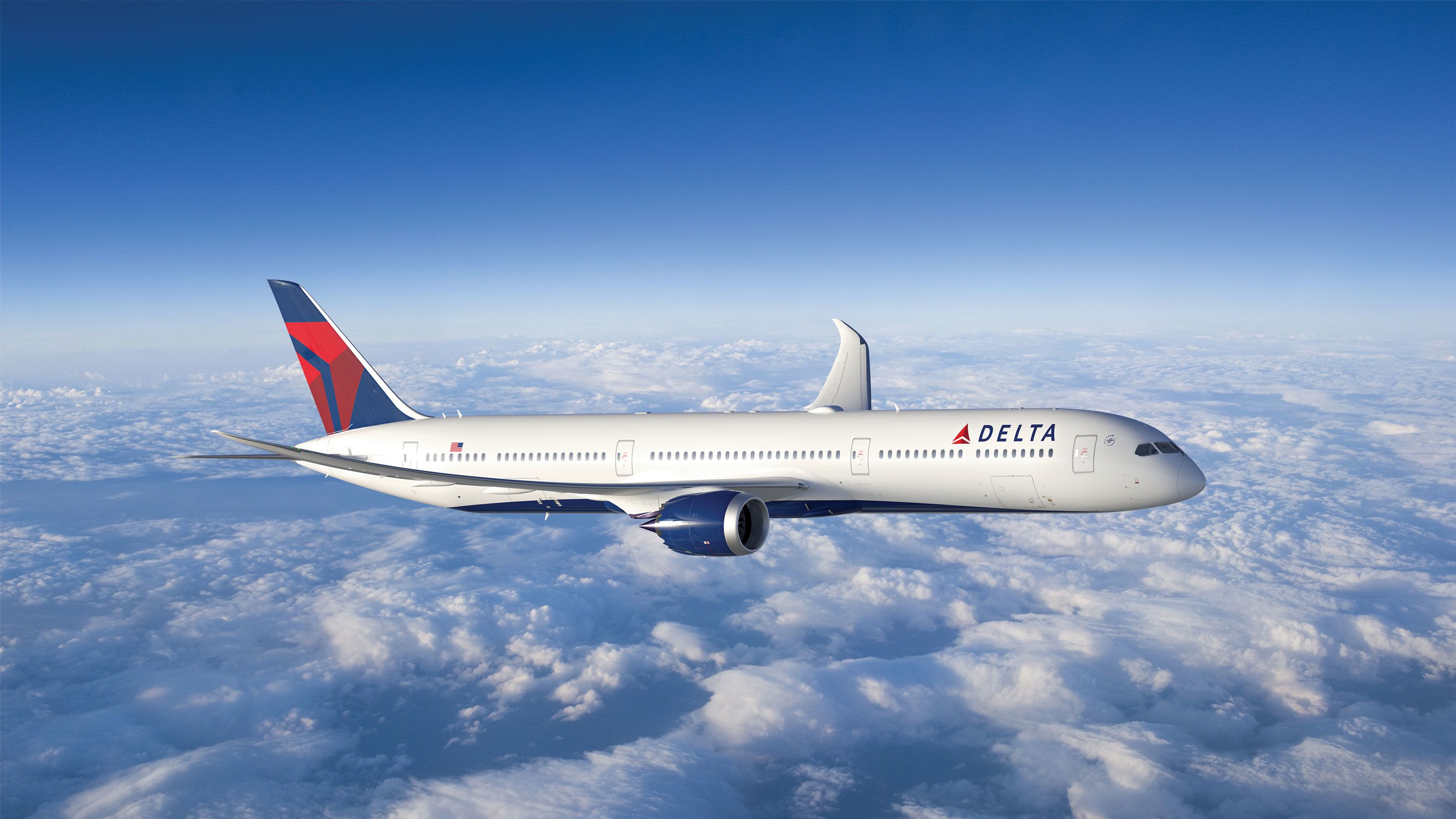
Widebodies like the Boeing 787 Dreamliner are expected to facilitate an increasing number of long-haul flights. (Courtesy of Delta Air Lines)
Widebodies like the Boeing 787 Dreamliner are expected to facilitate an increasing number of long-haul flights. (Courtesy of Delta Air Lines)

Travelers are increasingly seeking immersive tours that include activities like tastings and cooking lessons. (Courtesy of Globus)
Travelers are increasingly seeking immersive tours that include activities like tastings and cooking lessons. (Courtesy of Globus)


Top, white-water rafting in Costa Rica is the type of immersive experience travelers increasingly crave. (Courtesy of Trafalgar)
Top, white-water rafting in Costa Rica is the type of immersive experience travelers increasingly crave. (Courtesy of Trafalgar)

The AT&T Stadium in Arlington, Texas, which will host the most World Cup matches this summer. Events-based travel will continue to gain in popularity in the next decade. (Courtesy of North Texas FWC Organizing Committee)
The AT&T Stadium in Arlington, Texas, which will host the most World Cup matches this summer. Events-based travel will continue to gain in popularity in the next decade. (Courtesy of North Texas FWC Organizing Committee)

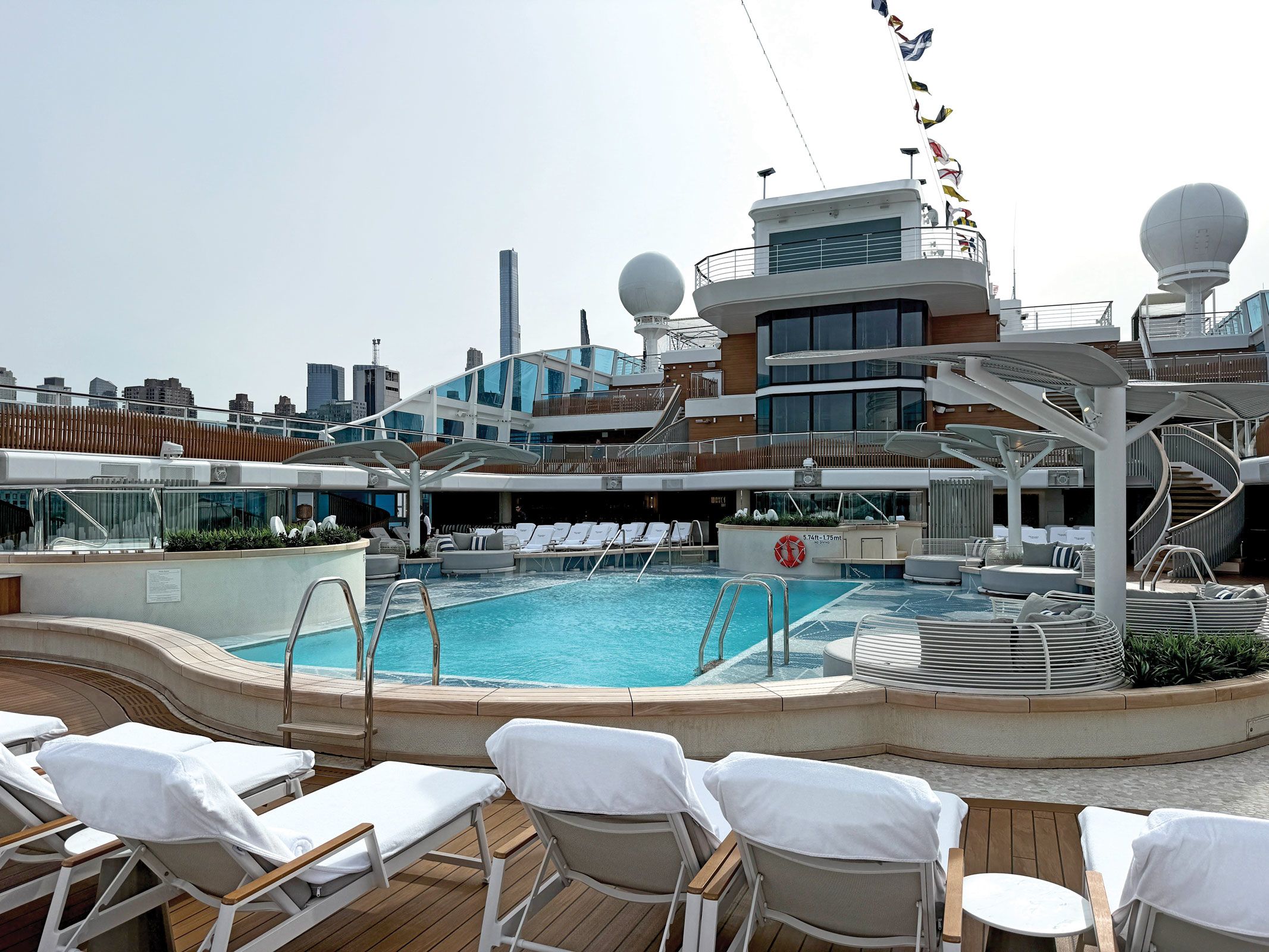
Cruise lines like Oceania are now adults-only amid a rise in young adults traveling child-free. (Photo by Teri West)
Cruise lines like Oceania are now adults-only amid a rise in young adults traveling child-free. (Photo by Teri West)
Long-haul planes will expand luxury air travel

MICHAEL HOLTZ, CEO and founder, SmartFlyer
The coming decade will bring an increasing number of long-haul routes that would previously have been unimaginable.
That’s the primary shift Michael Holtz, CEO and founder of the luxury agency SmartFlyer, said he expects in air travel over the next decade. And those new services will be accompanied by ever-better premium offerings.
“You’re going to see more routes like Newark to Bilbao as opposed to bringing people through major hubs like Madrid,” he said. “You’re going to see airlines like Qatar add service to more secondary markets.”
Along with United’s Bilbao service, Holtz cited other examples, such as United’s Newark to Nuuk, Greenland, which began last year.
He also pointed to British Airways service to be launched in April from London to St. Louis as well as Etihad service beginning this month between Charlotte and
Abu Dhabi, which will open a slew of one-stop global connections for residents of the Carolinas.
Routes like those, Holtz said, will continue to compound, facilitated by the Airbus A350 and the Boeing 787 Dreamliner — midrange widebodies that can fly farther and more efficiently than their predecessors.
Stretch narrowbodies, including the Airbus A321 long-range variants and the Boeing 737 Max 10, which is awaiting FAA certification, will also enable more transoceanic routes between smaller markets. And pushes by hotel brands into new, exotic destinations will fuel increased demand.
Holtz, who founded SmartFlyer in 1990, also expects flying to become ever more luxurious for those who can afford it.
He pointed to Qantas’ plan to deploy a purpose-built ultralong-range A350 variant to begin connecting New York and London with Sydney and Melbourne next year — routes that will be the longest in commercial aviation. The airline will deploy a special premium configuration for those A350-1000ULR planes, which are to include 12 first-class seats and 46 business-class suites and a total of just 238 seats, much fewer than typical for A350 aircraft.
Other ultralong-haul flyers are taking similar steps, such a Singapore Airlines, which is adding first-class cabins on aircraft serving Los Angeles, New York Kennedy and Newark.
“The writing is on the wall,” Holtz said. “People want that utraluxe experience.”
— Robert Silk
Advanced technology will help hotels give visitors the custom VIP treatment

RICHIE KARABURUN, Clinical associate professor, New York University’s Jonathan M. Tisch Center of Hospitality
Artificial intelligence is poised to be the single biggest disrupter for the hotel industry over the next decade, according to Richie Karaburun, clinical associate professor at New York University’s Jonathan M. Tisch Center of Hospitality.
“Just like electricity and fire changed the entire world — including hospitality — AI is going to be a main driver for change,” he said.
Within the next decade, Karaburun predicts hotels will stop thinking of themselves as room-based businesses and transform into what he describes as “intelligent, identity-driven platforms” that use AI to anticipate guest needs and deliver “predictive service.”
The concept is long overdue, he said, since hotels already collect enormous amounts of guest data but most still fail to act on it. For example, a repeat guest who has requested a high floor, away from elevators and with firm pillows, time and again, may still arrive to find none of it.
“But by 2035, nothing should be upon request,” said Karaburun, adding that AI should serve as the “invisible operating system” hotels use to personalize stays, without guests ever having to ask twice.
“Hotels already have the data, and they know what temperature a guest prefers, whether they use the minibar, what type of pillows they request,” he explained.
The winners will be the brands that turn guest identity into a predictive system, managing a lifetime relationship rather than just selling heads in beds.
But the obstacle, Karaburun said, isn’t the technology; it’s the industry’s willingness to commit to it. He pointed to barriers like fragmented legacy systems and central reservation and CRM platforms as well as cybersecurity concerns, privacy regulations and what he called “management inertia” among senior leaders who may not fully grasp AI’s potential.
“They are [now] in an uncomfortable era of AI,” he said. “And that discomfort is slowing the decision-making. But the winners will be the brands that turn guest identity into a predictive system, managing a lifetime relationship rather than just selling heads in beds.”
— Christina Jelski
Creating memories will become travelers’ main focus

KIER MATTHEWS, Head of global luxury sales, On Location Experiences
There will be a surge in travel tied to experiences — and not only in selling access to global events, which is Kier Matthews’ line of work as head of global luxury sales for On Location Experiences. Matthews, who has also worked for Classic Vacations, Hilton Hotels and Virtuoso, said thirst for experiences will be a defining feature of luxury cruising, as well.
He already sees it with what some of the new luxury brands like Orient Express, Aman and Ritz-Carlton are offering.
“It’s experiential-based,” he said. “It’s luxury that is not focused on things but on service and experience.”
And it’s no coincidence all of the lines he mentions are hotel brands entering cruise.
“They know their clients want to experience destinations not from a bucket list perspective but from a cultural-immersion perspective and to learn things they can then use in their daily lives,” he said of those brands. “For example, cooking lessons. That way they can extend the vacation beyond pictures and social media and share it with their families and friends.”
He also predicts that people in the U.S. will increasingly tie their travel around sporting events, in part because there are so many coming to their backyard.
“The numbers bear it out,” he said, pointing to a decade in which the U.S. will host the FIFA World Cup, the Rugby World Cup and both the Summer and Winter Olympic Games. “The awareness of the global sporting events over the next 10 years coming to this country is unprecedented.”
Hotel brands know their clients want to experience destinations not from a bucket list perspective but from a cultural-immersion perspective.
Fueling demand, he said, is a generational shift in priorities and the emotional connection fans have to these events. He recalled a family who went to the Paris Olympics because their 10-year-old daughter is a gymnast and wanted to see Simone Biles. He met a couple at the Super Bowl who had saved for years hoping to be able to buy tickets if their team, the Eagles, reached the sport’s biggest stage.
“More people are saying, ‘I don’t need another car; I want to go experience something,’” Matthews said.
He also sees the audience for major sporting events broadening and said that he already sees more people of color at major global events.
“It’s a big deal for people to be in these spaces,” he said.
— Johanna Jainchill
More cruise lines will cater to child-free adults

NIRMAL SAVERIMUTTU, CEO, Virgin Voyages
Virgin Voyages CEO Nirmal Saverimuttu said he believes there will be an “explosion” of adults-only cruise experiences in the next
decade.
He insists it’s not a self-serving prophecy, given that Virgin is one of three child-free cruise lines.
He thinks cruise lines overall will design more spaces with younger adults, as opposed to retirees, in mind, a prediction that essentially anticipates more competition for Virgin.
“I think this middle part of the market has been overlooked,” Saverimuttu said.
Besides Virgin and Oceania Cruises’ recent transition to an adults-only line, he pointed to other indicators that curated experiences for kid-free cruisers are gaining momentum.
Carnival Cruise Line introduced adults-only sailings last year and added three more for 2026.
Multiple private cruise destinations feature adults-only areas. Saverimuttu anticipates more initiatives like those, and, potentially, new adults-only brands or dedicated child-free ships.
Many travelers currently booking cruises on family-oriented ships are going without kids, he said, citing conversations he’s had with major agency partners.
“A lot of those people are now saying, ‘Hold on a sec. If I’m traveling without kids, do I really want to be on a very family-focused product?’” he said.
Millennials are entering middle age, and they want experiences curated to meet their needs, Saverimuttu believes.
Plenty of them have either delayed parenthood or want to leave the kids at home for some trips, he said.
A lot of those people are now saying,
‘Hold on a sec. If I’m traveling without kids, do I really want to be on a very family-focused product?’
Saverimuttu also predicts the industry will debut more midsize ships to fill a gap as family-forward ships get larger and luxury ships get smaller.
He senses that there are cruisers who want the variety of venues that can be found on a midsize ship while having a more curated experience than a megaship.
“You’re going to start to see very bespoke, targeted experiences,” he said. “When you offer midsize ships, you can do that.”
— Teri West