With all the buzz surrounding this year’s centennial
anniversary of the National Park Service, 2016 was already expected to be a
good year for attendance. But coupled with global events that have made some
travelers wary of heading abroad, such as the Zika virus and the terror attacks
in Paris and Brussels, domestic travel and national park visitation is surging
far beyond expectations.
“Some parks are now in danger of being overcrowded,” said
Betsy O’Rourke, vice president of sales and marketing for Xanterra Parks &
Resorts, the largest concessionaire in the parks system. Xanterra owns and
operates properties, restaurants and stores in some of the country’s most
iconic and popular national parks, including Grand Canyon, Yellowstone and
Zion. And according to O’Rourke, accommodations in those parks often sell out
during the peak travel season each year.
For 2016, she said that for all practical purposes there
is no inventory left.
“Any park that is opened seasonally, we’re pretty much
sold out,” O’Rourke said, adding that Xanterra has some off-season availability
in parks that are open year-round. For travelers hoping to book stays in the
most popular national parks this year, she said, “If I’m giving advice, really
look at the shoulder season.”
The national parks have seen large attendance swings. A
little more than 281 million people visited them in 1986, but that dropped to
255 million four years later and climbed and dropped during the next two
decades. For the last two years, the parks have seen huge gains, to almost 293
million visitors in 2014 (nearly 20 million more than 2013), then a
record-breaking 307 million in 2015.
The challenge is that although there are 410 national
park entities — national parks, monuments, battlefields, coastlines, recreation
areas, etc. — there continues to be a crush on the most popular ones. These
include the Great Smoky Mountains, Yosemite, Grand Teton and Glacier. Those
sites are even more in demand in an anniversary year when the parks are
expected to be high on everyone’s to-do list.
The hope is that travelers will also discover the hidden
gems of the National Park Service, which would spread out visitation and
increase awareness about the service’s diverse assets. Among the goals for the
centennial year, according to Elizabeth Stern, the public affairs specialist
for the National Park Service’s Centennial office, is “building awareness of
parks and programs that aren’t as well-known.”
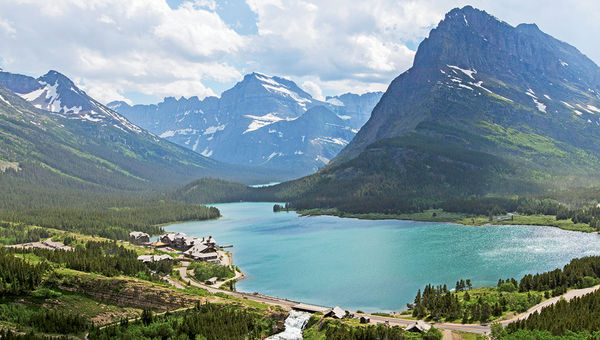
Glacier National Park in Montana drew 2.4 million visitors last year.
She said that despite the high visitation expected this
year, “We will work in partnership with the national parks to make sure that
every guest has a great experience.”
O’Rourke said that in addition to crowd management,
companies like Xanterra are also committed to sustainability and ensuring that
the parks’ popularity does not compromise their future.
For example, food waste like apple peels and other
appropriate food are used to feed the mules that transport visitors and
suppliers in the Grand Canyon. Xanterra does not sell bottled water, instead
providing visitors with water-refilling stations.
While accommodations inside some of the most popular
parks have long since sold out, tour operators have gotten creative by booking
accommodations outside and nearby, in places that can serve as a hub for day
visits.
One tour operator, Audley Travel, even used the possible
overcrowding this year as a tool to market national parks abroad.
“Today there are over 1,200 national parks in more than
100 countries,” Audley Travel wrote in a promotional email. “As U.S. national
parks will definitely see a surge in visitors this year, international national
parks are a great alternative for travelers looking for a slightly less-crowded
option.”
Among the operator’s foreign park recommendations were
Corcovado in Costa Rica, Pacific Rim in Canada and Hakone in Japan.
A major parks push
Last year, the National Park Service launched the Find
Your Park campaign, aimed at encouraging Americans to connect with their
national parks, as well as leveraging the centennial year to better engage the
next generation of travelers.
Tour operators and travel companies had already been
increasing their inventory and marketing efforts in anticipation of the
much-publicized anniversary, which is being marked by special events throughout
the National Park System this year. Little could anyone have predicted that
international events would further turn U.S. travelers’ attention more inward.
“We have found that Paris certainly stalled travel to
Europe and that many [travelers] are staying closer to home,” said Dan Sullivan
IV, the vice president of sales at Collette. Prior to last month’s attacks in
Brussels, bookings for Collette’s national parks itineraries were already up
more than 50% year over year for 2016.
“We’re so thankful for the support of the travel industry
in promoting, supporting and encouraging travel to the national parks this
year,” Sullivan said.
It would appear that the national parks as well as
domestic travel in general are picking up a lot of the slack being felt in
travel to impacted international destinations.
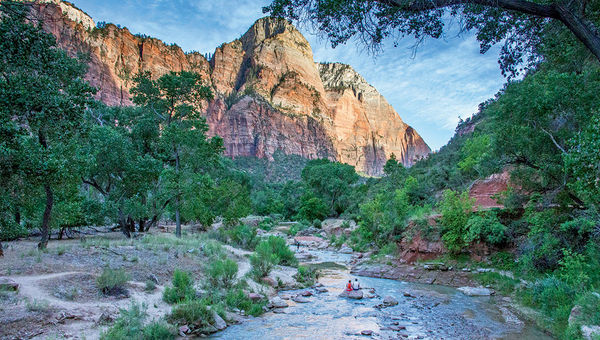
Utah’s Zion National Park welcomed more than 3.6 million visitors in 2015.
For example, when the mosquito-borne Zika virus hit
countries across Central and South America, the Caribbean and Mexico, Brittney
Magner of Chicago-based Royal Travel & Tours said some of her clients
decided to stay closer to home for spring break.
Zika, she said, “has really affected the travel for the
young millennials, for those just starting families.” She added that some
families had canceled preplanned spring break trips to countries where Zika
transmission had been reported and had rebooked their trip for somewhere in the
U.S.
Given the growing demand for domestic travel, several
companies within the last month have been adding capacity for destinations in
the U.S., notably the national parks.
Last week, Disney’s tour brand, Adventures by Disney,
added new U.S. vacations to its roster, with a Montana itinerary, which
includes camping adjacent to Yellowstone National Park and touts the National
Park Service’s centennial celebrations as part of the draw. That came on the
heels of Intrepid Travel introducing four adventure-oriented trips, all focused
on the national parks.
“We are privileged to have some of the most iconic travel
destinations in the world right here in the United States, and we hope to
encourage more people to visit them in 2016,” said Leigh Barnes, the regional
director for Intrepid Travel in North America. Intrepid’s new itineraries
include hiking and kayaking in Yellowstone, cycling in Bryce and Zion, hiking
in Sequoia and Mount Whitney and sailing in Dry Tortugas, a national park in
the Gulf of Mexico, about 70 miles west of Key West.