When it comes to hotel companies’ recent attempts to tweak
consumer behavior by encouraging early, prepaid bookings while discouraging
last-minute cancellations, the carrot appears to be working far better than the
stick.
Hilton Worldwide and Marriott International are among hotel
companies that have tested stricter cancellation policies, charging the guest
at least one night’s stay if the reservation is changed or canceled after a
certain deadline.
However, hoteliers have found little proof that such
policies have curbed guests’ booking behavior.
A strategy that appears to be more effective over the long
term is to offer discounts for purchasing early, nonrefundable bookings. This
prepay solution is being embraced with increasing frequency by hotel operators
under chains such as Marriott, Hilton and InterContinental Hotels Group (IHG), especially
at the property level.
As of last week, New York’s Marriott Marquis was offering
prepaid, nonrefundable rooms for late-September weekend dates at about a 15%
discount. The hotel gives guests a one-day grace period after the booking
before enforcing the nonrefundable policy.
Likewise, the Hilton Los Angeles/Universal City was taking
about 12% off the standard rate if customers bought nonrefundable, prepaid
bookings for late-September stays.
“Our agents understand that prepayment does not necessarily mean nonrefundable,” — Erick Rodriguez, Travel Leaders Group
Some independent hotels are being even more aggressive with
prepayment discounts. A recent booking query at the Ampersand Hotel, a member
of Small Luxury Hotels of the World in London’s South Kensington neighborhood,
revealed a discount for nonrefundable, nontransferable bookings of 20%, or
about $70 a night.
“Prepaid rates have been around for a long time,” said
Marriott vice president John Wolf. “Each hotel sets and loads the rates. We
don’t control that.”
As for IHG, spokeswoman Ada Hatzios said, “IHG offers
advanced purchase-type rate offers where guests are entitled to a discount
compared to the standard rate, based upon availability. Rates vary by hotel,
brand and market. It is nonrefundable, requires full or partial prepayment and
is charged to your credit card between the time of booking and day of arrival.”
Hilton spokeswoman Blake Rouhani declined to disclose
specifics about its hotels’ prepayment policy.
Prepayment discounts appear to be an especially popular way
to curry favor among travel professionals while cutting the costs associated
with a room sitting empty.
Those costs appear to be going up, most likely because U.S.
hotel occupancy reached a record high of almost 66% last year, according to
STR, while greater guest use of smartphones for bookings has likely increased
the popularity of last-minute bookings.
Travel Leaders Group, which in March instituted a new
booking platform called PinSight, has boosted prepaid bookings by about 25%
relative to a year earlier, according to Erick Rodriguez, senior vice president
of Travel Leaders Group’s hotel division.
“Our agents understand that prepayment does not necessarily
mean nonrefundable,” Rodriguez said. “The prepayment rates may have shorter
cancellation windows, but they offer flexibility up to a few days prior to
arrival.”
Meanwhile, the effectiveness of stricter cancellation fees
appears to be less clear.
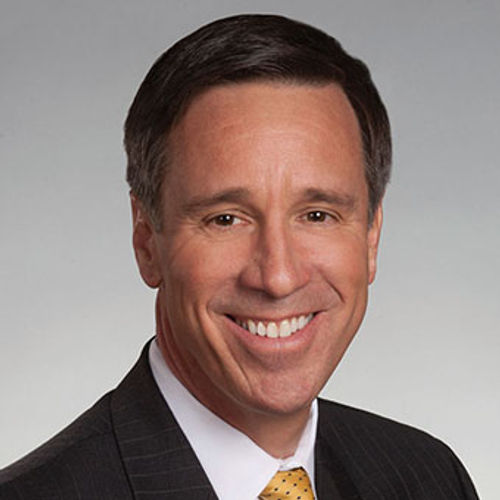
Arne Sorenson
Marriott International CEO Arne Sorenson addressed his
company’s February 2015 change in cancellation policy on a July 28 earnings
call with analysts. Marriott, which had previously allowed guests to cancel
reservations up until 6 p.m. on the night of arrival without invoking a charge,
tightened that policy so that all cancellations made less than 24 hours before
the scheduled arrivals generate a fee.
While Marriott’s Wolf said that the change in policy put the
company “in line with the rest of the industry,” Sorenson, on the call, said
the impact on cancellation frequency has been inconclusive.
“We’re not seeing a material change,” Sorenson said, adding
that the cancellation rates are “about the same.”
IHG says its hotels’ cancellation policies are determined
more at the property level than by the company.
“It varies by region and brand,” said IHG’s Hatzios. “Most
of the more than 5,000 IHG hotels worldwide have the flexibility to adopt a
cancellation policy for guaranteed reservations that suits their individual
market.”
Meanwhile, during the last two months of 2015, Hilton ran a
trial at two dozen hotels in which guests were charged $50 for any cancellation
after the reservation was booked. Hilton CEO Christopher Nassetta said in
February that guests “hated” the fee.
“We are always testing new initiatives and programs to see
what works best for all of our guests and owners,” said Hilton’s Rouhani, who
declined to disclose results from the two-month trial.
Travel Leaders Group’s Rodriguez said, “Whenever we
negotiate with our hotel partners, our goal is to always include a provision
for up to 24-hour cancellations with no prepayment necessary.”
“Should an unavoidable client cancellation occur within 24
hours, we work with our travel agent advisers and the hotels to see how we
might be able to get it waived or credited toward a future stay,” Rodriguez
said. “One of the biggest benefits of booking one of our hotel partners is that
they will offer more flexibility with us.”