KENMARE, Ireland -- Burning peat has a heavy, rich smell that sinks into the bones of a place.
And that smell certainly clings to Molly Gallivan's 200-year-old stone cottage, which feels like a time machine. This small farm, with its rolling hills and sweeping views, has a history that spans five millennia, from Stone Age astronomy to the famine to a working peat bog, each piece of its story representing an important part of Irish history.
The fire roars in the hearth, fueled by that distinctive peat. Soda bread is baked using the simple and traditional recipe that measures the ingredients by fistfuls rather than cups or teaspoons. Farm animals wander the fields.
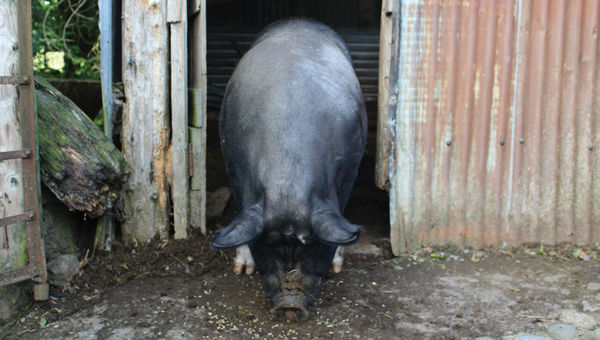
Black Pudding, a pig that lives at Molly Gallivan's cottage and farm. Photo Credit: Brinley Hineman
A visit to the historic homestead is included in the "Ireland Walking & Hiking: Cork to Kerry" itinerary led by CIE Tours, an Ireland specialist. I'm here to experience the new trip as part of a growing demand operators are seeing for walking tours.
A piece of Irish history
The farm, cottage and gift shop are situated alongside a winding road through the Irish countryside, surrounded by farmland where sheep and cows roam nearly-free. Here, the property has been transformed into a tourist attraction, operated by a descendant of Gallivan.
The purpose of the visit is to give us a taste of what rural Irish life would've been like two centuries ago. Visitors are likely to spend time with the owners and operators of the attraction: Stephen and Frances O'Sullivan, who purchased the property in 1999 to save it from a housing developer and keep it in the family.
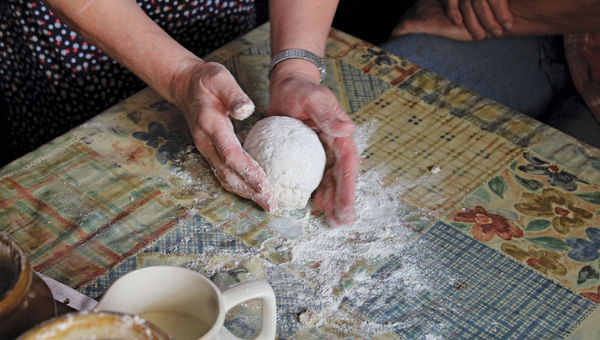
Frances O'Sullivan demonstrates how to make traditional Irish soda bread. Photo Credit: Brinley Hineman
Today, the farm welcomes thousands of visitors each year, giving them a glimpse back in time as they learn about Gallivan's life and the broader history of the rural area. And it's clear the O'Sullivans' gamble to purchase the property paid off: The attraction is featured on Brendan Vacations and Trafalgar itineraries.
Widowed and with seven children, Gallivan opened a sibheen, or illegal pub, where she served her poitin, or whiskey, that she made on-site. (Visitors can partake in a poitin tasting. Warning: it packs a punch.)
By luck, Gallivan's home was the perfect site to welcome in travelers, after a mountain pass was constructed in the 1840s that became a prominent tourist route where travelers could stop for a cup of tea and homemade treat.
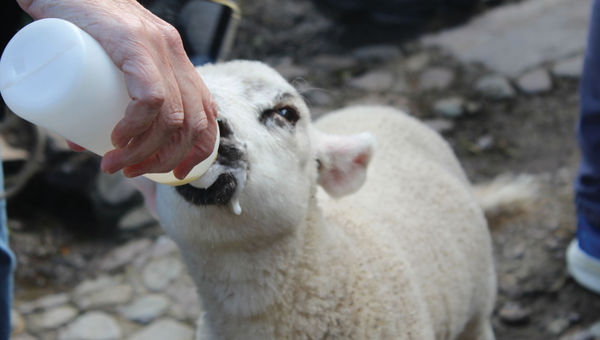
A visitor feeds a lamb named Salt at Molly Gallivan's cottage and farm. Photo Credit: Brinley Hineman
While there, our group enjoyed a baking demonstration from Frances, who showed us Gallivan's recipe for soda bread, an Irish staple, that was baked over an open flame. Stephen gave us a tour of the farm, which included the absolutely delightful experience of feeding a lamb named Salt a bottle of milk and being charmed by the menagerie of animals that live there, including a giant pig named Black Pudding.
Remnants of the famine
Moving through the farm, we travel even further into the past, pausing at the ruins of a famine house. The outline of a home remains, only evident by the stacked stones, which serve as a sobering reminder of the great hunger that started in Ireland in 1845, when blight destroyed the country's potato crops. The suffering was only compounded by political conditions caused by the British. An estimated 1 million died, including the family that had lived on the property, Stephen said.
We tried our hand at cutting peat at a bog, which was used as a fuel source. Using a traditional tool called a slean, I chopped a rectangle into the wet earth, using one part of the metal to scoop it out. The chunk of peat would dry in the sun for weeks before being ready to burn and keep a family warm on a cold Irish night.
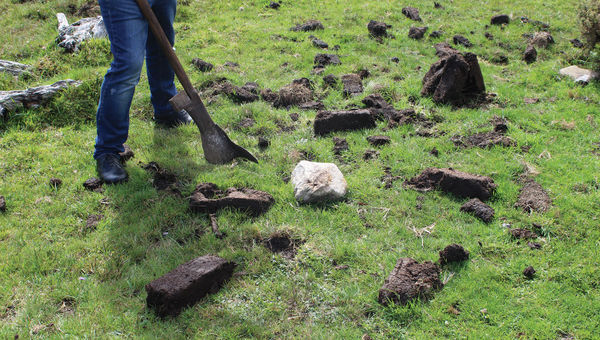
Guide Stephen O'Sullivan shows the tour group how to cut peat. Photo Credit: Brinley Hineman
And perhaps most interestingly were the 5,000-year-old Neolithic stones located just beyond the farmhouse.
The two flagstones were used as an early sun calendar. They were only confirmed by archaeologists 25 years ago, Stephen said. Before then, the stones were traditionally regarded as being important but eerie with stories being told of their relation to the fairies, an Irish superstition that persists despite modernity.