ISFJORD RADIO, Norway -- The walruses almost seemed to be posing as a group of 10 fellow travelers and I stood mouths agape along a windblown coast in the Norwegian archipelago of Svalbard.
For five miles we had walked along the strandflat, a mix of tundra and rocks that separates the Barents Sea from the mountains, to get to this place. We had expected a pot of gold at the end of the trek. After all, how often does the average bloke from the middle latitudes see a walrus colony. But what we did encounter was even better than I had expected. Indeed, it was among the most spectacular wildlife viewing experiences of my life.
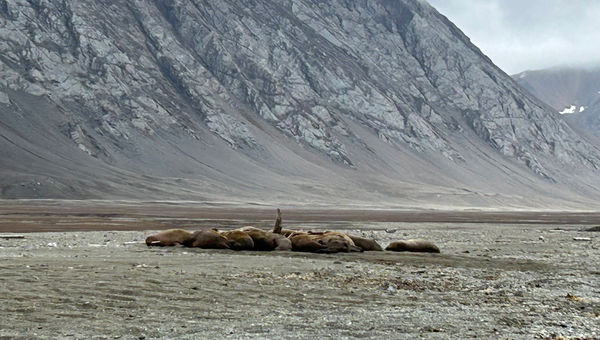
A group of walruses lying together on the shore. Photo Credit: Robert Silk
On the shore, a group of maybe 15 walruses were lying together, resting. This, I had anticipated. But just offshore, many more were swimming and surfacing. More than that, they were checking us out. Up they rose -- some alone, others in groups of two, three or four -- to give us a look. Some were barely five feet offshore.
What an adrenaline rush!
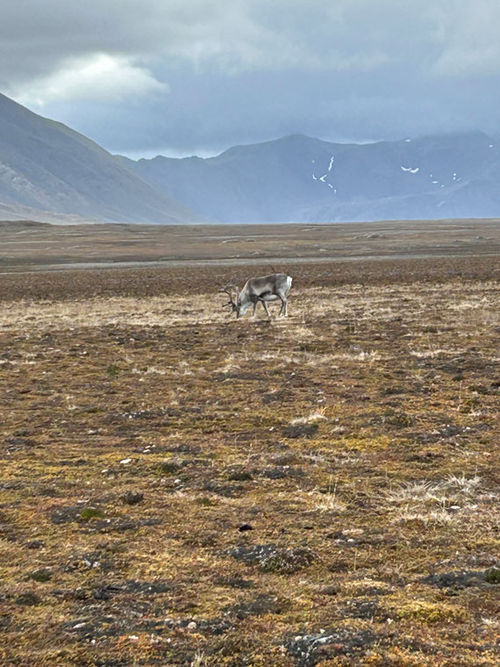
Grazing reindeer were spotted on the excursion. Photo Credit: Robert Silk
After a while, our guide Runar Hellerud from the wilderness expedition company and hotelier Basecamp Explorer, gathered the group together for an explanation. We had seen polar bear tracks just yards from where we stood. Hellerud speculated the bear had put the walruses on edge, leading to more than usual being in the sea rather than on shore. Walruses on shore are slow and awkward, making them vulnerable to bears. At sea, they're fast and efficient. Bears are no match.
As for why they took so much interest in us, Hellerud figured the walruses were just curious.
An Arctic adventure
Isfjord Radio -- a former communications center built in 1933, now repurposed by Basecamp Explorer as a boutique outpost -- was our starting point for what turned out to be this extraordinary adventure. Located 56 miles from the Svalbard capital of Longyearbyen, it can only be reached by a boat ride of about 75 minutes through the fjord called Isfjorden.
Our hike along the strandflat was filled with the first-of-kind experiences for me, even before we reached the walruses. Grazing reindeer dotted the nearly pancake-flat route. Periodically we encountered partial reindeer skeletons.
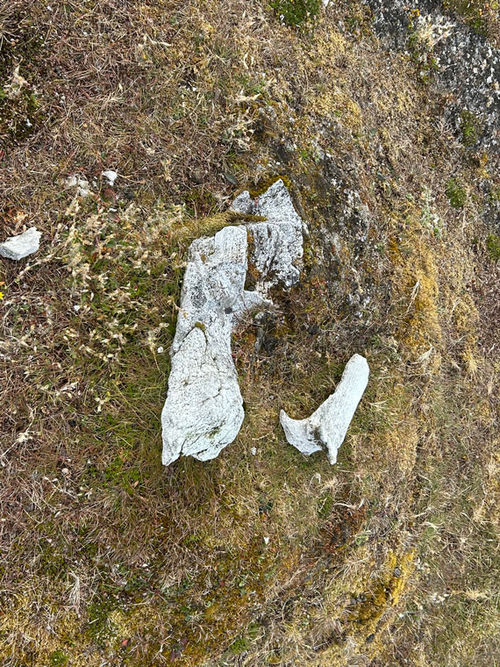
Fossilized whale bones and partial skeletons are remnants of the last ice age. Photo Credit: Robert Silk
We also came across numerous fossilized whale bones and partial skeletons. Some were located perhaps a half-mile above the modern tideline, remnants of the last ice age some 20,000 years ago when the sea was higher.
As we made our way back from the walruses, bracing against a sideways, icy rain, we saw an arctic fox, its sandy coat hard to spot against the surrounding strandflat.
We even got dive-bombed by northern terns after apparently getting too close to their nests, which they lay in shallow depressions in the sand.
After 10 miles and nearly six hours in the elements of an August Arctic day, we found our way back to Isfjord Radio. Rough seas, we had learned along the way, would delay our return to Longyearbyen for a night. Instead, a seafront sauna and gourmet dinner awaited.