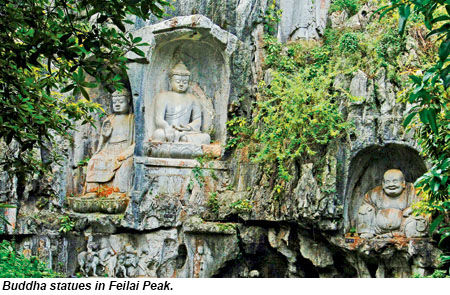
 An idyllic lake crisscrossed by wooden boats, terraced green tea plantations and a big-bellied Buddha carved centuries ago into a rocky cliff: Hangzhou, 125 miles south of Shanghai, has more than enough attractions to be a top destination in China for North American visitors.
But while the city of 8 million residents is already wildly popular with Chinese tourists, the capital of Zhejiang province isn't well known outside the country.
Hangzhou tourist officials want to change that and persuade foreign visitors to add several days to their China itineraries in this southeast city in the Yangtze River delta. That may sound overly ambitious, but after spending time there in April I left sharing our bubbly guide's enthusiasm for the city many Chinese call "Paradise on Earth."
Proximity to Shanghai is a plus: Hangzhou is a one-hour ride away via bullet train. But a classically beautiful lake that has inspired poets and lovers since the eighth century is what distinguishes Hangzhou from dozens of other rapidly urbanizing Chinese cities. The cars, the crowds, the cacophony fade away when strolling under the willow trees along West Lake, especially at dawn or dusk as mist settles over the water.
East meets West
It's actually possible to slow down, relax and enjoy the traditional Chinese sites that surround West Lake: pagodas, Buddhist temples, tranquil gardens and tea houses. Yet you're within comfortable distance of Western coffee shops, restaurants featuring the area's distinctive cuisine and an array of luxury and business accommodations.
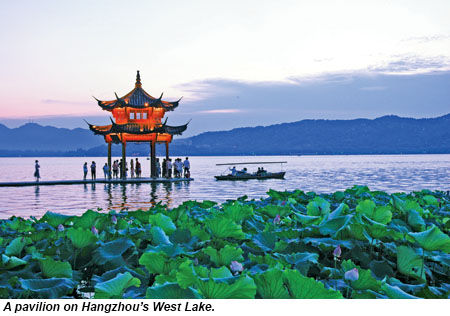 Steep, wooded hills on three sides of the lake create an oasis of green that separates the park-like area geographically and spiritually from the prosperous metropolis that sprawls around it. Trails wind along the water and up into bamboo and hardwood forest, ideal places for romantic walks and family outings.
Perhaps the most leisurely way to appreciate the lake is by boat. Vessels of all sizes and shapes ply the generally calm water, from traditional wooden boats to paddleboats and canoes as well as barges decorated to look like floating dragons.
Though it was rainy during our cruise, the faint outline of the city's skyline, dense with high-rises, loomed in the distance. More inspirational scenery included hills and bridges with poetic names like Two Peaks Embracing the Sky and Melting Snow on Broken Bridge.
Designated a Unesco World Heritage Site, West Lake is also close to the Ling Yin temple, with several Buddhist temples to explore and dozens of ancient stone carvings, including the laughing Buddha, whose enormous belly is said to contain the world's troubles.
Most nights a sound-and-light show transforms a quiet West Lake cove into a watery stage. Dozens of costumed dancers re-enact a Chinese legend about a snake in a show choreographed by film director Zhang Yimou.
Water features in several other Hangzhou attractions, including the Grand Canal and the XiXi National Wetland Park. Dug by hand in 610 to transport rice and silk to Beijing, the canal is touted as the world's oldest and longest man-made waterway. Today, the banks house flower shops and food stalls, some selling stinky tofu that, thankfully, tastes better than it smells. An old cotton mill on the canal is now a demonstration pavilion where craftspeople create fans, umbrellas, lanterns and clay teapots.
In XiXi Park, a nationally protected wetland dating back more than 1,800 years, wooden boats navigate narrow channels to transport visitors back in time to a traditional fishing village. Raised walkways wind past demonstrations of silk worm feeding and oyster beds as well as shops selling pearl jewelry and street food like crabs on a stick.
Steeped in tradition
Water and the area's temperate climate also play an important role in Hangzhou's designation as one of the country's best-known tea capitals. Tea is ubiquitous in China, but Hangzhou is the place to experience green tea, particularly the prized Longjing ("dragon well") tea. The best time to visit is early spring, when the first tender leaves are harvested.
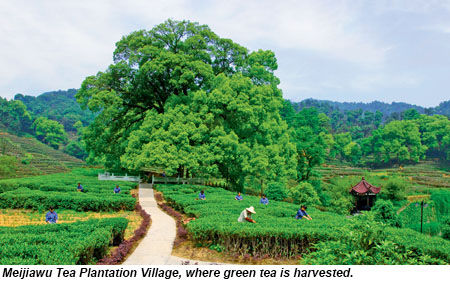 The picturesque Meijiawu Tea Plantation Village, a short drive south of the city, is surrounded by lush, fragrant tea bushes planted in neat rows that climb up the hillsides. You can literally immerse yourself in tea by walking among the plants, inhaling the mellow aroma and watching workers harvest the young leaves.
Green tea leaves are essentially dry roasted by hand in large, stainless steel bowls at temperatures reaching 200 degrees. The leaves are then cooled and packed tightly in cans or served immediately. A cup of Longjing tea often is served with floating leaves: Connoisseurs claim green tea should be eaten as well as sipped to gain its full medicinal benefits. It's said to be a cure for everything from indigestion and high cholesterol to hangovers.
Though Longjing tea has been cultivated for hundreds of years, the area has recently become popular as part of the growing "tea culture" in China and around the world. At the nearby National Tea Museum, visitors can attend a tea ceremony, sample different teas, see tea cakes as big as boulders and learn how the cultivation of tea has influenced life in China.
Consuming cup after cup of tea is a ritual part of most dining experiences in Hangzhou. Green tea is also an ingredient in many local dishes, including tiny, delicate Longjing shrimp and chicken bathed in Longjing tea. Green tea ice cream is a favorite dessert.
Hangzhou's mix of upscale Western- and Chinese-style accommodations ranges from the new Four Seasons Hotel on West Lake to the secluded Amanfayun, an Amanresort whose rooms were once homes in a tiny village. The ultramodern Pins de la Brume offers views of tea plantations.
Though nothing in Hangzhou is far from West Lake, staying close by makes it possible to appreciate some of the wonders of old China while the relentless pace of the country's modernization goes on around you.
Visit http://en.gotohz.com.