Just an hour's flight from Rome's Leonardo da Vinci Airport and linked by fast (and not-so-fast) ferries from the Italian mainland, Cagliari is the perfect entry point to Sardinia, Italy's second-largest island.
With crystal-clear turquoise waters, golden beaches and luxury resorts, Sardinia is a favorite leisure escape with VIPs and families. So much so that they often overlook Cagliari, the island's capital, rushing past en route to the glamorous Costa Smeralda or other secluded coastal retreats, while cruise passengers get only a fleeting glimpse on whirlwind tours.
Sardinia's popularity soars in the summer months, attracting visitors in such numbers that several beaches have had to introduce caps to protect their fragile ecosystems.
Yet beyond the coastline, the island boasts a captivating blend of culture, history and traditions as well as great food and wines. And there is no better place to begin exploring it all than in Cagliari.
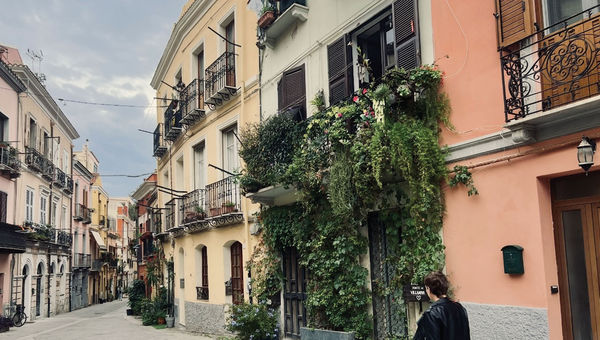
The narrow picturesque streets of the Villanova district are filled with pastel-colored houses, many adorned with flower-filled balconies and courtyards. Photo Credit: Pamela McCourt Francescone
Cagliari, a walkable city
Eager to discover the city off the beaten track, I chose to take an unhurried approach -- one that involved a somewhat unconventional mode of transport. My choice? An Ape Calessino, the iconic three-wheeled scooter that, in recent years, has been repurposed as an open-sided tourist taxi in Mediterranean hot spots.
My driver, Simone Accalai, was a fantastic guide who was light on history and dates but shared fascinating insights about his hometown. We started in the narrow alleyways of the Castello district at the top of the hill on which Cagliari is built, stopping at the Bastion of Saint Remy, a grandiose 19th century terrace, and at the Elephant Tower, both of which offer sweeping views of the city and the Gulf of Angels.
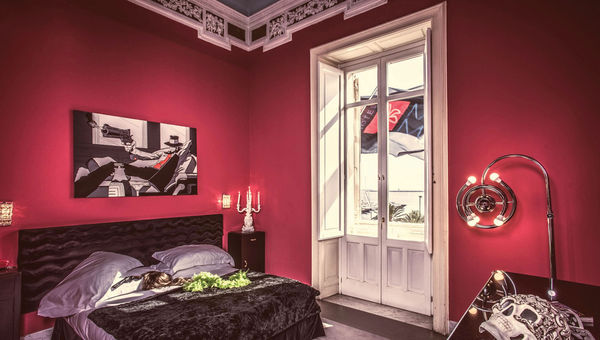
The boutique Hotel Miramare is housed in a 19th century palace and has uniquely decorated rooms packed with art in a blend of styles and offering views of the harbor. Photo Credit: Courtesy of Hotel Miramare
We also admired the golden sandstone facade of Cagliari Cathedral and, in the crypt, the remains of several Christian martyrs. Accalai skillfully sped down leafy narrow streets in the Villanova district, past charming cafes, pastel houses and street art, and then to the Molentargius Nature Park to see the rosy-pink flamingos that gracefully wade through the shimmering waters of the salt pans.
He told us that Cagliari is so compact (and thus highly walkable) that it is possible to swim and unwind on a beach, explore the ancient Roman amphitheater; hike up the Devil's Saddle promontory for breathtaking coastal views; and marvel at artifacts from Sardinia's ancient Nuragic civilization in the National Archaeological Museum, all in just one morning.
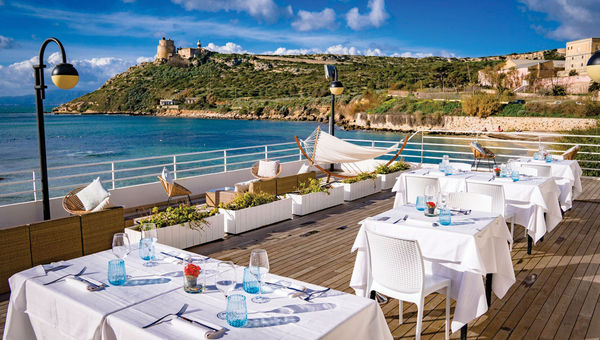
The Calamosca restaurant offers a refined take on traditional Sardinian and Mediterranean cuisine, emphasizing fresh, local seafood and seasonal ingredients in its dishes. Photo Credit: Courtesy of Ristorante Calamosca
For swimming, there is the famous five-mile, sandy Poetto Beach, where retro beach lidos rent sun loungers and umbrellas, and there are trendy cocktail bars and cycling paths along the waterfront.
Another charming spot is Calamosca Bay, which has a secluded sandy beach and the famous Calamosca seafood restaurant.
The Mediterranean yields a wealth of fish and, true culinary magician that he is, Calamosca's chef Michele Ferrara skillfully crafts the catch of the day into refined takes on traditional Sardinian and Mediterranean dishes, alongside local specialties like malloreddus gnocchi and fregola pasta, a Sardinian take on couscous.
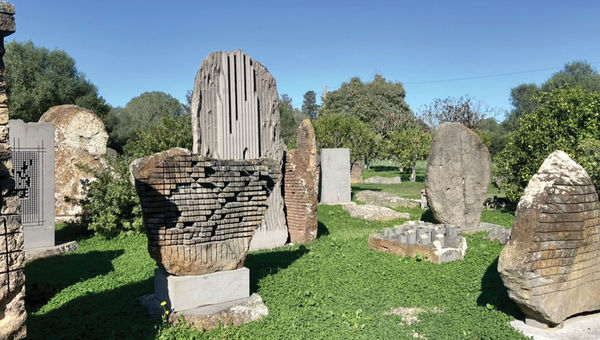
The Pinuccio Sciola Museum has hundreds of intricately carved "singing stones" that produce mesmerizing sounds when touched. Photo Credit: Pamela McCourt Francescone
Where to stay, what to do
Palazzo Doglio is Cagliari's only Leading Hotels of the World property, a fine five-star in the heart of the city with 72 spacious rooms (seven are suites), a high-end spa and a central courtyard with Mexican, sushi and gourmet pizza dining. Our top pick was the Hotel Miramare, a historical palazzo with sea views and 20 rooms and suites.
Styling itself as a museum hotel, it is packed with artworks, heirlooms and vibrant colors, the smallest room, for solo travelers, packing a real punch with bold red stripes on the walls.
Owner Giuliano Guida Bardi says much of the art has been done in exchange for hospitality under his Payable by Art plan. He recommends the nearby Vitanova Cucina e Dolci restaurant, which he said is small and elegant, with a menu that changes daily according to the seasonal produce chef Laura Sechi finds in the local market.
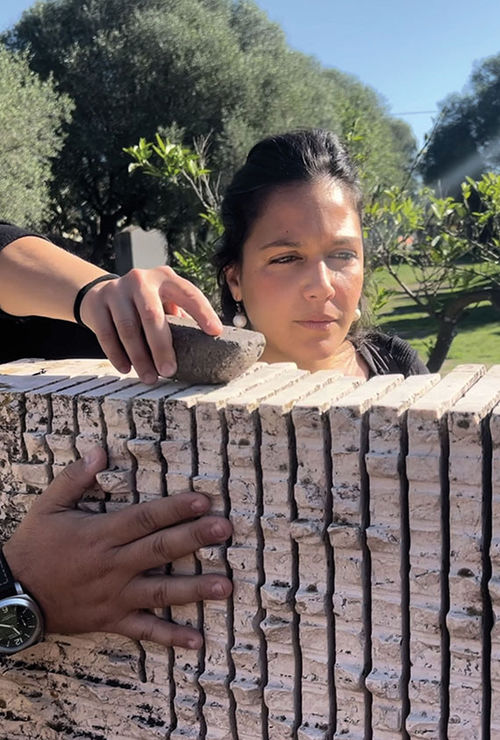
Maria, daughter of sculptor Pinuccio Sciola, guides visitors through the park. Photo Credit: Pamela McCourt Francescone
Just 15 miles from Cagliari, in the little town of San Sperate, a visit to the Pinuccio Sciola Museum, with its singing stones, is a must. In this park, hundreds of carved stones (many over 10 feet tall) produce amazing melodic sounds when touched.
Sculpted by Sciola, whose stones can be found in museums and collections worldwide, this sensory experience gives visitors a profound sense of Sardinia's cultural heritage, also thanks to the excellent guides, like Sciola's daughter Maria, who I was lucky enough to watch make her father's fascinating artworks sing.